Elly McDonald

Writer


Leave a comment

‘We remember as true things that never even happened’: Julian Barnes on memory and changing his mind

Booker Prize winning novelist Julian Barnes on shapeshifting memory. This is why his novel The Sense of an Ending is one of my favourite books.

From The Guardian, Sun 16 Mar 2025 19.00 AEDT

Consider the question of memory. This is often a key factor in changing our mind: we need to forget what we believed before, or at least forget with what passion and certainty we believed it, because we now believe something different that we know to be truer and deeper. Memory, or the weakening or lack of it, helps endorse our new position; it is part of the process. And beyond this, there’s the wider question of how our understanding of memory changes. Mine certainly has over my lifetime. When I was an unreflecting boy, I assumed that memory operated like a left-luggage office. An event in our lives happens, we make some swift, subconscious judgment on the importance of that event, and if it is important enough, we store it in our memory. Later, when we need to recall it, we take the left-luggage ticket along to a department of our brain, which releases the memory back to us – and there it is, as fresh and uncreased as the moment it happened.

But we know it’s not like that really. We know that memory degrades. We have come to understand that every time we take that memory out of the locker and expose it to view, we make some tiny alteration to it. And so the stories we tell most often about our lives are likely to be the least reliable, because we will have subtly amended them in every retelling down the years.

Sometimes it doesn’t take years at all. I have an old friend, a considerable raconteur, who once, in my presence, in the course of a single day, told the same anecdote to three different audiences with three different punchlines. At the third hearing, after the laughter had subsided, I murmured, perhaps a little unkindly, “Wrong ending, Thomas.” He looked at me in disbelief (at my manners); I looked at him in disbelief (at his not being able to stick to a reliable narrative).

I think that sometimes we remember as true things which never even happened in the first place

There is also such a thing as a memory transplant. My wife and I were great friends of the painter Howard Hodgkin, and travelled with him and his partner to many places. In 1989, we were in Taranto in southern Italy, when Howard spotted a black towel in an old-fashioned haberdasher’s window. We went in, Howard asked to see it, and the assistant produced from a drawer a black towel. No, Howard explained, it wasn’t quite the same black as the one in the window. The assistant, unflustered, produced another one, and then another one, each of which Howard rejected as not being as black as the one in the window. After he had turned down seven or eight, I was thinking (as one might), for God’s sake, it’s only a towel, you only need it to dry your face. Then Howard asked the assistant to get the one out of the window, and we all saw at once that it was indeed very, very slightly blacker than all the others. A sale was concluded, and a lesson about the precision of an artist’s eye learned. I described this incident in an essay about Howard, and doubtless told it orally a few times as well. Many years later, after Howard’s death, I was at dinner in painterly circles when a woman, addressing her husband, said, “Do you remember when we went into that shop with Howard for a black towel…” Before she could finish, I reminded her firmly that this was my story, which her expression clearly acknowledged. And I don’t believe she was doing it knowingly: she somehow remembered it as happening to her and her husband. It was an artless borrowing – or a piece of mental cannibalism, if you prefer.

It’s salutary to discover, from time to time, how other people’s memories are often quite different from our own – not just of events, but of what we ourselves were like back then. A few years ago, I had an exchange of correspondence about one of my books with someone whom I’d been at school with, but had not kept up with and had no memory of. The exchange turned into a sharp disagreement, at which point he clearly decided he might as well tell me what he thought of me – or, more accurately, tell me what he remembered now of what he had thought of me back when we were at school together. “I remember you,” he wrote, “as a noisy and irritating presence in the Sixth Form corridor.” This came as a great surprise to me, and I had to laugh, if a little ruefully. My own memory insisted – and still does – that I was a shy, self-conscious and well-behaved boy, though inwardly rebellious. But I couldn’t deny this fellow pupil’s reminiscence; and so, belatedly, I factored it in, and changed my mind about what I must have been like – or, at least, how I might have appeared to others – 50 and more years ago.


Gradually, I have come to change my mind about the very nature of memory itself. For a long time I stuck pretty much with the left-luggage-department theory, presuming that some people’s memories were better because their brain’s storage conditions were better, or they had shaped and lacquered their memories better before depositing them in the first place. Some years ago, I was writing a book that was mainly about death, but also a family memoir. I have one brother – three years older, a philosopher by profession – and emailed him explaining what I was up to. I asked some preliminary questions about our parents – how he judged them as parents, what they had taught us, what he thought their own relationship was like. I added that he himself would inevitably feature in my book. He replied with an initial declaration that astonished me. “By the way,” he wrote, “I don’t mind what you say about me, and if your memory conflicts with mine, go with yours, as it is probably better.” I thought this was not just extremely generous of him, but also very interesting. Though he was only three years older than me, he was assuming the superiority of my memory. I guessed that this could be because he was a philosopher, living in a world of higher and more theoretical ideas; whereas I was a novelist, professionally up to my neck in the scruffy, everyday details of life.

But it was more than this. As he explained to me, he had come to distrust memory as a guide to the past. By itself, unsubstantiated, uncorroborated memory was in his view no better than an act of the imagination. (James Joyce put it the other way round, “Imagination is memory” – which is much more dubious.) My brother gave an example. In 1976 he had gone to a philosophical conference on Stoic logic held at Chantilly, north of Paris, organised by Jacques Brunschwig, whom he had never met before. He took a train from Boulogne, and clearly remembered missing his stop, and having to take a taxi back up the line and arriving late as a consequence. He and Brunschwig became close friends, and 30 years later they were having dinner in Paris and reminiscing about how they first met. Brunschwig remembered how he had waited on the platform at Chantilly and immediately recognised my brother as soon as he stepped down from the train. They stared at one another in disbelief (and perhaps had to apply some Stoic logic to their quandary).


That book came out 17 years ago. And in the meantime, I have come round to my brother’s point of view. I now agree that memory, a single person’s memory, uncorroborated and unsubstantiated by other evidence, is a feeble guide to the past. I think, more strongly than I used to, that we constantly reinvent our lives, retelling them – usually – to our own advantage. I believe that the operation of memory is closer to an act of the imagination than it is to the clean and reliably detailed recuperation of an event in our past. I think that sometimes we remember as true things that never even happened in the first place; that we may grossly embellish an original incident out of all recognition; that we may cannibalise someone else’s memory, and change not just the endings of the stories of our lives, but also their middles and beginnings. I think that memory, over time, changes, and, indeed, changes our mind. That’s what I believe at the moment, anyway. Though in a few years, perhaps I will have changed my mind about it all over again.

This is an edited extract from Changing My Mind by Julian Barnes, published by Notting Hill Editions on 18 March (£8.99). To support the Guardian and Observer order your copy from guardianbookshop.com.

4 Comments

Consumed

It’s my constant delight to look around my home and realise I am in the lucky, privileged position of living like an empress.

I flick a light switch and have unimaginable power at my fingertips. I turn on TV and have the whole world under my surveillance. My phone opens universes. I open my pantry and it speaks abundance. My wardrobe is cloth of gold and spun silver.

Not quite really that last one. But close enough.

I also see waste. A lot of waste from me, and obscene cumulative waste from human consumption across the planet .

So in 2025, I am jumping on the No Buy trend.

Starting Christmas Day 2024, I aim to get through a year without purchasing any new clothes, accessories, makeup or gym gear.

Things I can do:

  • I can spend on food, as much (if I want) as my budget permits.
  • I can spend on toiletries, if I’m replacing something I truly need, if I have no supplies or alternatives left, and if I buy from my local pharmacy or supermarket.
  • I can spend on hair cuts but it’s going to stay a low-maintenance bob through 2025.
  • I can have that linen cardy thing professionally mended.
  • I can spend on social activities. Go for it.
  • My gym is social.

As I type this, I realise my dopamine cravings are likely to find outlets beyond buying for my personal appearance.

Household appliances, household decor, bed linen, home entertainment subscriptions, books… No, no, no, no and no. Not buying it. I have a library card. I have everything an empress needs.

Here goes. Let the reign of restraint roll.


Leave a comment

The Guardian (UK): Book review – really?

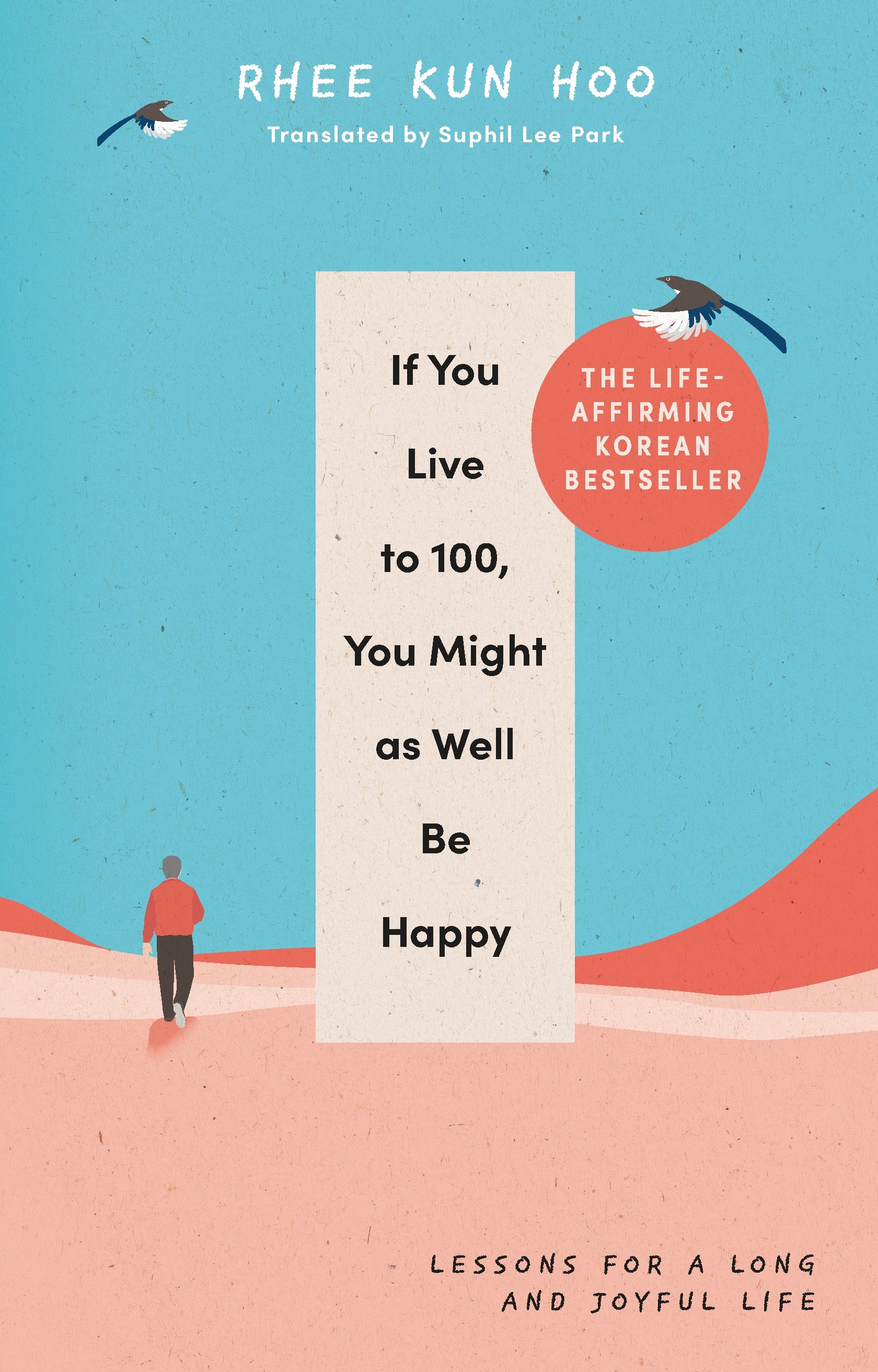
Rhee Kin Hoo, If You Live To 100, You Might As Well Be Happy

To guardianreaders@theguardian.com

Hello

I have just read Pratinav Anil’s review of Rhee Kun Hoo’s book If You Live To 100, You Might As Well Be Happy (2 June 2024), and I seriously question whether The Guardian’s reviewer actually read the book.

Your reviewer dismisses Rhee’s nine decades of accrued wisdom as trite platitudes and accuses the author of Boomer complacency.

I guess he missed the bits about living through war-time in a town filled with corpses, wounded soldiers, refugees, where children were displaced from schools turned hospitals and studied outdoors. He missed the bit about the earlier years schooled in Japanese, with native Korean banned, and having to learn his nation’s language and culture from the age of nine. Of relatives killed in wars and political massacres. Of going from wealth in childhood to abject poverty in consequence of war. Of being a high school kid trying to care for a dying father who was never diagnosed due to an inability to afford medical services post-bankruptcy. Of being imprisoned for political activism. Of being unable to pursue the career he planned because of his criminal record. Of finally being exonerated of his criminal record only to be required to put in three years military service well into the life phase where he was married with four kids and trying hard to get a career back on track. Of humiliation at housing his young family in a marginal, half-built estate without amenities.

Rhee was eligible to be drafted as a Japanese military kamikaze from age 10. He missed by one year. He was eligible to be drafted into wartime service from age 15. He missed by one year. He lived through dictatorships and eras of starvation.

Yet your reviewer snorts that this kkondae lives in a four-storey compound in Seoul’s equivalent of South Kensington. Missed the bit about this being inherited land where the original modest house was pulled down to permit a rebuild designed to accommodate himself and his wife and their four children and seven grandchildren in separate apartments, each financed by its occupants. Yep, he got lucky inheriting a site in Seoul. So shoot him.

I imagine Pratinav Anil has a much graver, more nuanced experience of life. It might even be he might someday care to share some of his wisdom publicly. Sorry (not sorry), but I won’t hold my breath.

I’m 63, in excellent health, caring for an 89 year old mother, just buried my 90 year old uncle. There was so much in Rhee’s book that spoke to me. I thank him.

Sincerely 

Elly McDonald


17 Comments

Obituary for my uncle, author Hugh Edwards OAM

Western Australian identity Hugh Edwards has died aged 90, following a fall. Hugh is well-known as an author, journalist, shark expert and underwater explorer. He was awarded the Medal of the Order of Australia in 2009 for services to Western Australian maritime history, in recognition of his writings about Dutch East India Company shipwrecks on the Western Australian coast. His best known book is Islands of Angry Ghosts, which recounts the story of the 1629 Dutch treasure ship Batavia, and which won the Sir Thomas White Memorial Prize for best book written by an Australian in 1966. Journalist Peter FitzSimons dedicated his own book Batavia (2011) to Hugh and to Henrietta Drake-Brockman, for their roles in the expedition that located and first explored the Batavia shipwreck, submerged off the Abrolhos Islands. Hugh served as consultant on the 1972 docudrama The Wreck of the Batavia, directed by Bruce Beresford.

A subsequent book, Wreck on the Half Moon Reef, recounts the loss of another Dutch ship, Zeewyk, in 1727.

Among Hugh’s 35 or so published works are histories of Broome and of the Kimberley, Joe Nangan’s Dreaming (1976, co-authored with Indigenous lawman Joe Nangan), books about sharks and crocodiles, and books for children.

Hugh Edwards published two autobiographical books: Gods and Little Fishes (1962) and Dead Men’s Silver: The Story of Australia’s Greatest Shipwreck Hunter (2011). He is survived by his daughter Caroline, from his marriage to Jennifer Lejeune, by his daughter Petrana, from his marriage to Marilyn Georgeff, and by their children. His son Christopher predeceased him, in 2019. In Hugh’s later years his companion Athena Paton was his rock.


2 Comments

South Korean Celebrity Suicides

South Korea has rules on media reporting of celebrity suicides.

The method of death should not be disclosed.

The location should not be identified or pictured.

No images of the person’s dead body should be published.

No images or footage of commemorative events that might appear to glamorise the death should be disseminated.

The text of any suicide note should not be published.

The death should not be attributed to a single cause.

For full context, here’s a reference – https://bmcpublichealth.biomedcentral.com/articles/10.1186/s12889-023-16080-1

It’s difficult, impossible, to ensure YouTubers and social media commentators comply with any of these regulations.

I’m not even going to name the person whose death prompts this piece. The date speaks for itself.

However… I am shocked by how deeply I feel affected. 

Since August 2019 I have been a hallyu and K-drama obsessive. I am 62 years old and have no excuses. Maybe fan-girl is who I am. But I will say that K-drama got me through the COVID lockdown periods. K-drama widened my world, shaped my thinking, kickstarted renewed mojo, gave me joy.

For three years I’ve been studying Korean language. Travel in Korea last spring was three weeks of bliss. I have been so happy immersed in Korean culture.

And yet, I was aware from early on that the Korean entertainment industries are brutally exploitative. The human damage is immense. The wastage of entertainers blackbanned in consequence of “scandals” is frightening. The long list of celebrity suicides is tragic.

I’m not going to write an essay here on all the ways in which Korean entertainment brutalises its participants.The commodification of human beings, the unfair contracts, the overwork, the unrealistic expectations, the fatigue, the depression, the loneliness, the public intrusion and public persecution are all well documented elsewhere. No one should die because penalty clauses in their contracts make living seem untenable.

I have wondered how men participate in prostitution, as clients, knowing the exploitative structures within which these transactions operate (mostly). I spent 10 years living in a red light district, not as a prostitute, but, ironically, as an entertainment journalist. The degrading conditions were in the public’s face.

Now I wonder how I can support an entertainment culture which dehumanises and kills its own. At one end, the South Korean entertainment industries are literally a feeder chute to the sex trade. At the ‘higher’ end, even the most high profile ‘successes’ walk a perilous line.

I feel like me continuing to support K-drama and the K-fantasy realms is like a man who buys a woman off the street. The pain and vulnerability are in my face. I can’t pretend otherwise.

I’m aware I might feel this way because people I worked with in entertainment died by suicide.

I was deeply affected when that happened, too.

I’m aware of the ripple effects of suicides. And the devastation of those closest.

Recently I bought a hoodie from a company called Kind Is Cool. They make t-shirts and hoodies with suicide prevention messages on them. Part of their proceeds go to suicide prevention causes. The hoodie I bought read ‘Tomorrow needs you’.

I’m inclined to think we need tomorrow. Tomorrow calls us. It’s always a new day.


2 Comments

The Newsreader S2 – reading and writing

Australian TV drama The Newsreader has returned for Season 2. It dunks us right back in 1988. I see a suit The [Woman] Newsreader wears on-air and instantly I see, “Marilyn Said. Covers.” Is it sad I go straight to ’80s fashion designers, ’80s dresses I wore?

This morning, my online news features an article where six women who debuted as TV news presenters in the late ‘80s and whose careers still thrive recall how it was starting out.

Me, I was never going to make it as a mainstream journalist, let alone on TV. But I was a journalist, a rock music and entertainment journalist, for 10+ years, and I did make it as far as the News Limited Sydney newsroom, writing for The Australian newspaper. (Also I auditioned as a deejay for a Top 40 radio station. I was incapable of speaking into a mike without veering into an American accent.)

That was 1981. I was 20. On my first day I brought a tapedeck into the newsroom to transcribe an interview. Why wasn’t I using my usual hand-sized recorder? No idea. But the tapedeck required an extension cord plugged into a wall and within minutes a senior journo tripped over it. He swore loudly. I didn’t have a desk space so I was crouching in an aisle between desks. I stayed crouched for quite some time.

Over liquid lunch at the pub, I asked the Chief of Staff about cadetships. He snorted and said, “When I was your age, I’d been chasing ambulances for four years.” If I’d had the least presence of mind, I might have piped back “Well I’ve been chasing rock bands for three years, and that’s more hazardous.” But I never mentioned a cadetship again.

A lift door opened and there stood Ita Buttrose, legend of Australian journalism, at that time editor of News Limited’s Sunday Telegraph. I remember Ita as Juno-esque, in a dress with big black polka dots, glassy-eyed with high-gloss orange lipstick. (I nearly wrote “orange lipstick you could catch flies on” – but the double entendre is foul, and unconscious. I nearly described her as a fembot, which is foul too.) Ita would be inspiring, right? Truth is: I was terrified.

I was terrified by everything in that newsroom. I took to coming into the office at about midnight, after seeing bands, and writing my copy in a semi-darkened cavern with few or no other journalists present. The wonderful columnist Geraldine Pascall would sometimes work near me in the Arts section. Geraldine was kind. She would push fish’n’chips at me and gentle cajole, “Eat.” In those days fish’n’chips was newspaper-wrapped. The irony. (Geraldine died far too young.)

Nobody missed me when I went to the States for a few months. When I came back, the male temporary replacement I’d organised had replaced me permanently.

At this time there was an Australian Broadcasting Corporation evening news show called Nationwide. They had their New York-based political correspondent do a light piece on Australian bands attempting to break into the U.S. music market. He was a fine journalist, but music was not his forte. I wrote a short letter to Nationwide’s producer suggesting coverage of the Australian music industry might be better served by a specialist reporter. I didn’t mean me. I meant anyone who could do the subject justice. I received a letter back saying (reconstructed in memory), “I admit this report was not our most successful. But I have now read your letter three times [was it five?], and I still cannot make sense of what you are trying to say.”

It’s true I was not my most lucid just at that point. It’s true my letter was handwritten in green biro. But hey, mate, way to punch down, no? (It makes me laugh now, imagining that veteran producer squinting at my two paragraphs for ten full minutes then flinging it down and typing his riposte.)

Meanwhile, while I was in Sydney, my friend in Melbourne was working her way up from writing TV listings to covering state social issues to covering state parliament to a posting in Canberra, covering national politics. Then her newspaper sent her to Russia. She covered Russia’s war in Afghanistan, the Chechen wars, everything pertaining to the former Soviet Union (after it was former), then later, for a prestige U.S. major newspaper, Sub-Saharan Africa, and then China. Today she’s covering the Ukraine-Russia war as Russia bureau chief. She tells me writing TV listings at the outset was fun, a happy memory. She had qualities I lacked. Plus mega-talent.

Women journalists are abundant in talent. In 1989 I had the opportunity to work on a special project for 10 weeks at Kerry Packer’s Cleo magazine, edited by Lisa Wilkinson. Lisa went on to be a household name, with a starry career in TV. What I remember best about her at Cleo was how consultative she was. Also how decisive. It astonished me that she’d ask a blow-in like me my opinions on editorial. Specially as I spent too much of my time at Cleo in toilet cubicles crying. I’d had a short DOA stint at a public relations consultancy and what confidence I might have had was shot.

I owed the opportunity to be at ACP (Australian Consolidated Press) to Cleo deputy editor Andrea Jones, a fellow music journalist who moved seamlessly into magazine editing. Andrea was talented, smart, hardworking, and a good friend to me.

At ACP I was able to write for GH, the revamped Good Housekeeping, which morphed into HQ. The editor was Shona Martyn, later publishing director of HarperCollins, now a senior editor for the Sydney Morning Herald and its Spectrum magazine supplement. Shona was bright as a new coin. I remain grateful I got to fulfil my ambition to write short Arts profiles.

I did not continue in journalism, but I’m glad the talented women I knew were, for the most part, able to forge careers that used their talents. The male journalists’ boys’ club in the ’80s was noxious. I’m so glad it wasn’t able to suppress those women.

Declaration of interest re The Newsreader: My aunt was an on-air reporter for SBS TV in the early 80s, and before that for Channel 7 Perth. The writer and creator of The Newsreader, Michael Lucas, is the half-brother of one of my sister’s ex live-ins. It’s a small world. 


1 Comment

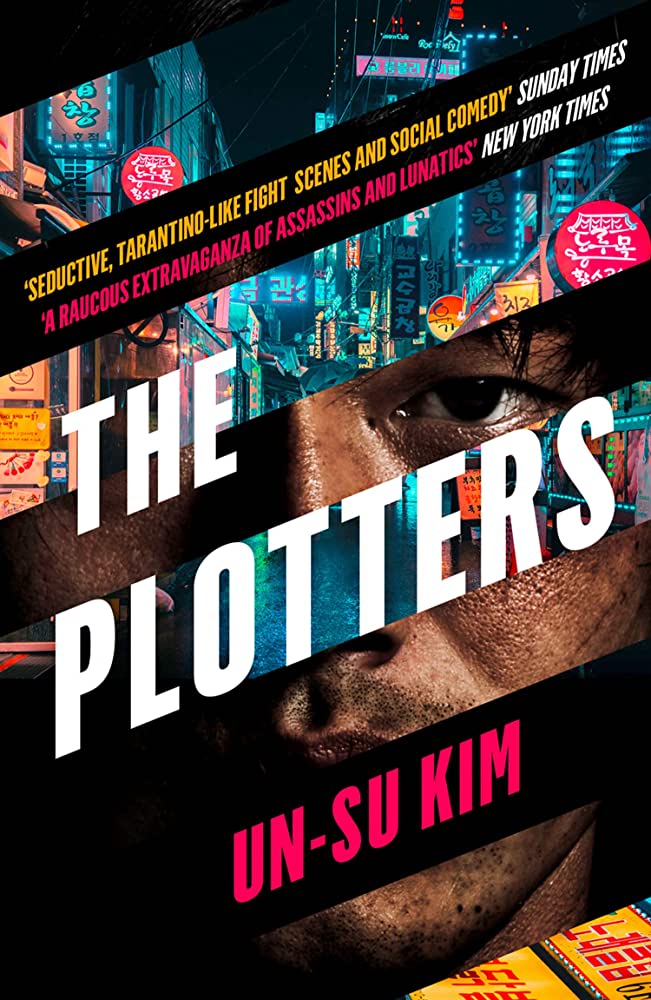
The Old Woman With The Knife by Gu Byeong-mo; and The Plotters by Kim Un-su (Un-su Kim)

She was a founding member of the company and a mainstay employee for decades. Now she’s in her 60s, and she faces being pushed out – rudely, by a jeering male junior. Termination is painful for professional assassins.

The female lead character of The Old Woman With The Knife could be any older woman in the workforce, or any Second Wave feminist.

It’s a cracking crime thriller. It’s also a social allegory asking us to consider the value of a life: why some lives are devalued, how value is contingent. How people are used. How people are thrown away.

This old woman wants to go out on her own terms. She might also want the experience of love, a sense that she has in some small way experienced tenderness, compassion, gratitude, and protected goodness. These are experiences never permitted her.

Reseng, the male lead character in The Plotters, is similarly caged in a dog eat dog reality. He exists only to carry out, to the letter, directions from mysterious Higher Ups. He’s a male assassin. He does have, or has had, people he’s cared for, but they get killed. That’s business.

A target tells Reseng, “A man ought to be able to choose a death that gives his life a dignified ending. Only those who truly walk their own path can choose their own death. But not me. I’ve been a slug my whole life, so I don’t deserve a dignified death.”

The Plotters is a tale of the worm turning. Reseng has never been permitted to write his own script. He believes – and he has evidence – that given the chance to turn his life around, a person will voluntarily return to the cage they were in. Reseng is a fatalist. He knows – he has evidence – death comes to everyone; he believes it doesn’t matter who kills us. But is it possible that the circumstances of our death can make our life meaningful?

The Plotters is set around a library filled with unread books. Every book is a script, and every script is a life. Who gets written, and who gets to write?

The Washington Post chose The Plotters as Best Thriller of the Year, presumably for 2018, the year the English translation by Sora Kim-Russell was published (in Korea, the novel was published in 2010). I love this book. I love both these books. The Old Woman With The Knife first appeared in 2013, English translation by Chi-young Kim in 2022.


6 Comments

Thoughts on the 2021 K-drama series Hometown

I thought I was okay at decoding K-drama, but the 12-episode drama Hometown is the most enigmatic Korean TV product I’ve encountered.

Far from the most enjoyable. Far from the most engaging. But the most baffling, the one that kept me guessing – frustrated, barely hanging in there, but anxious (neurotically, physiologically) to see where it headed.

At first I thought its primary real-life referencing was to the 30 August 1987 cult mass suicide-murder in Yongjin, 30 miles south of Seoul, morphed with the Matsumoto sarin gas attack perpetrated in Japan 27 June 1994.

On Facebook I summarised the first two episodes of Hometown this way:

‘A nerve gas attack at a train station on the eve of the nation’s biggest family holiday. A cult. Killings. Madness. A disappearance.’

I noted the aesthetic of cinematic realism. I noted the serious actors. I noted there was nothing funny, cute or glamorous here (most K-drama serves it up).

As the drama unfolded, increasingly I was concerned by the presentation of the cult leader, “the Guru”. The degree of mind control he wielded went well beyond anything realist, well into the supernatural, demonic.

I worried why what I took to be his murderous instigations were mediated via technologies: videotapes, cassette tapes. (I thought it was the influence of the Japanese hit horror movie The Ring.)

I worried why the timeframes were opaque: sometimes we were in 1999 (the apocalyptic Y2K moment), sometimes in 1987, sometimes earlier, at an orphanage.

I noted that characters implied or claimed intimacy with other characters who did not seem to recall them.

I worried why the hallucinations some characters experienced shared common elements – notably, the traditional Korean vengeful ghost-maiden, the dead woman with tangled long black hair, sometimes hanging upside down, wearing white.

It all moved slowly and at some point fairly late in the drama I declared it irredeemable tosh.

I marvelled to my sister that everyone concerned – the actors, the cinematographer, the director – were working so hard to sell something so fundamentally nonsensical. Then I worried, why would they do that?

I think the last two episodes are key.

I reported back to Facebook:

‘Turns out to be about memory, forgetting and accountability. I think it’s a parable about the years of the dictatorship, the disappearances, tortures and deaths, and cultural amnesia.

‘[It’s] the bargain with the Devil where you sell your soul in exchange for having the memory of your sins erased. Moral: if you reject that bargain and face up to your sins, you might live through the pain of that knowledge and, eventually, atone. 

‘I’m wrestling with the allegory in this drama (Hometown). The cult leader is wholly allegorical. He’s the Monster of repressed trauma, palliative amnesia. He’s the collective pact, the pact to not remember. The cop participated in torture and extra-judicial execution. The politician is a serial child molester who murders his daughter rather than have her denounce him. Parents who sold their children into exploitation. Loan sharks who take the ignorant and desperate for everything they’ve got. 

‘What is “the memory of your sins” if not conscience? The allegory is also about secondary victims: the traumatised survivors, and how the pact to forget leaves them unseen and unheard, living dead. The drama says: for them to live, their pain must be acknowledged, their loss recognised.’

What I call  “the traumatised survivors” are seen here often as the next generation(s), the scarred children of sins that pre-date their existence.

As I thought more about it, I came to see the anchoring references as being about the 1980 Gwangju Uprising, a student protest that turned into a massacre. That’s almost certainly not all that’s going on here. This is a drama made not for the international market but for those in South Korea who remember, even when they might wish to forget. Media are channels for reactivation (“triggering”) and also obfuscation.

The Monster of repressed trauma, the cult leader, is the embodiment of intergenerational trauma. He has taken on the name of his murdered father. He experiences past/present/future as a compressed unity. Nothing can end. In his cosmos, there are only two options: Kill the one you love most, then kill yourself; or, Accept the illusionary balm of amnesia, and give yourself over to the Monster.

The Monster is beautiful, and charismatic. Can a demon also be an innocent? His counterpart (opposite) is surely the gangster loan shark, who resists killing what he loves, the pure core at the heart of his being: the sinner as saint.

Hometown uses the metaphor of children shut inside a small, pitch-black room. It ends exhorting words to the effect, ‘If you have a small, dark room inside you, open it to the light. Choose life [with its pain, don’t choose to numb].’


Leave a comment

Fruit

Children have an instinct for sweetness
When young nectarines sprouted
From the young nectarine tree
My goblin sister and I ate them greedily
All of them
The fallen and the barely freed from budding
They knifed our bellies
What’s wrong with them
My mother cried
Meaning us, her children
She was so helpless
We were such shits
Rolling round
Like nectarine pits
Suffering from surfeit
Suffering for sweet


3 Comments

Thoughts on the ending of Drive My Car (film, 2021, directed by Ryusuke Hamaguchi)

SPOILER ALERT: Don’t even think about reading this if spoilers bother you.

This may plod. I am sorting out my thoughts as I write.

I’m prompted to write by the posts I see online that purport to explain the final scene in Drive My Car.

The final scene shows the driver, Misaki Watari, shopping in a Korean supermarket, in Korea, addressing the check-out assistant in Korean language. She gets into a red car, the red car we recognise she’s been driving throughout the film, and she greets a golden dog, the golden dog I believe we met earlier in the narrative in the home of the Korean couple Yoon-a and Yoon-soo.

What is this Japanese woman from Hokkaido doing speaking Korean in Korea in possession of her client Mr Kafuko’s car and her colleagues’ dog?

The internet explainers: Misaki has been freed from her miserable past by her cathartic experiences with Mr Kafuko and his theatre troupe. She has moved to Korea and commenced a new life. (Mr Kafuko, similarly freed from his miserable past, has given her his car, emblematic of said past. Yoon-a and Yoon-soo have given her the dog to be her companion and have, presumably, supported Misaki in transplanting to Korea.)

It’s not a total no-no explanation. The theatre troupe has been workshopping a production of Anton Chekhov’s play Uncle Vanya, which, at one level, is about dealing with life coming to dead-ends. Though Chekhov didn’t offer his characters’ the option of acts beyond the final curtain: say, The Three Sisters move to Moscow.

Myself – and I am odd – view Drive My Car differently.

On the face of it, this is a film about a man grieving his wife’s death who can’t reconcile his wife’s proclaimed deep love for him with her sexual infidelity. So: a film about distinguishing authenticity from acting.

On another layer, this is a film about the genius of Chekhov: how to present the authentic small lives of relatively ordinary people as worthy of our focus.

Theatre as most of us know it in the West derives from classical Greek drama. Its purpose is carthasis – the purging of deep emotions. Its protagonists are the great and powerful. They fall due to their fatal flaws. Witnessing their fall stirs deep emotions in audiences. The purpose of drama – the purging of deep emotions.

Every character in Drive My Car is, or has been, an actor, except Misaki, the driver. Yes, Mr Kafuko’s wife Oto was a scriptwriter. But before that she had been an actor. Yes, Yoon-a was a dancer. But now she is an actor. Yes, Yoon-soo is a dramaturg. But he studied Noh (or was it Kabuki?) at a Japanese theatre school. There’s the theatre festival’s director. But I say all theatre administrators started out as would-be actors.

The driver, Misaki, has her on-stage correlative in Uncle Vanya in the character Sonya: a plain girl easy to overlook, to disregard. Sonya is the emotional centre of Chekhov’s play. She owns the final scene. The character of Sonya is played in Mr Kafuko’s production by Yoon-a, who is deaf, and communicates in Korean deaf sign language.

Mr Kafuko’s production of Uncle Vanya is multilingual, featuring actors from across Asia acting their parts in their native languages. In the earlier stages of the readings, the Japanese actors admit they find the foreign language passages boring, like listening to a mantra. All the actors find Mr Kafuko’s insistence on a lengthy lead-up just reading the text, without vocal emotion, without embodiment, frustrating. He tells them to “listen to the text”.

A multilingual production of a Russian classic suggests the text is universal, and that ‘hearing’ the text transcends words. Eventually the text is felt, at the level of deep emotions. Eventually, almost everyone can understand that feeling of life coming to an end during one’s life-time, or of life running out of life within its allocated limits.

This is the experience of Uncle Vanya. “If I live to 60 and I’m 47 now, how will I fill in the years?”

Sonya’s answer: We will endure. Then we’ll die, quietly.

There are several characters in Drive My Car who have ‘run out of life’. A young man’s life can have ‘ended’ prematurely as much as his older counterpart’s. We are all Vanya, eventually.

So personally I don’t think Misaki moved to Korea and began a new life. 

Personally, I think the film director is revealing “Misaki” to be yet another actor, an actor in a fictional narrative purporting to be true life, that is true to life, but not real. “Sonya” in Uncle Vanya is presented as a simple, ordinary girl, yet is a theatrical construct brought to life by an actor and, as such, as much the performer as the histrionic beauty Yelena (a mask for another actor).

“Sonya” / “Misaki” is the antithesis of the great and the powerful, yet is an agent of catharsis. Because Chekhov taught us drama is not wholly the domain of the great and the powerful, the noisy and famous, but also the stories, in any language, of those who endure quietly. And drama translates to cinema.

Intelligent cinema, anyway.

Afternote: Drive My Car is based on a short story by Haruki Murakami from his collection Men Without Women (2014). Murakami explores the relations of fiction and actuality and acts of creating. The Korean film Burning (2018) is also based on a Murakami short story. One of the more interesting commentaries I read on Burning suggested the characters Ben and Hae-mi never exist in life but are imagined creations of the would-be writer Jong-soo. I recommend viewing Burning in tandem with Drive My Car. (The final sequences of Burning, where Jong-soo attempts to assert agency, are not part of Murakami’s narrative.)

rive


Leave a comment

Where poems come from Pt.3 / Mickey Mouse and Donald Duck. By Daffy Duck Pt.2

In 1984 I wrote a poem I called ‘Tidal’ and submitted it to several publications simultaneously, as was my practice. (The odds against a poem being accepted were low and editorial decison-making was slow.) All four journals published it. How embarrassing.

‘Tidal’ was a love poem to my dad. My dad across that period spent hours fossicking on the rockpools at the local beach, looking for shards of willow-plate and fragments of other ceramics lost in C19th shipwrecks.

His pose bending over the rockpools reminded me of a framed print in his parents’ house, the house where he’d grown up, a famous Edwardian image of a woman beachcombing. (Dad named a later home ‘Beachcomber’.)

In ‘Tidal’, I combined that image with the image of my father seeking, seeking… and merged that with the image of his parents on their wedding day, his mother, Edie Gibson, looking young and lush. A Gibson girl.

Two years later, in 1986, I wrote ‘Father and Child’, a deliberate echo of ‘Tidal’, this time the love between father and daughter rather than son and mother. Both have an erotic charge in the last line, intentionally evoked by reference to touch.

‘Father and Child’ was written as an technical exercise, a conscious attempt at a ‘happy’, “life affirming” poem. But I wasn’t happy with it. My father seldom talked about his mother or his parents’ relationship, which I knew was violent. So I wrote the poem ‘Wedding Photo’, about a battered bride, at much the same time. There’s an earlier poem, ‘Mad Edie’, also about, duh, Edie.

(I knew my grandfather’s feelings for Edie were tender, too. As he lay dying, he told 15 y.o. me that I looked just like 14 y.o. Edie as he first met her.)

At the same time as ‘Wedding Photo’ and ‘Father and Child’ I wrote a poem I called ‘Possums’ about someone I’d trusted who turned into a goblin. It was a poem about emotional violence and fear.

That suite of poems put paid to my poem writing for a few decades. A bit before I wrote my first poems in 25 years, my sister took a portrait photo of me as a kind of water spirit / earth goddess. The Gibson Girl of ‘Tidal’ turned full circle.

I’ve written before about a day at poet Dorothy Hewett’s place where I overshared about my maternal grandparents (not Edie and Angus) and Dorothy turned to her husband and said: “How gothic.”

My sister spontaneously confided similar thoughts last week: “Both our grandfathers were so gothic. One lived in Miss Haversham’s house, the other was King Lear.”

So what’s this about? Honestly, I’m over people assuming they know what or whom I wrote about. Those people don’t know the names of the people who mattered most to me. It’s just a bit ‘You’re So Vain’. I bet you think this song is about you.

But you know what? Even if the song *were* about you, I own my experiences and memories. And anyone who feels otherwise can climb a rat’s arse.


2 Comments

Like Her (21 April 1981)

Sometimes, he said, it’s as if she just sticks
out a hunk of bread, and says butter it
and they do.
But that’s just like her.

I didn’t defend her (those eyes, that hard mouth –
a ruthless child: desperate, defensive).
After all, I don’t
like her.

I’ve seen what she did (he said), she hurt
them to a man, those men. How she
hurt. I wanted to be
just like her.


Leave a comment

Mirror (1985)

from across the room this woman
stares: this face you’ve seen
distorted
by emotion by years by the camera
this face soft-framed
defamed
a face badly-loved, well-hated
unresolved
different every time, every time
you feel the same
you still
feel the same
you feel your face
dissolve into hers; you take
her expression, you turn
into her, towards her her
smile on your
lips
her reflected
in grey eyes
hungry eyes
your move – and her face
falls


Leave a comment

Haven (1985)

My mother has arrived. She’s unpacked
in my bedroom. From the bathroom I can hear
her chatting; she chirps
like a sparrow, cheerily, knowing
God cares – a bird among cats
young kittens, savage
strangers. She’s rolling bright-eyed
amidst claws, on the floor – they’ve hunted
her, caught her
pinned her wings flat; they crouch on her
chest and guard her 
for me, the arch-predator – for my
approval
keeping her prone, they keep this place ours
denying
safe house to the light speckled alien
refugee: a sparrow, fallen
who helplessly laughs


Leave a comment

Two Thighs (1985)

two thighs, knees together
firm converging lines
parabolic like an egg sucked
hollow inside
decisive outer planes
and gummy inner-lining – the jaws
of a dolphin, linear like this
wash up on northern beaches
bare and hard as crayfish claws
two thighs, knees together
an insolent autonomy
self-contained, impervious
bold strokes defining space
extended to an apex (knees together)
deft draftsmanship
emptiness encased
no fleshy Bardot pout: whose body?
brittle, bleached, beached
what body?
a dolphin’s skeletal beak