Elly McDonald

Writer


3 Comments

Schleswig-Holstein

Hello to the current residents at 22 Jardine Street

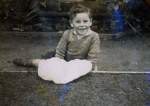
My father, Angus McDonald, was born in 22 Jardine Street in 1931 and grew up there. He sold the house on behalf of my grandfather Angus McDonald in 1974.

My dad Angus was diagnosed yesterday as having an extremely aggressive, untreatable pancreatic cancer. He’s unlikely to see out the year and will probably spend much of his remaining time heavily medicated, in palliative care.

He wrote this short piece about the history of your house as he knows it quite some time back, but felt shy about posting it, and considered it unfinished. (It could never be finished. He has a rich trove of memories of that house and his childhood.)

I am mailing it now on his behalf as I think he’d be thrilled to think the current owners care about the house’s history and its past residents.

I hope the house is as happy a home for you as it was for Angus and for my sister Cathy and me as visitors throughout our childhoods.

Best regards

Elly McDonald

My father writes:

My name is Angus McDonald. I am 85 years old and I grew up in your house, 22 Jardine Street, which my parents Angus McDonald and Edith McDonald (nee Gibson) purchased in 1928 and moved into with my older sister Ila.

I wondered if you might be interested in the history of the house as I know it and some photos of its earlier incarnation? I can email jpeg.

22 Jardine Street was built in 1909 for Mr Jens and his wife, who owned and ran Jens Hotel. They had two daughters and a son, Dr John Jens who practiced in Ballarat. It was built – on the wrong north-south orientation, from a European architectural draft – to the design of a castle-style grand house in northern Germany and was originally known as Schleswig-Holstein after the north-west German state. During WW1 this name was changed for obvious reasons. My mother renamed the house ‘Gazebo’. Huge 16 foot high cypress hedges formed the boundaries on Hedley and Jardine Streets.

My mother Edie was a ferocious and skilled croquet player, so the area which I believe is now a pool was then a croquet lawn, with thick cypress hedge on two sides and purple hydrangeas in the flowerbeds alongside the house. The formal dining room overlooked the croquet lawn and had a small ‘butler’s room’ adjacent. My mother had a mahogany dining suite with the chairs upholstered in red and white striped satin, with a mahogany and glass cabinet to display crystalware, and an upright piano lacquered black. My mother and her sister Maude were both enthusiastic pianists. On the walls were Edwardian idyll pictures of the flower gardens overlooking the lakes in Northern Italy, Como or Bellagio.

The bedroom on the south-west corner, alongside the dining room, was my sister Ila’s, then later, after my mother died in 1957 and my aunt Maude moved in to keep house, it was Maude’s (“Ainee” for Aunty). During that period the famous ‘Green Lady’ exotic Chinese beauty print hung there (The Chinese Girl painting by Vladimir Tretchikoff, 1952).

In the large foyer area with the stained glass dome, two porcelain orange and white cocker spaniels stood guard along the fireplace. In the front bedroom, overlooking the path winding down to the front corner gate (Jardine/Hedley Streets), tall pictures of cranes in white and pink and turquoise tones flanked my parents bed, which had a white bedspread with pastel blue and pink embellishments, marzipan-style. I was born in the front (north) bedroom.

The porch area out front had a waist-high wall and overlooked the rose garden. My father Angus was a very keen gardener and also maintained a thriving vegetable garden alongside what was then the driveway. Edie did most of the planning and he followed instructions.

An extension was built at the kitchen end of the house which had a toilet, a laundry, lower-bedroom (Ila’s for a time) and a cellar. The concrete floor was painted emerald green. Ila was very colour-sensitive and went through phases where she was, in turn, passionate about green, then mauve, then bright yellow. She updated her décor to suit her favourite colour. The huge courthouse to the south-east of the house was a cellar used as storage (for instance, for the manual lawn mower) and a wood-shed and loft overlooking the lawn. My young daughters found my father’s Digger’s slouch hat in the loft one time and were fascinated.

Ila had been physically disabled by the polio epidemic of 1921-22. She never married and remained sharing 22 Jardine Street with Angus after Maude moved to Melbourne and through to when the house was sold in 1973. Angus and Ila downsized to a more manageable home just around the corner on Hedley Street. Angus died in 1977 and in 1982 Ila came to live in Point Lonsdale, Victoria, where my wife and I live. She passed away in 1994.

My father Angus was an Alderman and member of Mt Gambier Council for 27 years and was a committed Rotarian. My mother Edie was active in the Presbyterian church and, of course, her croquet club.

In 1950 Jardine Street was an unmade road or track from Mitchell Street to Crouch Street, and Hedley Street was merely a survey plan. Mitchell Street north was a cattle track down to the sale yards in North Terrace. Schleswig-Holstein sat on 4 acres of grazing land below the hillside between Hedley and Crouch Streets.

On his death, my father gifted land which was then pastoral (despite being on the main through highway) to the Council for the purposes of building a visitor information centre. That land is now developed. This area was known as the Frew Estate. He also sold land 2.5 acres as allotments on the north side of the highway across from the boundary greens.

[unfinished]

angus-guarding-schleswig-holstein


Leave a comment

For Steve (2012)

Time was, you set the rhythm.

You kept the beat.

Singing, all the time, your head

Nodding to a melody line,

Your feet forcing out that beat.

You kept

The best memories, the ones that made me

Laugh. And smile. And grow pensive.

And now

I cry for you. Cry me a river, jazzman.

Let that river run through

A cavern, where the beat boys

Burst into the night.

Take me to that river.


Leave a comment

Practice Talk (1986)

He is learning English.

He likes to practice.


– So tell me what your life is like

here

asks the passenger.

He practices talking.


– My life is very filled

he says

his life is full.


He drives this cab: all days

most hours.

He studies.

He works hard and he

is learning.

Family?


No family.

There is no

since he was 15.


His passenger asks

– Was it hard?


– getting out?

he waded down

a river he swam

at night: smell


bodies

bits of bodies

like bouillabaisse

and mines

and he

did not know how

or where

to turn or which direction

and the delta was a swamp

clogged with flesh and he trod

and wished


for moonlight and the sea and

for his uncle:

who was dead

among bodies somewhere


else

and now

he is here.

He is learning.

Not so hard.


Leave a comment

Remembering Snow (1986)

Rosa says

I remember snow

When I was a girl I lived

in Siberia

There was so much snow so

much

we skated on a river of ice

Mrs Cameron

born Roth

40,916: tattooed in blue

teaches art

forgets

she remembers.

Don’t ask.

But

Mrs Zabukovec

gypsy eyes

teaches German

born Bulgarian

she remembers

being 18

in Berlin

being 18

Russians

she remembers.

Don’t.

She remembers

long rows of blossoms, white-clustered blossoms

so white so

much breaks

down


remembering snow


Leave a comment

Traffic Victim (1985)

I would argue

I would still be

arguing

as I stepped off the kerb, stepped into

a truck

bearing down

its tyres screech for me

its wheel-flesh burns

its brakes ache and break but always

you between me

between me

and death

your arm holds me back

holding back, straight and safe, your arm

curbs


and I would do

anything to reach you

to be

with you now

to yank you back to safety

I would kill

myself

anyone, anything, I would roll right over

any body

in my way

if I had my way

– screeching tyres, loss

shrieks –

I would run right over

any object, run right

to you: through

you holding on, holding fast

bearing all


Leave a comment

Tidal (1984)

In the laundry we found a postcard

Victorian erotica

a woman with blancmange buttocks and

a tentative smile

like her

malleable curves, bovine

eyes: a Gibson

girl, in sepia tones, her body

all graceful billows, as

rich as her husband’s wheatfields

her breasts, white as orchards in bloom

heavy

featured honey-lips and now

decades later, her country child

wades through pock-coral tidal pools

compulsive

he still finds relics

of a ship smashed by the bay

shards of pottery

pitted like daguerreotype

shattered, once-sharp edges smoothed

now aged, in submarine silence

he assembles the fragments for

mantelpiece display – a voyeur

caressing

he holds them with the tenderness

of her remembered

touch


Leave a comment

Other People (1981)

Long and gentle (soft dusky pink)

A girl in a coffeeshop

Closes up, jagged like an oyster.

Her face blurred like a moonstone.


huddled, hunted, in massive tawny furs

(a memory, but raw as a freshly-flayed kill)

can’t feel, can’t breathe, drains away…

her ankles loll like broken necks


The girl in the coffeeshop

Keeps her chin level,

Talks tired and calmly: I’m not

Really crying, she says.


Leave a comment

Telling (1985)

My grandmother, in the kitchen,

is talking to herself.

‘I had a friend called Alice,’

she intones, low voiced.

‘My friend called Alice baked bread;

she baked bread, ever day,

She was ill, and never told anyone

(I never told anyone

this, but she never did.)

Then she died, and nobody worried

no one had worried, she never

told anyone – so,

nobody ever did.’

My grandmother, in the kitchen,

keeps talking, telling herself. She says

she had a friend called Alice – she

says this baking bread, her daily bread –

and I know she never did.


Leave a comment

Death (excerpt from the Lenny novella December 2013)

When did death enter Lenny’s life? When did she slide from the domain of fruit trees and storytelling into the sphere of silence? Did it happen all at once, the night of the killings? Or did death enter stealthily, sliding like a serpent from some moss-covered well, grey and white tessellations camouflaged against the smooth pebbles of the formal rock garden?

Lenny had known death. She’d loitered by death’s door, then crept forward quietly and sat by its bedside. It looked out at her through her grandfather’s eyes, and it fixed her in its gaze. She recognized death for what it was: finality. Death, somehow, misidentified Lenny.

“Edie,” said Death, speaking through her grandfather’s thin, scaly lips.

“I’m here,” she replied, taking Death’s hand. Her grandfather’s fingers were mottled flesh and bone.

“Edie,” the ventriloquist voice of death repeated. “You’re here.”

“Of course I’m here,” said Lenny, holding Death’s gaze, holding her grandfather’s fingers. “Where else would I be?”

“I thought you were gone and now you’re here. I still have you.” Death smiled at Lenny.

“I’m always yours,” said Lenny, and now her voice was not her own. “I’m always here.”

The body on the bed was long and lean. If it raised itself up, it could run marathons.

“You’ll never escape me,” it whispered.

“I’ll come to meet you,” Lenny said. Silence smothered the room.

Silence filled the space and squeezed out the air. Lenny couldn’t speak. There was nothing she could say.

“I met you under a plum tree,” the living corpse said suddenly. “You were maybe thirteen. You look just the same.”

The death’s head turned towards her. Its face flushed pink and her grandfather’s eyes animated its eye sockets.

“You are unchanged, Edie,” her grandfather said. “You will always live.”

“Tell me the story, grandfather,” Lenny pleaded. Time stretched forever on that bed but now she felt urgency. Her grandfather was with her.

“You were just thirteen,” he smiled. His tongue moistened his lips. It was not quite blue.

“You stood beneath the plum tree and the petals showered down. You were laughing. You were beautiful and I knew you were the one. The one who would live. The one who would live always.”

“What was I doing, under the plum tree?” Lenny asked.

“Doing? You were being. You were being the eternal one. The one who cannot die.”

“But grandfather,” she said. “I know I must die. I’ve seen it. I’ve dreamed. We will all die. Buildings will burn and my family will be torched. There was blood. Blood everywhere.”

“Petals were falling. Stars burned in the sky.” Her grandfather’s words were suspended in air. His mouth hung open. Lenny was afraid the silence would return.

“You were standing in the moonlight. You shook that tree and its blossoms fell. You laughed at the sky and then you saw me. You put your fingers to your lips and told me ‘Shhh. Don’t tell.’”

“I said that?” Lenny laughed. “A storyteller telling a storyteller to hush? What was I thinking?”

“I have no idea,” her grandfather smiled. “I never understood your stories, Edie. But here’s what I think. I think you knew the end was coming. I think you had dreams. You woke up screaming. But I know you always laughed at death.”

Lenny felt abrupt grief. Her voice fell flat. “How can I laugh, when I’m not allowed to speak? How can I live, when the silence rules?”

The bones entwined in her fingers squeezed lightly. The bones were lightly padded and lightly veined. She could feel their faint warmth, feel their faint pulse.

“You will climb to the heights and hide in the depths. You will cloak yourself in silence. You will learn to use the silence to punctuate your tales. You will bury yourself in your heritage and live forever through it. You know who you are.”

“The one who cannot die.” Lenny breathed the words.

“The one who will not die. The one who refuses.”

“How can you know this?” Lenny demanded. “How can I know who I am? Even you don’t know me, grandfather!”

“Of course I know you, Lenny.” It closed its eyes. “You are the one who evades and confronts. The one who lives.”

Lenny stared at the death’s head and knew her grandfather had gone. Where had he gone, her grandfather and Edie? To what night-land of star-lit plum blossom had their spirits flown?

She let go of the bony hand.

“Grandfather,” she said softly. “Can you hear me? Is it silent where you are?

She paused, and listened. She thought she heard voices, soft murmured voices. She thought she heard laughing.

And she knew. She knew who she was.

“I am a story teller,” she said to the silent room. “I am the one who will not die. I am the one who tells.”

*

Here, in this hole in the ground, she lay in damp mud, a fugitive curled up alongside three survivor comrades.

“Chapin,” She said, grabbing Chapin’s arm. “I’ve dreamed. I know what I need to do now. We need to get out of here.”

Chapin, half asleep, nodded.

“We need to get back into the light to tell our stories. Not the mythic ones. The stories about what happened to us, about the killings, and after.”

She pressed her face close to his. “We’ve been in a hole. We’ve evaded and hidden. Now we need to confront.”

Chapin, now awake, rolled towards his rifle and rose to his knees.

The Lenny novella (c.26,737 words) – 2012 and 2018

blossoms 2


1 Comment

Tea (excerpt from the Lenny novella July 2012)

When the war was over the true terror began. It was the time of the Servants. It was hard for those of us who had been child soldiers. The Servants sent us to re-education camps to learn what service means. We learnt the tea ceremony and how to fellate our teachers. We spent dawn hours in the fields and afternoons doing data entry. In the evening we had group sessions to confess our service failures. Then we poured more tea.

I enjoyed the war. I lived in the hills, sometimes with other child soldiers, sometimes alone. When my home was first burned – when my family was burned – I escaped into the forest and lived alone for months. Mostly on raw bats. Bats taste foul but they’re easy to catch. Beetles are OK. You have to find big ones to get any juice, but the crunchy thing satisfies. I dreamt of pumpkin soup.

But I enjoyed it. The war. The way the sky lit up. So frequent yet so unpredictable. I loved those huge chutes of purple and pink. And yellow. And peach. I wanted weapons of my own, but all I had then was a knife. I wanted to find Servants so I could try it out.

Finding Servants is even easier than catching bats. They don’t take a lot care to cover their tracks. They’d say they do. They’d say they wear black and observe vows of silence to be unobtrusive. To be self-effacing. But except during the hours of the Silent Vow they talk all the time. They yell, they shout, they gossip, they grumble. They’re men. They even piss loudly.

That’s how I’d take down my first kills. They were outliers, men who’d left the group to piss or wank or just be alone. Me, I like being alone, but for a Servant it’s a vulnerable place. If you come up with a knife, unobtrusive, you can angle it upwards under their lower ribs and slash the vital organs. Lots of juice there. They generally die silent.

Sometimes they grunt, and once in a while they roar. If they make too much noise other men come running. That’s when it pays to be self-effacing, and it isn’t something I’ve needed to practice. Though as it happens I’ve accumulated experience.

When I was small my sister said I’d be handy in a war zone. And that was before the war. I don’t know if she saw the war coming then – if anyone did – but that’s what she said. It didn’t help her any. I couldn’t help her. When war arrived she died just like the others.

A war arrives like an unwanted guest. You’re going about your business – working or playing, quarrelling or hugging – and suddenly there’s this presence that interrupts everything. Suddenly everything, everyone, is enforced into its servitude.

I served the war for countless months and I mean that. I lost count. I have no idea how long the war went on. It just went on. Raw bats and blood and beetles and knives. Weapons of all kinds and smashed up entrails. Smashed in heads. Shattered hips and crushed legs. Smears of blood with just traces of bodies. It was good up in the hills where it was green and not red, and where the sky lit up like a pageant nightly. Sometimes there were other kids to talk to, and other kids to fight alongside. Sometimes there was food.

In the tea ceremony, we have to pour just so. The tea must reach a certain depth of colour – not lighter, not darker. We use a certain quantity of tea powder and whisk just so. The texture must be entirely light. We pour precisely to a certain level. We serve with a smile.

I don’t know what end purpose we serve here for. When we reach a certain level we are disappeared. The Servants tell us if we fulfil our potential we will be permitted into their community to represent redemption and model service values. I think they kill us.

The thing is, the Servants have always killed us, and it’s not like they’re dependent on us to serve them tea. They could do their own tea if the tea was what mattered. What matters is the service, which is what they’ve always been about. Once we erase ourselves and are effaced into pure service they’ve made their point; they might as well kill us. Or not. We’ve ceased to exist at that point. But they like to kill, so I think that’s how it ends.

But then again, I like to kill too, and I know who I am. I am a soldier. The more I meditate on serving the more I want to serve, just not quite the way the Servants have in mind. So maybe it’s not over. Did I say the war was over?

*

The tea ceremony? I could perform the tea ceremony with my eyes put out. Maybe some day I will.

These are the elements for the tea ceremony: tea, a small knife, a small mortar and pestle, a tea bowl, a bowl stand, tea cups, a whisk, a low table, a kettle, a kettle stand, a stove (with charcoal), a trainee, a Servant (or several). The teacake is pre-prepared. It’s imported from somewhere, I don’t know where. I believe it grows wild on forested cliffs. It’s white tea, rare and precious. Only the new shoots are picked, when they’re whitish, almost translucent. The shoots are picked at dawn, plump with dew. I’m told they must be picked by long fingernails; finger pads would bruise them.

Who told me this? A girl in the camp. She was a bit older than I am. I only talked with her once, after that she disappeared. I would have liked to ask her more.

The tea leaves are steamed, then crushed, then shaped by a mould into the form of an egg. Why an egg? I don’t know. I think it’s just aesthetically pleasing. Then the tea-egg is dried. It’s wrapped in a very fine tissue, each tea-egg stored in its individual container. The containers are carved from fragrant wood but unembellished. The tea-egg and the containers are smooth.

When I am called to perform the tea ceremony I am required to be washed first. I report to the cleansing studio. In the cleansing studio I am entirely passive: everything is done on my behalf. I am stripped of clothing and my intimate parts are scrubbed using sponges soaked in tepid water. By “my intimate parts”, I mean everywhere there is a hinge joint: between and under my toes, around my ankles, behind my knees, in my groin and where thigh meets hip, under my arms, under my chin, in my elbows, around my wrists, between and around my fingers. Also anywhere there are flesh flaps: my genitals, around my lips, my nostrils, my earlobes, around the top cartilage of my ears, my eyelids.

My scalp is washed. If hair has sprouted, it’s shaved again. It’s important that no blood be spilt so they’re careful not to cut me. The women who prepare me are expert. They do this fast and silently, never making eye contact. When they’re done they step me into a simple undergarment and wrap a large shawl around me. The shawl is fine cotton and feels not unpleasant. The women tuck and fold so the shawl covers me entirely. There’s no risk of it coming undone. I can move my arms and my torso without fearing cloth will fall into the tea bowl.

When I am clad the women paint a single spot on my face, a red dot just below my lower lip. I don’t know what it symbolises but I’m guessing it means something.

The oldest of the women then presents me with a tea-egg container. I am escorted out of the cleansing studio and guided to the tea house. As if I don’t know where it’s located. Tea is only ever served in the tea house. Everything is already set up there. The Servants are waiting.

So when I enter the tea house I see the Servants, sitting cross-legged on cushions alongside a low table. The table is plain and utterly smooth. The Servants wear black, as they always do. For the tea ceremony they wear their indoor robes. The fabrics are fine textured and deepest dark black, but devoid of ornamentation. The Servants’ Silent Vow applies during the tea ceremony, so they do not speak. I keep my eyes down and kneel before the table with the tea-egg container held in front in both hands. I place the tea-egg container on the table, pause, than prostrate myself, forehead to floor. Then I sit back on my heels and pause again.

I open the tea-egg container and lift out the tea-egg in its tissue wrapping. Very gently, I unfold the wrapping so the egg is exposed in my hands. I take the small knife from the table and here I always falter. I am expert with a knife. I can kill with a knife. If I smashed it into an eyeball, or up under a jaw, through the soft part, I could kill at least one Servant. Or through the base of the throat, I’m spoiled for choice. I always look too long at the knife. Then I take it – it’s very small – and ever so carefully shave a tiny piece of tea from the tea-egg. I do this as carefully, as expertly, as the women shaving my body.

Because I shave the tea-egg so carefully the fragment I shave does not break up. I place it in the pestle and crush it with the mortar. I grind for just a moment or two and it becomes fine powder. A kettle has been brewing on the small stove to the side of the room, which is fuelled by charcoal and stoked by the women before I arrived. The kettle is a metal ewer worked in a cylindrical shape – tall, flaring out from a flat small base then narrowing to a small, mouth-like opening. Ovoid,like an elongated egg. The water is boiling now. The water is pure. It’s been sourced from a stream or lake, or so I am told. The higher in the hills the better. I could take the boiling water and fling it in a Servant’s face. There isn’t a large volume of water, just enough for a few tea cups, but hot water stings and I could use that moment to knife a Servant or simply run.

I don’t do that today. Instead I use a section of shawl to wrap my hand and lift the hot kettle from the stove. I pour a small amount into the tea bowl then place the metal ewer back on the stove. Very carefully, I smooth the fine tea powder into the tea bowl with its shallow portion of hot water. This creates a paste. Then I retrieve the kettle with my left hand, wrapped in its shawl, and pick up the wooden whisk with my right hand. I pour and whisk simultaneously, ensuring the paste is diluted only gradually, so that it retains a milky white colour. I rotate the kettle as I pour. As I whisk, using a circular motion, a light head of foam develops. This is known as the Milky Way or Star Flight. It is very important that the Milky Way be frothy yet quite firm, so that it remains in place even as I pour the tea into cups.

The utensils matter. The tea bowl must be thick ceramic, pale duck egg blue. It must be deep, to get a good head of foam, and wide so I can whisk without spillage. The upper lip opens outwards, the texture is entirely smooth. The tea cups are the same duck egg blue, the same smoothness, but thin to the point that to pick them up by hand appears unseemly, even brutal. They look fragile. But so far I have never seen one break, so there must be something in the way they are fired that results in unexpected strength.

I don’t touch them myself. They are arranged on the table and my task is to pour tea. I place the kettle in the kettle stand and the tea bowl in the bowl stand. I bow lightly towards the Servant furthest from me. I say

“May you live in peace.

May you live in harmony.

May the universe shape itself for your comfort.

This is what it is to serve.

You do me honour.”

When the words are said I pour tea for that Servant. He then reaches out and takes his tea cup. The tea should look like cloud against a pale blue sky. Then I turn to the next furthest Servant from me, bow, say the words and pour his tea. Then the next, till however many Servants are present are served.

When the Servants have been served tea they drink in silence. They drink slowly, as tea cannot be rushed. During this time I kneel with my head bent. I do not move until I hear knuckles rapped on the table. This signals that the Servants have completed drinking tea. Now it is time for me to sing. It is always the same song:

“For as long as worlds suffer

I will serve.
For as long as chaos threatens

I will serve.

For as long as darkness rends daylight

I will serve.

For as long as time continues and change reigns

I live only to serve.

O teach me to serve.

Let me honour you with service.”

Then the Servant closest to me lifts his tunic and I am required to kneel over his crotch. I am required to serve. I serve each of the Servants in turn, in silence. When each Servant has been served, the final Servant, the one furthest from where I started, raps the table to signal me to leave.

I return unescorted to the cleansing studio where the women await me. The roster of women changes from visit to visit but the women who prepare me are always the same team who debrief me afterwards. First they use a sponge to wipe off the red dot beneath my lower lip, assuming it’s survived. They wipe my lower lip regardless. Then they unrobe me. Naked, I kneel then prostrate myself. Three times I say “I have served. I have served. I have served.” Then I extend myself fully like a snake, belly to ground, face to ground, and I say “I live to serve.” The women pick me up by reaching under my armpits and hauling me to my feet. They hand me back my regular coarse clothes and turn their backs on me. I walk to the door and exit, returning to the afternoon’s data entry, if this had been an afternoon session, or retiring to barracks if an evening session.

Generally I do two sessions a day. Some of us are seldom called but I have much to learn about service. Since I am a slow learner I’m not afraid I’ll be disappeared soon, but eventually I’ll be deemed proficient in the tea ceremony and then my ultimate self-effacement will be imminent. I am planning. I pride myself on being canny at planning, even if my service failures are gross, so with luck I will have a plan that works before I graduate as a tea ceremony adept.

*

I don’t know what you look like but I know one day we’ll meet. There will be an investigator and there will be a witness. I will be that witness. You’ll ask me about the Servants, and I’ll tell you there’s a lot I don’t understand, but this is what I know:

My family were at home watching TV when a newscast came on to say the Ruler for Life had been in a military plane which exploded over the hills. The Storytellers live separate from other Divisions, in villages clustered in the foothills. Somewhere mid-air between take-off from the airport outside the city and the hilltops near our home, the Ruler for Life had been assassinated.

That’s when war broke out. A lot of us didn’t know how to respond to the newscast. We stayed by our TVs and radios to listen for updates. We logged on to the internet. Within hours we were dragged from our homes and slaughtered, our houses set ablaze. The roads were cordoned off and anyone caught trying to escape was killed. I was lucky. I wasn’t caught.

This is when the Servants came into their own. The Servants started as the Ruler for Life’s bodyguards. After the Ruler for Life was killed, their numbers swelled. The Servants became those who serve the memory of the ruler. The killing was an unspeakable act, so the Servants take a vow of silence. They don’t speak between nightfall and breakfast, nor for an hour either side of meals, and they don’t speak during the tea ceremony. They are required to take part in a tea ceremony daily. The Servants take a celibacy vow. That’s OK. What they do in the tea ceremony isn’t sex. The tea ceremony is about service. Anyone can tell you that.

Service is the Servants’ highest value. Art is ornamentation, is embellishment, elaboration, lying. Art is self assertion. To be a Servant is the opposite of being a Story Teller. The mission of the Servants is to stamp out Story Telling.

That is why I am in a re-education camp. I am being trained in service. I might not like the means by which I am being retrained, the medium by which my voice is smothered, but my likes and dislikes are irrelevant. I am irrelevant. That is why once I fully understand, I will be killed.

My mission is to find you, the investigator, and tell my stories before I am killed.

The Lenny novella (c.26,737 words) – 2012 and 2018

tea bowl


Leave a comment

Roadtrain (1986)

Hugh is getting tired. The more tired he gets, the faster he drives. His eyes are glazed; he should be wearing glasses, but he always manages to leave them behind. Constant small losses; Hugh isn’t thinking about it.

Hugh, in all truth, is trying hard not to think at all. The highway is hypnotic – not winding (no deviation), but occasionally undulating, up and down. Endless white dots are an arrow down the centre, an imperative leading straight to the horizon. Hugh feels as if the white dots power this road. The van is on a conveyor-belt; the white links are the chain on which the mechanism turns. The van rolls forward, propelled by white lines, and to Hugh it seems that speed and destination have been pre-set. A process is in train, and no choice remains but to keep the van on course.

“Where are we heading?” asks Liam, from the back. Part-Irish, part-Aboriginal, Liam is low-voiced and sleepy-eyed. He trusts Hugh.

Hugh does look away from the road. “Wherever the white lines take us”, he says, and Liam, who is used to Hugh’s deadpan humour, nods.

“You’re not still thinking of Jim and Derry?”

Hugh thinks too much. He loves Liam for his intuition; Liam can always tell what’s on Hugh’s mind.

“Naah”, Hugh mumbles, after a pause. He knows he should throw out a throwaway line. Failing anything suitably ironic, he bites his lower lip. Liam leans forward; all he can see of Hugh’s face from behind is the harshness of the ridges marking brow, eye, cheekbone and jaw. Hugh is craggy, closed and worn – sensitive to too-close scrutiny. Right now he feels alone. He can tolerate Liam, but Hugh’s glad the rest of the band is asleep.

The van crests a slight rise. Hugh feels completely disconnected. He imagines he is dreaming, sitting in the care of a long rollercoaster, staring at ground far below. In the dream his hands are off the wheel. He’s waving at the ground, and the expression on his face is amazed.

Over the rise, on the upwards side of an oncoming hill, a roadtrain is ditched. All down both lanes of the bitumen behind it are black and grey skidmarks, coiled tight, doubling back almost over each other. Gouges savage the sides of the road; gravel has thrown up banks, furrowed troughs. As Hugh drives by he stares at the truckie, squatting beside his broken rear axel. The truckie looks scared. Half-blocking the road on the far side of the truck is a long, dented wheatbin. All down the road, twice the roadtrain’s length, are its entrails – spilt wheat, training blood betraying a wound.

Hugh can’t take his eyes off that truck, that wheat, that man. In the late afternoon glare he sees the wheat’s brightness not as gold or blood-red but as flame. He sees Derry and Jim, trapped in the cabin of the roadcrew’s truck: Derry unconscious, barely breathing, Jim screaming, desperately trying to bash through fire. The truck, glowing molten, roars in the heat. It lies on its side, by the side of a highway. Jim can’t get out, and even in his dreams, Hugh can’t reach him. They’ve been trapped there in Hugh’s mind a year now.

“Here”, says Liam, gently. “I’ll drive…”roadtrain2_96694170


3 Comments

For Steve Prestwich – Take me to the river (7 June 2014)

Steve Prestwich Elly McDonald

Steve Prestwich (Pic: Sydney Morning Herald)

Note 14 December 2016: The ‘Five Dead Rock Star’ pieces were written when I was depressed. I’ve left them to stand in their original versions, but they could be written very differently.

golden-star

I want to write about Steve Prestwich without writing about Cold Chisel and that’s not possible.

I wrote about Cold Chisel, a lot, between 1979 and 1984, when I was a young rock music writer immersed in Oz Rock – the Australian pub rock music scene of the ‘70s and ‘80s. I was a fan. I was more involved with Cold Chisel – its music, its band members, its trajectory – than with any other band I wrote about. Cold Chisel is why I moved to Sydney. Cold Chisel is the reason I became a rock writer.

There was a night, in suburban Melbourne in 1979, when I was in a speeding car with hoons – okay, young male tradies, only slightly drug affected – with the car radio playing. There were too many of us in that car. I was squatting in the well of the back passenger seat, curled up to fit, squeezed in. I could hear on the radio the opening notes of a song that stopped my heart. There was a keyboard line – the same notes a metal wind chime plays – and there was a percussive build, a drummer getting jittery with his high-hat. That drummer was Steve Prestwich and that band was Cold Chisel. The song was Conversations, from their second album, Breakfast at Sweethearts.

I interviewed the lead singer, Jim Barnes, and the keyboard player and songwriter, Don Walker, a few months later, as designated music reporter (only very slightly drug affected) for a student radio station.

It wasn’t a great interview – Jim later pointed out my interviewing style was seriously stilted – but next time the Sydney-based band were in town, I interviewed them again, this time as a writer for the indie rock magazine Roadrunner. I interviewed Don Walker and Steve.

Mostly I interviewed Don. The interview was at 2pm, in the hotel room they shared, and Steve hadn’t quite woken up to the day. He was awake: he just wasn’t out of bed, and he wasn’t clothed. In anything. Just sheets. He stayed under the sheets, mostly keeping quiet, while Don and I talked.

Don and Steve encouraged me to move to Sydney and Don Walker always encouraged my writing – my rock journalism and also, later, the creative writing (poetry and short stories) I published across the mid-‘80s. My friendship with Don Walker had highs and extreme lows. His support for my writing endeavours was constant.

But it’s Steve I’m writing about.

I learned from that hotel interview a little about Steve. I learnt his father had been a drummer who played at the Cavern, the Liverpool club where the Beatles built their following. I learnt he came from a large family of boys and had a lively – and sharp – sense of humour. I think I understood from the outset that Steve was a straight talker, a ‘what you see is what you get’ lad, with no time for posers.

Steve was always Steve. He didn’t waste energy on pretension. Not long after I moved to Sydney, I was in another speeding car with hoons – this time, Cold Chisel, heading back from a gig at the Dee Why Hotel on Sydney’s northern beaches – and once again, that car was too full. I was squeezed against the rear passenger door, seated alongside Don Walker and his partner, rock writer Jenny Hunter-Brown. Steve was in the front passenger seat. The car radio was playing Top 40 soft pap: Babe, by Styx. The lyrics go like this:

Babe, I’m leaving, I must be on my way
The time is drawing near
My train is going, I see it in your eyes
The love, the need, your tears

Steve was making retching noises.

But I’ll be lonely without you
And I’ll need your love to see me through
Please believe me, my heart is in your hands
‘Cause I’ll be missing you

Steve by now had the passenger door open and was hanging out into the highway, poised to jump.

That was so Steve.

He was the guy who would chat with young fans, approachable and friendly, then break off mid-sentence to say, “Whoa! Railroad tracks! Get a load of the metalwork on YOUR TEETH!”

Steve didn’t do tact.

When I had a one-night stand with the guitarist, Steve made it plain he thought it laughable. There was an awkward few minutes when he teased me backstage. Jim Barnes, whose relations with Steve could be combative, stepped in, demanding ‘What’s this about?”

“Steve’s giving me a hard time because I fucked Ian,” I snivelled.

Jim looked from me to Steve then back again.

“Jesus, Elly,” he snorted, “I wouldn’t fuck Ian. Do you want me to beat Steve up for you?”

It might be only night in my life I had men fight over me.

This is not to say Steve was not sentimental. He believed in love. Real love, not the soft pap media drivel. Not long after we met he started going out with Jo-Anne, the woman he married, with whom he eventually had two children, Melody and Vaughan. Jo-Anne when I first met her seemed shy, which baffled me, as she was classically beautiful – tall, elegant, with high cheekbones. The two held hands. She sat on his lap. They nuzzled. Steve told me he believed in the wisdom of the phrase, “my other half”.

“Jo-Anne is that,” he said. “She is my other half.”

Steve wrote beautiful love songs. His melodic sense is often remarked on, but what I notice is the minor keys. Steve’s songs were wistful, poignant. They spoke of loss. Steve wrote Cold Chisel’s biggest hit single, Forever Now, and its most covered track, When the War is Over. With Don Walker, he wrote Flame Trees, a song about small towns and times gone by that I sing to myself, in the small town where I live.

I’ve never written a novel. But I have written an extended novella, and its opening line is “When the war was over…”

“When the war was over, the true terror began.” Thank you, Steve.

In the mid-80s, when my poems began to be published in literary journals, Steve asked me if I could help him get some of his mother’s poetry published. He gave me a sheaf of her work. Freda’s poems were good. It was a simple matter of formatting them and sending them to literary journals. I was happy for Steve, and for Freda, that some appeared in print.

Steve and Cold Chisel parted ways during a disastrous European tour and in 1983 the band broke up. Fifteen years later they came together for a “reunion tour”, which blew up in an explosive fight between Jim and Steve. I saw every one of Cold Chisel’s farewell concerts, and I’ve twice seen Jim Barnes live as a solo artist in the 30 years since then, but I’ve never been to a live show by any of the other band members or listened to their post-Chisel music.

I regret that. I would have liked to accept Steve’s invitation to be in the audience when he played at the Basement in Sydney. Except that I live 950 kilometres away. I did suggest we might meet up when I visited Sydney one time. But Steve was living in New South Wales’ Southern Highlands by then, taking sensitive photographs of nature, listening to wide-ranging music, and making a life with a new love. We were Friends on Facebook, so I could see he was happy.

He could see I was not.

“You sound depressed,” he messaged via Facebook. “Are you okay?”

Not long after, I received a Facebook invitation to ‘Friend’ a second Steve Prestwich page. Steve explained in the accompanying note that he was setting up a page specifically for family and personal friends, separate from his public page where fans could post.

I teased him, telling him he’d finally grown pretensions.

A few weeks later when I logged on my pc, I saw a sidebar headline on a news site: Cold Chisel drummer dies. My heart seized up, like it did that night in 1979, when I heard the first notes of Conversations. Please God, I thought immediately, let it be one of the other drummers who filled in with Cold Chisel after Steve was sacked. Let it not be Steve.

It was Steve. News reports informed me he had died during surgery to remove a brain tumour. I learned for the first time that he’d had surgery for a brain tumour 18 years earlier, while I was living in London. I read that he’d suffered head pains while rehearsing for a planned Chisel reunion tour and had recognised the symptoms. Cold Chisel band members had been with him as he was wheeled into the operating theatre.

I can only imagine how Steve’s death impacted Don, Jim, Ian and Phil. I can’t begin to imagine its impacts on Melody, Vaughan, Jo-Anne and Victoria. I know I felt wrenching grief.

When Steve asked was I depressed, asked me what went on, I told him I felt I was at a crossroads. He responded that crossroads are a good place to be: you get to make choices, you get to journey, new horizons open up. I can’t say for sure those were his exact words, because after Steve died, I Unfriended his Facebook pages. I couldn’t bear Facebook’s yearly reminders each time it was his birthday. I didn’t realise that by Unfriending his page, I would lose the messages he’d sent me.

Nearly two years after Steve’s death, I was at a writers’ workshop. I hadn’t written a poem since 1987 – 25 years. We were given thirty minutes to write free-form, and I was not the least surprised to find that what I wrote was a poem, For Steve:

Time was, you set the rhythm.
You kept the beat.
Singing, all the time, your head
Nodding to a melody line.
Your feet forcing out that beat.
You kept
The best memories, the ones that made me
Laugh. And smile. And grow pensive.
And now
I cry for you. Cry me a river, jazzman.
Let that river run through
A cavern, where the beat boys
Burst into the night.
Take me to that river.


18 Comments

Marc Hunter – Forever Young (6 June 2014)

Marc Hunter Elly McDonald

Marc Hunter (Pic: Sydney Morning Herald)

I understand Marc Hunter could be cruel. I remember him for his kindness.

We met cute and we ended poignant. Marc’s parting words to me were among the kindest words I’ve ever been gifted.

But that was far down the track, ten years or more after Marc and I first met in late 1979.

I was 18 and I had just moved to Sydney from Melbourne. I was slightly overweight and not the least bit cool. That’s as it should be, as Marc knew what it was to be a fat teen and I don’t think he ever gave a rats about cool.

He was sitting on a bench by a bus stop on the overpass above William Street, where Victoria Street crosses Darlinghurst Road. These days the Cross City Tunnel toll road runs beneath this spot, and a high-rise building asserts itself where blue sky once was. The area immediately around the bus stop was dusty, with some rubble: a neglected spot with a semi-derelict bus shelter where junkies would shoot up.

As I walked across the overpass, on the pedestrian pavement, I saw Marc Hunter and I recognised him at once. Marc had been the lead singer of Dragon, a New Zealand band who achieved chart success in the late ‘70s. Like almost every other teen in Australia, I watched the TV show Countdown every Sunday evening, and I knew Marc Hunter as a very tall, willowy exotic, with strong features and fierce green eyes, whose costume was influenced by ‘70s glam rock and prefigured the New Romantics of the early ‘80s. Which is to say, Marc dressed somewhere between Pirates of the Caribbean and the Matrix. (On this day he was dressed down.) I knew the words to his hits, I could name bandmates, I could visualise their publicity posters. I hadn’t seen them play live. I didn’t yet know that a Dragon live show was stronger, more menacing and wilder than their pop hits might suggest.

I did know that Marc was no longer with Dragon. I knew he had been sacked by the band, who included his older brother Todd, in consequence of his drug and alcohol abuse and his unpredictable behaviour. I knew he’d released a solo album called Fiji Bitter. I knew he had spent some months in London, and travelling, and that he had only very recently returned. It’s possible I’d read an update in the paper that week.

So I had the advantage. I knew something about Marc Hunter. What he saw was a young girl in boots, striding towards him.

As I walked past, he said, “You’re very pretty.”

That stopped me in my tracks.

“If you were offered money, would you pose for Playboy?”

I considered, watching him.

“It’s just that we have a friend, a friend of our band, who was offered money to pose for Playboy.”

Playboy had launched its Australian imprint in February 1979. Media magnate Kerry Packer secured the rights and launched it as Australian Playboy, through Australian Consolidated Press (ACP), his magazine stable.

I gave the proposition a moment’s thought. “No,” I replied.

“Why not?” Marc asked me.

“Because I don’t know who I want to be later in life. I might want to go into politics” I said.

Marc reflected on this, and smiled.

I don’t know who raised the prospect of sex. Probably Marc. That would be a typical Marc gambit: say something outrageous, throw someone way off guard, and see how they react, how they reassemble.

I reacted the way I always have: by going on the offensive.

“If you want to have sex, we can do it here and now,” I countered, doing my update of a film noir femme. “Look. There’s a bus shelter.”

Marc backed right down. “My friends are collecting me any minute,” he said. “Their car will be along any minute now. Perhaps another time.”

We nodded at each other, and I walked on.

The next night I was partying at the Manzil Room, the legendary (and tiny) Kings Cross venue that served as a late night hang for musos. I think I was with Cold Chisel band members. Marc walked in with his partner Annie Burton, a well-known Sydney-based rock music writer, whose flatmate at the time, Jenny Hunter-Brown, another well-known rock writer, was Todd Hunter’s ex-wife and had recently begun a relationship with Cold Chisel’s Don Walker.

Marc was wearing a jaunty peaked cap, a Robin Hood hat. As I was introduced to him, he doffed his cap and gave me a slight bow. His eyes sparkled. Marc loved games. Score 1 to me.

I became a rock music writer. Dragon – without Marc – split up in December 1979. In 1982 the band re-formed – with Marc – to pay off debts. In 1984 they released an album, Body and the Beat, that was worthy of their talents. The single, Rain, was a joyous burst of energy co-written by Todd Hunter and his partner Johanna Piggott, who had played together over 1980/81 in the indie pop band XL Capris. (Todd had sounded me out, briefly, one night in the Manzil Room, for a job as the band’s wardrobe mistress.)

In 1985, keyboards player Paul Hewson died.

I did not like Paul Hewson. We had clashed. I’m not going into that story here. What was significant to this story, my story of Marc Hunter as I knew him, is that Paul’s death affected Marc deeply.

After Paul’s death the tabloids went wild. Perhaps not coincidentally, the next Dragon single was Speak No Evil. Reviewing that single, I pondered in print: “Is Marc Hunter going to sound 22 forever?”

Next time we met Marc remembered. “Thank you, “ he said. After his death, from throat cancer, at age 44, a collection of his solo recordings was released under the title Forever Young.

I was assigned to write a cover story on Dragon for RAM (Rock Australia Magazine). I put a lot of effort into writing that story. I had, if anything, an over-abundance of material, given Dragon’s astonishing – and tragic – history. And Marc had opened his heart to me. He had talked with little prompting about Paul Hewson, the band’s earliest days, their hardships, their reputation, their aspirations, his temperament. He spoke with passion. I remember him saying, with feeling, that rock’n’roll is designed to strip performers of poise. His heroes were the great interpreters of American popular song, performers like Ella Fitzgerald, whose poise seemed effortless.

The Hunter brothers contributed two pieces of life advice I continue to use as touchstones. The occasion was a Dragon gig at Sydney University. I had arrived early, backstage, and I did not know their road-crew. I felt their crew were disrespectful to me. When Todd arrived, I bleated a protest.

“Fuck ‘em if they can’t take a joke,” Todd advised.

Marc arrived. He looked at me appraisingly. “Stick out your tits and walk.”

When I feel someone’s trying to put me down, I recall that line: “Stick out your tits and walk.”

There are things I’m not including as I write. There were moments between Marc and his partner I witnessed, and moments between Marc and his girlfriends, that are nobody’s business. What was curious to me is that Marc seemed unconcerned when I blundered into his personal conversations. He was alternately completely calm, or amused.

The only time Marc savaged me was once in 1988, and he was so right. I had become embroiled in a quasi-cult, a “personal effectiveness” organisation. Participants in one of that organisation’s programs were assigned the task of creating a project as a vehicle for their personal “transformation” – as a means to “breakthrough”. Several participants threw their energies into a project designed to bring together members of Sydney’s Indigenous communities with white Sydneysiders. The key event was a fundraiser rock concert headlined by Dragon.

I danced all afternoon. The gig was great. Everything was cool until I mentioned backstage how (as I saw it) that concert had come about. How some of its organisers were part of this quasi-cult.

Marc never cared for cool. He exploded.

“You mean, this is part of SOMEONE’S FUCKING SELF-TRANSFORMATION?” he roared.

He was furious. He lashed out at me as an idiot for being involved with that group. Like I said, he was so right.

I’m glad that was not the end of our story.

Eighteen months later, my life had imploded. The quasi-cult had wreaked a reverse transformation. Instead of breakthrough, I was in massive breakdown. I was a danger to myself. I made painful plans to return to Melbourne.

This was the hardest time of my life – it has competition, but I think it was the hardest. I gained a lot of weight and was acutely depressed.

A short while before the sale of my home was completed and my belongings packed, I walked along a pavement and saw, through glass windows, Marc seated at a restaurant table, watching me walk towards him. He waved me across. He gestured for me to come inside and join him.

Marc was eating lunch with a friend who worked for a top booking agency, a woman I didn’t know. We had a conversation that felt odd, with this woman across the table, oblivious as she was to the emotional subtext. I was dissolving in the slough of alienation, evaporating.

Tenderly, Marc reached across the table and took my hands in his. He drew my hands towards him.

“So highly strung,’ he crooned. He paused. “So highly strung.”

Then, still holding my hands, he said: “You are a fine-bred race-horse.”

I nodded, unconvinced.

He held eye contact, and repeated softly: “You are a fine-bred race-horse. Never forget that.”

I’ve never forgotten.


27 Comments

Someone Famous, With Girl – for Michael Hutchence (5 June 2014)

Michael Hutchence asked unexpected questions. Like, “How do you say, ‘I love you!’ in Mandarin?”

“My” Michael – Michael as I knew him – was not the mythic Michael of the tabloids. “My” Michael was a sweet, rather whimsical boy with cosmos-encompassing curiosity. When I think of Michael, I think of Snufkin, the character in Finnish author Tove Janssen’s Moomintroll books. Snufkin has a round head, shaggy brown hair and big brown eyes, and that’s how “my” Michael looks in memory: a round face on a stalk neck. Snufkin was a wanderer, seeking spring and summer meadows: that was Michael. Snufkin was a provocateur, baiting authority and despising convention. As did Michael.

I first heard INXS at a live gig at Sydney’s Stagedoor Tavern, just after INXS moved from Perth to Sydney and just before the Stagedoor Tavern was closed down. INXS were bottom of a four-band bill. I couldn’t see the stage so I couldn’t see the band (the crowd was packed for the headliners, The Angels), but they sure sounded good. I was writing for a rock magazine called Roadrunner and I marked INXS as a band for me to interview.

The interview took place in February or March 1980, about the time I started writing for RAM (Rock Australia Magazine). I didn’t write the first INXS piece in RAM, but my article ran in Roadrunner, and a few years later I wrote RAM’s first cover story on INXS. Some of the more sensational Michael quotes from that RAM cover story were lifted by Sydney’s tabloid newspaper, The Sun.

In early 1980, INXS were still playing small venues. I interviewed them in a joint off Oxford Street where capacity must have been less than 100. The entire band sat around a table, eager to talk about their music. At that time an interview must have been a novelty. Michael’s curiosity showed up as alertness. He sat with spine long, long neck; not the languid, mannered stance familiar in later years. But whatever the body language, Michael’s physicality always spoke to me of dance. He stood, he sat, he moved like a dancer. On stage, he danced. Michael had vitality and grace.

He also had bad skin. When people started talking about Michael as a sex symbol, I was initially nonplussed. He was a skinny kid with pockmarks. Recently I watched again a music video from 1981, “starring” Michael: Speed Kills, written by Cold Chisel’s Don Walker for the soundtrack to the film Freedom, with Michael on lead vocals. In that clip I see the emergence of the “mythical” Michael – the cool dude with white hot sexuality. I didn’t see it at the time.

At the time, when we sat in that small dark room and talked, Michael was barely through his teens and was dressed like a fan of French new wave cinema, in a Breton fisherman’s long-sleeved t-shirt with horizontal stripes. He told me he was fascinated by post-War bohemianism, especially the literary and artistic bohemianism of the ‘50s and early ‘60s. I thought of Julie Christie, before she became a film star, a boho chick living with actor (and art school grad) Terence Stamp. Michael would have loved Julie Christie.

He talked textiles. Michael’s father Kell had been a textiles trader in Hong Kong. Michael loved colour and texture and trends, so he loved textiles. And he loved Hong Kong. He loved noise and close-pressed flesh and variety and change. Bewilder me, he beseeched. Fascinate me.

Michael could be mischievous, if I may use that word to cover a multitude of, literally, sins. In that first interview, he brought up one of my Roadrunner reviews that he said had made him laugh. It kicked off with some cruel comments about a band who at that time shared the same booking agency as INXS, a brother-sister combo called the Numbers. I liked the Numbers. I just couldn’t resist the impulse to be bitchy about their platinum blonde good looks. Michael had a bit of bitch in him too. Andrew Farriss, the INXS keyboard player and main writer, did not approve. Andrew never took to me, at all.

What sealed it for Andrew was that cover story I wrote in 1984. INXS were touring in support of their album The Swing. I had reviewed their previous album, Shabooh Shoobah, for RAM, and I’d loved it, so RAM’s then-editor Greg Taylor sent me off to Canberra with a specific brief: get an interview with Michael Hutchence.

That may have been the beginning – or an early instance – of that issue that plagues so many successful bands: the focus on the frontman, eclipsing other band members.

As the band and I travelled together to Canberra, I mused on the outfit saxophonist and guitarist Kirk Pengilly’s girlfriend Karen was wearing. It was white and flouncy with pastel trim. To me it looked like a cake decoration, perhaps a wedding cake. In the published article, I reported that reflection. I didn’t know Karen was an aspiring fashion designer, who succeeded in a career as an accessories designer. After publication, I heard Andrew felt my comment was disrespectful.

Michael didn’t have those inhibitions. Michael truly did not have a lot of inhibitions. The Canberra gig was wild; it took months for me to figure out how to remove the Bundaberg rum and coke stain from the drink spilled on my favourite top. It took hours for Michael to come down from his post-performance high, sufficient to consider an interview. By the time I turned the tape recorder on, we were both stripped naked, in our separate beds, in the hotel room we shared that night. For me as a rock writer, it was unprecedented, and frankly unexpected.

That’s when the question was asked: “How do you say ‘I love you!’, in Mandarin?”

Michael was in love. He was dating Michele Bennett, who had studied Mandarin at Melbourne University. Michele was exquisite and Michael was besotted. That did not preclude other flings. But I found it touching, and Michael and I did not fling.

I went round one time to the home Michael and Michele shared with New Zealand singer Jenny Morris, who became an INXS backing singer. The boys were ready to party. The girls were upstairs: Jenny singing, her voice melodic, honeyed and seductive; Michele was tweaking perfection, putting on her makeup.

“This can take hours,” Michael grimaced. He looked and sounded proud.

When INXS were recording their international breakthrough album Kick, I bumped into Michael on Williams Street, the arterial road leading up to Kings Cross. He invited me to hang out with him at the recording studio, Rhinoceros Studios in inner East Sydney, the hippest studios in town. Slack hours in a studio recording an album can hang heavy: an hour of studio downtime lasts longer than an hour of standard time. But I’m not sure that’s the reason Michael invited me. I’m not certain he was enjoying extended downtime with his fellow band members just at that point. They were there, except Andrew, but Michael mostly talked with me.

As I was leaving, I passed Andrew Farriss in the corridor.

“Hi!” I said brightly. “It’s Elly!”

“I know who you are,” growled Andrew, brushing past me.

What did Michael talk about, that day?

He talked about romance. He talked about sex. He was intrigued by the concept of designer baby sperm donations. He was interested in donating to a sperm bank – a sperm bank, I think hypothetical, that specialised in supplying sperm from donors with outstanding talents or attributes. He talked about who and what he found attractive. Princess Stephanie of Monaco. I couldn’t see it, but to Michael she was “Hot!”

He told me his theory of romance. Whether that was a theory of the moment or a life-long perspective, I cannot say. But Michael told me he saw romance as a masqued ball. The dancers are in costume. They circle each other, flirt, retreat, flirt some more. They engage in stylised games to hold each other’s interest. The first one who drops their mask, loses.

Game over.

Early in 1985, I met up with Michael in a Kings Cross night club and we talked poetry. I was preparing to self-publish a small book of poems. I told Michael I couldn’t sleep, pages of typeset proofs scrolled relentlessly through my mind. Michael had a talent, among his many talents, for appearing to listen intently while quite possibly screening out much that was said. He did ask questions about my poems. But the question, unexpected, that struck me was this: “Am I in there?”

In truth, several famous Oz rock identities were “in there”, in my poems. Michael was not.

It was too late to write a Michael poem, a poem for “my” Michael, to include in my collection. But I did write a poem for him, which was never published.

I called it Someone Famous, With Girl.

stops at the sound of
his name called by
a stranger – then
recalls
who she is and forgets
himself: it’s you
he smiles (he always means it)
he laughs (and feels abashed)
her eyes mirror his
she is his (they always are)
they are both young
veterans
they both can
remember
moments of belief, of the only kind
he’ll know
all strangers
his kind. He is
kind, or he could be, this singled out
outsider
he takes her
camera and asks
Am I in there?

Michael Hutchence Elly McDonald

Michael Hutchence with Michele Bennett (pic: Daily Mail UK)


6 Comments

Cheap Poem, Winking – for Doc Neeson (4 June 2014)

Doc Neeson Elly McDonald

Doc Neeson / The Angels 1981 in Adelaide Photo by Eric Algra

Note 14 December 2016: The ‘Five Dead Rock Stars’ pieces were written at a point where I was depressed. I’ve left them stand in their original versions, but they could be written very differently.

golden-star

I never slept with Doc Neeson. Not that he wasn’t a charismatic man. Not that we didn’t share moments that felt intimate.

Doc is dead. Doc died today. It’s been months coming, but I cannot say the words. I hadn’t seen him since 1985. My memories of who Doc was are necessarily subjective, and partial to the point of being atomic fragments. But Doc made a powerful impact in my life. As I grow old – my vanity says, as I grow older – I realise the men I loved are the men I never slept with. Doc was, is, someone I loved.

We met in August 1979. I was enrolled at Monash University but spending all my time at the student radio station, locked in a DJ booth, smoking dope and spinning the first LP by The Police. I had fallen into doing radio interviews with touring bands, who included Talking Heads and Doctor Feelgood but also Australian acts like Cold Chisel and the Angels. The touring Australian bands stayed at the Diplomat Hotel in St Kilda and played gigs at St Kilda’s Crystal Ballroom. My Angels interview at the Diplomat was with Angels’ drummer Buzz Bidstrup (then calling himself “Buzz Throckman”), and, I think, Angels’ lead guitarist Rick Brewster and bassist Chris Bailey.

I don’t think Rick’s brother, Angels’ rhythm guitarist John Brewster, was there that day. I’d be confident Doc was not – but then, when and where did he tell me about his interest in the Black Theatre of Prague, its lighting effects and puppetry, and about his time at Flinders University, where, during Doc’s student days, my mother was a senior lecturer in Sociology?

Somewhere in a box in my parents’ garage there still exists the cassette of that interview. I played it to a man a few months later who commented quietly, “You sound scared.”

I showed up at the Diplomat lugging the biggest, clumsiest cassette recorder ever. It had two mini speakers – and by mini, I mean the size of wombats. Buzz and Rick were curious. “Are you setting up for feedback?” Rick asked. Buzz pulled a mini-cassette recorder out of his jeans’ pocket, the size of a cigarette pack: “Have you thought about getting one of these?”

Buzz tells me he remembers that interview. I don’t flatter myself when I say I’m not surprised.

Maybe I first met Doc backstage at a gig, maybe that night. I don’t remember at all. The first Angels’ gig I actually remember was at the Stage Door Tavern in Sydney, the first week after I moved from Melbourne to Sydney in September 1979. The bill was all bands booked through the hot agency, Dirty Pool: INXS, who’d moved to Sydney about that time – must have been one of their very first gigs; Matt Finish, whose lead singer and writer Matt Moffitt was a talent who achieved minor success but died young; Mi-Sex, a New Zealand band then enjoying a Top 40 hit (“Com-pu-pu-pu-pu-pu-com-pu-ter GAMES!”); and, top of the bill, the Angels.

I’ve just realised all four of those bands’ frontmen are now dead.

The Angels at the time were the top live act in the country. They had broken through with their 1978 album Face To Face and were touring in support of their third LP, No Exit. My favourite Angels’ songs date from those albums: After The Rain, Take A Long Line, Straight Jacket, Love Takes Care, I Ain’t the One… everything on Face To Face. Their live show was extraordinary, with Doc’s legendary frenetic performance and its dark twin in Rick Brewster’s entirely impassive figure, nonchalantly tossing off riffs that rang in my head and rebounded in crystalline spirals. For me, Rick’s guitar was musically analogous to the castles of Mad King Ludwig of Bavaria; I think of Rick’s playing as baroque on speed. Though speed was not his drug of choice. (In about 1986 I met Rick in the street and he claimed not to recognise me. We’d slept together a few times, so I was stung. “Must be the drugs,” I’d laughed. “What drugs?” replied Rick. “I don’t do drugs.”)

Doc’s intense kinetics and Rick’s cardboard cut-out guitarist were flooded and swathed and swamped and lashed by vertical bars of blue and white lighting, then red, then yellow I think too, constantly changing, owing much to experimental theatre and German Expressionist film. The Angels’ lighting man was a rangy, laconic introvert named Ray Hawkins, who had done a university thesis on ‘Sydney arts bohemians of the 1930s and ‘40s”. I asked him – backstage, at a Hitmen gig – what that had involved. “Talking to a lot of old artsy Sydney bohemians,” Ray deadpanned. Then he looked me in the eye and said, “They are terrific.”

I realise I am now the approaching the age Ray’s Sydney bohemians were when he interviewed them. The rock musicians I met in 1979 have reached that age, if they’ve lived this long.

The Stagedoor Tavern that first night was crowded so close it was hard to move. I couldn’t see the young Michael Hutchence perform, couldn’t see any of his INXS bandmates: the crowd obscured the stage. I could hear Michael, though. I never had the best ears of the rock critics based in Sydney at that time, or the “best” musical “taste”, but I knew at once Michael and INXS were special.

That night, the Angels ruled. After the show, I stood near the mixer desk and watched as band members filed out through the audience (why would they do that? Memory is nothing but questions!) I remember what I wore: black suede strappy stilettoes; a tight black pencil skirt, from Target; a black short sleeve shirt; beaten gold hoop earrings from the Philippines; a lot of black kohl around my eyes, and copper-red lipstick. When Rick Brewster walked towards where I stood I stared him straight in the eyes, without smiling, almost hostile, and he winked.

A month or three later and it was New Year’s Eve, with the Angels playing on the steps at the Sydney Opera House. A massive, roiling crowd completely filling the Opera House forecourts. I was getting man-handled, so I made my way to the tower where the mixing desk was perched and showed my homemade ID card where the masthead for rock magazine Roadrunner displayed my name as a contributing writer. The crew were kind and hoisted me up into their tower. As a result I had a perfect view when a champagne bottle hit Chris Bailey in the head and a beer can hit Doc Neeson. Chris died last year, from throat cancer. He was a gentle, courteous man with a lovely wry sense of humour.

I must have seen a score or more Angels gigs between New Year’s Eve 1980 and 1982, when Chris Bailey left the band. After Chris left, I never saw them live again. But I did see Doc on occasion socially. I have particularly fond memories of the night Doc tried to teach me to drive. I don’t know how we connected that night – did we coincide at the same Japanese restaurant? Saki was involved – but in the course of the evening we visited my Kings Cross flat, where Doc went straight for the fridge, which was empty, except for a lemon and some lipsticks.

“I see you don’t cook,” he correctly surmised.

“If you want to lose weight,” he continued, ‘There’s this product called spirulina. I stir a few teaspoons into a glass of water before I go onstage, to give me energy. It expands in your stomach and fills you up so you’re not hungry.”

I was thin and had no interest in losing weight. Doc was thin too. Whip thin. Whippet thin. I find it hard to take in photos of him as he looked in later life, during treatment for brain cancer, suffering side effects of the treatments, his hair still its trademark black. I am certain it must have been painful for Doc to see how he looked, too. He was a performer; he had an ego. More than that: Doc was a handsome man – a dynamic, flirtatious, sexual man.

I remember him as he looked that night: so tall; his bright eyes blue; his hair a natural black, and strong; his long dark eyelashes and his crazed, cunning Irish smile, that smile like sunshine on hillside, emerging from cloud.

That night, Doc tried to teach me to drive. I told him how my dad tried to teach me in an empty parking lot outside Safeway on a Sunday (no Sunday shopping in those days, so no cars). When I reversed, a large metal object – a part of the car – had dropped out of the undercarriage, leaving me and dad staring at each other, aghast. So Doc proposed teaching me himself. He had a beat-up car with manual gears and he’d show me how – in Kings Cross, Sydney’s nightclub quarter, on a chaotic, bustling Friday night. We were doing alright for about 100 metres, down Elizabeth Bay Road. We made it past the corner of Roslyn Street, almost made it to the Sebel Townhouse, home away from home for rock stars in Sydney. Outside the Sebel, there’s a hill. Okay – a bit of an incline. I pulled the hand-brake and it came away in my hand.

I will never forget the look on Doc’s face as I turned to him, holding the steering wheel with my right hand, the hand-brake loose in my left. I remember us giggling in the closed space of that small car, celebrating automotive malfunction on a night bright with the lights of Kings Cross.

The last time I saw Doc was in Kings Cross. It was 1985, just before I self-published a small book of poems, outside what was once the Plaza Hotel. We talked about writing, about my planned book. Doc told me George Bernard Shaw wrote a quota of 2500 words every morning. I was hungry. I don’t know how that came up in conversation but Doc produced a $20 note and insisted I take it. I didn’t want to. He insisted. He said he was commissioning me to write him a poem. He was wearing black stovepipe jeans. I was wearing loose black cotton ‘Chinese’ pants and a faded indigo short sleeve shirt. He smiled at me.

Last year, when Doc was sick and his friends were raising money for his treatment costs, I repaid that $20. Twenty dollars is nothing to repay Doc for how he contributed to my life, in that vivid time, when we were both young.

The poem? Not one of my best. But here it is, and it’s for Doc:

Cheap Poem, Winking

For B Neeson

As a shadow, she’s much bolder
than I – looms much larger
takes more risks, stretches out and
intrudes: she
ignores bolted gates, and enters
other people’s homes; has no fear
of anything concrete, anything private
anything closed. Unafraid
and irreverent, she touches
those I fear, and smothers
those I love
has no shame, no sense of place
reaches out: no restraint
In a mirror she’s much sharper
than myself – she’s much
lighter, more quick; so much more
the creature of light
being of colour
of angles, so much more
somebody’s dream, someone’s
image – a reflection, my opposite number
laughing back at me, wherever I
look: winking up
from whatever I make
I create
spotlit flirt, knowing
on paper
she’s more brilliant, so much braver
much more startling, more broad
for your dollar
(more a tease)
more alive, even disguised
even dismissed, even derided and
tossed off as a
cheap poem