This piece is respectfully dedicated to the elders and descendants of the Indigenous peoples of the lands now known as Victoria and South Australia. I apologize sincerely on behalf of my own ancestors for the wrongs my ancestors committed against the Indigenous people they encountered in this country now known as Australia. I apologize sincerely for the wrongs the people of my heritage, Anglo-Celts, continued – and continue – to commit against the people of Australian Aboriginal heritage.
I hope in this piece it does not appear that I conflate the sufferings inflicted on the Indigenous people of Australia with the sufferings experienced by the emigrants from Scotland and Ireland who are my ancestors.
It is not my intention to do that.
My intention is to look at aspects of my own heritage I have not previously considered, with reference to two powerful pieces of writing I read today: a letter written in southeastern Australia in 1846 by a squatter (landholder) Henry Meyrick, to his relatives back home in England; and a novel by the Irish writer Paul Lynch, titled Red Sky in Morning.
Henry Meyrick wrote:
The blacks are very quiet here now, poor wretches. No wild beast of the forest was ever hunted down with such unsparing perseverance as they are. Men, women and children are shot whenever they can be met with … I have protested against it at every station I have been in Gippsland, in the strongest language, but these things are kept very secret as the penalty would certainly be hanging … For myself, if I caught a black actually killing my sheep, I would shoot him with as little remorse as I would a wild dog, but no consideration on earth would induce me to ride into a camp and fire on them indiscriminately, as is the custom whenever the smoke is seen. They [the Aboriginal people] will very shortly be extinct. It is impossible to say how many have been shot, but I am convinced that not less than 450 have been murdered altogether.
I read this appalling testimony today, the same day I read Paul Lynch’s novel, which, I think, centrally addresses these questions: how do we distinguish humans from animals; how and in what circumstances do some people privilege themselves as ‘human’ and reduce others to the status of ‘animals’; and, what are the consequences of some declaring themselves ‘human’ by denouncing others as ‘animal’?
What are the inter-generational consequences?
My father, who died last year at age 85, took pride in being part of history:
You see, my great-grandfather would now be 215 years old [born 1802], my grandfather would be 175 [born 1842], and my father would be 127 [born 1890] and my mother 125 [born 1892]. Even my sister would be 105 [born 1912]. […] All four of my grandparents had died long before I was born but because of this my parents told me a great deal about them and anecdotes of life in their time, including voyages by sailing ship from Great Britain, the goldrushes, Ned Kelly and the life of 12 kids on a 160 acre farm, floods, droughts, bushfires, horse-drawn vehicles and all.
My father’s grandfather arrived in the colony of South Australia in 1841 and made his way to the colony of Victoria, where he farmed land in central-west Victoria. My father passed on one anecdote only about the local Aboriginal peoples. He told me that his uncles – eight of whom survived childhood – who taught him to hunt and shoot, and whom he loved, practiced target shooting using the skulls of native people, set up as targets along fence posts.
I don’t know where these skulls were obtained. Presumably from Indigenous burial sites. Every thing about my father’s anecdote distresses me.
So what do I know, or think I know, really, about how my line of McDonalds came to be in Victoria, shooting at Aboriginal skulls?
In 1822 a girl was born in County Galway, Ireland, possibly to Luke Cavanagh and Mary Malone, but maybe not, and she was named Mary Jane. In about 1840 Mary Jane emigrated to Adelaide, in the young colony of South Australia, possibly travelling with a younger brother. There Mary married a man named Beresford, who worked felling timber on an estate called Burnside – neighboring the suburb where I grew up – and who died within the year. Beresford had a workmate named John McDonald. There were McDonalds in the neighborhood in Galway Mary might have come from, so possibly this John McDonald was someone she knew from home, or his family was known to her. Or perhaps, as his descendants believed, John McDonald hailed from southwest Scotland. We’ll probably never know. There were several John McDonalds who arrived in Australia in 1841 and whose known paths intersect with each other, confusing their tracks.
For certain, Mary Cavanagh married a John McDonald in 1841 in Adelaide and they had their first child, John, in 1842. This John is without doubt my great-grandfather.
In other respects there is doubt aplenty.
Mary Jane apparently had nine sons and three daughters with John McDonald between 1842 and 1858. A Mary Jane Cavanagh died on 8 October 1894 in Geelong, Victoria, at the age of 72. However… something is not right. There were twins, and twins in several generations of this line, but it still seems unlikely the same Mary Cavanagh had three children all born in 1858 and two children born 1851. My family’s research turned up a marriage certificate showing our Mary Cavanagh married John McDonald born 1802, whereas other amateur genealogy trees show her married to John McDonald born 1832 or 1835, which doesn’t make sense, given he’d be a child in 1841. It looks possible that somewhere, two or more Mary Cavanaghs and two or more John McDonalds have been elided.
It’s very unlikely that ‘our’ Mary Cavanagh died in Geelong. My father believed he knew his grandmother’s place of burial, in central western Victoria, but my father is dead. The main arguments in favour of ‘our’ Mary Cavanagh being the daughter of Luke and Mary and the mother of the named children is that the children include some with ‘family names’ that recur throughout our family tree: Donald, Angus, Annie, John, Archibald, James (Jim).
Does it matter?
We can’t know what kind of a person Mary Cavanagh was or why she emigrated.
I have always felt it was enough to say I cannot know and leave it at that. But in this past week I’ve read two novels by Paul Lynch that have made me rethink the Irish side of my heritage. The first, Grace, tells a story of the Great Hunger, the Great Potato Famine of 1845-46.
The second, which in fact was written prior to Grace (Grace is a kind of sequel), is the book I read today that shook me up so much.
Paul Lynch’s novel Red Sky in Morning tells a story of a man named Coll Coyle who is born in County Donegal, just north of Mary Cavanagh’s home County Galway, and who in 1832 flees to America after accidentally killing his landlord’s son.
Coll’s story is fiction, but the climactic sequence and other elements are based on fact. The climactic sequence is a massacre: humans regarded as animals, slaughtered.
Henry Meyrick writes of the Aboriginal people that “No wild beast of the forest was ever hunted down with such unsparing perseverance as they are”. Coll’s is another tale of a human being, in this case an Irishman, hunted down with unsparing perseverance, derided as an animal by his pursuer, the landlord’s right-hand man Faller.
Did you know […] the Irish never founded a town? Never founded a town. I bet you didn’t. But it’s true. The Danes and the Normans came here and cut down your forests. They founded on those clearings every single Irish town that exists. Had to build them themselves. Dublin, Wexford, Wicklow, Limerick, Cork. You’ve got the Danes to thank for all of that. […]
The Danes and the Normans they built your roads too. The Irish never founded a road. Imagine that. Thousands of years of trudging in the rain and the mud, back and forth, to and fro, in your bare feet, up to your knees in cow shit. It must have been slow going on your primitive roads. And nobody not once thought of making a road. You had to be helped with that too, didn’t you? […]
Not that you knew much about building either. You lived in your bothies made of clay and branches. You lived like that for thousands of years. But you could hardly call that living now could you […]? You had to be shown how to secure a proper roof over your heads. What I’m saying about all this is that you needed guidance.
[…] you have to wonder what the Irish were doing all those years. Imagine. What a state you would be in if left to your own devices. You really do have to think about that. To think of the advancement of the amenities of life. Well. I’ll tell you what you were doing […]. You were standing in the rain up to your oxters in cow shit. The world pissing on your heads. Huddling in your dank forests. Squirming about in your little wooden huts. Stealing each other’s cows then murdering each other for it. It’s not what you would call civilization is it […]?
The old man Faller is addressing says “What’s all that talk about? You’re as much from this place as any man. Not a drop of foreign blood in ye.”
Faller put his hands flat on the table and leaned into Ranty.
I’m not like you, he said.
I don’t think like you.
In truth, he does not.
A short while later Faller kills a man he repeatedly refers to as a “rat”, as vermin. He kicks a girl who he sneers is a “mamzer” (a Biblical term for outcast, the unclean product of incest). She should count herself lucky she lives. Almost no one who crosses Faller’s path lives.
In another short while Faller forces a crippled beggar to dance like an organ grinder’s monkey. He kills a man and orders the body fed to sheep.
Faller justifies killing two undefended women by saying
Let me tell you something […]. People aren’t people. They are animals, brutes, blind and stupid and following endless needs they know not what the origin. And all the rest that we place on top to make us feel better is a delusion.
In extremis, “Faller became at one with the beast” – by “beast” Lynch means requisitioned horse, but he might as well mean the Devil, the Great Beast. Faller is satanic. He is inhuman. As Coll’s bereft wife reflects, “Not everyone has the kindness in them.”
Encountering a loving, religious family who offer hospitality, help tend his injuries and promise to help him on his way next morning, Faller can only consider the husband and father “a very troublesome creature”. When bounty hunters trap him in the farmer’s home, he holds the family hostage, then uses the small daughter as a human shield, flinging her towards the bullets.
Is ‘Faller’ a reference to ‘Fallen’, or ‘Falling’, as in Lucifer?
Faller has a Darwinian dog eat dog philosophy. He lives to exert dominance, most particularly the power of life or death (mostly death). Cornered, he philosophizes
I’ll tell you, there’s always an agency more powerful than your own. Think about that. The terrible beauty of it. How it lies there unseen waiting for you. Every fate, every life, every story swallowed by forces greater […]
The man listening views Faller as a dangerous animal. He responds
But you know I spend a lot of my time on my own thinking betwixt me and the saddle and I ain’t come up with much but I did come up with this – the difference between a man and a beast is we’re able to imagine the future and they’re not. But what makes us no better than em is we cain’t predict it.
While Faller kills his way on his remorseless quest – like the Terminator, like a sociopathic Javert – Coll Coyle, the hunted quarry, barely one stumble ahead, faces shock after shock of life-threatening situations, and faces them like, dare one say, a man. A good man.
He endures many weeks at sea in squalid conditions on the emigrant boat to New York. He helps nurse his companions through a lethal fever that kills scores of fellow passengers, their corpses swollen with bloat turfed overboard. He spares the life of a deranged young man who tries to kill him. He joins his compatriots in signing up with an Irishman in New York called Duffy who promises they’ll be well-fed and paid fairly if they work cutting down a mountain to make way for a railway at a site known to history as Duffy’s Cut.
Duffy’s Cut turns into a gulch of hell: “In the days that follow they begin to work not like men but beasts […] They burrowed into the surface like animals taking flight from some sluggish danger […]”
Transcontinental railroad workers in America
On a journey to Philadelphia for supplies, Coll and his mate the Cutter
[…] decided they wanted a drink. A place called the Bull’s Head Tavern and they opened tentatively the door. Card players with clean faces and suits and they stopped their game to eye the two strangers. A man coughed and they thought they heard him say dirty Irish and they felt they were being watched. The Cutter clanked coins on the counter and waved a grubby hand and ordered two drinks but the barman turned away from them […]
Coll and the Cutter are refused service at the Bull’s Head Tavern and, when they attempt to journey back to Duffy’s Cut, they’re run out of the district by a local posse.
Git walking. Up thataways. He pointed to the road. […] The men mounted their horses and followed closequarters.
Coll and the Cutter are marched back to Duffy’s Cut by the mounted gunmen, who see at the encampment dead and sick men. Cholera has broken out at Duffy’s Cut –
[…] their minds went wild with the thought of disease and they put their sleeves to their mouths to protect them from the air and they turned their horses one-handed and fled.
At the encampment, some of the workers feel their best chance is to leave while they still can. But now the horsemen know the Irishmen carry cholera fever, and it’s already too late. A man called Maurice walks away only to be dumped back at the camp entrance by a local horseman.
The men stood up and walked over to where he had stopped and they saw that he had left a body. It lay face down in the dirt noosed about the neck and Chalky turned it over with his toe. The man’s complexion was scratched raw and teeth were broken and gums were bleeding and they saw it was the body of Maurice. Beneath the blood his lips were grey and his eyelids brown and his extremities dark with his own faecal matter. The men stood stunned and the blacksmith wandered slowly over and he looked at the body. […] Coyle watched him and walked over. What in the hell?, he said.
Again the blacksmith sighed. There’s people about who’d like you lot to keep to your own, he said. That’s just the way it is. And he turned and led the mule away.
Coll, once again, nurses the sick, tries to do the right thing by the dying and dead. He enlists his remaining companions to load the sick up on a mule cart. They attempt to leave Duffy’s Cut as a group.
The mounted gunmen stop them.
Not another step I tell you, the leader said. Take yer sickness back down with you where you belong and not a damn sight near the good folk from round here families and all. You lot are staying put in the valley and if you think you aren’t hell will come paying. You hear me? I tell you. Pack of diseased dogs.
In the minds of the locals, the Irishmen have ceased to be human. In a short while, the encampment is overrun by men with guns who shoot down ever last Irish soul.
The way Paul Lynch imagines this massacre left me gasping.
I took to google to look up Duffy’s Cut on Wiki:
Duffy’s Cut is the name given to a stretch of railroad tracks about 30 miles west of Philadelphia, United States, originally built for the Philadelphia and Columbia Railroad in the summer and fall of 1832. The line later became part of the Pennsylvania Railroad‘s Main Line. Railroad contractor Philip Duffy hired 57 Irish immigrants to lay this line through the area’s densely wooded hills and ravines. The workers came to Philadelphia from the Ulstercounties of Donegal, Tyrone and Derry to work in Pennsylvania’s nascent railroad industry. Less than two months after their arrival, all 57 are believed to have died during the second cholera pandemic. While most died of the disease, forensic evidence suggests that some may have been murdered, perhaps due to fear of contagion […].
I know that when Gaelic-speaking Scottish highlander emigrants arrived in the colony of Victoria, they were considered by the English settlers to be savages, and were penned up on arrival in camps in central Victoria until they could be ‘habituated’.
I know my forebears, both Irish and Scottish, were Gaelic-speakers.
I do not for one moment propose that the ways the Irish and the Scots who emigrated to the colonies had been dispossessed and mistreated in their home lands justifies their treatment of Indigenous people in Australia.
But I can’t help but relate the conditions of the subjected Irish and the Scots dispossessed in the Clearances with Henry Meyrick’s lines
For myself, if I caught a black actually killing my sheep, I would shoot him with as little remorse as I would a wild dog […]
I finally read Charlotte Wood’s The Natural Way of Things [which subsequently won the 2016 Stella Prize for “Writing by Australian women”].
I liked the opening sequences and the final section; some of the middle sagged a bit. It’s not an easy novel to like – stylistically sometimes too gothic for my palate (the Ransom doll) and ideologically hardline. Even as an unabashed feminist I found myself squeaking “But I like men!”. Which is beside the point in a schematically rigorous parable like this.
It was very similar, thematically, to the novella I wrote mid-2012: women forcibly interred in a kind of prison camp run by men, subjected to humiliations intended to enforce the “natural way of things”, with femaleness seen as abject and subject to male controls. I liked my opening sequences, too, but my draft backed my heroine into a muddy pit and I could not devise a way to extract her. Eventually I edited it into a short story, which worked better.
Charlotte Wood has set hers in a distinctively Australian environment, anchored by Australian references (notorious true crimes perpetrated against individual women and generic misogynist scenarios), whereas mine was set in a land of fable with lots of east Asian elements. Also mine was as much a lashing out at corporate culture… oops, so is Charlotte’s.
Charlotte’s novel stayed in my mind and I remember it now, precisely two years later (to the day), with more appreciation than I felt at the time. Also, I thank her for this:
I’m thinking I might reactivate one or both of my blogs, Elly McDonald Writer and Telling Tales. Maybe I’ll import the content of one into the other and just retain one [which is what I did]. Last time I was writing memoir pieces that sent me into a tailspin of depression. Enough of that. Not sure what I’d write about at this point.
Turns out I write about gender politics and violence, for now.
Eva and Hans Kristian Rausing early in their marriage
The eye of the storm is a locked bedroom: it stinks, drug paraphernalia and littered clothes strewn about, drug dealers’ phone numbers penned on the walls. At the very centre is someone who is now dead.
That much is common to many drug tragedies. Flung from the storm’s centre are children, four of them, primary school aged. Clutching for the children are adults, siblings and parents of the drug-affected pair; and spiralling out from the distraught adults are lawyers, police, specialist doctors, psychoanalysts, rehab staff, staff at the children’s schools, distressed friends, well-wishers, haters, readers of mass circulation tabloids, writers and directors and stagers of operas, casual internet trawlers and readers of this book.
Mayhem.
… an old English term for the crime of maiming. The term implies guilt, which is appropriate in this context, since there is no addict story that doesn’t revolve around guilt, shame and judgement. The guilt is indiscriminate, and so is the shame. We were all guilty, and none of us were guilty. We were all shamed, and we absorbed the shame.
Sigrid Rausing’s account of her brother’s and sister-in-law’s drug addictions, and the havoc wreaked by addiction, is at its centre not so very different from every other addict story. The story has some sensational embellishments that made it a public scandal. It could be ripped from the pages of a Stieg Larsson thriller: The Girl with the Flaming Stigma. It’s also made distinctive by how extraordinary Rausing’s writing is, by how painstakingly she steers her course between restraint and suppressed fury, by how intelligently she attempts to analyse and contain the issues and emotions stirred up by the cyclone that is addiction.
Rausing’s account is many things.
If you do not tell your stories others will tell them for you, and they will vulgarize and degrade you, said Ishmael Reed, quoting George Bernard Shaw.
I write, know that writing at all may be seen as a betrayal of family; a shaming, exploitative, act [how much do I love that extra comma]. Anyone reading this who thinks so, please know that I thought it before you. Anyone who thinks so, consider also how we were brought up: wealth, privacy, silence, discretion.
But someone died, early one morning or late one night.
When someone dies this way, must someone wear the guilt?
The story, its centre, can be schematised:
Hans Kristian Rausing, an heir to the TetraPak fortune, worth billions, develops a heroin addiction at age 19 or 20 on the beaches of Goa, in India.
Years later, in rehab, he meets a fellow recovering addict named Eva Kemeny. They marry, have four children, lead a drug-free life as wealthy philanthropists funding addiction recovery programs.
Eight years after their wedding, Eva and Hans celebrate the new millennium on New Years Eve 2000 with a glass or several of champagne. It is the end of their sobriety. The next 12 years are a whirlwind that tears their lives apart, culminating in that death in that bedroom in July 2012.
Should I say more?
I can only imagine the shame, the pain, Sigrid Rausing must have felt putting words to what happened.
The Rausings, Hans and Eva, had lived in a mansion in Cadogan Place, in Belgravia, possibly the most exclusive and expensive location in London. The mansion was maintained impeccably by their staff – except for the bedroom on the second level, the epicentre of the couple’s drug world, forbidden to all others.
When Eva died, sometime either late at night or before dawn, Hans was present, but could not cope with her death. Instead of reporting her death and ensuring proper procedures were followed, he heaped clothes, doonas, TV sets on her body, wrapped it in a blue tarpaulin, apparently sprinkled it with baby powder (to absorb the smell?), and continued in his drug nightmare until two months later, when some police officers stopped his car on Wandsworth Bridge, searched the car, found drugs, searched his home under warrant, and found Eva.
She was identified by a partial thumb print and by the pacemaker implanted six years earlier to support her damaged heart muscle.
Eva’s immediate cause of death was determined to be heart failure caused by inhaling crack cocaine. Hans Kristian was charged with preventing Eva’s lawful burial. He was sentenced to two years, suspended, with the requirement that he undergo a two-year rehabilitation program.
Then things took a weird(er) turn. Eva had been in communication with journalists and police in Sweden, claiming Hans’s father, Hans Rausing Snr, had ordered the hit on Swedish prime minister Olof Palme, who was fatally shot after a night at the cinema in 1986.
Eva was very often irrational across those years of relapse, sending threatening, quite psychotic emails and texts to Sigrid (and others?) with a frequency and degree of implied violence that constitutes harassment. She wrote in her texts and emails that she was omniscient, omnipotent; she hurled black magic curses. The investigative journalist to whom she sent her accusations against Rausing Snr did not publicly disclose Eva’s allegations until after her death, suspecting they were unreliable, not least because Eva admitted she had gained her information through a revelatory dream, a vision she admitted was not her first.
In a letter to a jailed killer she wrote
One morning, I woke up and looked over at my husband, who was asleep, and I swear, the thought came to me loud and clear. […] I’m scared. What I think that they could do is come into the house, gas me with some sort of sleeping gas, then they could deliberately give me an overdose of some drug or other and then, worst of all, they leave a note in what looks like my handwriting. Help! I know this sounds very far-fetched and completely paranoid but I swear to you these people are capable of anything.
Swedish police made no comment, as is their policy with ongoing investigations. In Sweden, where there is no statute of limitation, all investigations are officially ongoing.
In Sweden, Eva’s revelations were incendiary.
The background is complicated – changes in Swedish legislation in the 1970s and early ‘80s that proposed unions buy increasing shares in privately owned companies to become majority stakeholders – but Sigrid Rausing is adamant:
Eva’s idea, therefore, that Olof Palme had constituted a threat against the company may have been true in the 1970s, but by 1986 it certainly wasn’t true any more. And every newspaper editor in Sweden knew that.
It was Nordic noir, Scandi noir, at its blackest. In 2016 an opera was staged in Sweden with Hans Kristian and Eva centre stage, Sigrid, her siblings and her parents presented as agents of doom. The director sent a copy of the libretto to the family for comment.
The charge against Sigrid and her sister, Lisbeth, is that they took the children. Sigrid took the children; Eva couldn’t live with that and so she died.
Much of Mayhem is Sigrid wrestling with issues of guilt. Trained as a social anthropologist, a longtime proponent of psychoanalysis, Sigrid thinks like a philosopher. She worries away at issues of guilt, of culpability, of agency, from every angle she can conceive of. She is insightful, intellectual, intuitive. She is devastated.
One thing she never traces in her writing is the possibility that the children could have remained with their parents. Could that have made the difference? Could that have benefited the children, saved Eva Rausing?
Eva always believed so, and so, apparently, did Eva’s parents.
Could those four young children have lived downstairs in that mansion in Cadogan Place, maybe gone to boarding school, maybe as week-day boarders, cared for by staff, visited by relatives – and all would have been well?
Could those young children have been kept innocent of the darkness at the centre of that house, the room that was their parents’?
Sigrid and Lisbeth spent 2007/08 in court with lawyers arguing the case that this wasn’t possible. Courts are loathe to remove children from their parents, from their home. Yet the courts determined the children could no longer live with these parents.
The court action was prompted by a report from Social Services after Hans Kristian dropped out of yet another attempt at rehab. Social Services had informed Sigrid and Lisbeth that action would be taken to protect the children, and that if the children were taken into care by the state, the four siblings would most likely be split up.
Sigrid had been a director of the NSPCC – Britain’s National Society for the Prevention of Cruelty to Children. She knew what this meant.
Mayhem is
Dedicated to Hans and Eva’s four children. For legal reasons, they cannot be named in this book. That is one of the many reasons why the text remains as partial and unfinished as it is, since these young people, alongside my own son Daniel, were, and are, an indelible part of my life.
I thank them for their patience, their humour and their courage.
Working Class Man by Jimmy Barnes (Harper Collins 2017)
Working Class Boy by Jimmy Barnes (Harper Collins 2016)
A boy and a girl are seated on the top step of a flight of stairs in a grand old house. She is 19, he’s five years older, almost to the day. Their knees are touching.
He leans close towards her and says, “You’re a killer.”
She is dismayed. “A killer?”
His turn to be taken aback. “It’s a compliment,” he reassures her. “A killer. I think you’re fantastic.”
The girl adores him. She still adores him 37 years later, even though she’s barely seen or spoken to him since December 1983. A chance meeting on a Kings Cross street in 1985, a moment backstage in 1991, a note in about 2001, another moment backstage in 2007, then a book signing in St Kilda in 2017.
The boy is Jimmy Barnes, known and loved these days as an Australian rock music icon both as a solo artist and as lead singer in the band Cold Chisel. The girl is me, and the book Jim autographed for me at a book signing yesterday is Working Class Man, his second volume of autobiography, following his memoirs of a brutal childhood, Working Class Boy.
Working Class Boy is a gut-wrenching account of a childhood filled with neglect and violence, of a young boy struggling to survive a dysfunctional Glaswegian Scot family who migrated to Australia in 1961 and moved around Adelaide’s tougher, working class suburbs. It is compelling reading, beautifully written, with a fluency, passion and wit that surprises me not at all from the Jimmy Barnes I knew. The voice is authentic. I could hear him speaking in the written words.
I loved every page, every paragraph, of Working Class Boy. Yes, some parts horrified me. Some made me cry. Some helped me understand things we had (and have) in common I hadn’t understood before.
I was born in 1961. My family moved to Adelaide in 1963. We lived in what’s known as the “leafy green suburbs”, the pleasant suburbs housing the professional classes. We lived at the base of the foothills overlooking the plain Adelaide fills, in a place called Glen Osmond, just up the road from the Arkaba Hotel, where Jim and his brother John roomed for a time as young adults.
My dad had Scottish heritage – his name was Donald Angus McDonald – and my great-grandparents were Gaelic speakers. They came from south-west Scotland, and/or from the isles. Some of them were very probably Irish migrants to south-west Scotland, like Jim’s folk. Some of them were Irish from County Galway, the heart of the bilingual Gaeltacht. As best I can tell, they were all heavy drinkers.
Although my father grew up in a nouveau riche mini-castle and his father was a big man in his country town, a self-made man with a successful business, my father grew up with family violence. He very seldom alluded to it. It was only when he was dying, earlier this year, that in his last weeks he fleshed out a little of the kind of violence he witnessed between his parents. Within our family we’d all always known there was something dark and frightening, some things unexplained, but we’d never heard details. It was painful.
Hearing my father recount in plain terms what he’d been subjected to as a child helped me understand some of my dad’s own more erratic behaviour, and his drinking. I could also clearly see, reading Jim’s book, more reasons my teenage self felt an affinity with Jimmy Barnes: if I wrote a list of my dad’s best qualities, and his worse, then wrote a list of Jimmy’s best and worst qualities as I saw them, the lists would be identical. They were cut from the same cloth.
As soon as I finished reading Working Class Boy, I posted on Facebook:
Belatedly, I’ve finally read Jimmy Barnes’ memoir of his childhood, Working Class Boy, a remarkable work. On a personal level, there was so much in the voice, the reflections, the humour, the insights, the choices, the LANGUAGE that brought the Jim I once knew present. Which was a pleasure for me.
On a writerly level, I am blown away. Writing a coherent narrative takes skill. No surprise Jim is a great story teller. No surprise he’s articulate and rock-my-socks-off intelligent. But writing skills come through practice. I hadn’t realised he was so practiced. (Two previous attempts totaling c.60,000 words before a 100,000 dam-burst.)
Writing dialogue takes a great ear. Jim has that. In spades.
On a wisdom level – I always knew Jim as super-astute, with an off the charts EQ, but the maturity he demonstrates here through his writing has me worried. I’m only five years younger. Can I get that wise, so soon?
Jim’s wisdom is hard won. I would not wish to travel the road he has to acquire it. God bless him.
I am so eager now to read the follow-up, Working Class Man. This will be where I start to recognise more people, places, situations. I did meet Jim’s mum, his sister Linda and his brother John [also his siblings Alan and Dorothy, in passing], but I didn’t get to know them; arguably a lot of the people I met in the next stage of Jim’s life are also people I never truly ‘knew’, but we did share experiences and we share witness.
I knew Working Class Man would cover the period when I knew Cold Chisel – the band’s last four years, the height of their success and their ferocious last year or two – and there was so much I never understood about what went down, what happened between specific individuals, why they behaved the ways they did across that time. I wanted to understand, because I felt I’d been part of the emotional turmoil, that it affected me, and it had blindsided me.
And now I have read Working Class Man.
Early in the tale I meet friends we had in common, when Jim and I both still lived in Adelaide, moving in different circles but, in Adelaide, a large country town with zero degrees of separation, interconnected.
We share some history, this town and I And I can’t stop that long forgotten feeling…
(Flame Trees – lyrics Don Walker)
Here on the pages is my friend Vince Lovegrove, Cold Chisel’s first manager, and his wife Helen. Helen taught me to go-go dance when I was six or seven. She was a nurse with a close-knit group of bff’s including Mary, one of my earliest babysitters, who became one of our family’s dearest friends. Through Mary I knew Helen and through Helen I met Vince.
Vince when I met him was a minor pop star, sharing vocals in a band called The Valentines with a cheeky singer called Bon Scott. Bon Scott went on to sing with an Adelaide band called Fraternity, later fronted by Jim Barnes (with his brother John on drums), while Bon went on to front AC/DC. That’s Adelaide for you: the city of churches and serial killers, the town that spawned Bon Scott , Vince Lovegrove, Cold Chisel – and, less remarkably, me.
This is a review – or more correctly, a response – to Jimmy Barnes’ books Working Class Boy and Working Class Man. For a few years there his story and mine dovetail, so forgive me indulging in “sentimental bullshit”, settling in to play “Do you remember so and so?”, as Cold Chisel’s principle songwriter Don Walker put it in his lyrics to Flame Trees:
I’m happy just to sit here at a table with old friends and see which one of us can tell the biggest lies
I first met Jim Barnes in Melbourne. He was standing at the edge of a stage in a St Kilda venue, alongside his bandmate Don Walker, staring down at me. I was staring up, in my Anne of Green Gables floral-sprigged mauve frock, my hair the straggling remains of a dropped-out perm, my chubby upper arms straining at the cuffs of short puffed sleeves.
“Who’s in this band?” I demanded.
I was enrolled in Law/Arts at Monash University, then considered a second-tier suburban university, an offer I’d taken up over the offer from the more prestigious Melbourne University Law School due to some forlorn desire to be just a regular suburban girl. I wasn’t succeeding. I was a misfit, and I spent my days smoking dope and spinning the turnstile at the student radio station, 3MU.
3MU had lined up an interview with Jim and Don’s band Cold Chisel. Except no one owned having set up the interview and no one wanted to conduct an interview. I volunteered. Now here I was standing beneath a stage during a sound check.
The next time Cold Chisel came to Melbourne I interviewed Don and Cold Chisel drummer Steve Prestwich in their hotel room in St Kilda. I wrote it up as an article for the Adelaide-based rock magazine, Roadrunner.
In the hotel room, Don Walker considered me as if I were brain-gym puzzle. I asked Don what he was thinking.
“I’m wondering what social background you come from,” he said.
I told him my father was a director of a household name corporation and my mother was an academic. His mother was an academic too, but Don didn’t mention that.
The band put my name on the free list at the door to see them play one of Melbourne’s big beer-barn suburban venues, and at Don Walker’s invitation I joined them in the band room after the show. It was the tail end of Chisel’s 1979 Set Fire To The Town tour, promoting Cold Chisel’s second album, Breakfast at Sweethearts. The band joked it should be called the Let’s Get Fat tour. Sure enough, Jim did not look well. He was puffy, unshaven, his eyes were glazed, his skin a bad colour, smeared with a greasy sheen, and he was out of it, off his face on god knows what. He nodded bleary-eyed recognition to me.
When Jim was functioning, which seemed to me most of the time, he was funny and bright and kind. Over the next year, after I moved to Sydney and started writing regularly for RAM (Rock Australia Magazine), I saw a lot of him. Briefly, he shared a house with Vince Lovegrove, just around the corner from my place. Then he moved into that grand old house where we sat together at the top of the stairs, also not more than a few minutes walk from my small flat. Bandmates referred to that house as “Jim’s castle”, which puts me in mind of the grand country house my dad grew up in.
Jim and I both lived in Paddington, an inner-city Sydney suburb then in the process of gentrification. Boundary Road formed the boundary between Paddington and Sydney’s red light district Kings Cross. In those days I alternated between dressing in jeans and flannel shirts and dressing in what might kindly be described as outdoor lingerie. It wasn’t uncommon for hoons visiting Kings Cross from the outer suburbs to pick up prostitutes or bash trans people to mistake me for a hooker. Sometimes they were menacing. One time I was pursued: I ran, but they ran faster. I knew the short cuts and ducked down a hidden through-walk. I knew I couldn’t make it to my own home before they spotted where I’d gone, so I ran through the wrought iron gates to Jim’s grand house and hid in the portico by his front door. I watched these boys trying to track where I’d gone. They sniffed around like hellhounds then finally gave up. My heart was pounding.
Jim and his housemates were out at the time. That night I told him the newspaper headlines would not have looked good: ‘Girl raped on rock star’s doorstep.’
Jim grinned and shot back, ‘While rock star at the beach!’
Elly in 1983, the year Cold Chisel split
When I first met Chisel I was a fat teen with binge eating disorder, post-anorexic. As one venue promoter correctly surmised, you could write my sexual history on the head of a pin. The surfers, apprentice plumbers and neophyte heroin addicts my popular older sister hung out with had zero interest in me. Being seen with a fat chick was an embarrassment.
So when Don Walker referred to me, approvingly, as an “earth mother”, I failed to hear the compliment and was mortified. When I walked through Kings Cross and saw a porn mag titled Deviations featuring a special issue on fat chicks, my immediate thought was: “That’s me. I’m a sexual deviation.” (My eating disorder did my friendship with Don no favours. I had it in my head that Don only liked thin women, and, since I valued Don’s good opinion, that meant that whenever I felt self-conscious I’d get defensive, even semi-hostile, around him.)
When Jimmy Barnes told me I “looked the way a woman should look”, it was the first time I’d heard male affirmation.
More important, and certainly more intimate: Jim taught me how to punch.
Jim met and fell in love with Jane, the woman he married, not long after we met. But his relationship with Jane was turbulent. He did a lot of drugs. He drank a lot. When I complained I didn’t have money to buy groceries, Jimmy told me I could live on speed and booze. He must have liked that line, because he repeats it in Working Class Man. I didn’t have Jim’s constitution. I couldn’t afford groceries so I lost weight. Men started taking more sexual interest in me. I stayed cautious.
At Vince’s house, the lead singer of a young support band tried, politely, to chat me up. I was so unused to being chatted up and I couldn’t deal. I flung helpless looks towards Jim. He laughed.
Jimmy Barnes with Vince Lovegrove and Vince and Helen’s daughter Holly, Jane’s sister Jep Mahoney at front
Jim writes of Cold Chisel in Working Class Man that “These four guys would eventually become my family. The family I always needed.” With much less cause, I too regarded Cold Chisel as family. Although my birth family, living in Melbourne, were nowhere near as explosive as Jim’s birth family was, as a family unit we were not, across those years, in good shape. My father accused me years later of choosing to live first interstate then overseas in order to be far away from my family. He was not wrong, though it hurt me to admit it.
For me, Cold Chisel were the big brothers I never had.
Jim could be protective. There was a night when white powders were being passed around and when I reached for my turn, Jim slapped my hand.
“Not that! That’s smack,” he warned me, sharply.
The huge breakthrough album for Cold Chisel was East, released May 1980. Before it came out I watched Chisel rehearse for the album tour and I remember I was irritable. I recall Jim being unimpressed when I criticised the harmonies on Twist’n’Shout, so maybe that was it.
In the train on the way back to Kings Cross with Don Walker and Don’s partner, the rock writer Jenny Hunter-Brown, I remember Don looking at me like I was a toddler in need of a pacifier and handing me a Walkman, a small cassette player with mini-headphones.
“Here,” he said. “Listen to this.”
It was East, the first track: Standing On The Outside. I was so shocked by how slick and tuneful those first bars sounded, but I didn’t want to let go of being grumpy and give Don the thumbs up. I listened with a stiff face to the whole track, then took the earphones out.
“What do you think?” Don asked.
I think I said, “It’s good. It’s very good.”
In Working Class Man, Jimmy writes that when Don presented Standing On the Outside to the band,
“I felt like I was singing a song that came from somewhere deep inside my soul. I had been standing on the outside all my life, never being allowed to taste or touch the world that was just outside my reach.”
Jim writes that on East, Don “came up with a lot of songs about outsiders. We were outsiders, and we were surrounded by outsiders and misfits. There was something about the outcasts from society that fascinated him. Maybe that’s why he liked me.”
Me too. Maybe that’s why Don liked me when he met me, too.
Jim asked me which of the songs from the East live playlist I liked best. I told him Tomorrow (the set opener) and Star Hotel.
Jimmy met my eyes: “Me too”, he said.
In Working Class Man he writes, “Star Hotel let me sing about not being good enough, not being wanted or worth anything, and wanting to tear down the world because of it.”
Until I read that line I didn’t realise this was the “me too” we shared. I came from a relatively privileged background, Jim came from what is sanitised as “disadvantage”. But we both had a fundamental sense of being worthless, and a desperate fear of being abandoned. We both had deep wells of anger and terror.
When Jim writes in Working Class Man about near hysteria at the prospect of being separated from Jane when she fell ill in America, I cried:
“The idea of being separated from Jane again made me feel sick. I couldn’t lose her. If I let her go now I might never see her again. I always had the feeling that I would end up alone. I didn’t deserve her. I couldn’t let her go. […] I was definitely hysterical now. I was crying.”
That is so precisely how I felt about being part of Chisel’s circle. I was terrified of being expelled. I felt that Jane didn’t like me, and I can’t blame her. At my fattest I once trod on her while wearing stilettoes. But not to make light of this (so to speak): it was not easy for Jane being married to Jim. Even then, there were so many hangers-on pressing for Jimmy’s time and attention, and some had no scruples about how to achieve that end. There were individuals hanging out with Chisel who Jane disliked and mistrusted, mostly with good reason. I didn’t try to see things from her perspective. I resented her for seemingly separating Jim from people who had been his friends – for separating him from me.
I hated watching Jim cease to be my friend, and I was beyond terrified to lose my friendship with Don, for much the same reasons Jim and the band valued him: because Don was the big brother of big brothers, the stable one, the calm, capable, trustworthy one, the one who made sure what needed to get done always did get done. What a burden Don shouldered.
Cold Chisel, with Don Walker at centre
After I spoke with Jimmy at the book signing this week, I spoke with Jane. I leaned in close and said, “Thank you for keeping him alive.”
Jane instinctively pushed back, saying “It wasn’t me.”
“I know,” I replied. “He did that. But you both did that. You did it together.”
She half-nodded, warily. I know better than to put the burden of someone’s survival, of someone’s thriving, onto their partner. I asked if I could hug her. She wasn’t keen.
“After 30 years…” she began. I hugged her anyway.
I was over-emotional, and it’s not right to force another person’s emotional space. But for years I’ve recognised I was wrong about Jane. Jim ceased to be my friend after he and Jane married and committed to a life together, but Jane was and is, it seems to me, very likely the best thing that’s happened to Jimmy Barnes.
“You made his life,” I whispered, as I hugged her.
Years after Jimmy left Cold Chisel, years after Cold Chisel broke up, I was living in London. It came to my attention Vince Lovegrove was living in London too. I made contact and we talked on the phone.
Vince told me he’d worked with Jim when Jimmy Barnes toured Europe, and that Jim had not been in a good place.
“He’s a mess,” Vince told me. “He is drugging and fucking around and he’s filled with self-loathing. He can’t bear to look at the man in the mirror.”
This was not long after Michael Hutchence’s death and I was filled with fear that, like the INXS frontman, Jim might kill himself, intentionally or otherwise. I was in denial. I was angry at Vince for being the bearer of bad news, and for a moment – a long moment – I believed he was exaggerating the mess that was Jimmy Barnes because he was jealous of how much Jimmy meant to me, and because by exaggerating the depths of Jimmy’s personal decline it might distract from his own decline. This long moment – this extended denial – contributed to me not following up the plans Vince and I made to meet up.
I regret that now. Vince was killed in a car crash in early 2012. Friends are valuable. Friends don’t cease to matter because years have passed.
Do you know I reach to you from later times…
(Letter to Alan, lyrics by Don Walker)
I now know, after reading Jimmy’s account of his solo career and life across the years when we didn’t see each other, that Vince was not exaggerating. I now know that Jim very nearly did kill himself, in circumstances not unlike the circumstances in which Michael Hutchence died.
I am profoundly grateful my friend is alive.
I am profoundly grateful he wrote this harrowing book, painful as it’s been for me to read. I am grateful to his family and the friends who love him, who have been by his side.
I know Jimmy Barnes didn’t write this book so that people he wouldn’t recognise in the street could reminisce 35 years later about their brushes with fame. Seems to me he wrote it for himself, yes, as therapy; and also for the people who he loves, the people he perhaps feels he owes explanations; for people who are children of family violence, children of alcoholics and addicts; and for the people who share experiences similar to his of addiction, self-loathing, the fear of abandonment, the terror of loss.
When Jimmy was a child, he used to run away from his family, all the way down to Glenelg Beach, and watch the world from the jetty. I did something similar. I had a beach where I’d climb over a clifftop guard rail, curl up in a small sandstone depression in the cliff, and watch the sun set into the waters of Gulf St Vincent.
Jim didn’t write this book for me (or just for me). But I open the front leaf of my copy of Working Class Boy, and I see in Jim’s scrawl
Hillary Clinton, What Happened (Simon & Schuster 2017)
Susan Bordo, The Destruction of Hillary Clinton (The Text Publishing Company 2017)
So much has been said and written about how Hillary Clinton lost the 2016 U.S. Presidential election because she was a “flawed” candidate, and about her supposed inauthenticity.
In response to the question, ‘ Who is Hillary Clinton, really?’, large numbers of Americans have, in multiple ways, insisted she’s a liar, untrustworthy, a war-monger, an Establishment agent, a privileged white lady, a Lady Macbeth, unlikeable, avaricious, corrupt, criminal, vicious, and worse (enabler for a sexual predator, a murderer).
I’m not American. I’ve watched Hillary since 1992 (not before). I followed media and social media coverage of the 2016 campaign and election. I’ve read her autobiography Living History, and now I’ve read her memoir and analysis of the 2016 elections, titled What Happened, and I remain puzzled.
Not puzzled as to who Hillary is. Seems simple to me: she’s a Methodist. An over-achieving, hyper-capable, intellectually brilliant Methodist with a life-long dedication to public service.
My puzzlement continues over how it is that such large numbers of American citizens refuse to accept it can be so simple, and prefer to believe in Clinton as a bitch-witch Medusa.
These two recent publications – What Happened by Hillary Clinton, and The Destruction of Hillary Clinton by feminist academic Susan Bordo, a media critic and cultural historian – attempt to address public perceptions of who Hillary is, and other factors that contributed to her election loss, resulting in the triumph of President Donald Trump.
If you’re committed to the view that Hillary Clinton lost the election because she personally is “flawed”, or flawed as a candidate, I hope you will nonetheless continue reading. Most of this review focuses not on Hillary’s character and history, but on those other factors that combined to help undo her campaign.
In both Clinton’s and Bordo’s accounts, but most expansively in Clinton’s, other factors of vital public interest are identified:
Cyber warfare, also known as “active measures” – “semicovert or covert intelligence operations to shape an adversary’s political decisions” (Thomas Rid, Professor of Security Studies at King’s College, London).
The war on truth – the phenomenon of “false news” and a transition within established media from traditional news values to news as entertainment: news for ratings, news as click bait, news to fuel a 24-hours news cycle.
Inappropriate interference by State agencies in the electoral process, in breach of established protocols.
The breakdown of Democratic voter solidarity, with voters taking their cues from dissenter Democrat or third party leaders.
In short:
Putin
Emails
Comey
Sanders
At more length:
Putin, Wikileaks, cyber warfare and the war on truth
In the section of her book titled ‘Frustration’, which examines in depth specific issues and missteps within Clinton’s campaign that caused its failure, Clinton has a chapter titled ‘Trolls, Bots, Fake News, and Real Russians’. Whatever your personal views on Clinton, I recommend this chapter as a serious essay by a former Secretary of State on cyber propaganda as proxy warfare.
Clinton summarizes:
“The January 2017 Intelligence Community report called the Russian influence campaign a ‘new normal,’ and predicted Moscow would continue attacking the United States and its allies. Given the success Putin has had, we should expect interference in future elections and even more aggressive cyber and propaganda efforts. […]
“We should also expect the right-wing war on truth to continue. As Trump faces growing political and legal challenges, he and his allies will likely intensify their efforts to delegitimize the mainstream press, the judiciary, and anyone else who threatens his preferred version of reality.”
Clinton suggests four steps:
A Special Counsel investigation in tandem with an independent commission with subpoena power, to “provide a full public accounting of the attack against our country and make recommendations to improve security going forward”.
State and private sector partnership to plan and invest in improvements to U.S. networks and national infrastructure security, alongside acceleration of the U.S. military and intelligence agencies’ own offensive cyber and information warfare capabilities.
Publicly calling out cyber enemies – Putin and Wikileaks – and taking tough measures against them.
“We need to beat back the assault on truth and reason here at home and rebuild trust in our institutions.” Social media and tech companies need to adjust algorithms, deactivate bot networks, partner with fact-checkers and generally clean up their platforms. Mainstream media need to reaffirm a commitment to rigorously uphold factual rather than speculative or unexamined reporting.
By implication (Clinton doesn’t spell this out), individuals need to educate themselves to better identify fake news and stop fuelling it: stop Sharing fake news, but also stop Liking and Commenting, as responses on fake news posts trigger the algorithms that spread these posts more widely.
In What Happened’s final section, titled ‘Resilience’, in a chapter titled ‘Onward Together’, Clinton does strongly urge individuals to participate in public political conversation:
“If you’ve been keeping your opinions to yourself, try speaking out – whether that’s on social media, in a letter to the editor, or in conversations with friends, family, and neighbors. Your views are every bit as valuable as everyone else’s. You’ll be surprised by how satisfying it can be to express yourself. And chances are, once you take a stand, you’ll find you’re not standing alone for long. If all else fails, make a sign and show up at a protest.”
Using the mantra “Resist, insist, persist, and enlist”, with the emphasis on “enlist”, Clinton recommends further civic engagement:
“Register to vote.” Encourage friends, family and others to register too.
“Get involved in a cause that matters to you.” Actively involved.
Engage with our elected representatives.
Run for office.
In that section titled ‘Frustration’, Clinton addresses at length avoidable mistakes she made. A chapter titled ‘Country Roads’ examines economic stagnation in rural areas previously dependent on the fossil fuel industries, states such as Kentucky, West Virginia and parts of Ohio. She examines the impact of her statement at a town hall meeting that “We’re going to put a lot of coal miners and coal companies out of business”. This chapter is heartfelt and thoughtful, and I was astonished at her courage in subsequently fronting up to a public meeting in Mingo County in West Virginia, “arguably Ground Zero for the coal crisis”. Here the candidate ran a gauntlet of “several hundred angry protestors chanting ‘We want Trump!’ and ‘Go home Hillary’”. One woman had hands dripping red paint to symbolize blood and yelled accusations about Benghazi.
In this chapter Clinton does not make excuses. She presents a distressing picture of the plight of Appalachian communities and discusses the issues from multiple angles. She does provide the full context of that inflammatory, widely disseminated quote:
“Instead of dividing people the way Donald Trump does, let’s reunite around policies that will bring jobs and opportunities to all these under-served poor communities. So, for example, I’m the only candidate who has a policy about how to bring economic opportunity using clean renewable energy as the key into Coal Country. Because we’re going to put a lot of coal miners and coal companies out of business, right Time? And we’re going to make it clear that we don’t want to forget those people. Those people labored in those mines for generations, losing their health, often losing their lives to turn on our lights and power our factories. Now we’ve got to move away from coal and all the other fossil fuels, but I don’t want to move away from the people who did the best they could to produce the energy that we relied on.”
In a later chapter in that section, titled ‘Why’, Clinton provides the context for the inflammatory quote about Trump voters being a “basket of deplorables”. Many Trump supporters, she continued, as quoted by Susan Bordo, are
“People who feel that the government has let them down, the economy has let them down, nobody cares about them, nobody worries about what happens to their lives and their futures. They are just desperate for change. Doesn’t even really matter where it comes from. They won’t wake up and see their jobs disappear, lose a kid to heroin, feel like they’re in a dead end. Those are people who we have to understand and empathize with as well.”
Comey and “those damn emails”
There is a chapter titled ‘Those Damn Emails’. Although the issue of Hillary’s use of a private email server during her tenure as Secretary of State dominated coverage of her presidential campaign, and ultimately, arguably, derailed it, the ‘issue’ was only ever a furphy. Federal Register regulations requiring that only government servers be used were brought in in 2013, after Clinton left office. She, like all previous Secretaries of State (Colin Powell and Madeleine Albright, for example), did use a private server, and used it for both government and personal email correspondence; this was not in violation of any protocol or law. That she chose to delete her personal emails prior to providing all work-related emails for examination was found to be a legitimate choice. (Powell and Albright, by the way, did not provide any emails for examination, despite official State Department requests.)
Nor was Clinton guilty of improperly or carelessly disseminating classified emails. Even then-FBI director James Comey was obliged to retract his damning public verdict that Clinton had been “extremely careless” in her email use. Under questioning on 7 July 2016 (prior to the election vote), Comey acknowledged only three of 110 emails he had claimed were classified, out of more than 30,000 work emails provided, “had any kind of markings on them at all which would have alerted the recipient to their classified status. Those three, moreover, were marked (mistakenly, as it later turned out) only ‘internally,’ with tiny letter symbols pertaining to specific sentences within the emails” (Bordo).
DEMOCRAT MATT CARTWRIGHT: You were asked about marking on a few documents, I have the manual here, marketing national classified security information. And I don’t think you were given a full chance to talk about those three documents with the little ‘c’s on them. Were they properly documented? Were they properly marked according to the manual?
JAMES COMEY: No.
CARTWRIGHT: According to the manual, and I ask unanimous consent to enter this into the record, Mr Chairman.
CHAIRMAN: Without objection so ordered.
CARTWRIGHT: According to the manual, if you’re going to classify something, there has to be a header to the document, right?
COMEY: Correct.
CARTWRIGHT: Was there a header on the three documents that we’ve discussed today that had the little ‘c’ in the text somewhere?
COMEY: No. There were three emails, the ‘c’ was in the body, in the text, but there was no header on the email or in the text.
CARTWRIGHT: So if Secretary Clinton really were an expert about what’s classified and what’s not classified and we’re following the manual, the absence of a header would tell her immediately that those three documents were not classified. Am I correct in that?
COMEY: That would be a reasonable inference.
Across the presidential campaign, it’s been quantified that there was three times more coverage of Hillary Clinton’s so-called “email scandal” than there was on all her policy statements combined. The real scandal, according to Clinton and Bordo, is the way Hillary Clinton’s email use as Secretary of State was used as a political weapon to scupper her presidential campaign. Eleven days before the election FBI director Comey publicly announced further investigation into Clinton’s emails, even though the emails in question were subject to a wholly unrelated inquiry (into former congressman Anthony Weiner’s misuse of emails) and in the event turned out to be emails already examined months earlier during the closed inquiry into Clinton’s email use.
It violates protocols for an FBI director to publicly comment on an investigation in process, much less speculate about the possible reopening of a completed investigation where, in Comey’s words, “the FBI cannot yet assess whether or not this material may be significant”.
But that’s what Comey did. Clinton makes a convincing case for Comey’s announcement on 28 October 2016 being the turning point and deciding factor in an election where, for all her “flaws”, she led as preferred candidate at and up until that moment. She believes that a small cabal of FBI agents in the FBI’s New York office pressured Comey into making public statements that amount to electoral interference. Bordo describes it as a “coup d’état”.
Sanders and the Bernie Bros
In What Happened, Hillary Clinton is relatively restrained in her criticisms of Democrat contender Bernie Sanders’ impact on her campaign’s outcome. At some points her anger shows through. At other points she acknowledges him positively. Her main objection to how Sanders managed his campaign and its aftermath is that he set up ‘stalking horse’ policy positions, positions that were so idealistic, so far towards the left, that there was no chance of being able to deliver them as legislation, but which served to discredit her credentials as a “progressive” and made her own policy positions, which Clinton considers to be on the same continuum but pitched more realistically, appear compromised. She objects to his unwillingness to rein in the online vitriol of his more extreme supporters and to correct mischaracterizations of her activist history and affiliations. She notes he was tardy in publicly supporting her campaign after she was confirmed as the Democrat presidential candidate. She points out that ultimately she lost the presidential vote by a slim margin of voters, and that had some Sanders voters not abstained or voted Green, history may have been different.
Susan Bordo is not at all restrained. Her chapter ‘Bernie Sanders and the “Millennials”’ is, at 30 pages, the longest chapter in her book The Destruction of Hillary Clinton. She makes many of the same points Hillary does, but much more angrily. Unlike Hillary, she expresses exasperation at younger feminist voters who say they saw Hillary Clinton as an Establishment candidate or that they didn’t see her feminist policies and politics as relevant. Bordo isn’t at her most convincing in this chapter. She comes across as patronizing younger voters, accusing them of ignorance or immaturity.
The candidate herself is very clear younger voters are the future. She concludes What Happened? with a section titled ‘Resilience’, where in chapters titled ‘Love and Kindness’ and ‘Onward Together’, where she argues the need fervently for common cause. In ‘Onward Together’, she chooses to conclude her book with an account of her May 2017 visit to her college alma mater, Wellesley, where she had been invited to deliver an address to the graduating class, 48 years after she had come to national attention as the first student to deliver an Ivy League college graduation address, an event covered by Life magazine.
What’s interesting to me, and frankly moving, given how clear it is from previous chapters how personally devastated Hillary Clinton was by her election failure, is that in these concluding pages Clinton chooses not to focus on the speech she delivered to the Wellesley graduating class, but on the speech delivered by the representative of that class, Tala Nashawati:
“… she compared her classmates to emeralds. ‘Like us, emeralds are valuable, rare, and pretty durable,’ she said. ‘But there’s something else emeralds are known for: their flaws. I know it’s hard to admit, especially as Wellesley students, but we all have a lot of flaws. We are incomplete, scratched up in some places, jagged around the edges.’
I leaned in, curious. This is not what I had expected to hear.
‘Flawed emeralds are sometimes even better than flawless ones’, Tala went on, ‘because the flaws show authenticity and character.’
There was that word again, authenticity. But she was using it as a balm instead of a bludgeon. Flawed. How often had I heard that word over the past two years. ‘Flawed Hillary.’ But here was Tala defiantly reclaiming the word, insisting on the beauty and strength of imperfection.
Now her classmates were leaning in, too. They snapped their fingers instead of clapping, as Tala smiled and built to her close.
‘In the words of Secretary Clinton, never doubt that you are valuable and powerful and deserving of every chance in the world to pursue your dreams,’ she told the class of 2017. ‘You are rare and unique. Let yourself be flawed. Go proudly and confidently into the world with your blinding hues to show everyone who’s boss and break every glass ceiling that still remains.’
Now the snaps gave way to cheers. I was among the loudest. I stood and applauded and felt hope and pride rising in my heart. If this was the future, then everything had been worth it.
Things are going to be hard for a long time. But we are going to be okay. All of us.
The rain was ending. It was my turn to speak.
‘What do we do now?’ I said. There was only one answer: ‘Keep going.’”
Call me Jacks – Jacqueline Pearce in conversation [with Nicholas Briggs] Audio CD
You’re him, aren’t you? An autobiography by Paul Darrow
From 1978 till 1981 the British sci-fi series Blake’s 7 was broadcast on TV across four seasons, 52 episodes in all. Blake’s 7 was originated by Terry Nation, who also created the Daleks of Doctor Who fame. He intended Blake’s 7 to be a darker alternative to Doctor Who: Doctor Who for adults. Or a darker Star Wars. It ended badly. I mean that. As a 20 year old fan in 1981, I was so distressed by Blake’s 7’s final scenes that I wrote to the newspapers: Shocked of Kings Cross, Sydney (a neighbourhood where most of us were mostly unshockable).
There were two mainstay characters who did not appear in Episode 1, Series 1, and one of these characters was missing – and greatly missed – in that final episode. The other claims the final shot. These characters are the evil galactic Supreme Commander Servalan, played by Jacqueline Pearce, and Avon, first introduced as a cold, self-interested, sociopathic hacker, played by Paul Darrow.
The absence of Servalan and Avon might explain why, when I watched a repeat of Episode 1, Series 1 when Blake’s 7 was rescreened in the ‘90s, I could not make out why I’d loved this show so much. Avon and Servalan. They were the drawcards. Tarrant was cute and Cally quite compelling, Vila was amusing and the first Travis had a kind of S&M appeal, but really, for me Blake’s 7 was Avon and Servalan. This I understand was true for many of the series’ 10 million or so (at its peak) viewers.
Servalan, especially, was a kind of perverted role model for me. After a miserable love affair, I cut my hair to a short fuzz, to look like hers. Men wanted to touch the possum fur fuzz on my head. I let them. But I knew I was an alter ego – a lost clone – of the Supreme Commander and that if I chose, those men would be laser blast fragments.
Having recently re-encountered Blake’s 7, I was curious to learn what happened to the actors in their subsequent lives. I found there is a pop cult industry around the series, a business called B7 and a business called Big Finish, with audio adventures voiced by original cast members and Comic Con appearances. There are autobiographical materials, such as Call Me Jacks – Jacqueline Pearce in conversation (audio CD) and Paul Darrow’s memoir You’re him, aren’t you? – An autobiography.
What did I learn?
I learned that it’s painful to be an actor, that the odds of achieving any kind of success are stacked against acting aspirants, that success once achieved is seldom enough, and seldom sustained, and that the pain of being a has-been and the pain of being a never-was and the pain of finding hollow “success” can be hard to live with.
I learned that Darrow and Pearce are both deeply ambivalent about Blake’s 7, that the 35 years since have seen both struggle with depression and despair, and struggle in other ways. Pearce talks openly, recklessly, about it. Darrow circles around pain and disappointment over and over, looping through themes of ambition and failure, and feelings of anger and envy, till the cumulative effect is of an old actor, deep in his cups, holding forth in a way he hopes is avuncular but in fact comes across as bitter. Not that I’m saying Paul Darrow drinks. I’m talking about how I read his memoir.
There are positives. Jacqueline Pearce is painfully open, recounting a tale of talent blighted by mental illness, but her story testifies to resilience and the value of friendships, including a supportive friendship with the late great actor John Hurt. It’s easy to empathise with Pearce’s observations and experiences, and easy to admire her fortitude. Plus, her voice is beautiful, even if her frequent throaty laugh becomes unsettling.
Paul Darrow is an intelligent man and his account of his life attests resilience, too, and enterprise. He writes in short pieces, not necessarily linear chronology, and I wish there’d been a sympathetic editor to hand to help him focus on the interesting questions he raises, and to minimise some of the more indulgent sections, such as his synopses of each episode of every Blake’s 7 series, which could be summarised as “The narratives were crap, the production values trash; if you care about Blake’s 7, the more fool you.”
I don’t think he meant to imply Blake’s 7’s production team, or its viewers, are idiots, but he does imply that, at length. Then he contradicts himself and praises the writers, the directors, the stunt crew, thanks the actors for their friendship and thanks Terry Nation for transforming his life. Like I said, conflicted.
Paul Darrow is an intelligent man. He does raise good questions. Given the plots are ludicrous, the stunts unconvincing, special effects rudimentary and the production values shout low budget, what can account for Blake’s 7’s popularity? This was a show shot on video, not film, shot largely within semi-bare stationary sets (Scene: The interior of a space craft), with quarries and occasional sand drifts for location shoots, and characters who wield what look like hair-dryers standing in for laser guns.
And this: why did audiences relate so strongly to the overt sociopaths, to Avon and Servalan? Why did the sparks of an Avon/Servalan pairing cause salivations? Why, cosmos above, would young women like me imagine Servalan a role model and fantasise about Avon?
Paul Darrow is an intelligent man and in his autobiography he acknowledges these questions. Then, after a half-hearted stab in response (Avon as “a bit of rough”?), he gloomily gives up, as if it’s all too much. Which it would seem it was.
It must be hard, for Paul Darrow, to start out sharing a house with fellow RADA students John Hurt and Ian McShane, and at the height of one’s fame to be touted as a future James Bond (Timothy Dalton got the Bond gig), then to be relegated to pantomime, touring rep (again), and the continuing audio adventures of a character you played several decades back. A character who logic suggests died.
Darrow writes interestingly about typecasting, and he writes about an actor’s need for an audience, for affirmation. He is savagely funny about how he’ll be remembered. As ever, he’s torn, not sure whether anyone will care at all, or whether there’ll be mangled memories and pop culture fan-hysteric tears, or whether some people might consider his career had value. I’m here to reassure him. Paul, you are loved. How could a reader not love an actor who quotes the review that said “Paul Darrow plays Macbeth like Freddie Mercury giving a farewell concert”, and the review that read “Paul Darrow is an actor worth watching, but not in this play”?
It must be hard, for Jacqueline Pearce, to start out as the RADA ‘girl most likely’, directed by Trevor Nunn, hanging out with John Hurt, Anthony Hopkins and Ian McShane (no mention of Paul Darrow), then be ‘demoted’ in the final series of Blake’s 7, omitted altogether from the final episode, then spend most of the next decades with little or no acting work, instead dependent on Housing Benefits and the kindness of friends, with stints as an artists’ life-drawing nude model in Cornwall, and volunteering in a monkey sanctuary in Africa. Plus stints in psychiatric care. And two bouts with cancer.
Live well, Jacqueline.
My own best answer for why Blake’s 7 was loved is this:
In the late ‘70s, the Western world began to understand its supremacy could not last. Throughout the ‘70s there were petrol politics, revolutions, the Irish Troubles, labour unrest, increasing disparity between North and South, and rich and poor. During Blake’s 7’s run, the USA voted out Jimmy Carter and voted in Ronald Reagan. Margaret Thatcher was elected prime minister of Britain.
We weren’t too sure about our heroes – was Thatcher a Servalan? – and we weren’t sure who were the villains (the IRA? Revolutionaries in Iran?).
Paul Darrow points out it isn’t clear whether the crew of the space ship Liberator, the crew who were “Blake’s seven”, were in fact heroes or simply terrorists. He asks, if Blake was trying to lead a popular revolution, why was nobody else rising up? Could it be, possibly, that the Evil Empire was not perceived by its citizens as evil? Could it be that Blake, and his crew, with their talents for destruction, remained criminals even on the Liberator, as they had started out criminals?
In times of change and extreme moral ambivalence the foremost task, possibly, becomes survival. Avon and Blake and the Blake’s 7 crew hurtled through a hostile universe, hunted by omnipresent authorities, unsure of their mission, not knowing who to trust. So you trust the strong man. You trust the sociopath, Avon, because Avon has his eyes on the prize: survival. Or you follow the Supreme Commander, Servalan, because Servalan is also a survivor, and her will to power is second to none.
Pearce and Darrow were good at playing survivors.
Don’t be fooled by that soft velvet fuzz. Servalan will kill rather than be killed, and Avon will, always, be the last man standing.
I was with Dad when the surgeon said the cancer is inoperable. Dad smiled and asked, “You don’t think it’s worth looking around for a new car then?”
The next day he went out with Mum and bought a new car for her because he wanted her to be safe when he was no longer here to protect her.
He had an amazing capacity to manage setbacks with humour and I think he learned it from when he was very young growing up in Mt Gambier during the Great Depression and World War 2. His parents Angus and Edie were born in the 1890s and already parents when World War 1 began. Dad’s sister, Ila, was one of thousands of children who caught polio around 1917 and she suffered the effects for the rest of her life. His cousin Des also grew up cared for by Dad’s family but by the time Angus was born Des was leaving home. Dad’s father owned a shop called The Spot for Menswear and it’s there that Dad began his career in retail, learning from his own father the skills he needed to be a manager and later director at Myer. I think the first photographs he took were of his house and family and the shop.
You will all recall Dad out and about with his camera. Photography was his special past-time that got him out into nature, the sunshine and the inevitable conversations with all the extraordinary people he met. Soon after he received the bad news, he decided to prepare a slide show for today. I helped with the technology and he chose the images. This proved complicated because he has 45,000 photos on his computer. Not long after we started work on the slide show his computer completely froze. I took it to Matt at Apptech who said he’d never seen that happen before but Dad’s computer was completely full. We had to delete some obsolete files. This was tricky because Dad doesn’t see any of his things as redundant.
Dad wanted the slide show to reflect his great love of Mum and family. He wanted images of all his friends: those who have already passed and those here today. We found images of him at school, including a special one of the football team showing him and Hugh Edwards who would later be brothers-in-law. There are his dear friends from uni who I’ve known and loved all my life. There are the amazing people from the community at Point Lonsdale who have shown so much love and support for the family.
Dad was so worried about Mum left alone but just seeing all the kindness that has been extended towards Elizabeth relieved him. Thank you to all of you who have dropped off food and equipment, who have chatted on the beach, phoned, and given your attention to our family in the last few months. That solidarity is much appreciated.
I sidetracked there a bit, so back to the slide show.
There are the tennis players, the Point Lonsdale Raqueteers, who awarded him legend status just in the nick of time, as seen in the photo on today’s flyer. You will see the Optimists from the Optimists’ Club, who have lunched together once a month for years, and his mates from Probus. Mum and Dad were very proud foundation members of the Combined Probus. There are old friends from interstate.
However, we didn’t fit every one Dad cares about into the slide show because I wanted images of Dad. Now, he is happy to take photos of everyone else, but there are not so many images of him. Most of the ones he chose were taken by Mum when they travelled together. One of my favourites is of Dad dressed up as Father Christmas with his sister Ila and his Auntie Maude, both of whom he looked after as they aged. It was a huge responsibility for him to drive through Melbourne on Christmas Day dressed this way because children in cars everywhere spotted him and waved. He waved back to them all.
Last year, I researched the connections between memories and photographs for an artwork project for my post-graduate studies in art at Deakin. I based my work on a photograph of the Point Lonsdale front beach by Dad. You will have seen his images of random families on the front beach that he took originally to decorate the guest rooms at the Point Lonsdale Motel, which Mum and he ran during the 1990s. Later, he couldn’t throw them away, so they hung in their house at Cheshunt Street. We discussed what his photographs actually recorded. He told me that he recalled he heard Louis Armstrong singing A Wonderful World as he pressed the shutter button. When you look at Dad’s images they all show his love for people and nature and for being alive.
Angus loved music and played it constantly. If he could hang out with Bing, Louis, Frank, Dean and Sammy he was happy. He decided to make a soundtrack for the party, to start after these speeches. He wants to dedicate all these love songs to Mum. Like Dad, I find great consolation in the stardust of a song.
He also chose the songs for this serious part of the proceedings. Amazing Grace is for Mum because Dad is grateful to her for all the grace she has shown him over the years. He wanted the Dennis Walter version but we couldn’t find the single to buy so Elly tracked down Dennis’s brother. Fred said it wasn’t available as a single but he sent Dad a homemade disk just for today. Dad chose St Louis Blues because he loved the joyous jazz funeral processions he saw in New Orleans.
He chose Jimmy Durante because there couldn’t be anyone more lovable to sing about love and Dad decided that love was the most important part of his life.
Stardust captures the bitter-sweetness he feels at leaving behind his loved ones. You might be surprised that he chose When Irish Eyes are Smiling when his ancestry is so Scottish, but Elly sent a sample of his spit to be DNA tested and it turned out he was nearly 50% Irish, down the female lines of course. This amused him no end, as his favourite son-in-law is an O’Keefe. He gave Peter his green polo shirt to wear today and chose the song, an Irish song, to celebrate the news.
Isa Lei is a Fijian farewell song. Last year, for his 85th birthday Dad took us all to Fiji. Mum and Dad took Elly and me there for our first trip overseas as teenagers. It is a special place for our family and we had the most marvellous times there. I have video of Dad’s birthday dinner aboard a sunset cruise, being serenaded by waiters. Then we all got up and danced the night away.
Looking back at my childhood, I am grateful I had loving parents but even more so that I had parents who loved each other. I remember sometimes sneaking out of bed to the top of the stairs because I could hear music playing and seeing Mum and Dad dance together alone in their own bubble of love. The last song Dad chose is Save the Last Dance for Me.
Adam Lindsey Gordon, one of Australia’s great poets, incidentally also lived in Mt Gambier. He wrote a poem that sums up how I see my Dad. It’s known as Froth and Bubble – a good name for a racehorse.
I have a strong sense of history. You see, my great-grandfather would now be 215 years old, my grandfather would be 175, and my father would be 125 and my mother 125. Even my sister would be 104. There is frightening evidence of longevity. All four of my grandparents had died long before I was born but because of this my parents told me a great deal about them and anecdotes of life in their time, including voyages by sailing ship from Great Britain, the goldrushes, Ned Kelly and the life of 12 kids on a 160 acre farm, floods, droughts, bushfires, horse-drawn vehicles and all.
I’m not lying. My great grandfather was born in Scotland in Glencoe in 1802. My grandfather was born in Adelaide in 1842. My father was born in Yando in 1890. I don’t have to invent stories, they fell in my lap. I have been privy to hand-me-down stories dating back before Ned Kelly. I’ve selected a few from the distant past and some from my own personal experiences. There’s a bit of a mixture of humour and pathos, such is life; and hopefully some insights into human nature. I’m reaching an age where recollections are almost more important than new experiences and frankly I’ve already decided that I will ignore Facebook and a good deal of the goodies of the IT revolution. In fact some of the behaviour, such as the lack of eye contact because people have their focus trained on iPads and iPhones etc, and the pathetic use of mobiles just to fill in time, makes me quite angry on occasions.
Well, times have certainly changed. I imagine the percentage of regular church-goers has dropped from 80%-plus when I was born to maybe 2% now in Australia. My dad told me that when he was a kid they were let out of Sunday School well before the adults came out of church and he and his brothers had taken all the horses out of their shafts, turned the jinkers and the buggies around and re-harnessed the horses on the other side of the fences. The kids were hoping this would see them banned from Sunday School but all it did was result in a thorough belting from their father.
♥
Dad saw World War 1 coming and from 1911 he was in the volunteer Light Horse. He was also in the town band so he became their army bugler. He told me they had a visiting colonel from England came to inspect them, a very self-important gentleman. During a field exercise the colonel called on Dad to “Sound the assembly!”
“I don’t know it, sir,” Dad said. The colonel was unimpressed.
“If you whistle it I’ll play it,” said Dad.
“Good God!” said the colonel. “Well at least the man’s got some brains!”
♥
My dad Angus and two of his brothers were in World War 1. As farm lads they were all excellent horsemen and deadly shots with a gun and they were in the 4th Light Horse. Uncle Les saw more of the fighting, in Lebanon, Egypt and France. He was gassed in France and although he survived, it certainly shortened his life. He died in 1952. I also knew he had been hospitalised, wounded, for five months. I had always assumed it was a bullet but when I searched his records it was a surprise to discover he had been kicked in the groin while shoe-ing a mule! It may have saved his life by keeping him out of the front line for half a year. Uncle Jack told me a story of a soldier mate of his who woke up one morning in a dead funk and sweat and told him he knew he was going to die that day. He had never been anything but brave in all kinds of situations but this day he was petrified. My uncle went to their commanding officer and explained the situation, and he said, “I’ll send you two behind the lines to get ammunition and this will take him out of harm’s way, a mile away”. Jack said they took a wagon, each riding one of the horses. At the gate Jack dismounted and presented their authority to proceed. When he returned his mate was lying on the ground with a bullet between the eyes from a sniper who had infiltrated the lines.
At the end of the War they were reallocated horses and rode as Lighthorsemen in the Victory Parade in Paris down the Champs-Elysées. In the polishing and preparation for the event one of the men discovered he had been issued a sword which was bent; although it would come out of its scabbard OK it was extremely difficult to put it back. It was too late to get a replacement but nobody liked their sergeant-major, who was an arrogant bully, so the lads all agreed they should replace the damaged sword with his – a simple swap. Imagine the scene on the big day. The sergeant-major is out on his own in full view of the crowds. The detachment is at the trot and he gives the order as they approach the saluting base: “Withdraw swords! Present swords!”, and – after they pass the President of France – “Replace swords!”
The sergeant-major rode for the rest of the journey unsuccessfully trying to get his sword back in the scabbard. After the march he singled out our boys and said “If this bloody war wasn’t over I’d have you all shot!”
Les went on to ride at the London Victory Parade and got his just deserts when his horse slipped on the wet cobblestones and they slid into the crowd outside Buckingham Palace. One selfie he’s glad he didn’t get.
Back to farming for two of them.
♥
I had twin aunts, Fanny and Florence, who married farmers in the Yando district on the River Lodden. The eldest brother was Jim or James. He had to earn a living off a tiny farm, 200 acres. He left school at 14 and somehow got himself to Tasmania and worked in the 1890s on the newly-discovered Mount Lyall Mine near Queenstown. The work conditions were so dangerous and appalling that he joined the union. Some years later he was running the whole movement in Tasmania and in 1915 entered parliament as a Labor MP. With his lack of education it is amazing that he became Minister for Education, then Mining and then Attorney General. Dad went to his funeral in 1947. It was a State funeral and still holds the record for the number of mourners.
♥
Dad became a retailer, which he had been in Camperdown when the War started. He worked in London Stores (in Melbourne) then Hamilton and then Mt Gambier, eventually setting up his own highly successful men’s wear business, known as The Spot for Men’s Wear. He became a town councillor for 30 years, an alderman, president of the South-East and Western Districts Football Association, The Adam Lindsay Gordon Literary Society, a Rotarian from 1928 to 1977, president of the town band, and he opened branch stores in Naracoorte and Millicent despite the headwinds of the Great Depression in the 1930s.
I was born into the depths of the Great Depression in 1931. Nobody saw me coming and pretty soon nobody will know I’ve been here. 1931 was quite a dramatic year. The New York stockmarket had already imploded and the unemployment rate was over 30%. Adolf Hitler was gearing up to seize power from a democratic government which had become feeble. Josef Stalin had harnessed the false hope of Communism and killed 10 million of his own people. Tojo had control of Japan and invaded China’s province Manchuria, Franklin Delano Roosevelt was about to launch the New Deal in America, Chiang Kai-shek ruled China but Mao Zedong was taking advantage of that Japanese invasion to carve out a power base for a successful revolution, Mussolini was planning military aggression against France and Abyssinia, and in Spain, the monarchy was removed and replaced by a republic while General Francisco Franco watched, shocked, and waited his moment.
My father saw the inevitability of World War 2, and so when I woke up on my birthday in 1938 he had given me a .22 rifle and bullets as a present: “You’d better learn to shoot, son. It could save your life.” I was 7 years old and I did kill lots of hares and rabbits and won cadet shooting competitions. Luckily I missed World War 2, Korea and Vietnam.
♥
During World War 2 my father was appointed chairman of the government fund-raising for the War for the south-east of South Australia and chief Air Raid Warden for Mt Gambier and District. In this capacity he had a brush with American allies. The USA had taken over and expanded our airfield and had a squadron of Aerocobras stationed there along with other installations. They had compulsorily acquired five or six local garages for storage and supply depots and on one night at about midnight Dad received a call from an Air Raid Warden to say that one of these depots had a major light over the forecourt, in contravention of the blackout, and the officer in charge refused to put it out. He got out of bed very angry, probably just sufficient whiskey to prompt direct action, and he arrived outside the offending building and confronted the officer in charge. There was the light, 60 or 70 feet above the ground, and the Yank said, “We’ve come here to protect you, Aussie. If you want the light out, you put it out”.
“Right!” said Angus. “Can I have that sentry’s rifle?”
“Sure, Aussie, sure.”
Dad cocked the rifle and took aim and blew the globe to smithereens.
The Yank looked on and said, “You know, Aussie, I think we are going to win this war between us.”
♥
I turned 12 in 1943 and I distinctly remember the day I became convinced we would win World War 2. The news in that year was bleak. Hitler was at the gates of Moscow, Rommel’s panzas had reached El Alamein and Tobruk was under siege. In the Pacific, the Japanese were everywhere. But on that day a flight of 20 or so Aerocobras came to my home town. They hedge-hopped at phenomenal speed over the paddocks, even up and down our main street, less than 20 feet above the ground. And then they would hit the thrusters and let out an ear-piercing whine and hurtle vertically up into the clouds. We had become accustomed to Avro Anson trainers flying at 110 mph and these dare-devils thundered across our skies at 400 mph and, like the Yank from the story of the shot lamp, I said to Dad, “We’re going to win this war!”
The great turning point came in that year with the Battle of the Coral Sea, on Australia’s doorstep; the break-out from El Alamein across the North African desert; the Russian victory at the gates of Moscow, St Petersburg and Stalingrad; and the beginning of the thousand bomber raids over Germany. I recall a cartoon in The Argus: “At the going down of the son (S.O.N.) and in the mourning (M.O.U.R.N.I.N.G.) we will remember THEM – Hitler-Germany Mussolini-Italy Tojo-Japan THE AXIS!”
♥
I had some really great bosses during my working life but I think the best was Basil Glowrey, who was managing director of Myer in South Australia when I was there. He joined Myer after the War but only after he recovered from being a prisoner-of-war of the Japanese. He came back from Burma weighing 5 stone but when I knew him he was again a robust 14 stone. Glowrey was shot down over Sumatra. He was patrolling solo in a Wirraway and got sighted by three Zeros – not a fair fight. They took him to Changi in Singapore and like many others he was transferred to the Burma Railway. He was in the same camp as Weary Dunlop and witnessed some appalling scenes. If you haven’t seen Bridge Over The River Kwai you really should.
One of our Myer directors, Geoff Errington, was another ex-serviceman. He had been a bomber pilot in New Guinea and told me when they were stationed in Milne Bay a crew with a fully-loaded bomb-load took off on a mission from the short air-strip beside the heavily forested hills. It failed to climb fast enough and blew apart when it hit the hillside. The crew were all their close mates and they went up and surveyed the scene. No one was alive and there was a flying boot with a severed foot in it and helmets and jackets mixed with human flesh. Supplies were so short they salvaged everything they could and reused them when required. This became a practice and reusing dead men’s gear out of their lockers was usual.
Geoff told me he and some of these pilots from New Guinea came back to Australia and were stationed at Laverton and Point Cook as instructors. One day they were sitting in the bar and a trainer aircraft took off. It stalled and crashed back to earth and burst into flames. Geoff raced to the phone and contacted the control tower. “Who was the pilot and who was the instructor?” he asked.
It was one of his best mates. The boys in the bar followed tradition and went to his locker and each took a piece of clothing or boots and retired to the bar to have a farewell drink to their mate. Suddenly the door burst open and this guy waved his hands and shouted, “Put it all back! Put it all back!”
Their mate had been thrown clear and he knew exactly what they were doing, saying goodbye to him.
“Not yet,” he said.
He had resilience, like the old Jewish lady crossing the road. An aggressive motorist flashed by and knocked her flying. As she began to get up he stopped and leaned out the window and shouted, “Watch out!”
She shouted back, “Whatsa matter? You coming back??”
♥
Friday 14th August we celebrated the end of WW2 Victory in the Pacific. It’s worth thinking about what life would be like today had we lost!
♥
When my family – my wife Elizabeth and our daughters – lived in Adelaide we were adopted by the American ex-pat community, most of whom were engaged in oil search Delphin Santos as they found and developed the SA Moonie oil field. They were extremely active in the Australian-American Association and Liz and I were each year guests on that table, a huge square in the middle of the ballroom. We were the only Australians with several dozen Americans, mostly engineers and their wives. One year I was seated next to a guy from Oklahoma named Tom Manuel. His company actually sold the drilling equipment to Delhi and he was the US consul for South Australia. Tom was a man of few words and although I knew him quite well we really didn’t converse very much at the table. All of a sudden at midnight the double doors were thrown open and an American brass band from the visiting aircraft carrier came striding in playing Colonel Boogie and other Yankee tunes and precision marching up and down the aisles between the tables. It was really very exciting but Tom turned to me and said, “Don’t these Yanks give you the shits!”
♥
Back in 1967 the term ‘marketing’ came into widespread use and I was lecturing at the South Australian Institute of Technology and flew to Sydney to the first conference of the Institute of Marketing. The key speaker was Professor Britt from California. Part of his lecture was to define ‘marketing’. In doing so he told us this:
“I was flying out to Australia to address this conference and our flight followed the Tropic of Cancer across the Pacific to Japan and then on to Singapore and Sydney. The crossing of the Pacific became very hairy when we hit a typhoon. Before that however I was chatting with my neighbour in the next seat who was a bishop, he told me, and who was wearing his bishop’s vest and clerical collar. He enquired what I did and I explained I was a professor of marketing. He pressed to find out what this was all about, and so I explained there are those such as salesmen and sales managers whose job it is to sell but marketing embraced much more, such as advertising and broader policy issues including product innovation, and then on top of that there was in the company hierarchy the term ‘management’ – people who oversaw the whole structure and process of general management.
“About this time we hit turbulence and the plane began to thump and bump and shake unbelievably. Passengers started screaming and crying and several were injured. A young lady broke free from her seat-belt and raced up the aisle. She spotted my companion the bishop and grabbed onto him and pleaded ‘Father Father save us!’
“He turned to her and said, ‘I’m sorry, my dear. I’m not in Management. I’m only in Marketing.’”
♥
Here’s another aeroplane story.
At an exciting time in the history of Myer I was appointed team leader of a selected group of eight directors and senior representatives tasked with reorganising the company nationally. This did not include Target but it embraced McWhirters in Queensland, Western Stores and later Grace Brothers in NSW, Myer Melbourne and Southern Stores in Victoria, Myer South Australia, and Bairds and Boans in Western Australia. At that time I seemed to be on an aircraft five days a week and wouldn’t you know the economy had a nasty downturn and all directors and others used to First Class travel were sent a Board instruction not to travel First Class to help the company economise. Which we all did. Several weeks later I ran into our chairman Ken Myer in the departure lounge bound for Perth. When the seatbelt signs came off a hostess came to me and said, “Mr Myer is sitting five rows back and would like you to join him”.
I walked up the aisle and found Ken sitting by the window with a spare seat beside him.
“Gee,” I said. “You were lucky to get an empty seat on such a full flight!”
“Oh,” Ken said. “As chairman of the Board I carefully oversaw the wording of that edict about travelling economy class. You will notice it does not prescribe how many seats you can have. I always buy two.“
“I’ve got long legs,” he said.
♥
I’ve always been keen on tennis but no champion. In 1958 I married Liz and moved to Melbourne from my dad’s retail business to become personal assistant to John Young, one of the pioneer Australian management consultants. Must have boasted to him of my tennis powess when I found he was president of Kooyong Tennis Club and Lawn Tennis Australia Victoria hosting Davis Cups. He asked if Liz and I would come down to his Portsea house for a barbecue and tennis day and of course we accepted. On arrival he said there were four couples and suggested the men play a set before lunch, now!
The others were twice my age but I quickly found they were no pushovers. John Young was partnering me and I said, “I’m getting sick of this old guy down there on the backhand court, keeps returning my serve with ease and he’s giving me the shits!”
“Okay,” John said. “I’m sorry, I forgot to introduce you. That’s Harry Hopman!”
In Adelaide our neighbour was a close friend of Lew Hoad and he came over and stayed with them and I saw a lot of him. By then he was almost out of top tennis and was coaching in Spain. One day he showed me his problem from thumping his foot down as he served – his right foot and ankle was cold and solid like pottery. He had to have shoes made to fit and yet that week he played exhibition tennis with Rosewall, Sedgeman and John Newcombe.
Incidentally John Bromwich retired down here where we live in Victoria and used to play a little with his wife Zelda and two beautiful blond daughters. John had severe arthritis and could scarcely move about the court and died many years ago.
Later I had a chance meeting on a plane with Peter McNamara, who with Paul McNamee won the Australian Open men’s doubles and two Wimbledon men’s doubles. His knee was cactus and he had the management of the Pro Shop and brand new stadium in East Melbourne. He was trying to stir up interest in business for the courts and I formed a group to play there each week because Peter offered to play with us. We did this weekly for about five years and sometimes Paul McNamee showed up too. One day Peter was partnering me and said I would do a lot better if I watched the ball. I told him I was helping to partner him but I was too old to be coached!
On another day I asked him if he preferred me or McNamee as a partner. He said, “Well, McNamee is boring, because he’s so predictable. You? You’re not!”
♥
He told us that when he and Paul McNamee won their first Wimbledon doubles at a very young age, they were totally nervous the night before the final and decided to go to the club house, have a lemonade and sneak to bed. When they came into the bar there was their idol Lew Hoad propped up on a stool. McNamee pulled his shirt and said “Don’t go near him, people will think we’re trying to get some tips”. But Hoad had seen them and beckoned them over to him. Sheepishly, they approached and Paul couldn’t help himself. He blurted out, “Lew, what are we going to do?”
Lew looked at them both and said “It’s all in your serve”.
Dad and I were sitting out on the porch one day when I noticed something unusual about the tree branch hanging over our back fence.
“That tree has a NUT in it,” I said.
Quick as a flash Angus responded, “Must be one of our friends dropping over for a visit!”
Thank you for visiting. Thank you for being our friends. And thank you for being here today.
Dad was very quick witted.
After he was diagnosed with pancreatic cancer, a visiting friend made a somewhat socially awkward remark about playing a harp outside the Pearly Gates.
“What will YOU be playing in heaven, Dad?” I asked.
“Tennis,” he replied, with a Cheshire Cat grin.
I am so lucky to be the daughter of Donald Angus McDonald. I have valued his wit, his warmth, his intelligence, his fierce opinions, his protectiveness. I have valued his endless curiosity about life, other people, current events, fingerprint technology.
I’m not joking there.
In the last week of his life Dad and I spent a precious hour or two finding out everything we could about fingerprint technology: its uses, its failings, its future.
A day or so later I said to him, “I feel a little guilty that I used time we could have spent talking about the things that have mattered most to you in your life talking instead about fingerprints. But then I read an article which discussed gossip and trivial conversation from an anthropological perspective, in terms of social bonding, as a process of affirming relationship, like monkeys grooming each other, picking nits out of each others’ hair. It doesn’t really matter WHAT we’re talking about. It’s the act of conversing that matters.”
He smiled a Sphinx smile, which I hope means he agreed.
There’s no question Angus loved conversing, and loved his friends, his visitors, loved social bonding – and, truth to tell, loved a verbal tussle.
We had nitpick conversations about etymology. Most recently, the origins of the surname Bassingthwaite. We don’t know anyone with the surname Bassingthwaite, but we thought it worth exploring, for the sake of exploring.
Which brings me to travel. Angus didn’t travel overseas until after he’d reached 40, but he made up for lost time. His interest in other people extended to an interest in other cultures.
Dad was a child in World War 2. All his life, World War 2 was a reference point, the most charged period within his memory and study. When Angus, Liz and I drove the Nullarbor together in 1985 we drove past a bicycle, alone on the highway, with panniers and a rider in a French Foreign Legion cap, and with a Japanese flag flying optimistically from the back wheel rack.
Dad overtook, carefully, then said, “He is taking a big risk flying the Japanese flag out here. There are still motorists who might take that as a provocation.”
And yet, when Angus visited Japan he fell in love. I think he made five visits to Japan within about 10 years, and there’s no questioning his very real admiration and respect for Japanese people and culture. He was capable of embracing new information and adopting new attitudes.
Speaking of love: my father loved my mother. When he was ill, he was clear she was his first priority. In the last day, when he was dying, it was her name, Elizabeth, he said repeatedly, even after very few words were coherent. Other words that were clear were “Cathy”, “Peter”, “Pelly”, “Family”, and “Love”.
Dad loved us, and we loved him.
After all the words are said, all the words explored, those are the words that count.
When my father was dying, across the Australian summer 2016/17, I wrote frequently on Facebook about what was happening.
I am very aware that there are people who consider it completely inappropriate, abhorrent, to post on Facebook about intimate family matters. There are people who find it distasteful to post about deaths.
I am, obviously, not one of those people. I use Facebook to post to my friends about my daily life. My daily life across those months centred on death – my father’s.
One of my friends, John Power, who has himself since died, asked if I was collating my Facebook posts as a diary. He said there was a book in it.
I have no urge to write that book, but there will come a day when I delete my Facebook account, and unless I collate those posts elsewhere, the record of those months will be lost to me.
This is not a blog post intended for a broad audience. This is me ensuring that what I wrote and the images I selected during these crucial 11 weeks in my life, the 11 weeks of my father’s dying, are retained.
A NOTE ON FORM: Perversely, I have set this in reverse chronological order. Like Harold Pinter’s play Betrayal – in my beginning is my end.
3 September 2017:
“I have two favourite children. Guess what? You are one of them. I have adored you both always! Angus”
Love you this Father’s Day and always 💌
29 May 2017:
Funnily enough, reading this article at the reference to Lear I immediately thought not of Shakespeare’s king but of Edward Lear.
Dad and I sat together every day, and he, too, quoted Lear:
“We two alone will sing like birds i’ th’ cage.
When thou dost ask me blessing, I’ll kneel down
And ask of thee forgiveness.
So we’ll live,
And pray, and sing, and tell old tales, and laugh
At gilded butterflies, and hear poor rogues
Talk of court news, and we’ll talk with them too—
Who loses and who wins, who’s in, who’s out—
And take upon ’s the mystery of things
As if we were God’s spies.”
My father had 11 weeks’ notice of his death and, although he was not religious, his and our preparations were very much as Phillipe Aries describes, minus the overtly religious elements.
We certainly would not have preferred a quick, sudden death, or a medicalised death ending in hospital.
Sorry not sorry to anyone bothered by me harping on about my father’s death.
Angus’s “proper” plaque is in situ. Cathy has planted pigface.
Visiting with offerings of Rocky Road. Now I’ll have to eat it on his behalf, here in the autumn sunshine with a cold sea breeze.
12 May 2017:
Digital art by Cathy McDonald – ‘Sisters’ series
9 May 2017:
To Melbourne to see the family financial adviser about my legacy from Dad. Feeling entirely awful and exhausted beyond belief. My psychologist suggests the exhaustion might be grief.
I’ve been reading H is for Hawk, Helen Macdonald’s remarkable memoir of grief (and birds, and history, nature, poetry, photography), but my ability to concentrate is not great. The upside of today is that as of this week, my usual restricted cashflow is unchanged but my broader financial setup is suddenly quite grown-up. Possibly for the first time ever. Strange.
24 April 2017:
The NBN installers are due any minute. I have a flu-like cold and Liz, Cathy and I have a lawyer’s appointment this arvo about probate.
More nightmares: a final year English exam, to be done in our own individual apartments in a kind of grand hotel, except I’ve just moved my belongings into mine and it’s piled high with stacks of books and a dog knocks the pile where I put the exam paper and I can’t find the exam paper again and I can’t find an invigilator and I only wrote one sentence and I don’t know how long I’ve got and it’s so unfair because I know the texts backwards and the questions are a doddle, if only I knew what they were, in the absence of the paper, the paper that is lost…
18 April 2017:
Note from my reclusive octagenarian retired GP neighbour discovered today scrunched up and wet in my letterbox (the note, not the neighbour).
Despite 1/3/17 date, I could swear it hasn’t been there previously.
People are strange. Sometimes wonderfully 💝
… strong possibility: he put the letter in Unit 1’s mailbox, and no one clears that mailbox because Unit 1 is a holiday rental, but it’s been cleared now because a buyer’s contract has just gone through.
16 April 2017:
Liz has Angus’s wearable clothes prepared for the Op Shop and has offered me my pick.
Not the best night to do this. Tired and sad.
She’s worrying a nuclear bomb will drop on Hong Kong while we’re there 😯
I formally ended my friendship with my first ever ‘best friend’ after Dad’s death. She was the first person I contacted with the news of his diagnosis. She responded with a breezy text about everyone having to go at some time and said she’d find a time in her busy schedule to be in contact later. 20 weeks later she texted me happy birthday greetings (my birthday is the same week as hers). I told her in the meantime Angus had died at home in my arms, was dead, buried, there’d been a commemoration, and I was so disappointed I hadn’t heard from her. Nothing since.
I remember sitting in the Bayswater Brasserie in Kings Cross carefully composing a letter to her father when *he* was dying 30 years of so ago.
the day after Dad’s death I Unfriended a longtime FB friend in the U.S. who I’ve never met but who I like(d) very much. She has difficult life circumstances and mental illness and quite frequently posts suicidal thoughts or about hospitalizations. I always sent prompt responses I hoped were supportive and appropriate. My bro-in-law the shrink abd my sister would point out how aggressive it is to post suicide threats and attempts on FB, and how distressing for readers with issues of their own, and had been advising me to Unfriend her for some time.
That day she posted that she had razor at her throat. I didn’t see her post till hours later and I was blunt: Don’t kill yourself. Today I watched my father die in my arms spewing black blood. Life is precious.
She wrote a long response about how some day, some time, the inevitable ultimate ending to her story MUST be that she kills herself. No reference at all to my father’s death.
I told her I wished her well but I cannot remain her friend.
Very, very grumpy today. Watching Cats v Hawks (Cats bloody better win) and just adapted a line from The Rocky Horror Show, “There’s a spar-ar-ar-ar-ark [sic] BURNING IN THE FIRE PLACE” … remember breaking into that over dinner with parents one time and them both staring, and Dad saying, “Whatever THAT was, DON’T EVER DO IT AGAIN”.. 😻
14 April 2017:
After an uncharacteristically work-filled week it’s hard to get up, get dressed, and get to Geelong for church.
But after attending last night’s Tenebrae (Maundy Thursday) service – after a late shift – I’m reminded of the Christian significance of Easter by the words of minister Peter Gador-Whyte: “He shares our frailties to restore our dignity”.
Seems I’ve lived this recently.
How empowering is it for me to put myself in the place of Michelangelo’s Mary 💛 (That’s not a question)
… going to church dressed as an Italian widow. Some of us are incorrigible. (An Italian widow in sheer see-through fabric; limited black options in my wardrobe 😎)
8 April 2017:
I am 56 today and last night my sister gave me a birthday card from my Dad.
It reads: “I have two favourite children Guess what? You are one of them I have adored you both always! Angus”
Cathy bought multiple cards when Dad got sick and asked him to write birthday and Christmas greetings into the future in them. He never got round to it. So she trimmed a note he’d written on scrap paper and stuck it inside a birthday card for me.
When it’s her birthday, I’ll transpose the love note to a card for her 👭
25 March 2017:
I dreamt my Dad wasn’t dead.
Instead he was entangled in the doona on my parents’ king-size bed, not well, but bright-eyed and smiling.
“Hello,” I said. “I thought you were gone.”
19 March 2017:
Sisters 👭
16 March 2017:
All is well. In fact all is good 🌞
Enjoying cappuccino catch-ups with friends who live locally. Back at work at the Gallery. Gardening. Swimming 🐋
Thank you for all the well-wishes (and the fishes)
6 March 2017:
Yesterday’s celebration of Angus was everything we could have hoped.
I cannot express how grateful I am to my FB (and real life) friends who were able to be there: in no particular order: Penny, Jen, Lou, Heather, Ian W, Ian R, Adrienne, Gail and Sonia, Vikki and others who are not on FB but who I love very much and whose presence is appreciated. I hope I haven’t dropped out anyone’s name. Please forgive me if I have.
I also very, very much appreciate all the care and patience other FB friends have shown me over this past 3 months since Dad’s diagnosis. I won’t name you. You know who you are. I am very thankful and I will not forget.
Much love to you
We’re embarrassed that some people who planned to be there stuck with the initial tbc date 12 March and didn’t see the subsequent notices advising 3rd March. There were 150+ guests, maybe 200, with standing room only, and it really wasn’t possible to update individuals ahead of time, but sad some people – like Dad’s favourite of Cathy’s exes – missed out 😯
3 March 2017:
3 March 2017:
Singing this on the way to the crematorium.
Previous song was Maurice Chevalier and Hermione Gingold singing I Remember It Well (from Gigi), which made us cry
3 March 2017:
Liz has tidied Angus’s closet. It never, for one moment, looked REMOTELY like this in his lifetime 😂
The format for the wake on Sunday has Peter as MC, short eulogies from me, Cathy, then Liz, lots of food and drink and conversation, and all Dad’s favourite music, with slideshow visuals of family.
This is a draft. It’s short. I’ve told Cathy she can do the timeline history of etc.
Anyone and everyone is very welcome – details published with Angus’s death notice in The Age and the Geelong Advertiser tomorrow (Wednesday)
Seems the wake is now confirmed as THIS Sunday, 5 March – 2pm at Point Lonsdale Bowls Club. All welcome.
I need to get that eulogy written, fast.
The private funeral is 11am this Friday.
There won’t be any religious element – just Peter as MC, short eulogies from me, Cathy and Liz, the music he most loved, eating, drinking and socializing.
26 February 2017:
Donald Angus McDonald
b.30/10/1931
d.26/2/2017 at 1pm
at home with his head on my lap and his family around him.
… I think Cathy and I were feeling pretty good relatively speaking except since Dad’s death mum has been difficult and Cathy lost it with her and Hugh has been harassing us with multiple phone calls about his planned visit and taking us to task for how we announced the death (an email I wrote sent in Liz’s name) and our arrangements for the funeral and the wake and even accusing us of misinforming people of the date and time Dad died. Pretty sure it was 1pm Sunday; I was 100% present. I was holding him, I took his pulse, checked his breath, cleaned his body. Hugh thinks it was 3pm Saturday and somehow thinks his opinion matters.
I was so angry by Hugh and his partner’s 6th phone call within 24 hours I had to remove myself.
I’m trying to not let it affect me. But he’s coming for a week and now that Dad’s gone there’s no reason for him to stay at Cathy and Peter’s rather than in Lonnie and removal will be hard. The saving grace is with the wake now so soon NEITHER he nor Athena will be there. (I presume)
24 February 2017:
We watched cricket together. Lots of sleeping.
24 February 2017:
Daddy’s girl
Still waiting for paramedic vehicle to bring him home
Update: he’s staying in hospital on a morphine pump, might come home on pump in the middle of the night, might not
24 February 2017:
24 February 2017:
Cathy, Peter and I have spent the afternoon in St John of God emergency dept but in keeping eith Advanced Care plan Angus is now being sent home dosed heavily with morphine.
I went ahead to locate after hours Palliative Care contacts but CANNOT FIND the palliative care info folder or A.H. tel’s
Will be off FB for a bit now xxx
… the home visit nurse on Friday took it with her. It’s back now
24 February 2017:
It’s agreed: I will sing the Aaronic Blessing to my father’s coffin before it exits.
The Lord bless you and keep you
The Lord make his face to shine upon you
And be gracious unto you.
The Lord lift up his countenance upon you
And give you peace.
It’s only 19C and overcast, but it’s low tide (I wrote ‘tired’) and Dad has been dry retching sputum and blood and shaking violently, so I am heading to the sea for a swim 🏊
Photo taken by Angus on Wednesday when he and Cathy drove down the Surf Coast.
24 February 2017:
Family getting-to-know you meeting 11.15am today with my friend Michael Nolan, in his capacity as celebrant for Angus’s funeral.
Dad has micro-managed the wake. Properly speaking Mum gets the deciding say on things to do with the private family part, at the funeral. Dad got a little over-anxious a few days back and started dictating the details but I think, based on how well we’ve been doing, we’ll have consensus xxx
… he was really, really sick this morning. Too sick to participate. Community nurse arrived about an hour ago.
1 February 2017:
Liz’s friend Bev got knocked down by a kelpie on the beach and will need 6 months rehab to repair torn ligaments. She won’t be back at the beach.
Some of Liz’s beach friends whose dogs have recently died have decided they’re too old to walk dogs and are not getting replacements. Liz is very sad that her supportive beach network is evaporating, just as she most needs it.
21 February 2017:
Elly’s nightmares:
Heather you and I were to appear on TV and I didn’t have a thing to wear. Here’s how we decided to style me:
Pale primrose granny-pants, worn as hot pants
Sunshine yellow singlet, worn without bra
Mauve Isadora Duncan scarf
Dark red chunky plastic Pop Art ring
Minutes before we were due in the studio I was worried strong camera lighting might be unkind OMG 😨😨😨😨😨
19 February 2017:
From Liz’s hidden photo albums – Angus 1972, and the first photo I ever took, Angus 1972 or 1973 building the retaining wall in our Adelaide back garden.
Those pants are towelling.
19 February 2017:
I’m due to meet up with an old friend from teacher training on the beach in 55 minutes but I cannot quite get vertical. (Nightmares again.)
I haven’t seen her since ’04 but saw her name as purchaser on the paperwork for the sale of my car.
Then family lunch.
Parents’ house deluged with phone calls yesterday from WA family – from Perth, from Paris, from Texas. Hugh isn’t seriously sick. Low numbers on prostate count and no spread.
16 February 2017:
16 February 2017:
Clan McDonald sign up for their final resting places (Indigenous: weerona – the name of my great-grandfather McDonald’s property near Campbelltown).
Angus and Liz are the big upright rock (centre); Cathy and Peter are to the left; and I am the small irregular awkward stand-alone (right). I expect future vandals to pick me up and fling me. Plaques to come.
It’s beautiful. We’re thrilled. There’s a beautiful sandstone bench where a person can sit and reflect by our stones 💚
Moonah Walk, Point Lonsdale cemetery
15 February 2017:
It’s official: my family ARE THE BEST 💖💖💖💖💖💖💖💖💖
We have agreed on everything for Dad’s cremation, and the wake, and have got through all that other Very Tricky Stuff.
It’s been a very intense and painful few days with family issues as Angus gets more ill. On Friday Angus and Liz visited Kings Funerals to discuss the funeral pyre and came away with a long list of questions such as: What will Angus wear? Do we want to view him? Who will wheel the coffin? Et al
We’ll have a family get-together this week to sort through all this.
We’re a long way from being on safe ground.
Dad has decided to include a couple of religious elements after all, one of which might be Psalm 23 and another might be my friend Michael Nolan, a former Catholic priest who once explained to me the role of a parish priest is similar to being the donkey in a paddock with horses: there to help calm the skittish ones.
Very very hard to stay ok but fortunately have a few horse whisperers to hand.
We’re racing ahead on suggestions for What Will Angus Wear? Rather than playing a harp in Heaven he says he wants to play tennis, so I suggested tennis gear. Angus rather fancies being buried in full Essendon Bombers supporters gear: then we could say the Essendon Saga killed him. It would have the dual benefit of disposing of the Essendon scarf I knitted him with decency.
12 February 2017:
[During family turmoil I won’t record here]
Laughing while watching Mulan:
Mushu: “Hey, c’mon, you did it to save your father! Who knew you’d end up shaming him and disgracing your ancestors and losing all your friends…”
5 Februay 2017:
Cathy did an icon-making workshop this weekend and made this icon of St Mary (me) and St Elizabeth (Cathy) hugging each other.
She wanted to make St Elizabeth’s robe blue but the specialist told her Greek Orthodox symbology requires that it be green.
We look very worried.
The other images are from the Nag Hammadi Library and a copy (the darker one) in St Elizabeth’s Episcopal Church, Roanoke, Virginia.
1 February 2017:
Things turned pear-shaped shortly after this pic. Very bad day. Angus off to GP.
Feels like a turning point. We’re poised for the down slide. Dad has apologized in advance to me and Cathy for when he’s angry or short-tempered over coming weeks.
We had a Monty Python moment where Cathy was trying to talk up how well he is and Dad and I were having Absurdist paroxysms lol
He was [calm and at peace in this photo]. He’s calm most of the time anyway, doesn’t have the energy to get agitated. As opposed to Liz, who was a nightmare yesterday. I had an awful day and an awful night and now I’m lolling in bed just dreading a future with my mother. Luckily Adrienne expects me paddle boarding with her at Barwon Heads at 9am so I have a distraction.
31 January 2017:
Since I keep having these horrible nightmares, I’m pondering what I can do with them creatively.
Take last night: my dream about Sarah. Sarah is a little person, a dwarf. But she has some kind of cultic significance that’s causing her to be hunted down to enrol her against her will in an ominous ritual. Sarah is trapped in a large house that’s designed to maximize surveillance, with mirrors, peepholes, angled corridors all set up to ensure she never escapes visual monitoring.
Someone remarked, “Imagine what it means to someone who’s been stalked all her life to be in this environment”. It was a voice in my ear, from outside the dream, and I thought, how TRUE!
Dad is envious of my nightmares because he never dreams. We discuss guided dreaming; I don’t think that’s the correct term but it *has* a term and it means developing the ability to direct the narrative within our dreams.
Dad and I were chuckling over this when suddenly when suddenly he became Saccorhytus and threw up very loudly for what seemed an eternity, whole body shaking. Mum is upset it was so loud the neighbours must have heard. Very distressing for everyone 😦
28 January 2017:
26 January 2017:
My sister left this card for me. She knows I’m seeing bands tomorrow – Jo Jo Zep and Sports at Melbourne Zoo – and staying over in Melbourne in hopes of doing it again on Saturday, Peter Garrett and Kev Carmody. Finances permitting.
Also tonight I’ll be on Dad’s arm as his date at his tennis group’s Australia Day barbecue 🎾
Angus waves the flag
26 January 2017:
Reports of Angus’s weight loss are greatly exaggerated. He’s not 48kg, he’s a much more robust 63kg. Seems he leaned against the bathroom sink bench while weighing himself 😂
I did think a 27kg loss in 8 weeks was improbable, and he looks more solid than I did when I was an anorexic 47kg lol
25 January 2017:
Centrelink has lost my application for Carers Payment, mailed to them 18 Dec. So far I’ve been on hold with them for 40+ minutes and counting.
I am doing gentle yoga asana, all the seated poses and prone poses I can think of, moving into standing now. Had another ocean swim this morning and did aquaerobics too (auto spell suggests aquaerotica, which I might try another time) 💚
26 January 2017:
23 January 2017:
Wildlife Photographer of the Year, People’s Choice Winner 2017
Mario Cea, The Blue Trail
Rainbow Wings, by Victor Tyakht
21 January 2017:
Nightmare in which I performed a Wednesday Addams version of this accompanied by werewolves howling.
Marginally less scary than previous night, when radioactive tentacled indigo creatures from outer space caused people to fling themselves from top floor windows of a haunted house, in vain; and it was revealed my mother had had an affair with Vince Lovegrove.
I do not think this happened 😉 Dad’s facial expression response to my nightmare was priceless.
I think that came out of a conversation Dad and Mum and I had a few days back discussing the insurance liability implications of Grant Page dunking women from the foxline into Gill and Ron’s pool New Year’s Day 1970, 71. Reckon Liz found being dunked by Grant a bit of a turn-on 😂
20 January 2017:
Driving Dad to imaging appointment. He is a passenger seat driver.
We have marvelled at the discovery “40 zone” rhymes with “cortisone”.
We have agreed there should be a TV series called Braking Hard.
Dad has begun a verse that includes the lines ‘My underwear hurts me / course it does’ – corset does, geddit 😉 – which may go on to include the references to cortisone and school hours traffic limits.
He’s bright as a button, lots of entertaining conversation 💘
The GP just phoned to say x-ray shows no bowel obstruction, nothing bad. He said he knows the deal was he was only going to phone if it was BAD news but he didn’t want to leave us dangling. Dad so moved by that he cried.
We have agreed he will not only leave me a birthday card for my 56th birthday (he’ll be gone before April) but will write me a time-capsule birthday card to be opened on my 86th birthday. Currently he’s considering “You expected something profound? April fool”. I think he can do better.
… last night we (parents + me) were reviewing a butcher sheet filled with my writing c.1990 with headings “Angus – I like” and “I *don’t* like”. He got all happy at the “I like” list then sad at the “I *don’t* like”. I thought the lists were mine (they were all things I *would* write), but Liz and Angus believe they were lists where I acted as scribe on Liz’s behalf, mediating to save their marriage after he’d disgraced himself. Somewhere there was once a corresponding list about Liz, by Angus.
Then at bed time Mum left a card on his pillow with “Je t’aime” printed on the front and her message inside “Sleep well / Love you”. Dad and I joked today she couldn’t quite bring herself to say “*I* love you”, in English 😈
18 January 2017:
Dad and I tried to play #top10booksthatshapedmeasateen but he insists no books have influenced him, except economic theorists and the Scottish Enlightenment.
We tried #top10filmsthatshapedmeasateen but again, Angus says the only film that’s shaped him is On The Waterfront, which he saw aged 20 or 21.
I could immediately come up with one Ridley Scott (The Duellists, seen on my 17th birthday) and no less than 3 Scorseses seen as a teen (Mean Streets, Taxi Driver, The Last Waltz), but despite a youth misspent at the Valhalla Richmond I couldn’t think of others that I could say “shaped” me in teen years.
A little indie film from Canada I reviewed for The Nation Review in 1978, called Outrageous?
Harvey Keitel in Mean Streets
17 January 2017:
16 January 2017:
Angus with Bella and Liz
One might wonder, why is Elizabeth holding a breakfast tray in front of her face. Answer: she is using it to prop up her newspaper cryptic crossword 🙂
16 January 2017:
Angus has dropped from 75kg to 48kg. We’re feeding him carrot cake 💜
He has zero desire for food but more particularly, he can’t tolerate many foods, or much food. He either throws it up or has horrible digestive issues. He says he has a visceral instinct for what he can’t eat.
“Bleeding that takes place in the esophagus, stomach, or the first part of the small intestine most often causes the stool to appear black or tarry. Your doctor may use the term “melena.”
Bleeding in the upper part of the GI tract will most often cause black stools due to:
Abnormal blood vessels
A tear in the esophagus from violent vomiting (Mallory-Weiss tear)
Bleeding ulcer in the stomach
When blood supply is cut off to part of the intestines
Inflammation of the stomach lining (gastritis)
Trauma or foreign body
Widened, overgrown veins (called varices) in the esophagus and stomach.”
Pretty sure I saw a small segment of blood vessel in his black stools yesterday 😦
15 January 2017:
I so much enjoyed being at church this morning that I’m thinking it might be good to schedule regular weekly activities away from family and Point Lonsdale as part of my self-care program.
My initial doodles play with me having maybe a Geelong day every Friday, so I can sing with Wesley Singers Thursday evenings then stay over at Cathy’s ahead of singing with the Acabellas Friday mornings. That would mean lunch and early afternoons Fridays would be available for catch-ups with Geelong friends, if anyone feels inclined.
I might also designate Wednesday as a weekly Melbourne day, partly so I can catch films at the Nova I’d ordinarily miss out on and also art exhibitions. It would mean, too, I could do catch-ups with Melbourne-based friends on Wednesdays, it that suits. If I stay over at Cathy’s the previous night I could do a Yoga Dojo class Tuesday evenings. Alternatively, Tuesday could be the regular Melbourne day (Wednesday works better for cash flow).
In Point Lonsdale, Maureen Crawford has invited me to ocean swim with the Mermaids whatever mornings I can make it to the Springs for 7.30am. [Ian] we might be due a light lunch or coffee or a walk, too? Will message you xxx
Guys, I exhausted myself making plans. Will do what I can when I can [angel with wilting wings emoticon]
14 January 2017:
From the poem “Survey” by Elizabeth Willis
13 January 2017:
Point Lonsdale Racqueteers tennis group formally farewell Angus – Beach House, Barwon Heads.
Liz and Angus (lanyard reads ABSOLUTE LEGEND)
It was a lovely occasion 💗 Liz had an afterglow through till bedtime, which is wonderful.
Glad people are actively supporting Liz now rather than waiting.
Mum was on a high all day. Dad had to stay in bed all [next] day but it was worth it 💕
The photo Dad wanted me to delete
11 January 2017:
Angus’s DNA results are in! Amazingly, Donald Angus McDonald has DNA 46% Great Britain, 45% Ireland – 91% British Isles.
3% Scandinavia (but no Finland or northwest Russia), 2% Italy or Greece.
There are “trace results” (less than 1 percent, insignificant and possibly an artifact) for western Europe, eastern Europe, the Iberian peninsula and Central Asia (Turkmenistan, Uzbekistan, Kyrgyzstan, Azerbaijan).
We’re having fun imagining him as part of the Golden Horde but… no.
Zero from Africa, America, Pacific Islander, West Asia, South Asia, East Asia and all sub-regions thereof.
10 January 2017:
4 January 2017:
Deep breathing at the Heads
4 January 2017:
Jen Clarke thank you for that beautiful letter you wrote Angus, in the beautiful card.
The back of the card says, “It is said that the kind of dog you own says a lot about your personality. […] Bill Clinton owned a labrador named Buddy.”
Which may explain Bill’s inclination to hump everything in sight?
Dad and I discussed what our dogs say about us, which led to reminiscences of all the dogs we’ve ever owned.
We discussed who and what my next dog might be.
We agreed Joshua is a little beaut. Then Dad joined Josh in Dad’s bed, with the Tosh boy graciously making room.
Btw sadly Dad can’t drink red wine, has a visceral aversion now to any alcohol (or rich foods, or almost any foods). But he will enjoy the shortbread, in delicate-sized helpings.
💜💜💜
3 January 2017:
ECG at Cardiology, Geelong Hospital.
Earworm.
Lovin this CD. There There.
ECG completed and I”m happy to report my heart is a rodent: tough as 💞
2 January 2017:
Elizabeth has found a book we think my paternal grandmother Edie had when she married in 1913: ‘A Friend in the Kitchen’, by Mrs Anna L Colcord.
Mrs Colcord was a Seventh Day Adventist advocating vegetarianism, passionately.
The little essays throughout the book are gems. There2 a 4-page essay arguing the religious, moral, social case for vegetarianism.
Dad says Edie was impervious.
1 January 2017:
Land art, stone circle mandala by Katie Griersar, ‘everything changes, nothing is lost’ (2014) #womensart
31 December 2016:
Obviously, 2016 has had its challenges. It’s obvious 2017 will have, too.
Cathy has a practice now of asking before she goes to sleep each night, “What can I do tomorrow to be kind to myself?”
My friend Michael asks www: What went well?
I gave my mother a book for Christmas called How to Hygge – “hygge” (pronounced “hugger”) being a mode-ish Danish word that loosely translates to comfort, contentment, cosiness, safety.
We’re not big huggers in my family, but recently we’ve been trying it out. It feels good.
I thought maybe this coming year I might aim for a hug, and a hygge experience, every single day.
Other than that, I hope it’s a year of birds and flowers.
I wish you hugs, and hygge, and birds and flowers, too.
Much love
31 December 2016:
AMAZING!
The CDs I selected to live in the car-that’s-now-on-loan-to-me-from-the-parents fit PRECISELY into the Japanese box I never quite found a use for!
It must be meant 💘
Dad has gifted me his immense collections of vinyl, CD and cassettes. He thinks I might get $$ putting them on eBay. Meanwhile I have all the vintage 30s-70s stuff I could ever hope for 💘
It’s a random chaotic mess, like all his stuff. Eventually I’ll do an inventory 😊
31 December 2016:
“Black cockatoos are somewhere under the sun: / Down with the mattocks, let the wild couch-grass run. / Take the gully-road, slide on the sticks and stones/ And wait for the artists of Heaven, the crested ones.” Francis Webb
29 December 2016:
Words with no direct English translation, describing states of happiness 🙂
Elizabeth (in the nightie we gave her for Xmas) with Cathy.
If Liz loses any more weight we’ll mistake her for mistletoe 🎋
Small white plastic beads from the Op Shop 😉
We went for a beach walk – while Mum was still in full Op Shop finery – and several people she’s known for years failed to recognise her in her Sunday best. Might be because she’s got so thin.
The bag in the background reads: “For Xmas lunch. Do not eat or damage.”
Angus cops a shelf of trophies for Xmas: Best Story Teller, The One and Only, Most Loved Dad Ever, Favourite Father-in-law, Point Lonsdale Racqueteers Best Player Over 85… Spottiest Frog
Angus and Liz eating toast and marmalade and drinking Earl Grey tea while watching Yogi’s First Christmas on TV, Christmas morning 2016 🎄
24 December 2016:
Today is a new day
23 December 2016:
Elly McGrinch gives Xmas a two-fingered salute.
23 December 2016:
Merry Christmas all 🎄
Dad can’t drink and Cathy/Liz/I won’t but there’ll be champagne tonight when the McDonalds join [people] for Christmas dinner at Queenscliff marina.
I roasted a turkey last night and had turkey with cranberry sauce, corn cob and salad solo for dinner last night. Cherries for dessert. Turkey 2.84kg so it’s cold turkey with Angus and Liz for lunch today and probably a few days to come 🙂
It’s actually rather beautiful when we as a family get to be together. Yesterday seemed like there wasn’t a moment without phone calls, visitors, appointments – way too much, constant responding to other people, and way too much of it creating anxiety, frustration snd anger. Peace on Earth? Like, yeah.
22 December 2016:
We have MORE interstate visitors arriving any minute. These ones will be in Point Lonsdale 3 days. CAN’T THEY LEAVE IT ALONE LONG ENOUGH FOR ANGUS TO REST? And for me to clean the house.
No one welcome 1-4pm. Piss off.
Things found randomly in my Dad’s study.
7 days. One of these people I have never met, or even heard his name. Angus introduces me and he replies (to Angus), “Very attractive”. I am thinking WHAT’S IT TO YOU, DICKHEAD?
The other, the bi-polar guy given to manic grandiosity, lurches in for a hug and I am like a 7 y.o schooled in Stranger Danger: MY BODY IS MY OWN. BACK OFF.
I decline to offer them tea.
20 December 2016:
To escape having a cold, and general malaise, I am time travelling: via Justin Hill’s Viking Fire, the second novel in his Conquest Trilogy, one of The Sunday Times’ books of the year, focused on King Harald Hardrada of Norway.
Last night I was 15 years old, wounded, trekking across winter mountains from Norway to Sweden. Then I was in my 20s, gifting a leopard cub to an Empress.
I know it won’t end well, but what a journey!
20 December 2016:
Whoever gave me a cold for Xmas, I hate them for eternity. I can’t see my Dad in case he catches it. It’s been one day and he says he misses me. My mum says it’s ok, he’s robust; but he bloody isn’t.
Don’t know don’t know don’t know. Will see how I am tomorrow
18 December 2016:
Beach village desperation.
17 December 2016:
My father shocked me today when he asked if pogroms predated Hitler. He seemed to think anti-Semitism started in post-WW1 Germany. I can only think this is cognitive slippage in old age and illness, as Dad, having been a child in the ’30s, went on to be a student of economics, politics and modern history.
Yet knowledge of modern history *is* vanishing, replaced by Hollywood distortions (Inglourious Basterds), denial, and a galloping cynicism that buys into conspiracy theories and a belief that everything we’ve been told is propaganda.
When I was 22, in 1983, I went to an adult education course where my classmates included 3 older women, post-WW2 Jewish refugees. Two spoke with heavy accents and the third, after 35 years in Australia, barely spoke English at all. Her friends explained she rarely ventured outside the Jewish emigre community.
I asked if they’d encountered anti-Semitism in their early years in Australia.
“Oh darling,” one woman laughed. “No. People here didn’t know what a Jew WAS.”
I suppose part of the problem is when we can’t admit our ignorance, and *think* we “know” the stranger.
Openness to learn is more important than ever. But in a media age, what media do we trust?
17 December 2016:
Angus has met up with the palliative care doctor and the palliative care nurse. The doctor, David, thinks Dad will make it to February, and says medication can manage the pain with Angus remaining lucid most of that time.
Meanwhile both Angus and Liz are suddenly quite skinny. We need to keep them eating.
Gotta get [Liz] to EAT. I think it’s vitawheats and tea unless there are guests.
I think as a family at the moment we feel like we’re doing well 💚
But it’s not ok. This is palliative care for terminal untreatable cancer.
17 December 2016:
15 December 2016:
Dad took Mum’s old Hyundai in for servicing ahead of it being handed on to me.
He pulled the “terminal illness, no time to hang about” line to make sure he could pick up the serviced car by lunch time.
When he got back the car was ready and there was this note:
Louise Eggleston, Dad was so moved by your letter, which I won’t make public. He burst into tears and said “I wish people weren’t so NICE! I can handle anger and aggression, but I HATE kindness!”
Translation: He loves you like a daughter.
15 December 2016:
Dad is very firm that palliative care should include checking out a time of his choosing.
He says he feels sorry for me (and Cathy, assuming Peter dies first) because we won’t have family around us when we die. But he got quite angry when I told him Cathy and I both plan to check out early; not having kids and a husband means there’s no purpose in me sticking around.
He said I can stick around as long as I like: not having loved ones dependent does NOT determine the value of my life.
On a similar note:- we’ll none of hang around “because there are books to write!” Uncle Hugh is trying to convince Angus to write a memoir about dying, because “it could help others”. I told him (yes! We’re speaking!) Dad could not be less interested. Interested in writing about his childhood, his youth, his birth family, his birth home – but not about death or dying.
14 December 2016:
Someone made a reference to their after-life, playing a harp by the Pearly Gates.
I asked, “What will you be playing, Dad?”
Angus (immediate, with gleeful grin): “TENNIS!”
14 December 2016:
Sudden overwhelming need to contact my friend Lou Benson, who I grew up with in Adelaide. Thanks to the magic of Google and LinkedIn, mission accomplished.
13 December 2016:
In my ‘Death & Dying’ reading list I have now read Australian writer Cory Taylor’s Dying: a memoir.
Cory Taylor investigates the big ones: Life, and Death, and Family, and Home. Oh, and Art and Time and Desire and Love. The relations between Body and Consciousness.
At times it’s a soap opera. At one point I put it down and thought, Is that all life is? A soap opera? Then she’ll make gold thread connections. I’m not doing her justice, I’m making her writing sound portentous when it’s delicate, sensitive.
She resolves it as a screenwriter would: Fade to black.
13 December 2016:
Reading Max Porter’s novella Grief is the Thing with Feathers, which is both a response to poetry (Ted Hughes, Emily Dickinson) and is poetry.
“We are all agreed the book will reflect the subject. It will hop about a bit.”
What between the bat-shit crazy allegorical Crow and that large tub of Macha Green Tea White Chocolate Wafer ice-ceram (how did I only see “green tea”?), I am finding it hard to concentrate. The book lets me peck at it.
12 December 2016:
Today my cousin Petrana, her two kids and my aunt Marilyn made Angus and Liz – and me and Cathy – very happy by visiting from Sydney.
Noah and Liv brought artwork as gifts for Angus: the portrait is by Noah, the thing-where-the-first-letter-of-each-line-spells ANGUS is by Liv.
The sun shone and Angus laughed and Liv and Noah went swimming in the sea and took turns walking Bella the poodle.
12 December 2016:
Two years today since Toby’s death.
11 December 2016:
The well-being room: featuring Dad’s exercise bike (gifted), step, Swiss ball, off-road bike, yoga mat, block and bolster, relaxation CDs and Bach cello suites, exercise shoes, my Great Gatsby party costume for Friday (Lord how I do NOT want to do that), Andrey’s painting, Cathy’s watercolour, Leeanne’s print, the Japanese painted hanging screen, and Doctor Who on the DVD player in the corner.
Haven within home.
10 December 2016:
The McDonald Xmas tree. Decorated by Cathy.
8 December 2016:
In an ambulance being driven to hospital. Suspected heart attack. But probably not.
I hear the paramedic say, “I gave her more morphine. It made her worse.”
7 December 2016:
Another task off Dad’s ‘To do’ list:- new shade sails installed.
There was a bit of a ruckus coordinating with the neighbour over the timing of the tree surgery, won’t go into it but Dad got very, very upset, which made me very, very upset; our kind friend Greg is liaising from here.
It was very not good. V distressed Tuesday night. Yesterday much better for all.
Josh has gained a kilo when he should have lost 2kg. He has pronounced thickening on his back right knee joint which will be bothering him. Business as usual – Loxicom for the pain and Synovan as his 6-monthly anti-arthritis treatment program. Vet is under instruction to make sure Josh outlives Dad; Angus couldn’t bear Josh dying.
The betting is on Angus going first 😦
6 December 2016:
Mum and Dad’s new car. Er, Mum’s new car.
Dad left a note in the trade-in car for the new owner, because he thought the CD system might be a bit complex: “Press LOAD and insert a disc while READY indicated in green”.
5 December 2016:
SO EXCITING!!
The current owners of the grand house where my father was born and grew up have replied to my letter with a wonderful email updating us on their plans to landscape the grounds and restore some of the house’s original features.
They made Dad so happy by telling us they see themselves as custodians rather than owners, and that it seems to them EVERYONE in Mt Gambier knows and loves this house.
Angus has responded by immediately writing long-hand notes recounting further house tales.
Dad says this was about 1946, and that during WW2 the maintenance on garden and house fell away. When his mother was diagnosed with cancer not long after, she made it a project to revive house and garden.
4 December 2016:
Wonderful to have our very dear friends Mary Christie and Seb Dickins visit from Sydney this weekend: it meant a lot to all of us.
A few local friends are dropping by without phoning first expecting Angus to be in shape for visitors any time. They bring casseroles. Angus is barely able to eat still – or yet – and Liz frets about freezer space. Lots of love though, and I’m grateful.
Angus was so happy to have Seb and Mary here, and he held up well yesterday, but today was difficult. It’s very confronting to see how unwell he really is.
2 December 2016:
Bringing Young Angus home from hospital in 15 minutes.
[My short story Old Angus] won The Australian’s 20th Anniversary Short Story Prize for Young Writers (under age 25) in 1984.
One of the judges – an old school newspaper editor – told me he liked its naturalism. “A lot of the stories weren’t stories,” he said.
Old Angus was 86, not 90. Edie wasn’t mad: she was sometimes angry. Ila is reconfigured as Laura, as a nod to Tennessee Williams’ Laura, his fictionalised sister, in The Glass Menagerie.
1 December 2016:
I turned into a viper last night and was still baring fangs and lashing this morning.
Fortunately my very kind friend Heather complicated her day by driving to Point Lonsdale with cappuccino and brownies, and spent time in the sunshine being companionable.
I am lucky to have caring friends. Thank you.
Pictures: Viper. Sunshine. One of these is healing.
30 November 2016:
Our beach is, still, strewn with bluebottles.
One of hundreds.
30 November 2016:
Angus plans the playlist for his wake.
I’m spinning out a bit today. I’m particularly pissed off at a person who I told to phone or email if she wished but not to visit, for good reasons I won’t go into. She phoned Liz today and asked to visit.
[Later] The surgeon has phoned to say the operation went well. Angus is just coming out of the anaesthetic now. Tomorrow he’ll meet with the palliative care team and then Liz and I can collect him and bring him home.
[Later] Angus won’t be coming home today due to raised blood pressure. We don’t want to worry Liz with this.
So happy [our friend Mary] and Seb and Millie are able to visit us 💚 There’s accommodation at my place for any or all of [them] and also at Cathy’s, 30 mins down the highway.
30 November 2016:
Tidal (1984)
In the laundry we found a postcard
Victorian erotica
a woman with blancmange buttocks and
a tentative smile
like her
malleable curves, bovine
eyes: a Gibson
girl, in sepia tones, her body
all graceful billows, as
rich as her husband’s wheatfields
her breasts, white as orchards in bloom
heavy
featured honey-lips and now
decades later, her country child
wades through pock-coral tidal pools
compulsive
he still finds relics
of a ship smashed by the bay
shards of pottery
pitted like daguerreotype
shattered, once-sharp edges smoothed
now aged, in submarine silence
he assembles the fragments for
mantelpiece display – a voyeur
caressing
he holds them with the tenderness
of her remembered
touch
29 November 2016:
Angus update: Dad will have surgery at 6pm tomorrow (Wednesday). The bile duct has been closed by the tumour in his pancreas pressing against it; bile is not draining, Angus has turned yellow, his liver is collapsing.
A metal stent will be inserted via a tube to enable bile to flow as it ought. If this operation is successful it will have zero effect on the progress of his cancer but he will be able to eat again.
I’ve just eaten a mega-bag of Smarties and I feel sick… but Dad tells me he’s had fish and mashed potatoes, orange juice, ice cream and jelly as his hospital dinner, and so far no probs, so that’s pretty good ☺
He said he felt emboldened to tackle the meal as in a hospital environment he has expert support. Also, yesterday when he said he was sometimes dizzy and was having trouble concentrating I pointed out he’d barely eaten for 10 days and was starving.
Smarties really crap idea. I am stacking on heaps weight and have gone up yet another clothes size. Eating for two?
I’m a bit wrecked – woke up c.1.30am and only slept patchily after that. Bloody Smarties 😉
28 November 2016:
28 November 2016:
28 November 2016:
Angus goes into St John of God’s cancer ward at 11am Tuesday to have a stent surgically inserted in his blocked bile duct Wednesday afternoon, so that he can hold down food.
He is yellow. Angus, but yellow.
25 November 2016:
No concerns about going public: a Probus club member knocked on the parents’ door just now and asked Angus, brightly, “How are you?”
Angus: “I’m dying. No, really. I have aggressive, inoperable pancreatic cancer.”
So the cat’s well and truly out of the bag.
There was a friend he met outside the local store who he was updating when an acquaintance walked past and overheard. The acquaintance immediately burst into tears and flung herself on Angus, sobbing and trying to hug him. Friend A has to prise the interloper off.
24 November 2016:
So. Angus has an extremely aggressive pancreatic cancer which is untreatable. Palliative care only for the short time remaining.
He will have surgery next week for a blocked bile duct on his gut which has meant he can’t keep food down.
People who know Angus and Liz: please don’t contact them just yet.
Angus will be doped up quite soon, and his time-frame is short, so friends who know him and Liz and want to make contact while he’s still compos mentis, I will let them know today. […]
I’ve arbitrarily gone public: feel free to contact them from tomorrow on liz.angus@**** or (+61) 03-**** **** – if phoning, please don’t 1-4pm when he sleeps, or after 7pm AEST. Thanks
Also, if speaking to Liz, be aware there is a touch of dementia, which she does not acknowledge, and quite a bit of anxiety and depression.
I’m thinking of moving the agave [Lou] gave me (which I found, in my garden) across to the little sun-garden outside Dad’s bedroom, which Peter and Cathy are doing a makeover on to make appealing both to look at from the bed and also to sit in ♡
24 November 2016:
Initial test results for Angus very, very scary. Prayers please.
LOL Cathy texted to say on the admissions form under ‘Existing conditions’ they forgot to fill in “prostate cancer, emphysema, asthma”… and Alzheimer’s?
He’s handling it well right now.
21 November 2016:
Supposed to be 39C today, with high winds. Dad’s with the doctor, Mum has another cardiologist consult tomorrow. The dog isn’t moving. Don’t know what to do with myself.
Angus back from GP appt where various tests were done, more scheduled, imaging appt in Geelong tomorrow alongside Liz who was already booked for imaging.
Dad has a 9.30am appt Thursday to find out what his tests showed. The test process this morning he describes as torture. He still throws up if he tries to eat and has other gastrointestinal probs too. Liz was told the risk of stroke if they try to correct her arrhythmia is too high so if she feels better on the medications then that’s all that’s required. Liz says she has a greenlight to go to HK. Angus is anxious about his test results.
Glam factor not high.
20 November 2016:
Beautiful lunch for Cathy’s 57th birthday at Gladioli restaurant in Inverleigh, followed by Angus throwing his guts up out the car window by the side of the Hamilton Highway.
Peter and Cathy drove back so Peter could do an immediate medical check. Angus is rugged up with a water bottle and paper towels and we cleaned off the mess. Peter says he needs to see his GP asap tomorrow. He has no appetite and for the first time ever almost no capacity for alcohol. He was very unwell this morning but we didn’t want to cancel Cathy’s birthday lunch.
I can’t see how they [Angus and Liz] can possibly go to Hong Kong 😦
Every Sunday, he used to stand by the front window and yell abuse at churchgoers. Sometimes he stood on the lawn and shook his fist at them. Directly across the road, a small Roman Catholic church lies meek in the face of aggression, its whitewashed walls shadowed by an Anglican cathedral towering alongside. Old Angus has no interest in the Anglican cathedral; his fight is with the Roman Catholic god.
He knows he’s losing. After a twenty year battle he’s all but yielded sight; now, his being is demanded. Knowing he’s dying, Old Angus resents it. He rages. For hours he debates unhearing politicians – they on radio and television, he in his solid, ancient bed. A spent force, he is unforgiving.
“I’m ninety”, he tells Young Angus. “If I were a cricketer, I’d have to say I’d had a good innings.”
Not being a cricketer, he doesn’t believe it.
Young Angus sits by his bedside and worries, caring so much he can barely listen.
“D’you remember”, says Old Angus, “That tale about Johnny? How you used to tell me about your girls?”
Young Angus, tired, looks blank.
“You remember, lad? I’d laugh at you. You know the one. In Scotland, the son would come to his dad and say ‘Dad, I’ve found me a perfect lass’. ‘Aye, aye, Johnny?’ the dad would say. ‘Father, I mean to ask her to marry me!’ Johnny tells his dad, and his dad says ‘Aye?’ Maybe she won’t have me’ worries the son, and ‘Aye’, says the dad, ‘Aye, aye’… You remember, lad?”
“Oh, aye”, Young Angus reassures him, truthfully. “I wanted to marry Beth, and you told me about Johnny. I’m glad you never told me what to do.”
“I thought you’d be disappointed again”, Old Angus sighs, shifting uncomfortably in his sheets. “I thought she’d be scared away by Laura. I though maybe Evie might scare her away.”
“Evie never scared anyone but you”, Young Angus reproves him, rearranging the bed clothes.
In the other bedroom, Beth is dying Emma’s hair with Laura looking on. Emma’s triple image, reflected in an old, three-way mirror, commands all eyes. The girl herself perches stiffly on the bed, her self-conscious, fifteen year-old body stretched regal and long. A scheming princess, arrogant neck destined for the block, she notes with satisfaction the way her hair rests in damp curls, piled up away from her face. (Emma, immersed in vanity’s haze, recalls an incident from early childhood, taunting as she yanked a playmate’s pigtail: “I have hair like a princess”, sneered Emma, “And you have hair like a rat’s tail!” Soon after, her blonde began to darken. Old Angus, gazing down from his superior height and seeing only nutmeg, had tussled the strands, saying “Never mind, lass – not every princess has golden curls”.)
“You look lovely!” grins Laura, and Beth beams back at her. Emma, coppoer-brown and all but naked in sheer underclothes, says nothing.
“Here”, says Beth. “Throw on a dress and go in and show Old Angus.”
Old Angus guesses at Emma’s dislike. The young, he reflects, would prefer not to have to acknowledge old age. Emma shouldn’t have to confront death yet.
“You look just like Evie”, Old Angus tells Emma, who momentarily feels insult and fright. Evie, to her, is a mystery madwoman only referred to in furtive whispers. Emma juts her chin.
“Evie was your age when I first saw her”, Old Angus recalls, disregarding the distance between this child and him. “She was fourteen, and I thought she was beautiful. The boss’s daughter, you know? I had to sweep the shop and the verandah, and I’d loiter outside, waiting to see her come home from school. her father couldn’t stand me.”
Emma remains silent, but she’s listening.
“Well, what was I but trash? And Catholic, too! We were shanty types – Scottish Catholics, and fifteen kids! We lived in a riverside shack that flooded when it rained. We’d eat the fish left tangled in the furniture. We couldn’t read or write. Or the others couldn’t, anyway…
“But I wanted more, and I wanted Evie. She was a dream, that girl! A beautiful, round-faced, round-eyed dream. By that time I owned a store of my own.”
He smiles across at Emma, and reaches out his hand. She takes it awkwardly, not knowing what to say.
“He’s telling you about Evie?” asks Beth, balancing a laden tray as she pushes through the door.
“I was telling her how we first started out, before Laura”, Old Angus says. “Her whole family was against us marrying, but she always had a will, had Evie. I remember years later when we got that car. A terrible contraption, a car – it had me beat, alright! But Evie, she was determined to master it. She took it down to the paddock behind the house (this was when we still had the old place), and she forced that thing to work the way she wanted. It fought! It ran amok all over the croquet lawn. But she got the better of it, finally, and it never gave her a problem again.”
“Yes”, Beth smiles, seating herself beside him and carefully handing him a mug of warmed milk. “Yes, Evie was a brave one.”
“Aye”, says Old Angus, meeting her eyes quickly. “She was brave. She was brave with Laura. It wasn’t like she had a soul on her side.”
“Tell me”, Emma Frances demands. Her initials are E.F.M/, like her grandmother’s were.
“About Laura?” asks Old Angus, spilling some milk down his chin. Beth gently mops his neck with a tissue, mentally dismayed at how fragile his skin is.
“Better not”, Beth cautions, quietly.
“Why not?” The old man turns on her. “Why not let her know? I’m not ashamed of Evie. She was worth a dozen of any other person I ever met.”
“Go on, then”, Beth sighs, and he hunches over his mug, cloudy-eyed stare trained on Emma.
“She was, you know”, he nods. “She was worth a damn sight more than what she got. It’s not Laura’s fault. Laura was born a normal child. It was illness that did it. Illness and doctors. First polio, then meningitis. They put her in plaster. Imagine a child’s legs locked away in plaster, for a whole year! They said it would stop them trembling.
“She trembled worse, and her legs were so stunted she could hardly walk. Couldn’t talk properly either. And something happened to her brain.
“Well, you know country towns, and it was worse back then. People round here didn’t understand. They said Laura being struck down was an act of God, that Evie and I had brought it on our child. They said Evie and I must be to blame. Said it was Evie, acting like a man. Too forward, they said; too bloody ambitious.
“She’d dived into politics, Evie-style. Talking feminism, socialism… ‘isms’ we’d never heard of till then. She aimed to be a town councillor, and women could vote here in South Australia, so she wouldn’t let anyone tell her what was what. Unnatural, they said. The children of bad mothers always come to harm; bad mothers like Evie deserve it.”
“That’s not true”, protests Emma, and Beth – taking in her city-bred, modern daughter – wonders if Emma will develop into someone Beth can point to proudly and boast “Yes, that is the child I deserve”.
“The Church believed it”, Old Angus glowers. His hands shake, and milk splashes. “Laura wasn’t allowed to attend mass. They said she was simple, and couldn’t understand. Like she was a dumb animal. So, that was it between the Church and Evie, for all she’d tried so hard to fit in with those women. She’d worked herself to rags on their goddam charities…
“Restaurants, too – they said Laura and her trembles turned people’s stomachs. The said it wasn’t right to feed her in public, the way she slobbers and sometimes spills her food. But she wasn’t any worse than someone old, and I’m still a person, aren’t I?”
Beth takes the mug from Old Angus’s grasp. There are tears of frustration in his clouded eyes, frustration unexhausted after sixty years.
“I gave Evie a rough time”, Old Angus continues, trying to wipe his eyes on a pyjama sleeve. “She was hurt, you know. It made her strange. She got so odd, so set in her ways! She was always stubborn, always fighting. I remember when she found my whisky supply – I’d hidden it in the woodshed, ‘cos she wouldn’t have alcohol in the house. I could have killed her. I nearly did! I chased her all around with a knife for twenty minutes, and Young Angus hid up in the big tree and cried.”
“Young Angus thinks the world of you”, says Beth.
“He was a joy, that one.” Old Angus smiles fondly towards the open window. “When we still had the big house, I used to dress up as Father Christmas every year for the town pageant. All the children would climb on my knee and tell me what presents they were angling after. Young Angus clambers up and whispers he’s hoping for a big hunting knife, for when he goes rabbiting with his uncle Jock. Well, says I, I reckon your dad might decide a hunting knife’s too big for a small boy. Young Angus, he looks at me. ‘You look like my dad’, he frowns, ‘But my Daddy would give me what I want’. And bless him, I did. I always did. We spoil the fruits of our old age.”
That night, Young Angus keeps Old Angus company. Quiet pervades the room.
“How do you want to go, Dad?” Young Angus asks his father, low-voiced.
“I don’t want to go at all”, Old Angus snaps back, somewhere between a laugh and a sob.
“No, Dad, I didn’t mean it that way. The old ones in the family are planning the funeral. They want to know if you’ll do it Church or not.”
“Which church?” Old Angus glares.
“Dad, don’t make it hard for me. They want to see you reconciled. They want to see you return to the faith.”
“I’ll not return till they give me back my Evie, and that won’t happen in this world.” A fierce old man, blind and sunken-faced. He considers a moment, then asks more kindly “What seems best to you, lad?”
“I don’t know, Dad. There must be a compromise.”
Old Angus and Young Angus sit shoulder to shoulder, the old man supported by a pile of pillows. Suddenly Old Angus laughs.
“Yes!” he chuckles. “There’s a compromise of sorts. Next to the church, there’s that new cathedral – the C-of-E number. If we book me in there, we can ring our funeral bells all through their mass, and hold up the pious with our funeral procession! If we’re canny, we can clog up their carpark with our mourners’ carss. That’s having it both ways! Can you do it for me, lad? Can you fix ‘em?”
Young Angus would do, could do anything. He kisses the damp flesh of the old man’s head.
“Aye, aye”, says Young Angus, and hugs his father.
Hello to the current residents at 22 Jardine Street
My father, Angus McDonald, was born in 22 Jardine Street in 1931 and grew up there. He sold the house on behalf of my grandfather Angus McDonald in 1974.
My dad Angus was diagnosed yesterday as having an extremely aggressive, untreatable pancreatic cancer. He’s unlikely to see out the year and will probably spend much of his remaining time heavily medicated, in palliative care.
He wrote this short piece about the history of your house as he knows it quite some time back, but felt shy about posting it, and considered it unfinished. (It could never be finished. He has a rich trove of memories of that house and his childhood.)
I am mailing it now on his behalf as I think he’d be thrilled to think the current owners care about the house’s history and its past residents.
I hope the house is as happy a home for you as it was for Angus and for my sister Cathy and me as visitors throughout our childhoods.
Best regards
Elly McDonald
My father writes:
My name is Angus McDonald. I am 85 years old and I grew up in your house, 22 Jardine Street, which my parents Angus McDonald and Edith McDonald (nee Gibson) purchased in 1928 and moved into with my older sister Ila.
I wondered if you might be interested in the history of the house as I know it and some photos of its earlier incarnation? I can email jpeg.
22 Jardine Street was built in 1909 for Mr Jens and his wife, who owned and ran Jens Hotel. They had two daughters and a son, Dr John Jens who practiced in Ballarat. It was built – on the wrong north-south orientation, from a European architectural draft – to the design of a castle-style grand house in northern Germany and was originally known as Schleswig-Holstein after the north-west German state. During WW1 this name was changed for obvious reasons. My mother renamed the house ‘Gazebo’. Huge 16 foot high cypress hedges formed the boundaries on Hedley and Jardine Streets.
My mother Edie was a ferocious and skilled croquet player, so the area which I believe is now a pool was then a croquet lawn, with thick cypress hedge on two sides and purple hydrangeas in the flowerbeds alongside the house. The formal dining room overlooked the croquet lawn and had a small ‘butler’s room’ adjacent. My mother had a mahogany dining suite with the chairs upholstered in red and white striped satin, with a mahogany and glass cabinet to display crystalware, and an upright piano lacquered black. My mother and her sister Maude were both enthusiastic pianists. On the walls were Edwardian idyll pictures of the flower gardens overlooking the lakes in Northern Italy, Como or Bellagio.
The bedroom on the south-west corner, alongside the dining room, was my sister Ila’s, then later, after my mother died in 1957 and my aunt Maude moved in to keep house, it was Maude’s (“Ainee” for Aunty). During that period the famous ‘Green Lady’ exotic Chinese beauty print hung there (The Chinese Girl painting by Vladimir Tretchikoff, 1952).
In the large foyer area with the stained glass dome, two porcelain orange and white cocker spaniels stood guard along the fireplace. In the front bedroom, overlooking the path winding down to the front corner gate (Jardine/Hedley Streets), tall pictures of cranes in white and pink and turquoise tones flanked my parents bed, which had a white bedspread with pastel blue and pink embellishments, marzipan-style. I was born in the front (north) bedroom.
The porch area out front had a waist-high wall and overlooked the rose garden. My father Angus was a very keen gardener and also maintained a thriving vegetable garden alongside what was then the driveway. Edie did most of the planning and he followed instructions.
An extension was built at the kitchen end of the house which had a toilet, a laundry, lower-bedroom (Ila’s for a time) and a cellar. The concrete floor was painted emerald green. Ila was very colour-sensitive and went through phases where she was, in turn, passionate about green, then mauve, then bright yellow. She updated her décor to suit her favourite colour. The huge courthouse to the south-east of the house was a cellar used as storage (for instance, for the manual lawn mower) and a wood-shed and loft overlooking the lawn. My young daughters found my father’s Digger’s slouch hat in the loft one time and were fascinated.
Ila had been physically disabled by the polio epidemic of 1921-22. She never married and remained sharing 22 Jardine Street with Angus after Maude moved to Melbourne and through to when the house was sold in 1973. Angus and Ila downsized to a more manageable home just around the corner on Hedley Street. Angus died in 1977 and in 1982 Ila came to live in Point Lonsdale, Victoria, where my wife and I live. She passed away in 1994.
My father Angus was an Alderman and member of Mt Gambier Council for 27 years and was a committed Rotarian. My mother Edie was active in the Presbyterian church and, of course, her croquet club.
In 1950 Jardine Street was an unmade road or track from Mitchell Street to Crouch Street, and Hedley Street was merely a survey plan. Mitchell Street north was a cattle track down to the sale yards in North Terrace. Schleswig-Holstein sat on 4 acres of grazing land below the hillside between Hedley and Crouch Streets.
On his death, my father gifted land which was then pastoral (despite being on the main through highway) to the Council for the purposes of building a visitor information centre. That land is now developed. This area was known as the Frew Estate. He also sold land 2.5 acres as allotments on the north side of the highway across from the boundary greens.
When I left London and came back to Australia I promised myself I’d return for a visit within 18 months. I needed to make myself this promise, or I wouldn’t have been able to leave the places, and the people, I loved.
At almost precisely the 18-month mark, I booked a return Melbourne/London/Melbourne plane ticket on my credit card and flew ‘home’ to London, where I’d arranged to spend a few days initially staying with a friend and her infant daughter. I must have been the worst guest ever: I immediately came down with an ugly cold virus. Everywhere I went inside Evelyn’s flat I trailed cloud-mountains of used tissues, soggy and snotty and seemingly endless. Evelyn insisted this was fine; she said she had a cold herself, and contributed a few snotty tissues to the mountain range in solidarity. I bought an over-the-counter medication containing pseudoephedrine to drain my internal swamps and thought I’d be able to tramp on regardless.
I was wrong. I had a reaction to the pseudoephedrine, manifested as a total loss of appetite, mortifying the evening Evelyn and her man took me out to dinner at a local African restaurant and I couldn’t eat a thing. Then my voice went raspy, and eventually, after I’d moved on from Evelyn’s and was staying as a paying guest in a private home in my old neighbourhood, my voice started cutting out altogether.
I’d arranged to meet one of the people I loved for lunch.
“It’s Elly,” I croaked over the phone.
“You sound like a horror movie monster,” the loved one replied. It was too hard to talk. I let that one go.
At Waterloo Station I stopped at a pharmacy and when my turn in the queue came up, I made pleading eyes at the sales attendant and gestured urgently at my throat. He was momentarily nonplussed, then handed me a medication he thought suited.
“I hope whatever happened to your voice gets… better,” he said, sympathetically.
“Thanks,” the horror movie monster croaked. People behind me in the queue shifted uneasily.
By the time I reached the loved one’s workplace I could barely make intelligible noises. This was unfortunate, as he attempted introductions to various colleagues. They smiled and were gracious; I rasped at them.
By the time we reached the upmarket restaurant my friend had booked, I was reduced to making pantomime faces. The waiter came to take our order.
“The rabbit,” I said. He heard, “Rrr rrrrrr.”
The waiter looked at my friend and raised his eyebrow.
“She wants the rabbit,” said my loved one, completely calmly, as if bringing a desperate semi-mute to lunch was an every day occurrence, and as if he could see no problem whatsoever translating my intentions.
My intentions, as it happened, had been to tell my friend how much I had loved him. I felt defeated.
“What’s wrong?” my loved one asked.
“Rrr rrrr rrr rr,” I replied. Which he heard correctly as, “I can’t talk.”
I looked at him with soggy eyes. You know the tragic face in a silent movie? That one.
I think my friend reassured me that was okay, and we proceeded to lunch as best a pragmatic CEO and a snot-filled silent movie grotesque can in a glamorous restaurant. My vision of us talking, earnestly and intimately, about how we’d felt and why we were not together dissolved in a mist of cold virus microspray.
My loved one assumed immunity as we hugged farewell and I rasped my goodbyes.
“Rrrrrrrrrrrr”, I said, with feeling.
He smiled kindly.
It was somehow unfulfilling.
My plan to declare love was almost certainly foolish. My friend knew I loved him. Or he didn’t. Either way, that should have spoken for itself and been sufficient. There are few things more irrelevant than a love whose moment has passed.
Possibly.
In my blog posts, I’ve spent an ungodly amount of space considering the ethics of when to name names and how to label emotions. I’ve tried to explore emotional bonds: how we form strong feelings for a person; when strong emotions are ambivalent; how we situate those feelings within our life narratives. Sometimes I’ve self-censored, thinking it’s not for me to put words out into the world about particular feelings and experiences, in relation to particular people, especially when those people very likely would tell the story of our shared experiences differently.
In other words: My friend of the London lunch might not have had the ‘L’ word – the four-letter one – in mind in relation to me. Ever. I can’t know because we never directly discussed this. That’s why I’d wanted to speak The Word on this occasion.
As I get older, and as people I love age and die, I find I am getting reckless with words and emotions. Fling ‘em out there. Speak up. Just say it.
Two years ago I wrote a series of blog posts I thought of as my ‘Five dead rock stars’ pieces. They were eulogies for five people, now dead, who at important points in my life were significant to me, about whom I had strong positive feelings. Just say it: these were love letters – they were people I loved.
I’m not saying they loved me. Maybe they did, in differing ways, some of the time, at least. The important point is I loved them.
Some people really didn’t like my ‘Five dead rock star’ pieces. They didn’t think I should co-opt and name other people within my highly personalized narratives. They didn’t think I should name my feelings about those people. As they see it, I don’t have that right.
Maybe.
But the way I’ve come to see it, love is too important to leave unnamed. It’s a mystery to me why one day this other person is just another person, then the realization hits: what I feel is a form of love.
Yesterday, I read an article in a newspaper, an interview with an old friend who has been confronting his formative years and writing about his extremely troubled past. I admired his willingness to try to tell it like it is, to try to uncover his truth. And I realized, I don’t want to wait till this person is another dead rock star to eulogize them. I want to publicly name the place he had in my life, as someone I loved, in my way.
Decades ago, a female friend and I were jaywalking in Kings Cross when we bumped into my troubled rock star friend. We chatted briefly, then we parted.
My female friend turned to me and said, “That was amazing. You lit up like a Christmas tree!”
I did. That was love. I can’t turn it down, or off, or suppress it. It persists.
And halleluljah. Thank God for that. What a gift it is, to be capable of long-lasting, irrepressible, life-changing positive feelings for a person, even if those feelings are not reciprocated or are returned inequitably. It’s a cliché, but love gives meaning to life.
So why am I not naming the loved ones in this piece? And the others who I love, who shaped my life and helped create meaning?
Our lives are now disparate, widely diverged and widely divulged. I guess they know I loved them. Or they don’t. Maybe they do and they’d rather I hadn’t, rather I didn’t. Too bad.
Love shows up and does its thing then settles into my soul. It’s not that it doesn’t dare speak its name. Through life’s inarticulacy, it makes itself understood.
Poetry and Gender: Statements and Essays in Australian Women’s Poetry and Poetics – editors Davids Brooks and Brenda Walker, St Lucia University of Queensland, 1989, p.57/58
It’s very strange to re-read this after 30 years. I remember I was asked to write a Statement of Poetics for this study early in 1985, in my first term enrolled in English at the University of Sydney. I had no idea what a “Statement of poetics” should be. I knew nothing about gender theory in Literature. I took my draft to my Term 1 tutor, who as it happened was an aspiring creative writer too. She didn’t like me and she did not like my draft. I remember her wrinkling her nose. I also remember that when the writer Helen Garner visited that term, my tutor and a number of students joined Helen for a drink, and I hoped my tutor might introduce us. Of course I should have simply introduced myself. A short while after, Helen contacted me, by handwritten note, requesting a copy of my poetry book, Other People (and other poems). I was thrilled by her interest, and I told her I’d been present that evening at Sydney Uni. Helen wrote back saying it’s frustrating how often people she hoped to meet tell her they’d been somewhere in her proximity but had been too shy to introduce themselves.
The other thing I note is my bullshit. My poems did not have an “male/female, overtly sexual context”? My relationships with women and family were “more complex than my relationships with men”? I wrote “most often about female friendships”? Perhaps. For the record: Other People (and other poems) was memoir.
Nearly all my poems are records of conflict; I write as a means of clarifying emotion.
The only reader I initially had in mind was me; for years I never considered poems of mine might be publishable. I was writing highly-codified, deceptively simple lines that read like printed lyrics to songs. The music was built-in: I relied on rhythm, and rhythm is still the lynchpin of my style. I actually regard some of my poems as songs for the inner-ear, though I’m aware that rhythms that seem to me insistent are not always obvious, comfortable or even apparent to some readers.
Repetition is another hallmark of my style. I like to play with a word, and its puns and variations and rhymes, in such a way that several meanings may be suggested. Punctuation in my poetry is a guide suggesting mental pauses like musical rests of varying value. I seldom use conventional punctuation, believing it forces too narrow a reading. Ideally, multiple meanings should bounce off each phrase. Lines often have a particular meaning taken by themselves that adds another dimension to their sense in the context of the whole sentence or verse. I like that. I think of it as texture, as verbal cross-weaving. It’s also an intellectual game, a form of self-amusement like a cryptic crossword. I once wrote a six-line poem in which the lines and phrases could be read in any sequence and still convey sense.
However, until quite recently it never occurred to me these games might be accepted as ‘real’ poetry. Real poetry, I thought, was based on metaphor. More abstract, more structurally complex and more dense, real poetry was rife with adjectives. My poetry became very wordy, which in itself I don’t consider a fault – writing is, after all, about words – so long as the words are used to effect. I do think, though, that in poems written during this phase I was cramming in too much, too clumsily.
Because I feel strongly about their subjects, my poems often have an impulsive, obsessive quality. Where poetry is concerned, I’m just not interesting in exploring anything but the politics of personal relationships. The relationships I have with other women and with my family have proved more complex than my relationships with men, so I write most often about female friendships, current and past. These ‘friendships’ have often been problematic, ambivalent; the poems are correspondingly ambiguous. (Some poems that may appear to address a man in fact involve a woman.)
Up until now, stalemated power-struggles have been the dominant recurring theme, and the image of the doppelganger stalks through much of my work. The doppelganger reflects a too-close identification with my perceived (female) ‘Enemy’: almost an exchange of identity. The doppelganger might be the Enemy as Self.
The doppelganger stares back from mirrors. Frequent references to mirrors in my poems are not intentional symbolism, but now I’ve become aware of them I’m sure they relate to a childhood conviction that mirrors are the bridge between the land of the living and a phantasm zone. Quite a few poems of mine are re-lived nightmares, or slip midway into nightmare sequences.
A sense of displacement, of dislocation, is also something I’m increasingly aware of as an element in my writing. The poems’ subjects are usually an Outsider – or an outcast, a misfit who’d choose to be accepted. More often than not, the Outsider’s survival is in jeopardy. The context is hostile, unknowable: strangers, people not recognised, mistaken identity and identity exchange recur.
These recurring elements have not been consciously endowed with significance, and I don’t fully understand their implications. Explicit meaning is not a high priority; my poems are not plotted in advance. When I sit down to write, all I usually have is a mood demanding expression. I may have a character, a specific situation and perhaps a key phrase or metaphor, but for the most part the first draft resembles automatic writing. I write till the words take on some kind of form, and then I examine what may have emerged. Invariably these days it requires re-working, but the first draft is the model.
I hope my work reads as distinctively female. Its focus on relationships in other than a male/female, overtly sexual context and its concern with inter-personal nuances are not, to my mind, typical of male writing. For me, poetry is close focus. I believe there are infinite kinds of feeling, forming all degrees of human bonding: variation on feeling seems to me a subject demanding close examination.
Headshot taken for inclusion in poetry anthology 1985 (pic: Ian Greene)
She and he
are sitting in a public place. They’re smiling. They’re
talking. Her fingers rest on his forearm and
their profiles overlap. They might
be kissing, but in fact
they’re talking. They’re smiling, and it’s all
alright
She and he
stand watching, observing themselves from the foreground.
A shared smile, turned inwards
her hand on his shoulder, long-held
hopes in her touch. See? She turns to him
softly – in this dream
they might be kissing. They might in fact
be talking, be smiling – they might both
be alright

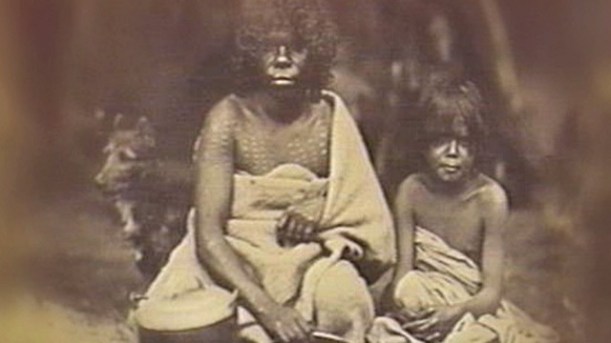
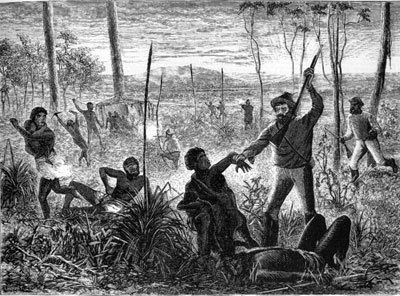
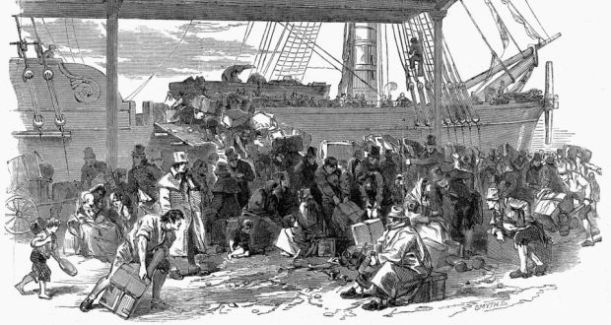

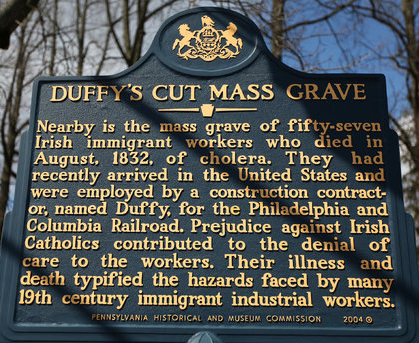

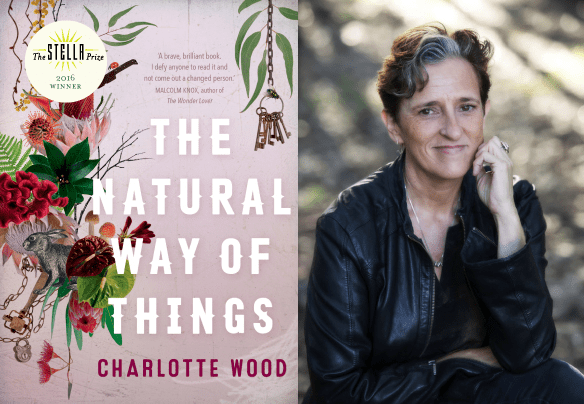
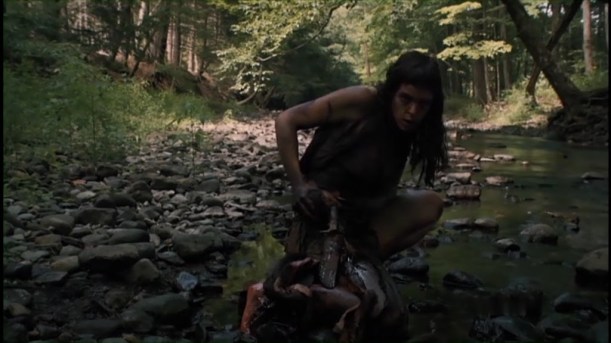


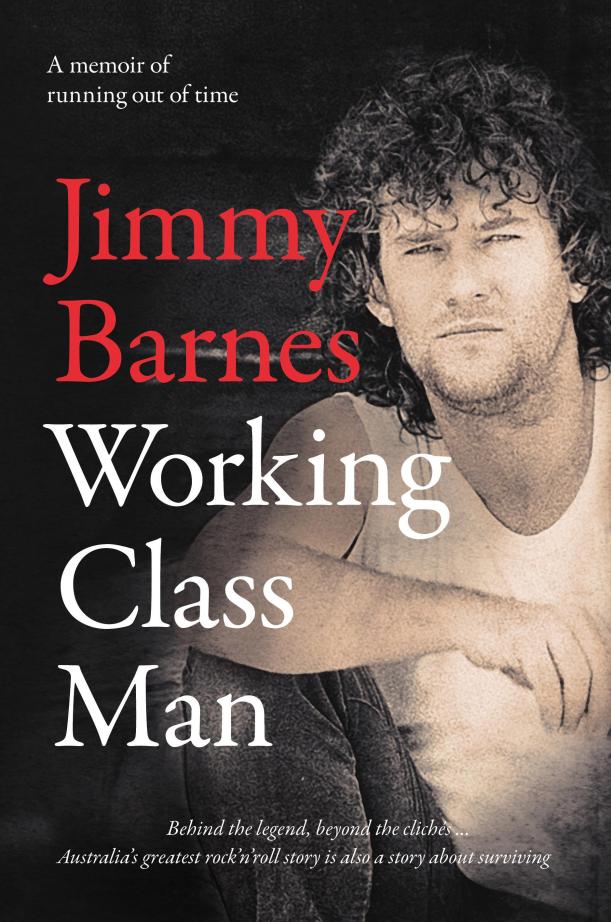

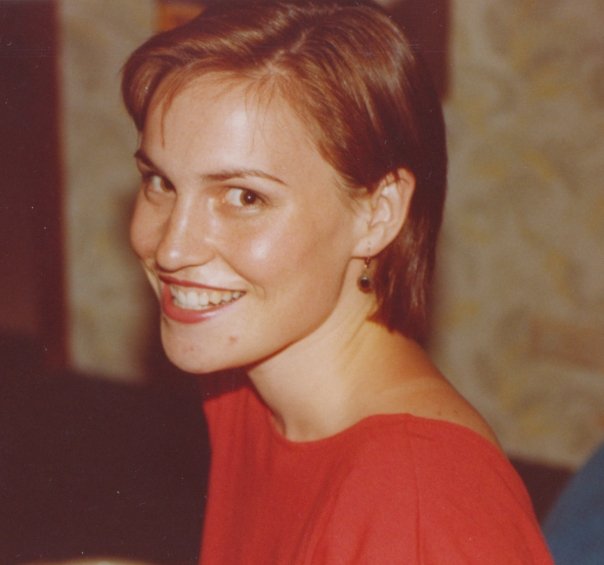



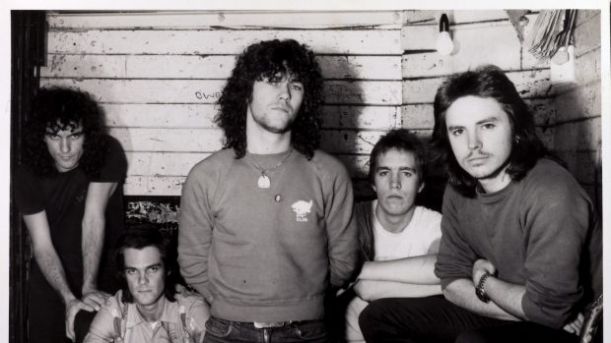


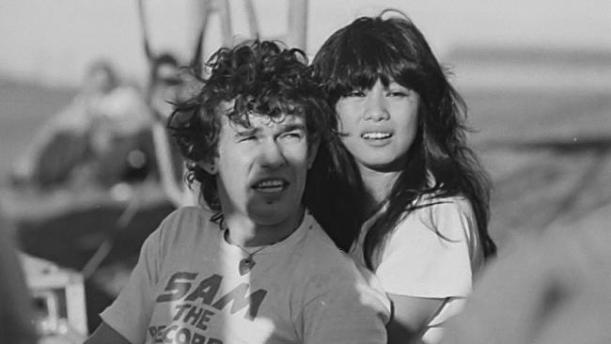





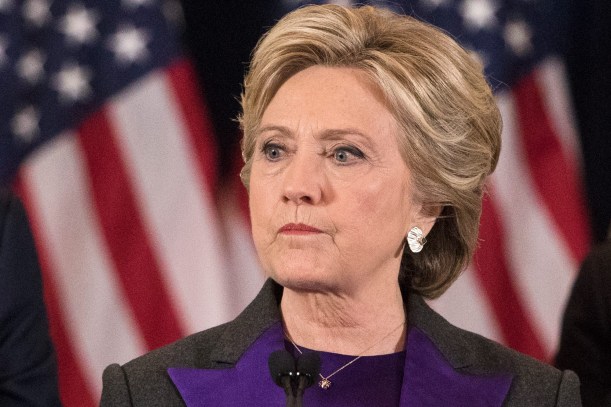


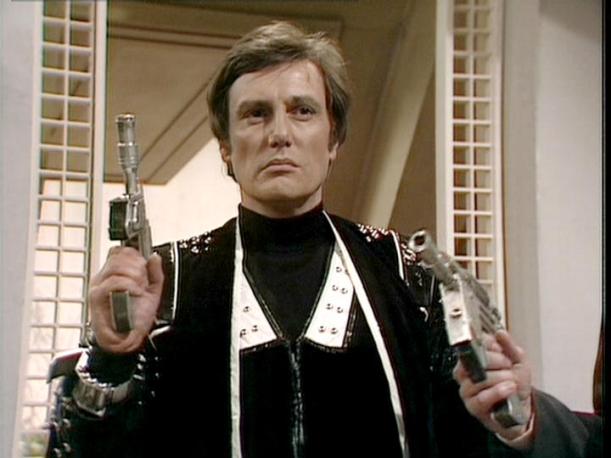
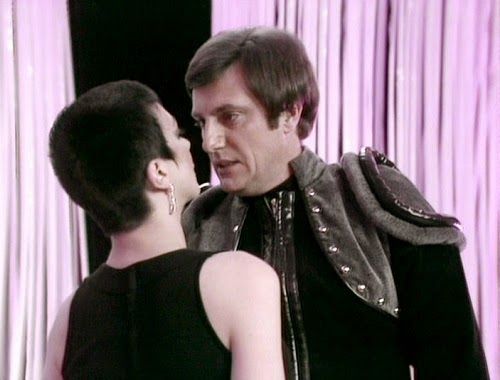


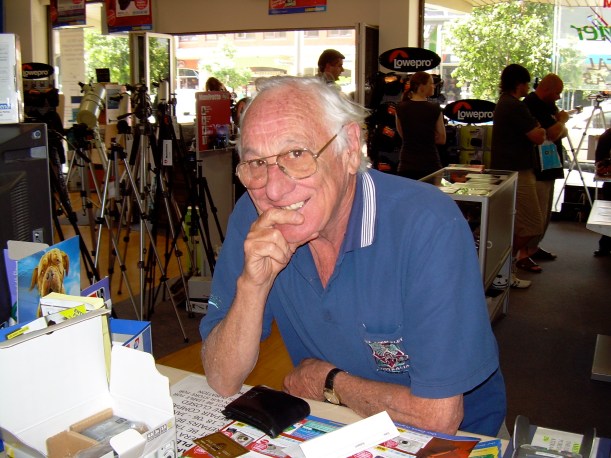 I have a strong sense of history. You see, my great-grandfather would now be 215 years old, my grandfather would be 175, and my father would be 125 and my mother 125. Even my sister would be 104. There is frightening evidence of longevity. All four of my grandparents had died long before I was born but because of this my parents told me a great deal about them and anecdotes of life in their time, including voyages by sailing ship from Great Britain, the goldrushes, Ned Kelly and the life of 12 kids on a 160 acre farm, floods, droughts, bushfires, horse-drawn vehicles and all.
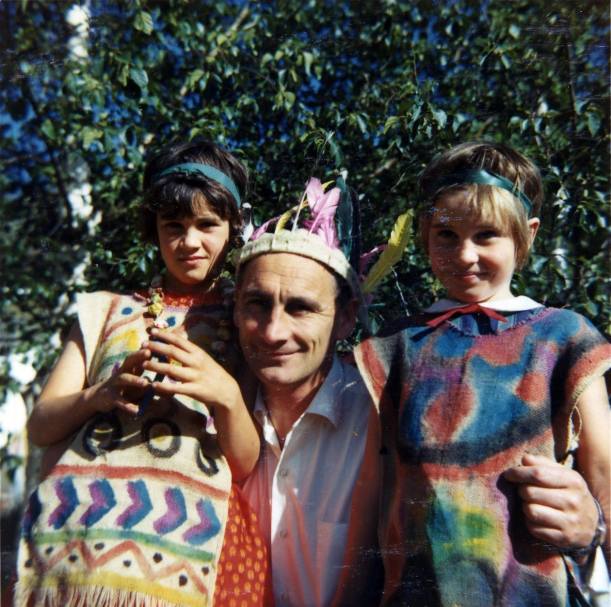
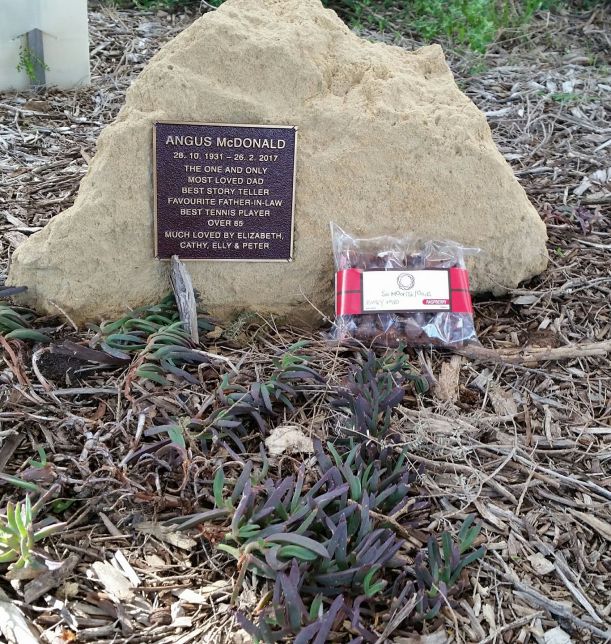



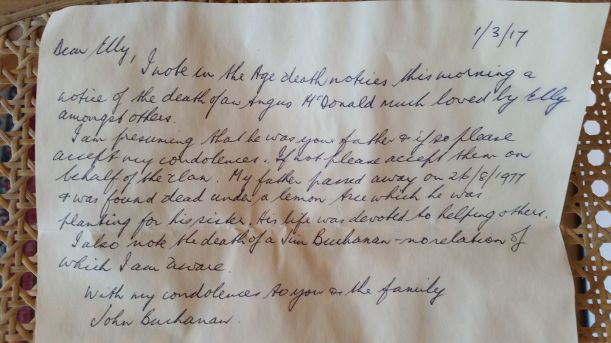
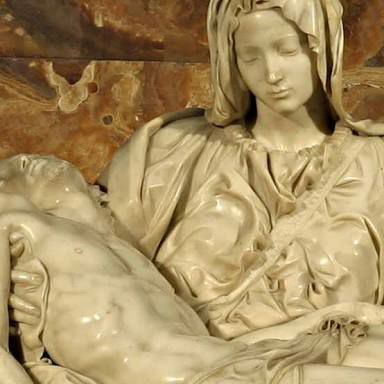
 I am 56 today and last night my sister gave me a birthday card from my Dad.
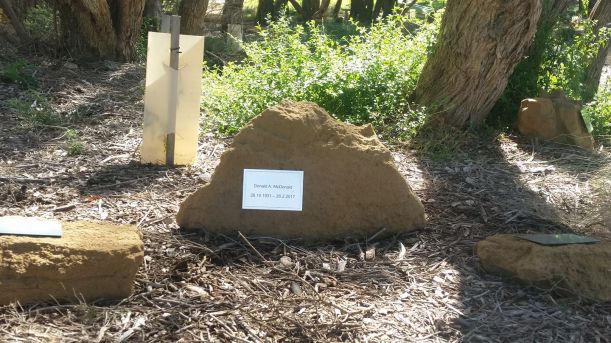


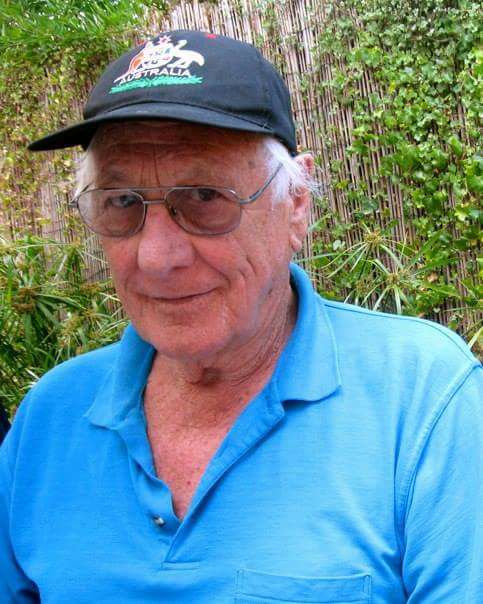




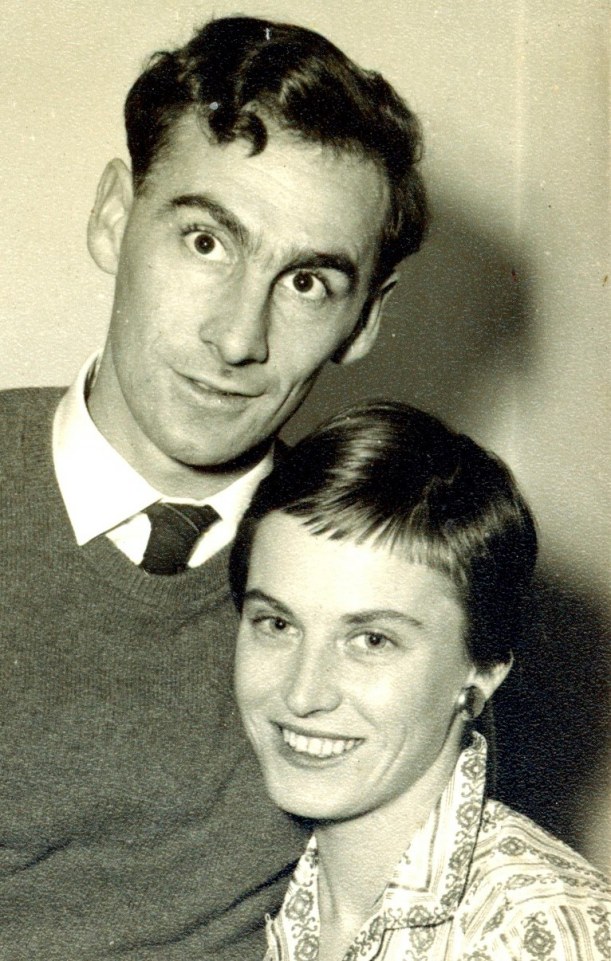



















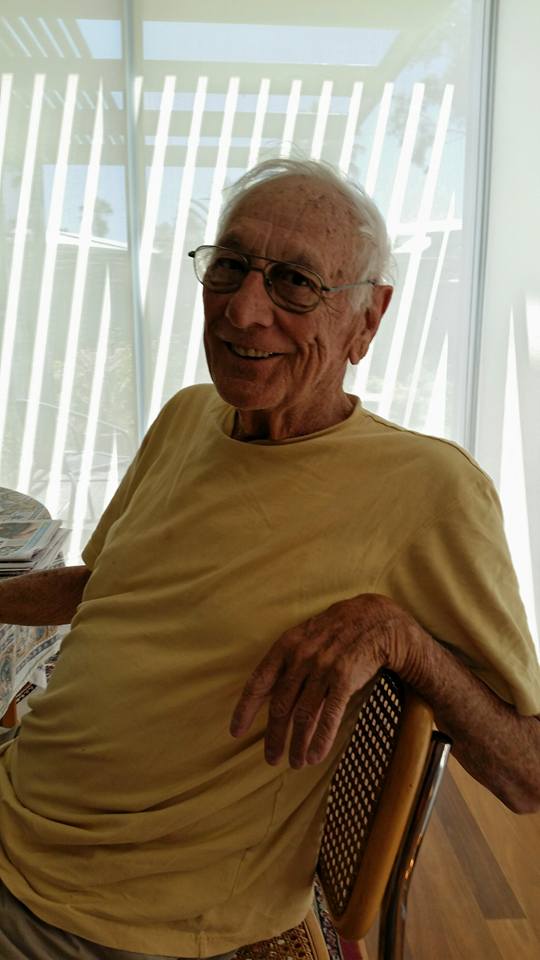
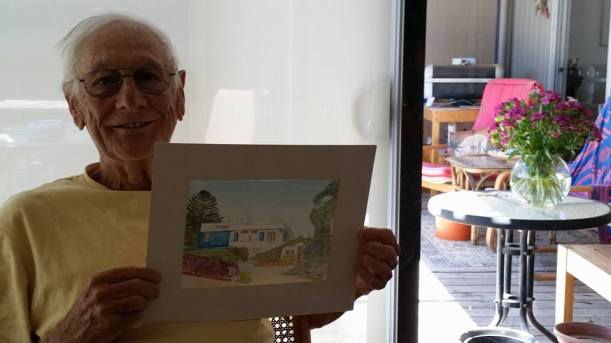


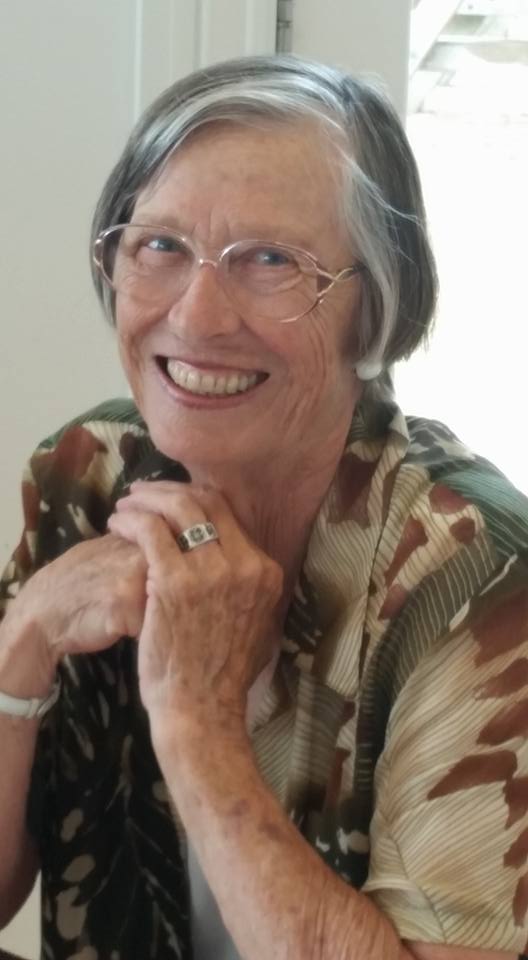



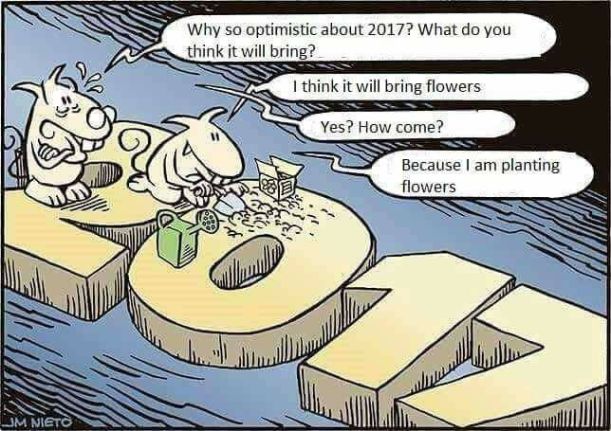





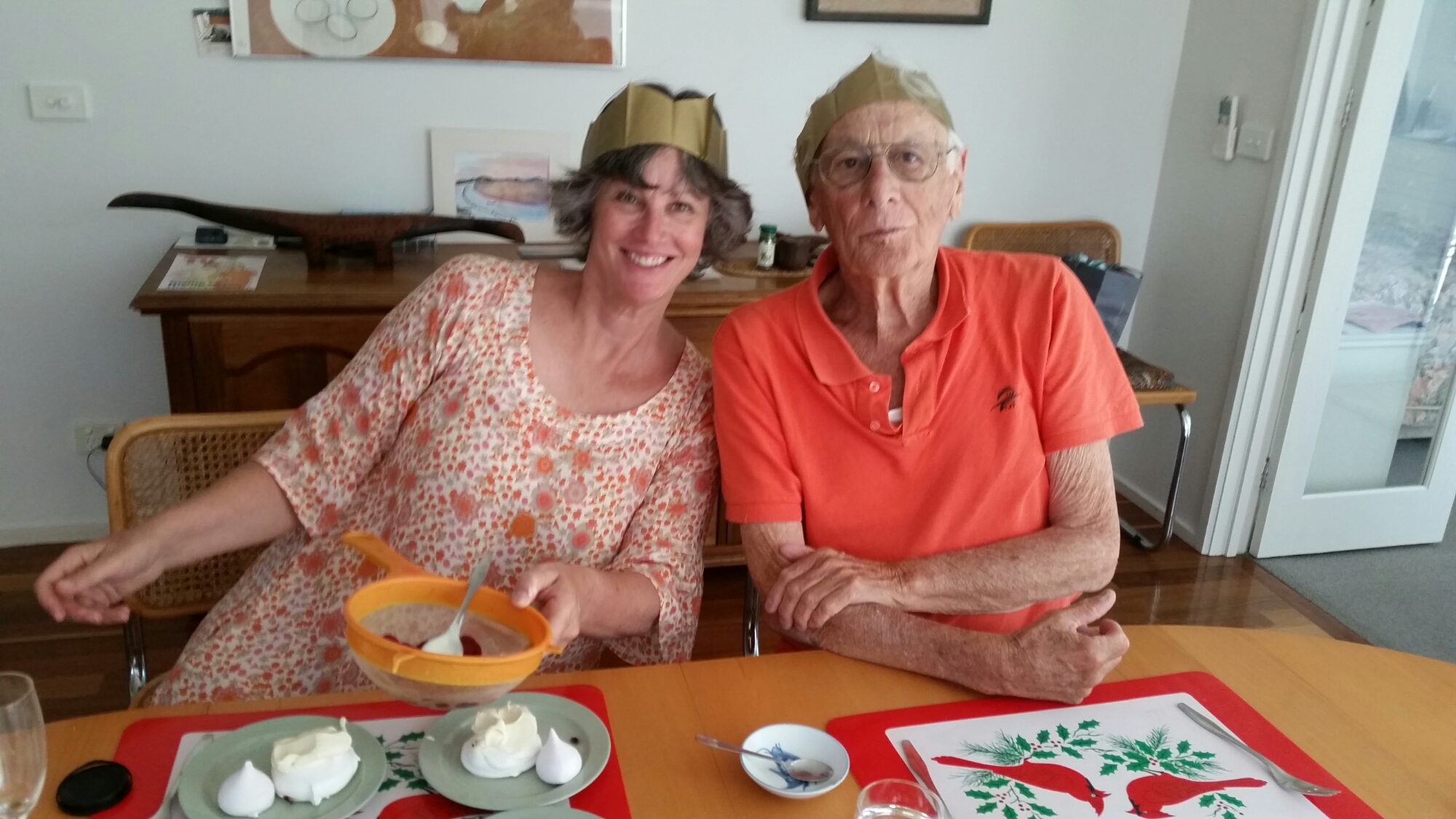
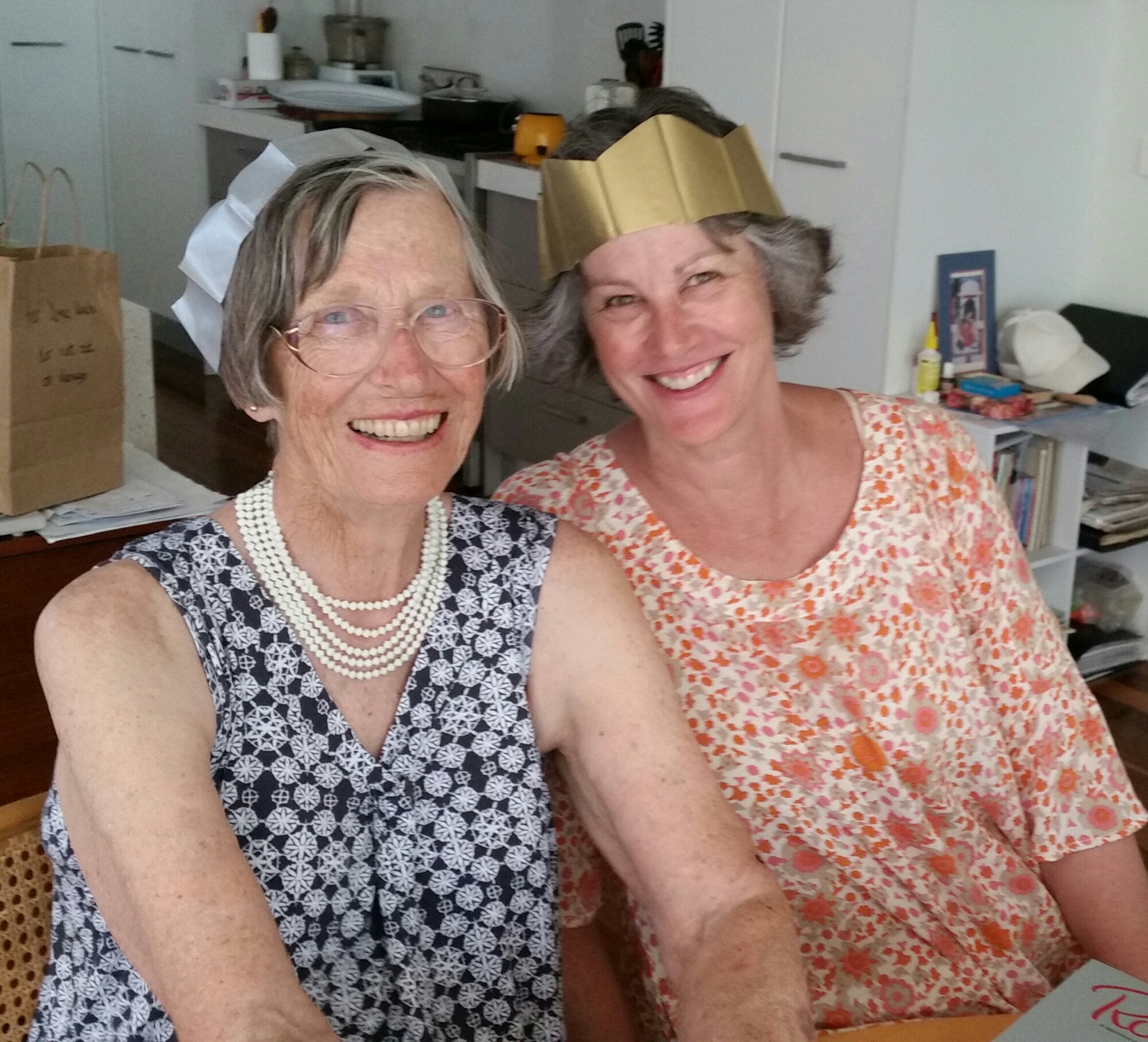
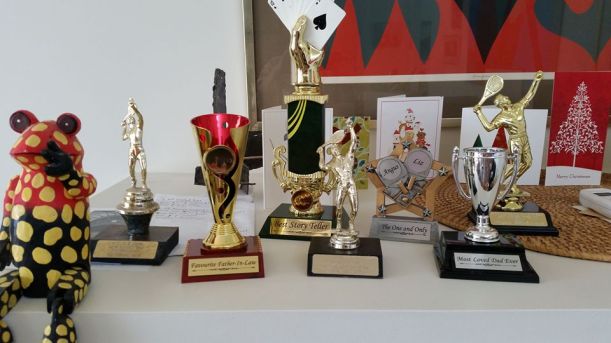
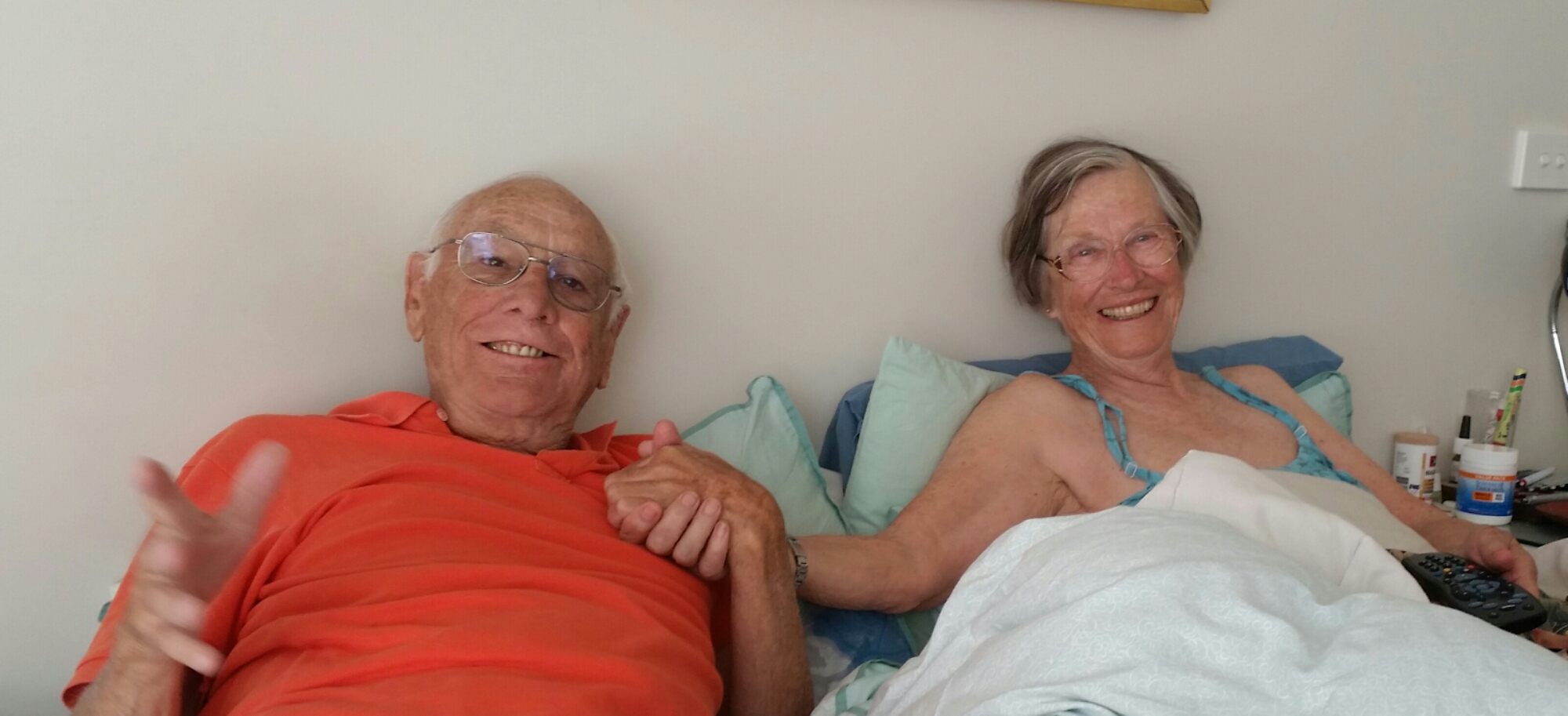


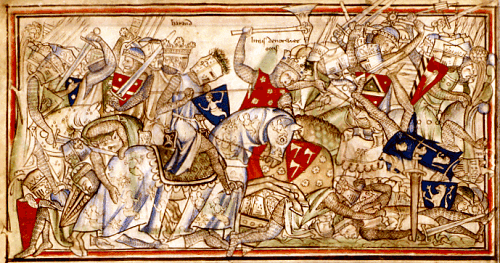




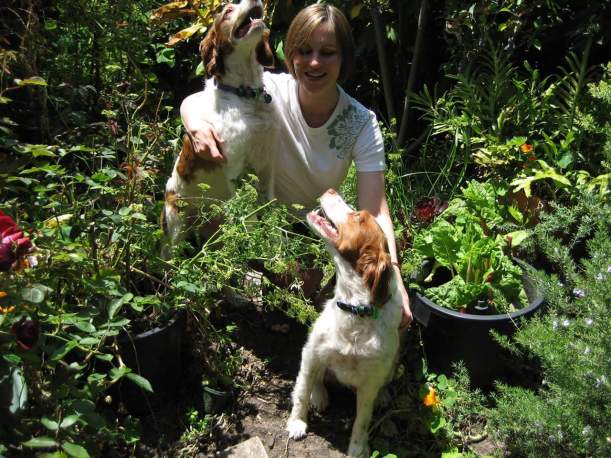




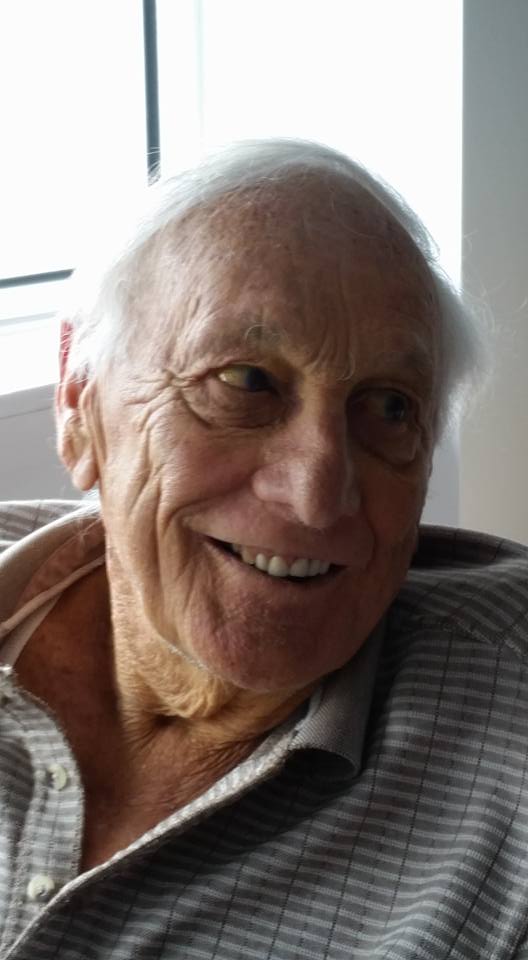
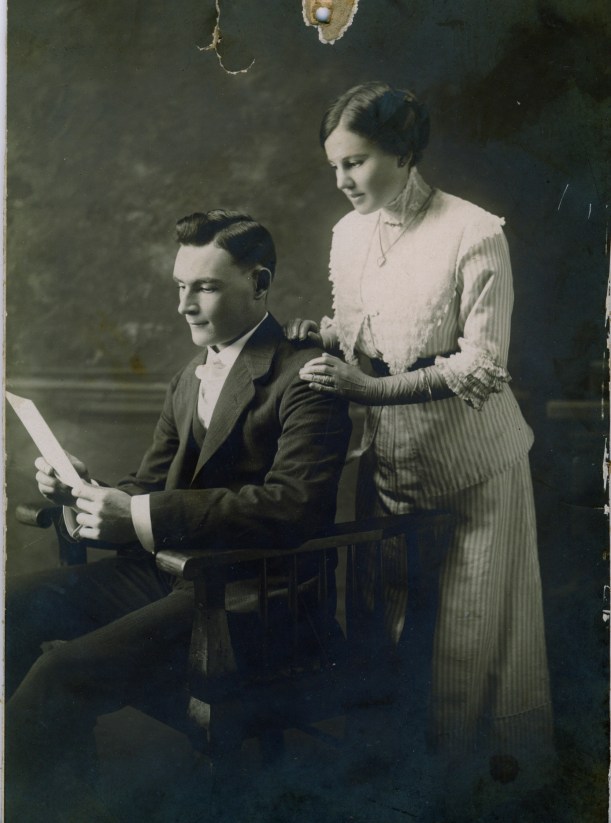


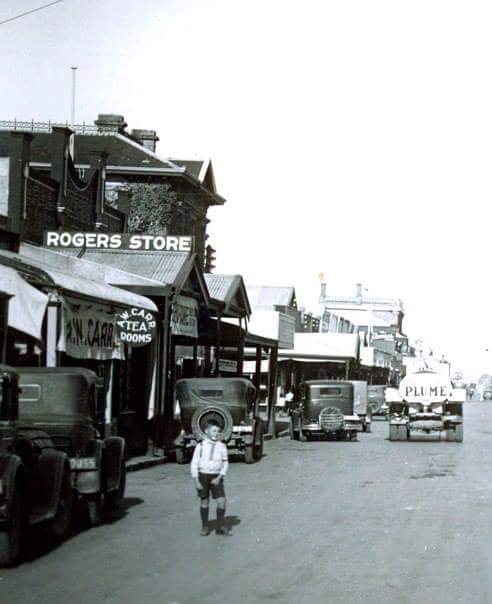
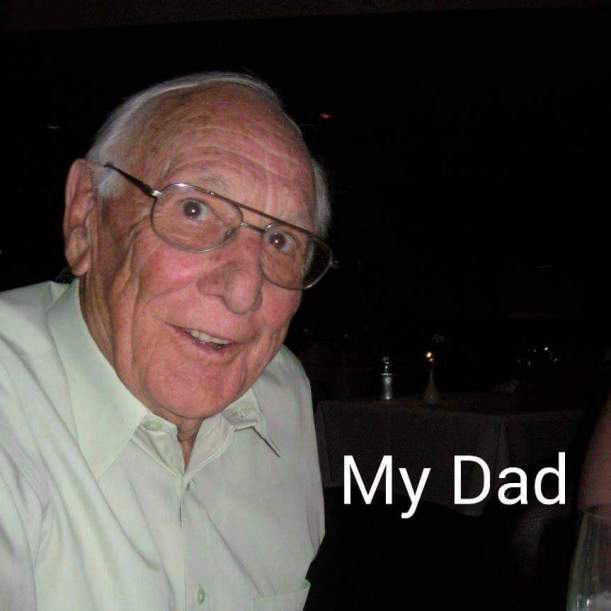

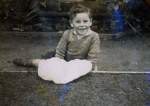


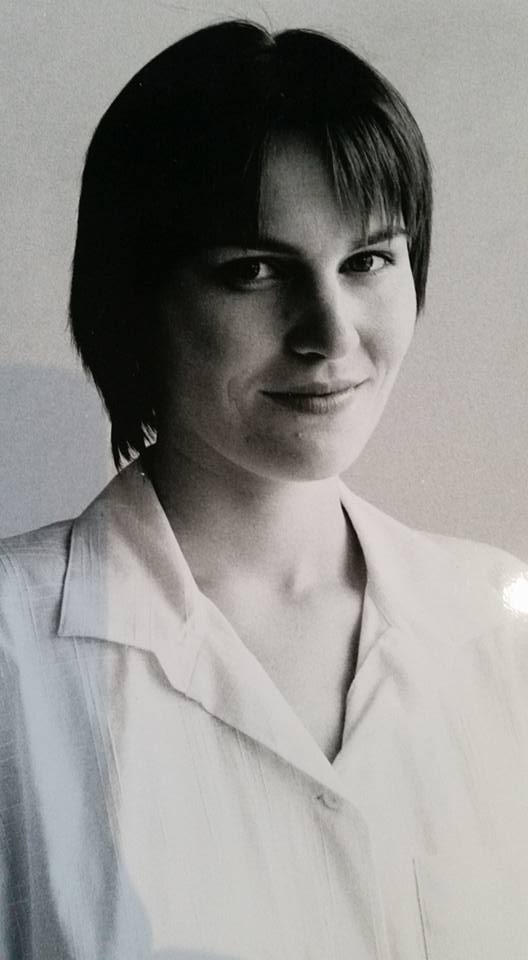
 Elly McDonald