Susan Atkins, Patricia Krenwinkel, Leslie Van Houten – Charles Manson’s “Girls”
Emma Cline’s The Girls is a serious novel, and seriously disturbing.
It’s a fictionalized reimagining of the Charles Manson “family” and the notorious murders perpetrated by Manson’s “girls” at 10050 Cielo Drive in Los Angeles in 1969.
Due to the salacious subject matter, and Emma Cline’s marketability, there was a bidding war for publishing rights in response to the book proposal. The project could have turned out grossly exploitative, but one of the attributes that makes Emma Cline marketable is her egregious talent: her novel is a stunning debut.
The Girls is a narrative told in the first person by Evie Boyd, within two timeframes: Evie aged about 61, and Evie aged 14, in 1969. Speaking as a 56 year old, I must immediately credit Cline with making an audacious choice, given the author was a mere 25 when The Girls was published. Her choice to inhabit the voice of a woman in her 60s is audacious but successful (though her mature Evie is outstandingly reflective – living through six decades doesn’t always result in this degree of insight).
Evie at 14 is painfully vivid. Cline is concerned with the vulnerabilities of adolescent girls: the ways the intense desire to belong, to be accepted within a friendship group or community, exposes them and makes them pliable, open to sexual exploitation and grooming. She’s concerned with formative adolescent sexual experiences and developing sexuality. She’s particularly concerned with the passionate feelings adolescent girls sometimes develop for each other and with older girls. Her Evie embodies all this.
Evie as a young girl is also a walking illustration of how we choose not to see, especially as adolescents, but also, for most of us, as we age. We choose not to recognize the obvious, if the obvious thwarts our illusions. We choose cognitive dissonance. We tell ourselves lies to make it all alright.
Evie is a privileged young girl from a wealthy, albeit troubled, background. She’s a socially isolated poor little rich girl. When she first sees “the girls”, gypsies, hippies, ‘free spirits’, she is immediately infatuated. When they take her to the hippy encampment on a ranch outside of San Francisco, she is seduced, literally and metaphorically, and wants nothing more than to join the girls as acolytes of Russell Hadrick, the cult leader Cline bases on Charles Manson.
Evie can see the hippy commune is dirty, disordered, dysfunctional, the small children underfoot feral and neglected, the adults semi-starved, drug addled inadequates. She can see they survive on petty criminality. But Evie is enamoured by the girls, most particularly Russell’s number one girl, Suzanne (who might be partly based on Manson disciple Susan Atkins), and all that is ugly is wreathed in the glamour of her feelings for Suzanne and her desire to be seen, accepted, and loved.
Susan Atkins
Evie gives herself sexually. She robs her mother. She joins in burglary forays, invading the homes of her own neighbours. She lies, cheats and steals for Suzanne, the girls and Russell. The question looms: would she kill?
To this point, the story could be a gothic allegory for more usual adolescent rites of passage – the crushes, the fervent group identifications, the sleazy manipulations of young girls by older men. But this story is based on the murders instigated by Charles Manson, so inevitably the narrative must engage with the much more extreme issues around killing fellow human beings.
If Cline simply retold the Manson story, fictionalizing names, attributing motivations and feelings, I think this project would be inexcusable. But she doesn’t do that. Instead, while allowing the narrative enough closeness to the Manson killings to acknowledge the real life scaffolding, she deliberately distances the story, geographically and in other ways, both to ensure the reader is pointed to the themes she most wishes to explore and, I believe, out of respect for Manson’s real life victims.
It would be unthinkable to recount in forensic terms precisely the ways the real life victims were slaughtered. That is not an entertainment. So instead of Sharon Tate, Abigail Folger, Jay Sebring, Wojciech Frykowski and Steve Parent, the victims in The Girls are named as Linda, Christopher, Gwen, and Scotty, and the ways they meet their deaths are comparable to, but not identical to, the ways Sharon, Abigail, Jay, Wojciech and Steven were killed. The killers are not named as Tex Watson, Susan Atkins, Patricia Krenwinkel and Linda Kasabian; Leslie Van Houten and Bobby Beausoleil are not named. Instead, the characters are Susan, Donna, Helen, Guy and Roos.
The LaBianca murders, perpetrated by Manson, Tex Watson and Manson’s girls the following night, are not mentioned. The Gary Hinman murder is only alluded to, without using names. The murders of James Willett and Don ‘Shorty’ Shea and the attempted assassination of President Gerald Ford are outside the scope of Evie’s story.
The fictional Evie Boyd owes her material comforts to the fortune built by her grandmother, a movie star. Emma Cline is the grand-daughter of the man who invented the Jacuzzi. There was at least one pubescent girl with movie star connections embroiled in the Manson cult [I have amended this blog’s original wording, which specified an individual, almost certainly confusing that individual with a different child of Hollywood, for which I sincerely apologise]. Emma Cline was a pubescent actress whose experiences in Los Angeles as a teen on the fringes of the entertainment world and later attempting to transition to a young adult actress were so demeaning she tossed it in and instead undertook a Masters of Fine Arts (Writing) at Columbia University in New York.
At Columbia, Emma Cline as a writing talent is remembered by one faculty member as “head and shoulders above everyone else”, which is born out by The Girls. She quickly progressed to writing for Salon, O Magazine and The New Yorker, with fiction in The New Yorker, Granta, Tin House and Paris Review, before she was signed to a three-book fiction deal by Random House, for a rumoured $2 million.
The Girls, published in 2016, was shortlisted for the John Leonard Award from the National Book Critics Circle and the Center for Fiction’s First Novel Prize. The following year Cline was named one of Granta’s Best Young American Novelists.
Her short stories to date tend to engage with similar themes to those explored in The Girls – how young girls navigate that potentially dangerous passage to adult sexuality. Emma Cline is on record saying she constantly wonders how she survived her teen years without crippling damage. The Girls asks, did Evie?
Subtitle: On Playboy Bunnies, Princesses, Trainwrecks & Other Manmade Women
Other editions subtitle: On Playboy Bunnies, Stepford Wives, Trainwrecks & Other Mixed Messages
Other editions subtitle: and Other Vexing Stories That Tell Women Who They Are
Carina Chocono was losing her mind as a movie critic:
“I found myself spending hours in the dark, consuming toxic doses of superhero movies, wedding-themed romance comedies, cryptofascist paeans to war, and bromances about unattractive, immature young men and the gorgeous women desperate to marry them. Hardly any movies had female protagonists. Most actresses were cast to play ‘the girl’.”
Chocono credits film actor Isla Fisher with slapping her awake. Asked whether her break-out success in The Wedding Crashers opened opportunities for her, Fisher had reportedly replied, “All the scripts are for men and you play ‘the girl’ in the hot rod.”
As Chocono noted, “Women’s experience in its entirety seemed contained in that remark, not to mention several of the stages of feminist grief: the shock of waking up to the fact that the world does not also belong to you; the shame at having been so naïve as to have thought it did; the indignation, depression, and despair that follow this realization; and, finally, the marshaling of the handy coping mechanisms, compartmentalization, pragmatism, and diminished expectations.”
Before diminishing into being a “movie” critic, Chocono had thought of herself as a “film” critic (her distinction): “I wrote about what interested me and reacted to whatever seemed to be worth reacting to in the moment.” She used film as the springboard to freeform meditations on issues that resonated – as Renata Adler wrote, writing “about an event, about anything”, “putting films idiosyncratically alongside things [writers] cared about in other ways”.
You Play The Girl is a collection of essays Carina Chocono has written utilising Adler’s approach: responses to film as “a way into larger cultural conversations”.
It’s also – which cannot surprise anyone who’s read my previous blogs exploring approaches to writing memoir – a memoir, of sorts.
Finely etched as a filigree narrative spanning these essays is the story of how Carina Chocono figured out how to save her marriage (Chapter 2 Can This Marriage Be Saved?), be a good mother, be a good writer, and find her way back onto the heroine’s path:
“The heroine’s journey starts with the realization that she is trapped inside the illusion of a perfect world where she has no power. She employs coping strategies at first, or tries to deny reality, but eventually she is betrayed, or loses everything, and can no longer lie to herself. She wakes up. She gathers her courage. She finds her willingness to go it alone. She faces her own symbolic death. […] The heroine’s journey is circular. It moves forward in spirals and burrows inward, to understanding. […] The path is treacherous. The territory is hostile. But the heroine is brave. She knows what she wants. She’s determined to get it. Isn’t that how all good stories start?”
Yes but. As Herr Freud asked, “What do women want?”
For Chocono, it’s autonomy, agency, and authority. Also, equity and self-expression. To love and to be loved.
This book is dedicated to the author’s primary school aged daughter, from “For Kira” on the dedication page to the penultimate thank you in the Acknowledgements: “And to my amazing daughter, Kira, for being ever curious, always insisting on presenting her evidence, and never holding her tongue.”
The ultimate acknowledgement goes to one of Chocono’s heroines: “And to Hillary Clinton, for inspiring us both.”
The memoir elements tracing Chocono’s marriage are subtle, and tender, but Chocono repeatedly refers back to cultural texts that provide explicit metaphors: Lewis Carroll’s mad worlds, Alice’s Adventures In Wonderland and Through the Looking Glass; the folk tales and fairy tales of Hans Christian Anderson, the Brothers Grimm and Charles Perrault; and the ways those folkloric tales have been reconfigured by Disney, Pixar and Hollywood more generally.
For me, Chocono is at her best deconstructing the Princess in popular culture, as she does in the chapter ‘All The Bad Guys Are Girls’. Her princesses range widely: encompassing Snow White, Cinderella, Sleeping Beauty/Aurora, Elsa and Anna, and Maleficent; but also Edith Wharton’s Lily Bart, Katharine Hepburn as Tracy Lord, and Betty Draper from Mad Men. She re-presents the Jennifer Beals character in Flashdance and the Julia Roberts character in Pretty Woman as “princesses’, based on their exceptionalism. (She savages both films, hilariously.)
She asks her daughter ‘What is a princess, anyway?’
Kira replies, “It’s a very fancy woman who gets her own way.”
What most horrifies Chocono though is what happens after the ‘happy ever after’. As she points out (and as I discuss in previous blogs), a medieval princess knew she was simply a transmitter of bloodlines and a vehicle for political alliances: her role was to get up the aisle with as little fuss as possible, pop out some heirs, and remain ‘invisible’ as an individual, whether alive or dead. Even in more recent times, for girls born into elites within stratified societies (as Chocono’s great-grandmother was, in Peru), ”A woman’s education was designed to coax her to sleep at sixteen and keep her unchanged and unconscious forever. It was an undoing. It wasn’t a start but a ‘finishing’.”
Elsewhere, in her synopsis of the film Maleficent, Chicano describes the narrative building from when “King Stefan’s men try to kill Maleficent, and Aurora tries to help her and discovers [Maleficent’s hacked off] wings in a glass case, because everybody is putting girls and their parts in glass cases all the time in these stories…”
These prince “heroes” in Frozen and Maleficent are sociopaths who mutilate and usurp women with extraordinary gifts. They’re Buffalo Bill in The Silence of The Lambs appropriating women’s skin. They’re monsters.
Yet in popular culture, just as often, what women see reflected back is the princess as monster. To quote David Bowie, ‘I looked around / and the monster was me’.
There’s a chapter called ‘Bunnies’ that I thought might be about the Bunny Boilers, but it is in fact about lads’ mags and the Playboy magazine ideal. Bunny Boilers surface instead in the chapter titled ‘The Eternal Allure of the Basket Case’. The Basket Case makes reference to Virginia Woolf (who Chocono cites frequently), and to artists’ muses, including Courtney Love, with a glancing mention of Zelda Fitzgerald but in-depth focus on Isabelle Adjani’s most famous studies in madness, in the films The Story of Adele H and Camille Claudel. Sylvia Plath pops up. Girl, Interrupted and Fatal Attraction are the Hollywood texts, along with an HBO show I haven’t seen, Enlightened, where Laura Dern loses her mind then loses her job. Or, arguably, the other way round.
Reading Chocono’s analysis of Adele H, I was reminded of when I first read reviews of this film, when it was released, in 1975, when I was 14. Director Francois Truffaut based his film on a real life story. Adele was the daughter of French literary titan Victor Hugo, writer of the novel Les Miserables. A young English army lieutenant had proposed to Adele, but she turned him down. Later, she regretted doing so, and, uninvited, followed his regiment to Canada, where she stalked him for years, then followed his regiment to Barbados, where eventually one day he confronted her, only for it to be apparent she did not recognise him.
Adele is a princess, daughter of the greatest French literary hero of the nineteenth-century. She is a Romantic: Chocono quotes philosopher Isaiah Berlin’s definition of Romanticism as “the unappeasable yearning for unattainable goals”. She quotes from Sandra Gilbert and Susan Gubar’s book The Madwoman In The Attic, a study of “madness as feminist protest, subversion, and resistance. The madwoman, they say, serves as ‘the author’s double, and image of her own anxiety and rage’ towards a culture that oppresses her.”
Is Adele’s madness also her own misplaced sense of entitlement? Is she being a “princess”, a “very fancy woman” who thinks she can get her own way by ‘virtue’ of her privilege and passion? Is she on the “heroine’s journey”?
Virtue, as Mae West almost said but didn’t, has nothing to do with it.
Reading again about Adele H reminded me of two vintage Hollywood films that made an impact on me when I was 12, both about mad and bad bunny boilers who selfishly insisted on loving men who did not want to be loved (by them). I was so distressed by these two films that I wrote about them at length in my then-diary. I have long since burnt those diaries. But I think I remember what I had to say.
The first film was Forever Amber (1947), starring Cornel Wilde, the Texan actress Linda Darnell, and George Sanders as King Charles II. Amber is a luscious 16 year old country girl when Wilde, playing randy cavalier (a tautology?) Lord Bruce Carlton, age 29 when our story starts, rapes her as he’s en route to London. Except it isn’t really rape because obviously she was too luscious to remain virgin and was gagging for it anyway, and because she falls Wilde-ly in love with Bruce and hitches a ride with him to the metropolis. Amber remains ardently in love with Bruce Carlton even as she sleeps her way to being the king’s mistress. She nurses Bruce when he collapses with plague. She lances his pustules. She lends him money and advocates on his behalf. In return, he scorns her as a fallen woman, derides her as shallow and selfish, and eventually, once he marries a demure young heiress, he takes the child Amber bore to him away to the colony of Virginia, away from the child’s whore mother, away from the contaminated royal court.
I felt that was unfair. Amber didn’t get to experience much love. She loved her son. Bruce was, reductively, a prick. She did not deserve his bad treatment of her.
It did not occur to me at age 12 that Amber might be capable of recognising all this herself and washing her hands of the bastard.
The second film was Leave Her to Heaven (1945), starring Gene Tierney and, again, Cornel Wilde, this time playing a writer who meets a beautiful woman, Ellen, on a train en route to her father’s funeral: the beautiful woman is especially emotionally vulnerable. Or out and out psycho. After their whirlwind marriage her obsessive jealousy and, yes, selfishness emerge. The writer has a disabled younger brother who comes to live with them. Bunny Boiler Ellen can’t bear to share her husband’s love so she watches, cold-bloodedly, as the boy drowns in a boating incident. Then her husband the writer finds solace in his friendship with her half-sister. He even dedicates his new novel to the sister, as “The gal with the hoe”. (She gardens.) Or was that dedication to “The gal with the hole”? Or “the gal with the ho’”?
Whatever. The Bunny Boiler had my sympathies.
Ellen flings her pregnant self down the stairs, cruelly murdering the writer’s innocent unborn son. When he walks out on her, she kills herself, setting up her sister and her husband for a murder charge. Knowing what we know about partner violence, it would be more credible if the writer had killed the Bunny Boiler, as Michael Douglas eventually kills Alex Forrest in Fatal Attraction (but she was asking for it). The screen-writer does kill Gene Tierney’s character. But only after he first assassinates it.
To me, this, too, did not seem fair. Granted, Ellen was intense. She failed to sufficiently empathise with her husband’s needs. But all she asked was to be loved.
Gene Tierney’s problem was that she was a princess. She was a very fancy, over-entitled daddy’s girl who thought the world – or if not the whole world, her husband, at least – should love her unconditionally.
The Gene Tierney character is the Wicked Witch. She failed to play ‘the Girl’ the way ‘the Girl’ should be played – in the passenger seat.
To return to Isla Fisher: “All the scripts are for men and you play ‘the girl’ in the hot rod”:
“Women’s experience in its entirety seemed contained in that remark, not to mention several of the stages of feminist grief: the shock of waking up to the fact that the world does not also belong to you; the shame at having been so naïve as to have thought it did; the indignation, depression, and despair that follow this realization; and, finally, the marshaling of the handy coping mechanisms, compartmentalization, pragmatism, and diminished expectations.”
Or, the alternative coping mechanisms of madness and murder.
“’The girl’ doesn’t act, though – she behaves. She has no cause, but a plight. She doesn’t want anything, she is wanted.” For every princess who transforms into a witch, goes murderously crazy, there’s another – many others – being gaslighted: manipulated into believing, as Carina Chocono did, that she is losing her mind.
From Alice In Wonderland:
“But I don’t want to go among mad people,” Alice remarked.
“Oh, you can’t help that,” said the Cat: “we’re all mad here. I’m mad. You’re mad.”
“How do you know I’m mad?” said Alice.
“You must be,” said the Cat, “or you wouldn’t have come here.”
Quincy, Lisa and Samantha are each sole survivors of mass murders. But they live with threat.
When Lisa dies in suspicious circumstances, who should Quincy fear? Coop, the protective cop with Daniel Craig eyes? Jeff, the Ryan Reynolds look-alike Public Defender boyfriend? Samantha, her Riot Grrrl alter ego, tattooed SURVIVOR? Jonah, the tabloid scumbag? Her own mother, who taught her to be “Fine”?
Could He (who cannot be named) rise from the dead?
Or is that pesky dissociative amnesia concealing something Quincy’s survival depends on?
It’s 10.30pm. I’m working tomorrow. But I’m hooked.
So began my relationship with Riley Sager’s Final Girls – undoubtedly soon to be a movie near you, not to be confused with a 2015 teenflick of the same title.
This was a thriller I read through the night, constantly mapping it against its pop culture references, the movies, the books, the actors who might be cast, constantly guessing and second-guessing the whodunnit.
I knew guessing whodunnit was a pointless exercise. The author is such a fan of this genre that I knew s/he’d strew red herrings liberally and would make sure the ending twists back on itself like an angry rattler. (For the record: I’ve since discovered Riley Sager is a man.)
Partway through:
The movies it’s reminding me of most right now, other than Fight Club, are I Know What You Did Last Summer, The Blair Witch Project, and the Sharon Stone pic Sliver, where the script intended the Perfect Boyfriend (Billy Baldwin) to be the killer and Tom Berenger as the brooding cop with icy blue eyes to be the Male Savior. But preview audiences didn’t like that, so the ending was re-shot, making a nonsense of any nuanced characterisation the actors might have attempted.
Icy blue eyes ex-marine = sociopath ordinarily. But hey. Anything can happen.
In fact those icy blue eyes might be more Gary Cooper than Daniel Craig and Tom Berenger. The cop’s name is Franklin Cooper, known as Coop or Frank – Gary Cooper’s real name was Frank Cooper, and he was known to his friends as Coop.
Then I got precious:
Might be a touch of Donna Tartt (quince) in here too. The Secret History. The girl in the sacrificial virgin’s white dress that turns red with blood. Quincy and Sam are definitely maenads.
Btw Quincy is an Instagram blogging baker. She makes tartts (sic). And sweet muffins. Just desserts.
The Hitchcock Vertigo references kicked in.
Next day, I couldn’t let it rest:
I’ve been turning this one over in my head this morning. The author really loves genre. This is surprisingly smart plotting and structure and is ultimately a fan homage to the “final girl” trope. It’s also genuinely terrifying in some sequences.
Yup. It is.
UPDATE 26 November 2017: Since posting this blog I have learned that two of the most striking moments in Final Girls are not products of Riley Sager’s imagination but are instead lifted from reports of the murders at 10050 Cielo Drive in Los Angeles in 1969, perpetrated by members of the Manson Family. It’s all fun and games until it’s real.
I’ve just read Paula Hawkins’ Into the Water, and IMO it’s a better and more interesting novel than her bestseller The Girl On The Train.
It doesn’t have the more egregious flaws of GoTT – the drawn-out over-repetition, the ludicrous gothic ending, the central character we wanted to strangle. In all, much more disciplined: more pointed, less hysterical, more affecting. The ending is particularly finely judged.
The point is not really the whodunnit, which I won’t comment on. The point is how we construct and contextualise memories, the lies we tell ourselves and the delusions we accede to.
Hawkins prefaces her tale with two quotes, one from Hallucinations, by neurologist Oliver Sacks:
“We now know that memories are not fixed or frozen, like Proust’s jars of preserves in a larder, but are transformed, disassembled, reassembled, and recategorised with every act of recollection.”
Jules has been estranged from her sister Nel for decades, despite Nel’s frequent phone messages, to which she will not respond. Jules remembers Nel as callous – even cruel – as an adolescent big sister. She has Nel written off as a narcissistic self-dramatist. Then Nel dies in circumstances that might seem to justify that verdict. Jules returns to the village where the two spent teen summers, the village where Nel died, to care for Nel’s 15 year old mini-Nel, whose name is the near anagram Lena. But Lena is hostile, and her mother’s death is her second recent loss: not so long before, her BFF died the same way Nel apparently died.
The same way another local woman died 30 years earlier.
There are those who believe they know the truth of what happened in each case, and those who know versions of what happened but cannot quite trust their knowing. There are those who seek a ‘justice’ that validates their version of events. There are those solely interested in self-justification. There are characters who effectively live in parallel universes, their versions of ‘reality’ in contradiction to the universes inhabited by others in their orbit.
Paula Hawkins explores what might happen when contradictory realities, constructed memories, are contested. She’s interested in interpersonal conflict, the shock effects in the wake of tragedy. She’s particularly concerned, as she was in The Girl On The Train, with how misogyny impacts women. There are several plot strands that play out ways men exert power to the detriment of women. Not all of these are presented in the most obvious terms. There are subtleties that are disquieting.
Don’t get too hung up on who did the killings. It’s really not the pay-off with this novel. The pay-off is the deep sigh when the question “Why?” is answered.
Ivor Indyk at Giramondo Publishing was one of my lecturers at Sydney Uni 30 years ago, and I see he helped birth Ali Alizadeh’s novel The Last Days of Jeanne D’Arc, which I read last night.
Declaration: When I read Thomas Keneally’s Joan of Arc novel Blood Red, Sister Rose at age 14 in 1975 it made an indelible impression on me. It was always, perhaps, an uphill task for Alizadeh’s novel to surmount that.
It’s not that the Alizadeh novel isn’t interesting. It’s simply that for me it’s not compelling. And partly it’s not compelling, for me, because of how he’s chosen to expound his narrative, in ways that might be described as unconventional, might be described as experimental, might be described (my description) as pompous.
Alizadeh has chosen to write mostly in very short sentences. Sentences grammatically incomplete. Missing subject pronoun or verb. Repetitive. Yeah, he’s a poet. He wrote his PhD on Jeanne D’Arc in verse. Very clever. Not compelling.
The authorial voice switches between what I think of as Pompous Academic; first person; second person; and Voices. The first person and second person pronouns interchange across much of the novel’s central sequences. Sometimes together within the same paragraph. Sometimes they are linked immediately together, hand in hand. I’ll take that as a metaphor for the lesbian relationship which forms one plot strand. The Voices are Jeanne’s saints, or angels, and they speak in free-form verse, italicized.
Confession: I skipped quite a bit of the italicized sacred voices. I also skipped a lot of the lesbian relationship, but I did go back and read those sections afterwards. I skipped the lesbian relationship not because I have any aversion to lesbian relationships – contemporary, historical, speculative or fictional – but because I was interested (not compelled) by Alizadeh’s recounting of the historical narrative, and initially I chose to follow that more closely. I’ll come back to that lesbian relationship.
Joan of Arc as imagined by John Everett Millais
Let’s address the historical record, and that Pompous Academic voice.
In her review for Readings Online, Freya Howarth states “Alizadeh’s authorial interjections in the midst of battle scenes (about what future films will get wrong or debates historians will have) are jarring, in a good way; they remind the reader that what we know of Jeanne D’Arc is an amalgamation of stories told and retold over centuries”.
We are indeed frequently reminded that Jeanne D’Arc – that history – is an amalgamation of stories told and retold over centuries. And those reminders, that frequency, does jar. I agree with Howarth that this is intentional, intended to provoke readers to re-examine their assumptions, their received wisdoms.
Is Henry V of England a hero, as late medieval English people saw him, the very model of a king and warrior? Here’s how Alizadeh introduces Henry:
“Twenty-seven years old, a grotesquely scarred face. An extremely devout Christian, not at all the fun-loving, riotous youth of Shakespeare’s future play [Henry IV Part 1]. Severe and frankly soulless. Muscular. Possibly a psychopath. Probably a war criminal.”
And later:
“The Treaty of Troyes between the king of England, the Duke of Burgundy and the terrified, bullied queen of France. French Princess Catherine given to the English king. It is agreed that their child will be the joint ruler of the kingdoms of England and France. Celebrations in London. Shame in Paris. King Henry burps, rubs his hands after an ale, then fucks the beautiful Catherine without interest. Without any of the courtship of Shakespeare’s Henry V.”
How to respond to these passages?
Let’s compare them to Peter Ackroyd’s account in The History of England, Vol I: Foundations:
“There can be no doubt that Henry V was driven by a sense of divine right as well as of duty. He abandoned his youthful pursuits and almost overnight, according to chroniclers, became a grave and serious king. He acquired a reputation for piety and for the solemn observance of ceremonies; until his marriage, seven years later, he remained chaste. He established several monastic foundations of an ascetic nature, where the daily exhalation of prayer was meant to support the Lancastrian dynasty. His devotion also had an aesthetic cast. The annalist, John Stowe, recorded that ‘he delighted in songs, metres and musical instruments, insomuch that in his chapel, among his private prayers, he used our Lord’s prayer, certain psalms of David, with diverse hymns and canticles’. When he went to war in France, he took with him organists and singers.”
Ackroyd summarises Henry as follows:
“No king won such plaudits from his contemporaries as Henry V. The [financial] misgivings about his wars in France were forgotten for the sake of celebrating his martial valour. He was devout as well as magnificent, chaste as well as earnest. He was as generous to his friends as he was stern to his enemies; he was prudent and magnanimous, modest of temperament. He was the very model of a medieval king.”
He continues:
“Yet there are some who have doubted that verdict. Shakespeare’s play Henry V can be interpreted in quite a different spirit as an account of a military tyrant who staked all on vain-glorious conquest of France. What did he finally achieve? Once his French conquests were dissipated, and the dream of a dual monarchy dissolved, very little was left to celebrate. All was done for the pride of princes.”
Which tells us nothing about Henry’s personal relations with the beautiful Catherine. Or the state of his soul (“soulless”?).
I am inclined to suspect Alizadeh’s descriptions of Henry burping, rubbing his hands after an ale and fucking the French princess without interest are speculative (fictional). And this inclines me to suspect other embellishments where the Pompous Academic voice does not make clear what is on the historical record as against what is speculative, or where the Pompous Academic voice omits details on the historical record, creating a different impression of events.
For example, on Edward III:
“His father, another Edward, murdered in captivity so that the boy could claim the throne. Murdered by having a red-hot blade forced into his anus, apparently. So the towering young ruler has reason to be consumed with shame, self-loathing, brutality, hatred.”
These alleged feelings, are, according to Alizadeh, Edward III’s motive for starting the Hundred Years’ War with France.
Alizadeh is not, to my knowledge, a psychiatrist or psychotherapist. (He’s a poet.) Henry V was probably not, in my opinion, a psychopath (although being a psychopath was a handy requisite for being a successful medieval warlord). Edward III may have had many strong feelings but there is nothing on the historic record, to my awareness, to suggest shame and self-loathing were among them.
Let’s try the Battle of Crecy:
“The French king’s Genoese [mercenary] crossbowmen advance upon the English longbowmen. The crossbows’ range is very short – no more than seventy metres at the most – compared to the longbows’ 400-metre range. Corpses of Genoese shooters pile up. Haughty French knights, angered by the crossbowmen’s failure, charge the English positions.”
Yes, and no. What Alizadeh fails to mention is that it is raining, raining so that the Genoese crossbows are damp. The crossbows cannot operate when wet. The Genoese mercenaries’ captain explains this to the French commanders, pleads not to be deployed. The French force the Genoese forwards. When the Genoese crossbows misfire, the French heavy cavalry trample over the top of them.
Henry V is a “psychopath”, “Probably a war criminal”? Well yes. Henry V did order the execution of French prisoners taken for ransom during the Battle of Agincourt (Azincourt). The numbers of French prisoners overwhelmed the numbers of men available to guard them. But the order was stayed and most of the French knights and nobles taken captive survived to be ransomed.
Henry lays siege to Rouen: “the city’s trade routes, food supplies, water conduits, blocked by the English. Hunger forces out the city’s poorest, about twelve thousand. The English open fire: filled with arrows, thousands of civilians fall and fester. The surviving die of starvation and cold during the winter – one of the worst atrocities of the European Middle Ages.”
But hold up. “Hunger” forces out the city’s poorest? I think not. I believe the records show the good burghers of Rouen force out the city’s poor and sick, so the wealthier and healthier can live longer, sharing food and water between many fewer. Should the English army have taken in the outcasts, given them free passage? The English had camp followers enough of their own. Given men in medieval besieging armies die from contagious illnesses as much or more as they die in military assaults, the frail and sick of Rouen were potentially a biological weapon. The refugees might have included assassins, terrorists, fifth columnists. The debate has contemporary resonance.
Not long after his marriage and the Treaty of Troyes, Henry V of England dies of dysentery, at the siege of Meaux.
Henry presided over a scorched earth policy, where English raiding parties burnt all habitations and all food sources that might provide shelter and sustenance to French troops. Henry didn’t invent that strategy; it was standard modus operandi for the English in France and their allies. Meanwhile, at the French court, the Burgundian and Orleans factions engage in massacres and assassinations. The French king believes he is made of glass. No one here has clean hands, no one is wholly sane.
But I digress. I promised to come back to the lesbian love story. Was Joan of Arc raped in imprisonment, prior to execution? That’s plausible. Was she raped by the Earl of Warwick? Speculative. Highly. Was she lesbian? Who knows. Did she engage in lesbian sexual relations? Speculative. Highly.
I am touched to learn from Ali Alizadeh that after Jeanne/Joan’s capture by Burgundian forces, not a voice in all of France, from all her erstwhile martial and political fellows, spoke up in Jeanne’s defence save one: a novice nun told a University of Paris theologian and judge something along the lines of “She’s not evil, sire. You must believe me. Joan is a good woman.”
Or maybe she said, “Jeanne’s a good woman, sire. All that she’d done has been good and according to God. She’s innocent.”
I wish I knew the precise words this Breton nun actually said, but I don’t, because Ali Alizadeh quotes all those words, yet he also writes, “What is known of Pieronne the Breton and her trial comes from a minor entry, one paragraph, in Journal d’un Bourgeois de Paris, an account of events of that time written by an anonymous Parisian.”
One paragraph? Did that one paragraph quote all those words verbatim? Or are they speculative? Or, does this Journal d’un Bourgeois de Paris exist at all, or is it a postmodern fictional insertion?
I wish I knew. Because I can’t trust the author, the Pompous Academic, and his “authorial interjections”.
Blood & Beauty / In the Name of the Family – Sarah Dunant The White Princess – Philippa Gregory Game of Thrones (TV series) – George R.R. Martin, David Benioff, D.B. Weiss
Lucrezia Borgia lived an extraordinary life, but really, who’d swap? Who’d be a Renaissance princess for real?
Born in 1480, the illegitimate daughter of a prince of the Roman Catholic Church, Pope Alexander VI, Lucrezia was twice engaged before age 12; married (to a third fiancé) at 13, divorced four years later, allegedly (but implausibly) still virginal; remarried at 18, widowed by age 20 when her brother had her husband garrotted; married once more at 22, to a duke’s syphilitic son; ten children (and multiple miscarriages) later, dead at 39. Libelled through the centuries as an adulteress, an incestuous wanton, a poisoner.
There’s Elizabeth of York, born in 1466, eldest daughter of King Edward IV of England: first engaged at age 3; then engaged to the French Dauphin at age 9; rumoured to be her uncle King Richard III’s intended wife at 18; offered by her malformed uncle to the Portuguese king’s heir; offered by her mother to Henry Tudor, King Henry VII. Six live births, three surviving children (including the future Henry VIII) when she died in childbirth on her 37th birthday.
Then there’s Sansa Stark. Sansa Stark is a fictional character. Arguably, she’s a composite invention, with elements of Elizabeth of York’s life woven through her story, and a few tangential elements of Lucrezia Borgia’s: Lucrezia’s sister-in-law, from her second marriage, was named Sancia. Viewers of the TV series Game of Thrones will recall that Sansa was engaged to King Robert Baratheon’s heir Joffrey, then married to the dwarf Tyrion Lannister, abandoned still virginal to be bigamously married off to the sociopathic rapist Ramsay Bolton. (Readers of the George RR Martin novels A Song of Ice and Fire understand the narrative in the books unfolds somewhat differently.)
What’s interesting about these storylines is agency.
Were Lucrezia and Elizabeth merely marriage pawns? Were they merely bargaining chips in high stakes political alliances? Or did they have some say in their ‘choices’? Once married, what degree of ‘choice’ did they have in how those marriages – and those political alliances – worked out?
Any historical fiction is always a working through of issues that address contemporary readers. As is all science fiction. So fictionalised imaginings of the lives of Lucrezia Borgia and Elizabeth of York, and fictional creations such as Sansa Stark, are vehicles to explore issues affecting women today: self-determination, autonomy and dependence among them.
Sarah Dunant has written five novels now which explore aspects of women’s lives in Renaissance Italian states. The Birth of Venus (2003) tells the tale of a Florentine merchant’s daughter who aspires to be an artist. In the Company of the Courtesan (2006) follows the career of a courtesan who, after the 1527 Sack of Rome by French armies, rebuilds her career in Venice. Sacred Hearts (2008) concerns a young girl unwillingly interned in a convent as a novice nun. Blood & Beauty (2013) and In the Name of the Family (2017) recount the fortunes of Lucrezia Borgia, through to the death of her father and her brother Cesare’s political demise.
Sarah Dunant scrupulously follows historical fact as best it can be ascertained. Where there is no surviving primary evidence, she chooses plausible speculations, from a feminist perspective. Most of the calumnies against Lucrezia Borgia are not plausible. Consequently, the Lucrezia Borgia Dunant presents is much the Lucrezia Borgia presented by Sarah Bradford in her readable biography, Lucrezia Borgia: Life, Love, and Death in Renaissance Italy (2004) – an exemplary Renaissance princess, a convent-educated patron of the arts well-versed in diplomatic skills.
This Lucrezia Borgia has no say in her first marriage and divorce, no hand in the death of her second husband, no choice in leaving her first-born child, but is actively involved in negotiating her third marriage and committed to ensuring that marriage succeeds. She is not an adulteress, being instead a poet’s muse, in line with poet-patroness conventions of the day. Dunant doesn’t allude to Lucrezia’s alleged affair with her brother-in-law the Duke of Mantua, but the case is well-made for why a canny political operative such as Lucrezia proved to be would reject a sexual liaison. (Besides, Francesco Gonzaga was frequently incapacitated by syphilis, and there were few occasions when the two were in physical proximity; their relationship was mainly a written correspondence.)
Lucrezia couldn’t prevent a husband she apparently loved from being murdered on her brother’s orders and was obliged to collaborate in impregnation after impregnation by a husband with advanced syphilis whose temperament and affinities were poles apart from hers. But their interests coincided: preserving the duchy of Ferrara for d’Este rule in a time of turmoil. As a team, they were a success.
Similarly, Elizabeth of York and Henry VII appear to have made a success of their marital alliance, albeit on very different terms. Elizabeth’s claim to the throne of England, as the eldest surviving child of Edward IV, was better than Henry Tudor’s. (Being female did not disbar her, as the subsequent ascents of Mary I, Lady Jane Grey and Elizabeth I in the Tudor period proved.) It was important to Henry that it be clear he claimed the throne in his own right, by right of conquest, and not as male spouse to a queen regnant, the Yorkist heir. The timing of his coronation, prior to the marriage, reinforced this point. Elizabeth was relegated to queen consort, stripped of political power.
It wasn’t that late medieval English female royals had no formal political influence, as had been argued until relatively recently. Henry’s mother, Margaret Beaufort, was his foremost political adviser, with private rooms adjoining her son’s and prominence in public ceremonies. Her household papers attest to the degree of power and autonomy she enjoyed.
But Elizabeth, the White Rose of York, was acknowledged as little more than a breeder. Little contemporary testimony as to her character and activities survives, other than that she was a most amiable woman, with a russet gown and one blue, fond of past-times such as cards, music and dancing, who loved her siblings, her mother and her children, and also her greyhounds. She grew plump over time. Her son Henry, who was 11 when she died, remembered her as a very pretty woman. She lived away from the public gaze, mostly at Greenwich Palace and Eltham Palace.
For Elizabeth, this was a good outcome. She had grown up as the marital prize for the would-be kings. Her destiny was to be queen of England, and she fulfilled that destiny. Even if she could not exercise power herself, her son would be king, and her descendants future rulers. She survived the downfall of her house, the House of York, the York Plantagenets, just as Lucrezia survived the fall of the house of Borgia to thrive as duchess of Ferrara, mother of future dukes.
Both were survivors – until they weren’t, until childbirth felled them. But they survived their brothers and fathers, and fared better than many might have wagered at the time.
The central mystery of Elizabeth’s life however remains what she made of the emergence of the man who claimed he was her brother Richard – a man who claimed he hadn’t been murdered in the Tower of London as believed, had survived his older brother Edward, had been brought up in Burgundy, and was in fact the rightful king of England, King Richard IV. This man was supported by European royalty and enjoyed prolonged hospitality at royal courts, marrying the daughter of one of Scotland’s most powerful nobles.
When this man proclaimed himself king in England, he hoped for a popular uprising. It didn’t happen. Instead he was captured. Henry VII’s agents denounced him as an imposter. They said he was really Perkin Warbeck, a Fleming. But Henry treated the imposter well initially, allowing him to live at court for 18 months, albeit under guard and without his wife, who lived under the protection of the queen, Elizabeth.
It is improbable, but possible, that Perkin was born Richard. Did Elizabeth believe Perkin Warbeck was a pretender? Was she unsure, confused? Or, privately, did she recognise him as her brother? Did she believe his wife Lady Katherine was her sister-in-law, or was Lady Katherine, for her, another young noblewoman married for political purposes? Did Elizabeth ever get to have close contact with Perkin? Did she get to see him, to speak to him, at all?
Perkin Warbeck was recaptured after allegedly trying to escape. He was severely beaten and dragged on a wooden hurdle to execution at Tyburn, alongside Elizabeth’s cousin, her aunt Isabelle’s son Edward, the young Earl of Warwick. How did this impact Elizabeth?
The truth is, Elizabeth the White Rose of York, queen consort of England, had zero agency to affect Perkin Warbeck’s fate. Even if Perkin Warbeck was Richard Plantagenet, rightful king of England, and even had his sister recognised him at first glance, there was not a thing she could have done to avert his end. Any hint of recognition, distress or mourning would have been anathema to her husband and to the dynastic interests of her children, and might have endangered Elizabeth herself. After all, her husband – and, after her death, her son Henry – spent years systematically destroying any kin of Elizabeth’s who could be acclaimed as Plantagenet heirs.
I’m not a huge fan of Philippa Gregory’s novels, despite their immense popularity. But Elizabeth’s powerlessness is poignant as depicted in The White Princess, just as Lucrezia’s powerlessness to prevent her second husband’s murder is poignant – is shocking – as depicted in Dunant’s Blood & Beauty.
Philippa Gregory represents Elizabeth of York almost as catatonic, as paralysed, in relation to Perkin Warbeck. Dunant shows Lucrezia and her sister-in-law Sancia desperately attempting to save Alfonso of Aragon by appealing to a higher authority, her father, the Pope – only to inadvertently leave him exposed and fatally vulnerable.
On Game of Thrones, as at the time of writing we don’t know where Sansa Stark’s story is headed. She’s developed from being a naïve ingénue through manifold manipulations to her current status as an avenging Amazon, intent on reclaiming what is hers. So far, all but one of her immediate family have been killed (with one resurrected, and one transformed into a three-eyed crow). I don’t know whether Sansa gets to call the shots in her future. But I’m betting she doesn’t die in childbirth.
Call me Jacks – Jacqueline Pearce in conversation [with Nicholas Briggs] Audio CD
You’re him, aren’t you? An autobiography by Paul Darrow
From 1978 till 1981 the British sci-fi series Blake’s 7 was broadcast on TV across four seasons, 52 episodes in all. Blake’s 7 was originated by Terry Nation, who also created the Daleks of Doctor Who fame. He intended Blake’s 7 to be a darker alternative to Doctor Who: Doctor Who for adults. Or a darker Star Wars. It ended badly. I mean that. As a 20 year old fan in 1981, I was so distressed by Blake’s 7’s final scenes that I wrote to the newspapers: Shocked of Kings Cross, Sydney (a neighbourhood where most of us were mostly unshockable).
There were two mainstay characters who did not appear in Episode 1, Series 1, and one of these characters was missing – and greatly missed – in that final episode. The other claims the final shot. These characters are the evil galactic Supreme Commander Servalan, played by Jacqueline Pearce, and Avon, first introduced as a cold, self-interested, sociopathic hacker, played by Paul Darrow.
The absence of Servalan and Avon might explain why, when I watched a repeat of Episode 1, Series 1 when Blake’s 7 was rescreened in the ‘90s, I could not make out why I’d loved this show so much. Avon and Servalan. They were the drawcards. Tarrant was cute and Cally quite compelling, Vila was amusing and the first Travis had a kind of S&M appeal, but really, for me Blake’s 7 was Avon and Servalan. This I understand was true for many of the series’ 10 million or so (at its peak) viewers.
Servalan, especially, was a kind of perverted role model for me. After a miserable love affair, I cut my hair to a short fuzz, to look like hers. Men wanted to touch the possum fur fuzz on my head. I let them. But I knew I was an alter ego – a lost clone – of the Supreme Commander and that if I chose, those men would be laser blast fragments.
Having recently re-encountered Blake’s 7, I was curious to learn what happened to the actors in their subsequent lives. I found there is a pop cult industry around the series, a business called B7 and a business called Big Finish, with audio adventures voiced by original cast members and Comic Con appearances. There are autobiographical materials, such as Call Me Jacks – Jacqueline Pearce in conversation (audio CD) and Paul Darrow’s memoir You’re him, aren’t you? – An autobiography.
What did I learn?
I learned that it’s painful to be an actor, that the odds of achieving any kind of success are stacked against acting aspirants, that success once achieved is seldom enough, and seldom sustained, and that the pain of being a has-been and the pain of being a never-was and the pain of finding hollow “success” can be hard to live with.
I learned that Darrow and Pearce are both deeply ambivalent about Blake’s 7, that the 35 years since have seen both struggle with depression and despair, and struggle in other ways. Pearce talks openly, recklessly, about it. Darrow circles around pain and disappointment over and over, looping through themes of ambition and failure, and feelings of anger and envy, till the cumulative effect is of an old actor, deep in his cups, holding forth in a way he hopes is avuncular but in fact comes across as bitter. Not that I’m saying Paul Darrow drinks. I’m talking about how I read his memoir.
There are positives. Jacqueline Pearce is painfully open, recounting a tale of talent blighted by mental illness, but her story testifies to resilience and the value of friendships, including a supportive friendship with the late great actor John Hurt. It’s easy to empathise with Pearce’s observations and experiences, and easy to admire her fortitude. Plus, her voice is beautiful, even if her frequent throaty laugh becomes unsettling.
Paul Darrow is an intelligent man and his account of his life attests resilience, too, and enterprise. He writes in short pieces, not necessarily linear chronology, and I wish there’d been a sympathetic editor to hand to help him focus on the interesting questions he raises, and to minimise some of the more indulgent sections, such as his synopses of each episode of every Blake’s 7 series, which could be summarised as “The narratives were crap, the production values trash; if you care about Blake’s 7, the more fool you.”
I don’t think he meant to imply Blake’s 7’s production team, or its viewers, are idiots, but he does imply that, at length. Then he contradicts himself and praises the writers, the directors, the stunt crew, thanks the actors for their friendship and thanks Terry Nation for transforming his life. Like I said, conflicted.
Paul Darrow is an intelligent man. He does raise good questions. Given the plots are ludicrous, the stunts unconvincing, special effects rudimentary and the production values shout low budget, what can account for Blake’s 7’s popularity? This was a show shot on video, not film, shot largely within semi-bare stationary sets (Scene: The interior of a space craft), with quarries and occasional sand drifts for location shoots, and characters who wield what look like hair-dryers standing in for laser guns.
And this: why did audiences relate so strongly to the overt sociopaths, to Avon and Servalan? Why did the sparks of an Avon/Servalan pairing cause salivations? Why, cosmos above, would young women like me imagine Servalan a role model and fantasise about Avon?
Paul Darrow is an intelligent man and in his autobiography he acknowledges these questions. Then, after a half-hearted stab in response (Avon as “a bit of rough”?), he gloomily gives up, as if it’s all too much. Which it would seem it was.
It must be hard, for Paul Darrow, to start out sharing a house with fellow RADA students John Hurt and Ian McShane, and at the height of one’s fame to be touted as a future James Bond (Timothy Dalton got the Bond gig), then to be relegated to pantomime, touring rep (again), and the continuing audio adventures of a character you played several decades back. A character who logic suggests died.
Darrow writes interestingly about typecasting, and he writes about an actor’s need for an audience, for affirmation. He is savagely funny about how he’ll be remembered. As ever, he’s torn, not sure whether anyone will care at all, or whether there’ll be mangled memories and pop culture fan-hysteric tears, or whether some people might consider his career had value. I’m here to reassure him. Paul, you are loved. How could a reader not love an actor who quotes the review that said “Paul Darrow plays Macbeth like Freddie Mercury giving a farewell concert”, and the review that read “Paul Darrow is an actor worth watching, but not in this play”?
It must be hard, for Jacqueline Pearce, to start out as the RADA ‘girl most likely’, directed by Trevor Nunn, hanging out with John Hurt, Anthony Hopkins and Ian McShane (no mention of Paul Darrow), then be ‘demoted’ in the final series of Blake’s 7, omitted altogether from the final episode, then spend most of the next decades with little or no acting work, instead dependent on Housing Benefits and the kindness of friends, with stints as an artists’ life-drawing nude model in Cornwall, and volunteering in a monkey sanctuary in Africa. Plus stints in psychiatric care. And two bouts with cancer.
Live well, Jacqueline.
My own best answer for why Blake’s 7 was loved is this:
In the late ‘70s, the Western world began to understand its supremacy could not last. Throughout the ‘70s there were petrol politics, revolutions, the Irish Troubles, labour unrest, increasing disparity between North and South, and rich and poor. During Blake’s 7’s run, the USA voted out Jimmy Carter and voted in Ronald Reagan. Margaret Thatcher was elected prime minister of Britain.
We weren’t too sure about our heroes – was Thatcher a Servalan? – and we weren’t sure who were the villains (the IRA? Revolutionaries in Iran?).
Paul Darrow points out it isn’t clear whether the crew of the space ship Liberator, the crew who were “Blake’s seven”, were in fact heroes or simply terrorists. He asks, if Blake was trying to lead a popular revolution, why was nobody else rising up? Could it be, possibly, that the Evil Empire was not perceived by its citizens as evil? Could it be that Blake, and his crew, with their talents for destruction, remained criminals even on the Liberator, as they had started out criminals?
In times of change and extreme moral ambivalence the foremost task, possibly, becomes survival. Avon and Blake and the Blake’s 7 crew hurtled through a hostile universe, hunted by omnipresent authorities, unsure of their mission, not knowing who to trust. So you trust the strong man. You trust the sociopath, Avon, because Avon has his eyes on the prize: survival. Or you follow the Supreme Commander, Servalan, because Servalan is also a survivor, and her will to power is second to none.
Pearce and Darrow were good at playing survivors.
Don’t be fooled by that soft velvet fuzz. Servalan will kill rather than be killed, and Avon will, always, be the last man standing.
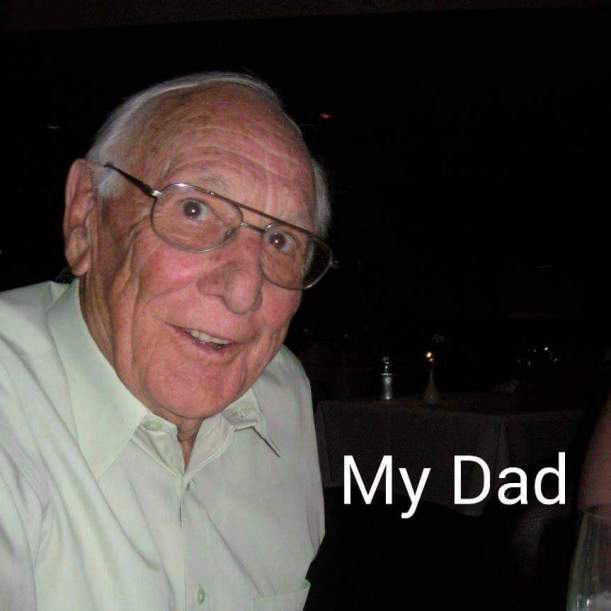
When my father was dying, across the Australian summer 2016/17, I wrote frequently on Facebook about what was happening.
I am very aware that there are people who consider it completely inappropriate, abhorrent, to post on Facebook about intimate family matters. There are people who find it distasteful to post about deaths.
I am, obviously, not one of those people. I use Facebook to post to my friends about my daily life. My daily life across those months centred on death – my father’s.
One of my friends, John Power, who has himself since died, asked if I was collating my Facebook posts as a diary. He said there was a book in it.
I have no urge to write that book, but there will come a day when I delete my Facebook account, and unless I collate those posts elsewhere, the record of those months will be lost to me.
This is not a blog post intended for a broad audience. This is me ensuring that what I wrote and the images I selected during these crucial 11 weeks in my life, the 11 weeks of my father’s dying, are retained.
A NOTE ON FORM: Perversely, I have set this in reverse chronological order. Like Harold Pinter’s play Betrayal – in my beginning is my end.
3 September 2017:
“I have two favourite children. Guess what? You are one of them. I have adored you both always! Angus”
Love you this Father’s Day and always 💌
29 May 2017:
Funnily enough, reading this article at the reference to Lear I immediately thought not of Shakespeare’s king but of Edward Lear.
Dad and I sat together every day, and he, too, quoted Lear:
“We two alone will sing like birds i’ th’ cage.
When thou dost ask me blessing, I’ll kneel down
And ask of thee forgiveness.
So we’ll live,
And pray, and sing, and tell old tales, and laugh
At gilded butterflies, and hear poor rogues
Talk of court news, and we’ll talk with them too—
Who loses and who wins, who’s in, who’s out—
And take upon ’s the mystery of things
As if we were God’s spies.”
My father had 11 weeks’ notice of his death and, although he was not religious, his and our preparations were very much as Phillipe Aries describes, minus the overtly religious elements.
We certainly would not have preferred a quick, sudden death, or a medicalised death ending in hospital.
Sorry not sorry to anyone bothered by me harping on about my father’s death.
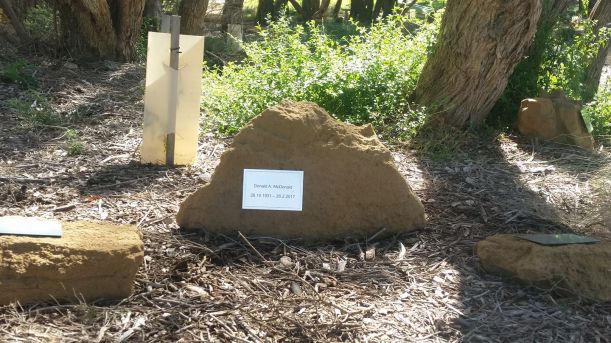
Angus’s “proper” plaque is in situ. Cathy has planted pigface.
Visiting with offerings of Rocky Road. Now I’ll have to eat it on his behalf, here in the autumn sunshine with a cold sea breeze.
12 May 2017:
Digital art by Cathy McDonald – ‘Sisters’ series
9 May 2017:
To Melbourne to see the family financial adviser about my legacy from Dad. Feeling entirely awful and exhausted beyond belief. My psychologist suggests the exhaustion might be grief.
I’ve been reading H is for Hawk, Helen Macdonald’s remarkable memoir of grief (and birds, and history, nature, poetry, photography), but my ability to concentrate is not great. The upside of today is that as of this week, my usual restricted cashflow is unchanged but my broader financial setup is suddenly quite grown-up. Possibly for the first time ever. Strange.
24 April 2017:
The NBN installers are due any minute. I have a flu-like cold and Liz, Cathy and I have a lawyer’s appointment this arvo about probate.
More nightmares: a final year English exam, to be done in our own individual apartments in a kind of grand hotel, except I’ve just moved my belongings into mine and it’s piled high with stacks of books and a dog knocks the pile where I put the exam paper and I can’t find the exam paper again and I can’t find an invigilator and I only wrote one sentence and I don’t know how long I’ve got and it’s so unfair because I know the texts backwards and the questions are a doddle, if only I knew what they were, in the absence of the paper, the paper that is lost…
18 April 2017:
Note from my reclusive octagenarian retired GP neighbour discovered today scrunched up and wet in my letterbox (the note, not the neighbour).
Despite 1/3/17 date, I could swear it hasn’t been there previously.
People are strange. Sometimes wonderfully 💝
… strong possibility: he put the letter in Unit 1’s mailbox, and no one clears that mailbox because Unit 1 is a holiday rental, but it’s been cleared now because a buyer’s contract has just gone through.
16 April 2017:
Liz has Angus’s wearable clothes prepared for the Op Shop and has offered me my pick.
Not the best night to do this. Tired and sad.
She’s worrying a nuclear bomb will drop on Hong Kong while we’re there 😯
I formally ended my friendship with my first ever ‘best friend’ after Dad’s death. She was the first person I contacted with the news of his diagnosis. She responded with a breezy text about everyone having to go at some time and said she’d find a time in her busy schedule to be in contact later. 20 weeks later she texted me happy birthday greetings (my birthday is the same week as hers). I told her in the meantime Angus had died at home in my arms, was dead, buried, there’d been a commemoration, and I was so disappointed I hadn’t heard from her. Nothing since.
I remember sitting in the Bayswater Brasserie in Kings Cross carefully composing a letter to her father when *he* was dying 30 years of so ago.
the day after Dad’s death I Unfriended a longtime FB friend in the U.S. who I’ve never met but who I like(d) very much. She has difficult life circumstances and mental illness and quite frequently posts suicidal thoughts or about hospitalizations. I always sent prompt responses I hoped were supportive and appropriate. My bro-in-law the shrink abd my sister would point out how aggressive it is to post suicide threats and attempts on FB, and how distressing for readers with issues of their own, and had been advising me to Unfriend her for some time.
That day she posted that she had razor at her throat. I didn’t see her post till hours later and I was blunt: Don’t kill yourself. Today I watched my father die in my arms spewing black blood. Life is precious.
She wrote a long response about how some day, some time, the inevitable ultimate ending to her story MUST be that she kills herself. No reference at all to my father’s death.
I told her I wished her well but I cannot remain her friend.
Very, very grumpy today. Watching Cats v Hawks (Cats bloody better win) and just adapted a line from The Rocky Horror Show, “There’s a spar-ar-ar-ar-ark [sic] BURNING IN THE FIRE PLACE” … remember breaking into that over dinner with parents one time and them both staring, and Dad saying, “Whatever THAT was, DON’T EVER DO IT AGAIN”.. 😻
14 April 2017:
After an uncharacteristically work-filled week it’s hard to get up, get dressed, and get to Geelong for church.
But after attending last night’s Tenebrae (Maundy Thursday) service – after a late shift – I’m reminded of the Christian significance of Easter by the words of minister Peter Gador-Whyte: “He shares our frailties to restore our dignity”.
Seems I’ve lived this recently.
How empowering is it for me to put myself in the place of Michelangelo’s Mary 💛 (That’s not a question)
… going to church dressed as an Italian widow. Some of us are incorrigible. (An Italian widow in sheer see-through fabric; limited black options in my wardrobe 😎)
8 April 2017:
I am 56 today and last night my sister gave me a birthday card from my Dad.
It reads: “I have two favourite children Guess what? You are one of them I have adored you both always! Angus”
Cathy bought multiple cards when Dad got sick and asked him to write birthday and Christmas greetings into the future in them. He never got round to it. So she trimmed a note he’d written on scrap paper and stuck it inside a birthday card for me.
When it’s her birthday, I’ll transpose the love note to a card for her 👭
25 March 2017:
I dreamt my Dad wasn’t dead.
Instead he was entangled in the doona on my parents’ king-size bed, not well, but bright-eyed and smiling.
“Hello,” I said. “I thought you were gone.”
19 March 2017:
Sisters 👭
16 March 2017:
All is well. In fact all is good 🌞
Enjoying cappuccino catch-ups with friends who live locally. Back at work at the Gallery. Gardening. Swimming 🐋
Thank you for all the well-wishes (and the fishes)
6 March 2017:
Yesterday’s celebration of Angus was everything we could have hoped.
I cannot express how grateful I am to my FB (and real life) friends who were able to be there: in no particular order: Penny, Jen, Lou, Heather, Ian W, Ian R, Adrienne, Gail and Sonia, Vikki and others who are not on FB but who I love very much and whose presence is appreciated. I hope I haven’t dropped out anyone’s name. Please forgive me if I have.
I also very, very much appreciate all the care and patience other FB friends have shown me over this past 3 months since Dad’s diagnosis. I won’t name you. You know who you are. I am very thankful and I will not forget.
Much love to you
We’re embarrassed that some people who planned to be there stuck with the initial tbc date 12 March and didn’t see the subsequent notices advising 3rd March. There were 150+ guests, maybe 200, with standing room only, and it really wasn’t possible to update individuals ahead of time, but sad some people – like Dad’s favourite of Cathy’s exes – missed out 😯
3 March 2017:
3 March 2017:
Singing this on the way to the crematorium.
Previous song was Maurice Chevalier and Hermione Gingold singing I Remember It Well (from Gigi), which made us cry
3 March 2017:
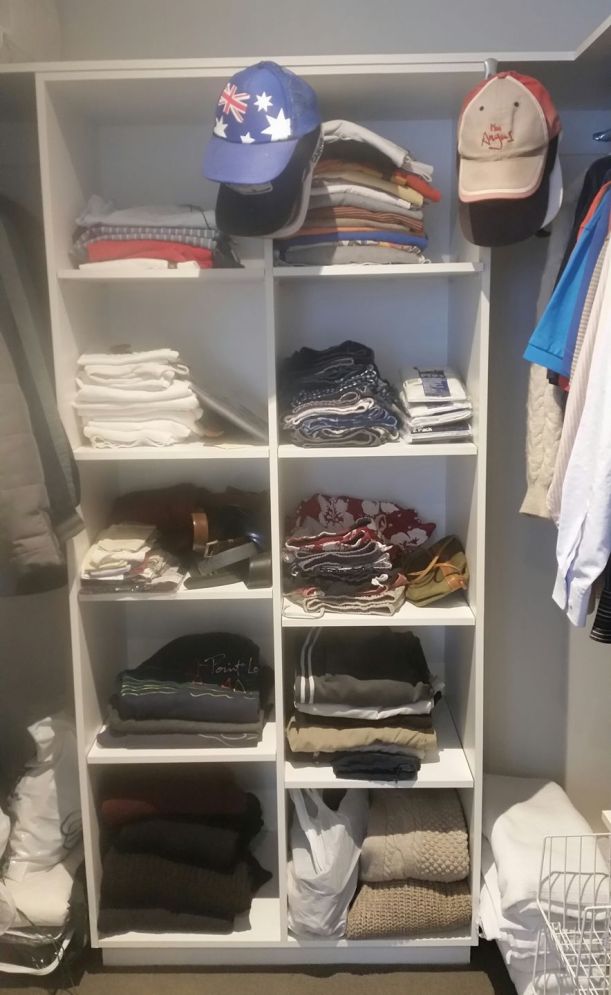
Liz has tidied Angus’s closet. It never, for one moment, looked REMOTELY like this in his lifetime 😂
The format for the wake on Sunday has Peter as MC, short eulogies from me, Cathy, then Liz, lots of food and drink and conversation, and all Dad’s favourite music, with slideshow visuals of family.
This is a draft. It’s short. I’ve told Cathy she can do the timeline history of etc.
Anyone and everyone is very welcome – details published with Angus’s death notice in The Age and the Geelong Advertiser tomorrow (Wednesday)
Seems the wake is now confirmed as THIS Sunday, 5 March – 2pm at Point Lonsdale Bowls Club. All welcome.
I need to get that eulogy written, fast.
The private funeral is 11am this Friday.
There won’t be any religious element – just Peter as MC, short eulogies from me, Cathy and Liz, the music he most loved, eating, drinking and socializing.
26 February 2017:
Donald Angus McDonald
b.30/10/1931
d.26/2/2017 at 1pm
at home with his head on my lap and his family around him.
… I think Cathy and I were feeling pretty good relatively speaking except since Dad’s death mum has been difficult and Cathy lost it with her and Hugh has been harassing us with multiple phone calls about his planned visit and taking us to task for how we announced the death (an email I wrote sent in Liz’s name) and our arrangements for the funeral and the wake and even accusing us of misinforming people of the date and time Dad died. Pretty sure it was 1pm Sunday; I was 100% present. I was holding him, I took his pulse, checked his breath, cleaned his body. Hugh thinks it was 3pm Saturday and somehow thinks his opinion matters.
I was so angry by Hugh and his partner’s 6th phone call within 24 hours I had to remove myself.
I’m trying to not let it affect me. But he’s coming for a week and now that Dad’s gone there’s no reason for him to stay at Cathy and Peter’s rather than in Lonnie and removal will be hard. The saving grace is with the wake now so soon NEITHER he nor Athena will be there. (I presume)
24 February 2017:
We watched cricket together. Lots of sleeping.
24 February 2017:
Daddy’s girl
Still waiting for paramedic vehicle to bring him home
Update: he’s staying in hospital on a morphine pump, might come home on pump in the middle of the night, might not
24 February 2017:
24 February 2017:
Cathy, Peter and I have spent the afternoon in St John of God emergency dept but in keeping eith Advanced Care plan Angus is now being sent home dosed heavily with morphine.
I went ahead to locate after hours Palliative Care contacts but CANNOT FIND the palliative care info folder or A.H. tel’s
Will be off FB for a bit now xxx
… the home visit nurse on Friday took it with her. It’s back now
24 February 2017:
It’s agreed: I will sing the Aaronic Blessing to my father’s coffin before it exits.
The Lord bless you and keep you
The Lord make his face to shine upon you
And be gracious unto you.
The Lord lift up his countenance upon you
And give you peace.
It’s only 19C and overcast, but it’s low tide (I wrote ‘tired’) and Dad has been dry retching sputum and blood and shaking violently, so I am heading to the sea for a swim 🏊
Photo taken by Angus on Wednesday when he and Cathy drove down the Surf Coast.
24 February 2017:
Family getting-to-know you meeting 11.15am today with my friend Michael Nolan, in his capacity as celebrant for Angus’s funeral.
Dad has micro-managed the wake. Properly speaking Mum gets the deciding say on things to do with the private family part, at the funeral. Dad got a little over-anxious a few days back and started dictating the details but I think, based on how well we’ve been doing, we’ll have consensus xxx
… he was really, really sick this morning. Too sick to participate. Community nurse arrived about an hour ago.
1 February 2017:
Liz’s friend Bev got knocked down by a kelpie on the beach and will need 6 months rehab to repair torn ligaments. She won’t be back at the beach.
Some of Liz’s beach friends whose dogs have recently died have decided they’re too old to walk dogs and are not getting replacements. Liz is very sad that her supportive beach network is evaporating, just as she most needs it.
21 February 2017:
Elly’s nightmares:
Heather you and I were to appear on TV and I didn’t have a thing to wear. Here’s how we decided to style me:
Pale primrose granny-pants, worn as hot pants
Sunshine yellow singlet, worn without bra
Mauve Isadora Duncan scarf
Dark red chunky plastic Pop Art ring
Minutes before we were due in the studio I was worried strong camera lighting might be unkind OMG 😨😨😨😨😨
19 February 2017:
From Liz’s hidden photo albums – Angus 1972, and the first photo I ever took, Angus 1972 or 1973 building the retaining wall in our Adelaide back garden.
Those pants are towelling.
19 February 2017:
I’m due to meet up with an old friend from teacher training on the beach in 55 minutes but I cannot quite get vertical. (Nightmares again.)
I haven’t seen her since ’04 but saw her name as purchaser on the paperwork for the sale of my car.
Then family lunch.
Parents’ house deluged with phone calls yesterday from WA family – from Perth, from Paris, from Texas. Hugh isn’t seriously sick. Low numbers on prostate count and no spread.
16 February 2017:
16 February 2017:
Clan McDonald sign up for their final resting places (Indigenous: weerona – the name of my great-grandfather McDonald’s property near Campbelltown).
Angus and Liz are the big upright rock (centre); Cathy and Peter are to the left; and I am the small irregular awkward stand-alone (right). I expect future vandals to pick me up and fling me. Plaques to come.
It’s beautiful. We’re thrilled. There’s a beautiful sandstone bench where a person can sit and reflect by our stones 💚
Moonah Walk, Point Lonsdale cemetery
15 February 2017:
It’s official: my family ARE THE BEST 💖💖💖💖💖💖💖💖💖
We have agreed on everything for Dad’s cremation, and the wake, and have got through all that other Very Tricky Stuff.
It’s been a very intense and painful few days with family issues as Angus gets more ill. On Friday Angus and Liz visited Kings Funerals to discuss the funeral pyre and came away with a long list of questions such as: What will Angus wear? Do we want to view him? Who will wheel the coffin? Et al
We’ll have a family get-together this week to sort through all this.
We’re a long way from being on safe ground.
Dad has decided to include a couple of religious elements after all, one of which might be Psalm 23 and another might be my friend Michael Nolan, a former Catholic priest who once explained to me the role of a parish priest is similar to being the donkey in a paddock with horses: there to help calm the skittish ones.
Very very hard to stay ok but fortunately have a few horse whisperers to hand.
We’re racing ahead on suggestions for What Will Angus Wear? Rather than playing a harp in Heaven he says he wants to play tennis, so I suggested tennis gear. Angus rather fancies being buried in full Essendon Bombers supporters gear: then we could say the Essendon Saga killed him. It would have the dual benefit of disposing of the Essendon scarf I knitted him with decency.
12 February 2017:
[During family turmoil I won’t record here]
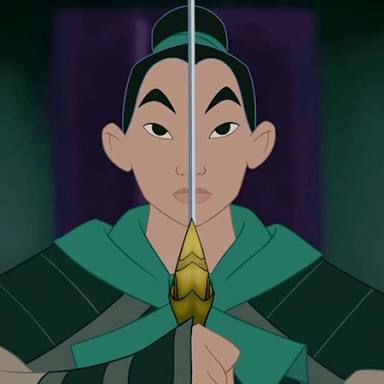
Laughing while watching Mulan:
Mushu: “Hey, c’mon, you did it to save your father! Who knew you’d end up shaming him and disgracing your ancestors and losing all your friends…”
5 Februay 2017:
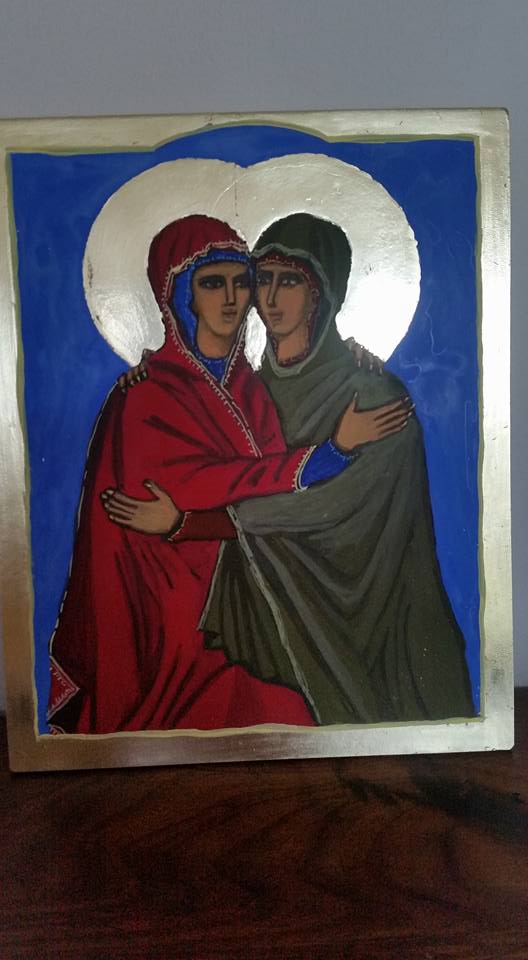
Cathy did an icon-making workshop this weekend and made this icon of St Mary (me) and St Elizabeth (Cathy) hugging each other.
She wanted to make St Elizabeth’s robe blue but the specialist told her Greek Orthodox symbology requires that it be green.
We look very worried.
The other images are from the Nag Hammadi Library and a copy (the darker one) in St Elizabeth’s Episcopal Church, Roanoke, Virginia.
1 February 2017:
Things turned pear-shaped shortly after this pic. Very bad day. Angus off to GP.
Feels like a turning point. We’re poised for the down slide. Dad has apologized in advance to me and Cathy for when he’s angry or short-tempered over coming weeks.
We had a Monty Python moment where Cathy was trying to talk up how well he is and Dad and I were having Absurdist paroxysms lol
He was [calm and at peace in this photo]. He’s calm most of the time anyway, doesn’t have the energy to get agitated. As opposed to Liz, who was a nightmare yesterday. I had an awful day and an awful night and now I’m lolling in bed just dreading a future with my mother. Luckily Adrienne expects me paddle boarding with her at Barwon Heads at 9am so I have a distraction.
31 January 2017:
Since I keep having these horrible nightmares, I’m pondering what I can do with them creatively.
Take last night: my dream about Sarah. Sarah is a little person, a dwarf. But she has some kind of cultic significance that’s causing her to be hunted down to enrol her against her will in an ominous ritual. Sarah is trapped in a large house that’s designed to maximize surveillance, with mirrors, peepholes, angled corridors all set up to ensure she never escapes visual monitoring.
Someone remarked, “Imagine what it means to someone who’s been stalked all her life to be in this environment”. It was a voice in my ear, from outside the dream, and I thought, how TRUE!
Dad is envious of my nightmares because he never dreams. We discuss guided dreaming; I don’t think that’s the correct term but it *has* a term and it means developing the ability to direct the narrative within our dreams.
Dad and I were chuckling over this when suddenly when suddenly he became Saccorhytus and threw up very loudly for what seemed an eternity, whole body shaking. Mum is upset it was so loud the neighbours must have heard. Very distressing for everyone 😦
28 January 2017:
26 January 2017:
My sister left this card for me. She knows I’m seeing bands tomorrow – Jo Jo Zep and Sports at Melbourne Zoo – and staying over in Melbourne in hopes of doing it again on Saturday, Peter Garrett and Kev Carmody. Finances permitting.
Also tonight I’ll be on Dad’s arm as his date at his tennis group’s Australia Day barbecue 🎾
Angus waves the flag
26 January 2017:
Reports of Angus’s weight loss are greatly exaggerated. He’s not 48kg, he’s a much more robust 63kg. Seems he leaned against the bathroom sink bench while weighing himself 😂
I did think a 27kg loss in 8 weeks was improbable, and he looks more solid than I did when I was an anorexic 47kg lol
25 January 2017:
Centrelink has lost my application for Carers Payment, mailed to them 18 Dec. So far I’ve been on hold with them for 40+ minutes and counting.
I am doing gentle yoga asana, all the seated poses and prone poses I can think of, moving into standing now. Had another ocean swim this morning and did aquaerobics too (auto spell suggests aquaerotica, which I might try another time) 💚
26 January 2017:
23 January 2017:
Wildlife Photographer of the Year, People’s Choice Winner 2017
Mario Cea, The Blue Trail
Rainbow Wings, by Victor Tyakht
21 January 2017:
Nightmare in which I performed a Wednesday Addams version of this accompanied by werewolves howling.
Marginally less scary than previous night, when radioactive tentacled indigo creatures from outer space caused people to fling themselves from top floor windows of a haunted house, in vain; and it was revealed my mother had had an affair with Vince Lovegrove.
I do not think this happened 😉 Dad’s facial expression response to my nightmare was priceless.
I think that came out of a conversation Dad and Mum and I had a few days back discussing the insurance liability implications of Grant Page dunking women from the foxline into Gill and Ron’s pool New Year’s Day 1970, 71. Reckon Liz found being dunked by Grant a bit of a turn-on 😂
20 January 2017:
Driving Dad to imaging appointment. He is a passenger seat driver.
We have marvelled at the discovery “40 zone” rhymes with “cortisone”.
We have agreed there should be a TV series called Braking Hard.
Dad has begun a verse that includes the lines ‘My underwear hurts me / course it does’ – corset does, geddit 😉 – which may go on to include the references to cortisone and school hours traffic limits.
He’s bright as a button, lots of entertaining conversation 💘
The GP just phoned to say x-ray shows no bowel obstruction, nothing bad. He said he knows the deal was he was only going to phone if it was BAD news but he didn’t want to leave us dangling. Dad so moved by that he cried.
We have agreed he will not only leave me a birthday card for my 56th birthday (he’ll be gone before April) but will write me a time-capsule birthday card to be opened on my 86th birthday. Currently he’s considering “You expected something profound? April fool”. I think he can do better.
… last night we (parents + me) were reviewing a butcher sheet filled with my writing c.1990 with headings “Angus – I like” and “I *don’t* like”. He got all happy at the “I like” list then sad at the “I *don’t* like”. I thought the lists were mine (they were all things I *would* write), but Liz and Angus believe they were lists where I acted as scribe on Liz’s behalf, mediating to save their marriage after he’d disgraced himself. Somewhere there was once a corresponding list about Liz, by Angus.
Then at bed time Mum left a card on his pillow with “Je t’aime” printed on the front and her message inside “Sleep well / Love you”. Dad and I joked today she couldn’t quite bring herself to say “*I* love you”, in English 😈
18 January 2017:
Dad and I tried to play #top10booksthatshapedmeasateen but he insists no books have influenced him, except economic theorists and the Scottish Enlightenment.
We tried #top10filmsthatshapedmeasateen but again, Angus says the only film that’s shaped him is On The Waterfront, which he saw aged 20 or 21.
I could immediately come up with one Ridley Scott (The Duellists, seen on my 17th birthday) and no less than 3 Scorseses seen as a teen (Mean Streets, Taxi Driver, The Last Waltz), but despite a youth misspent at the Valhalla Richmond I couldn’t think of others that I could say “shaped” me in teen years.
A little indie film from Canada I reviewed for The Nation Review in 1978, called Outrageous?
Harvey Keitel in Mean Streets
17 January 2017:
16 January 2017:
Angus with Bella and Liz
One might wonder, why is Elizabeth holding a breakfast tray in front of her face. Answer: she is using it to prop up her newspaper cryptic crossword 🙂
16 January 2017:
Angus has dropped from 75kg to 48kg. We’re feeding him carrot cake 💜
He has zero desire for food but more particularly, he can’t tolerate many foods, or much food. He either throws it up or has horrible digestive issues. He says he has a visceral instinct for what he can’t eat.
“Bleeding that takes place in the esophagus, stomach, or the first part of the small intestine most often causes the stool to appear black or tarry. Your doctor may use the term “melena.”
Bleeding in the upper part of the GI tract will most often cause black stools due to:
Abnormal blood vessels
A tear in the esophagus from violent vomiting (Mallory-Weiss tear)
Bleeding ulcer in the stomach
When blood supply is cut off to part of the intestines
Inflammation of the stomach lining (gastritis)
Trauma or foreign body
Widened, overgrown veins (called varices) in the esophagus and stomach.”
Pretty sure I saw a small segment of blood vessel in his black stools yesterday 😦
15 January 2017:
I so much enjoyed being at church this morning that I’m thinking it might be good to schedule regular weekly activities away from family and Point Lonsdale as part of my self-care program.
My initial doodles play with me having maybe a Geelong day every Friday, so I can sing with Wesley Singers Thursday evenings then stay over at Cathy’s ahead of singing with the Acabellas Friday mornings. That would mean lunch and early afternoons Fridays would be available for catch-ups with Geelong friends, if anyone feels inclined.
I might also designate Wednesday as a weekly Melbourne day, partly so I can catch films at the Nova I’d ordinarily miss out on and also art exhibitions. It would mean, too, I could do catch-ups with Melbourne-based friends on Wednesdays, it that suits. If I stay over at Cathy’s the previous night I could do a Yoga Dojo class Tuesday evenings. Alternatively, Tuesday could be the regular Melbourne day (Wednesday works better for cash flow).
In Point Lonsdale, Maureen Crawford has invited me to ocean swim with the Mermaids whatever mornings I can make it to the Springs for 7.30am. [Ian] we might be due a light lunch or coffee or a walk, too? Will message you xxx
Guys, I exhausted myself making plans. Will do what I can when I can [angel with wilting wings emoticon]
14 January 2017:
From the poem “Survey” by Elizabeth Willis
13 January 2017:
Point Lonsdale Racqueteers tennis group formally farewell Angus – Beach House, Barwon Heads.
Liz and Angus (lanyard reads ABSOLUTE LEGEND)
It was a lovely occasion 💗 Liz had an afterglow through till bedtime, which is wonderful.
Glad people are actively supporting Liz now rather than waiting.
Mum was on a high all day. Dad had to stay in bed all [next] day but it was worth it 💕
The photo Dad wanted me to delete
11 January 2017:
Angus’s DNA results are in! Amazingly, Donald Angus McDonald has DNA 46% Great Britain, 45% Ireland – 91% British Isles.
3% Scandinavia (but no Finland or northwest Russia), 2% Italy or Greece.
There are “trace results” (less than 1 percent, insignificant and possibly an artifact) for western Europe, eastern Europe, the Iberian peninsula and Central Asia (Turkmenistan, Uzbekistan, Kyrgyzstan, Azerbaijan).
We’re having fun imagining him as part of the Golden Horde but… no.
Zero from Africa, America, Pacific Islander, West Asia, South Asia, East Asia and all sub-regions thereof.
10 January 2017:
4 January 2017:
Deep breathing at the Heads
4 January 2017:
Jen Clarke thank you for that beautiful letter you wrote Angus, in the beautiful card.
The back of the card says, “It is said that the kind of dog you own says a lot about your personality. […] Bill Clinton owned a labrador named Buddy.”
Which may explain Bill’s inclination to hump everything in sight?
Dad and I discussed what our dogs say about us, which led to reminiscences of all the dogs we’ve ever owned.
We discussed who and what my next dog might be.
We agreed Joshua is a little beaut. Then Dad joined Josh in Dad’s bed, with the Tosh boy graciously making room.
Btw sadly Dad can’t drink red wine, has a visceral aversion now to any alcohol (or rich foods, or almost any foods). But he will enjoy the shortbread, in delicate-sized helpings.
💜💜💜
3 January 2017:
ECG at Cardiology, Geelong Hospital.
Earworm.
Lovin this CD. There There.
ECG completed and I”m happy to report my heart is a rodent: tough as 💞
2 January 2017:
Elizabeth has found a book we think my paternal grandmother Edie had when she married in 1913: ‘A Friend in the Kitchen’, by Mrs Anna L Colcord.
Mrs Colcord was a Seventh Day Adventist advocating vegetarianism, passionately.
The little essays throughout the book are gems. There2 a 4-page essay arguing the religious, moral, social case for vegetarianism.
Dad says Edie was impervious.
1 January 2017:
Land art, stone circle mandala by Katie Griersar, ‘everything changes, nothing is lost’ (2014) #womensart
31 December 2016:
Obviously, 2016 has had its challenges. It’s obvious 2017 will have, too.
Cathy has a practice now of asking before she goes to sleep each night, “What can I do tomorrow to be kind to myself?”
My friend Michael asks www: What went well?
I gave my mother a book for Christmas called How to Hygge – “hygge” (pronounced “hugger”) being a mode-ish Danish word that loosely translates to comfort, contentment, cosiness, safety.
We’re not big huggers in my family, but recently we’ve been trying it out. It feels good.
I thought maybe this coming year I might aim for a hug, and a hygge experience, every single day.
Other than that, I hope it’s a year of birds and flowers.
I wish you hugs, and hygge, and birds and flowers, too.
Much love
31 December 2016:
AMAZING!
The CDs I selected to live in the car-that’s-now-on-loan-to-me-from-the-parents fit PRECISELY into the Japanese box I never quite found a use for!
It must be meant 💘
Dad has gifted me his immense collections of vinyl, CD and cassettes. He thinks I might get $$ putting them on eBay. Meanwhile I have all the vintage 30s-70s stuff I could ever hope for 💘
It’s a random chaotic mess, like all his stuff. Eventually I’ll do an inventory 😊
31 December 2016:
“Black cockatoos are somewhere under the sun: / Down with the mattocks, let the wild couch-grass run. / Take the gully-road, slide on the sticks and stones/ And wait for the artists of Heaven, the crested ones.” Francis Webb
29 December 2016:
Words with no direct English translation, describing states of happiness 🙂
Elizabeth (in the nightie we gave her for Xmas) with Cathy.
If Liz loses any more weight we’ll mistake her for mistletoe 🎋
Small white plastic beads from the Op Shop 😉
We went for a beach walk – while Mum was still in full Op Shop finery – and several people she’s known for years failed to recognise her in her Sunday best. Might be because she’s got so thin.
The bag in the background reads: “For Xmas lunch. Do not eat or damage.”
Angus cops a shelf of trophies for Xmas: Best Story Teller, The One and Only, Most Loved Dad Ever, Favourite Father-in-law, Point Lonsdale Racqueteers Best Player Over 85… Spottiest Frog
Angus and Liz eating toast and marmalade and drinking Earl Grey tea while watching Yogi’s First Christmas on TV, Christmas morning 2016 🎄
24 December 2016:
Today is a new day
23 December 2016:
Elly McGrinch gives Xmas a two-fingered salute.
23 December 2016:
Merry Christmas all 🎄
Dad can’t drink and Cathy/Liz/I won’t but there’ll be champagne tonight when the McDonalds join [people] for Christmas dinner at Queenscliff marina.
I roasted a turkey last night and had turkey with cranberry sauce, corn cob and salad solo for dinner last night. Cherries for dessert. Turkey 2.84kg so it’s cold turkey with Angus and Liz for lunch today and probably a few days to come 🙂
It’s actually rather beautiful when we as a family get to be together. Yesterday seemed like there wasn’t a moment without phone calls, visitors, appointments – way too much, constant responding to other people, and way too much of it creating anxiety, frustration snd anger. Peace on Earth? Like, yeah.
22 December 2016:
We have MORE interstate visitors arriving any minute. These ones will be in Point Lonsdale 3 days. CAN’T THEY LEAVE IT ALONE LONG ENOUGH FOR ANGUS TO REST? And for me to clean the house.
No one welcome 1-4pm. Piss off.
Things found randomly in my Dad’s study.
7 days. One of these people I have never met, or even heard his name. Angus introduces me and he replies (to Angus), “Very attractive”. I am thinking WHAT’S IT TO YOU, DICKHEAD?
The other, the bi-polar guy given to manic grandiosity, lurches in for a hug and I am like a 7 y.o schooled in Stranger Danger: MY BODY IS MY OWN. BACK OFF.
I decline to offer them tea.
20 December 2016:
To escape having a cold, and general malaise, I am time travelling: via Justin Hill’s Viking Fire, the second novel in his Conquest Trilogy, one of The Sunday Times’ books of the year, focused on King Harald Hardrada of Norway.
Last night I was 15 years old, wounded, trekking across winter mountains from Norway to Sweden. Then I was in my 20s, gifting a leopard cub to an Empress.
I know it won’t end well, but what a journey!
20 December 2016:
Whoever gave me a cold for Xmas, I hate them for eternity. I can’t see my Dad in case he catches it. It’s been one day and he says he misses me. My mum says it’s ok, he’s robust; but he bloody isn’t.
Don’t know don’t know don’t know. Will see how I am tomorrow
18 December 2016:
Beach village desperation.
17 December 2016:
My father shocked me today when he asked if pogroms predated Hitler. He seemed to think anti-Semitism started in post-WW1 Germany. I can only think this is cognitive slippage in old age and illness, as Dad, having been a child in the ’30s, went on to be a student of economics, politics and modern history.
Yet knowledge of modern history *is* vanishing, replaced by Hollywood distortions (Inglourious Basterds), denial, and a galloping cynicism that buys into conspiracy theories and a belief that everything we’ve been told is propaganda.
When I was 22, in 1983, I went to an adult education course where my classmates included 3 older women, post-WW2 Jewish refugees. Two spoke with heavy accents and the third, after 35 years in Australia, barely spoke English at all. Her friends explained she rarely ventured outside the Jewish emigre community.
I asked if they’d encountered anti-Semitism in their early years in Australia.
“Oh darling,” one woman laughed. “No. People here didn’t know what a Jew WAS.”
I suppose part of the problem is when we can’t admit our ignorance, and *think* we “know” the stranger.
Openness to learn is more important than ever. But in a media age, what media do we trust?
17 December 2016:
Angus has met up with the palliative care doctor and the palliative care nurse. The doctor, David, thinks Dad will make it to February, and says medication can manage the pain with Angus remaining lucid most of that time.
Meanwhile both Angus and Liz are suddenly quite skinny. We need to keep them eating.
Gotta get [Liz] to EAT. I think it’s vitawheats and tea unless there are guests.
I think as a family at the moment we feel like we’re doing well 💚
But it’s not ok. This is palliative care for terminal untreatable cancer.
17 December 2016:
15 December 2016:
Dad took Mum’s old Hyundai in for servicing ahead of it being handed on to me.
He pulled the “terminal illness, no time to hang about” line to make sure he could pick up the serviced car by lunch time.
When he got back the car was ready and there was this note:
Louise Eggleston, Dad was so moved by your letter, which I won’t make public. He burst into tears and said “I wish people weren’t so NICE! I can handle anger and aggression, but I HATE kindness!”
Translation: He loves you like a daughter.
15 December 2016:
Dad is very firm that palliative care should include checking out a time of his choosing.
He says he feels sorry for me (and Cathy, assuming Peter dies first) because we won’t have family around us when we die. But he got quite angry when I told him Cathy and I both plan to check out early; not having kids and a husband means there’s no purpose in me sticking around.
He said I can stick around as long as I like: not having loved ones dependent does NOT determine the value of my life.
On a similar note:- we’ll none of hang around “because there are books to write!” Uncle Hugh is trying to convince Angus to write a memoir about dying, because “it could help others”. I told him (yes! We’re speaking!) Dad could not be less interested. Interested in writing about his childhood, his youth, his birth family, his birth home – but not about death or dying.
14 December 2016:
Someone made a reference to their after-life, playing a harp by the Pearly Gates.
I asked, “What will you be playing, Dad?”
Angus (immediate, with gleeful grin): “TENNIS!”
14 December 2016:
Sudden overwhelming need to contact my friend Lou Benson, who I grew up with in Adelaide. Thanks to the magic of Google and LinkedIn, mission accomplished.
13 December 2016:
In my ‘Death & Dying’ reading list I have now read Australian writer Cory Taylor’s Dying: a memoir.
Cory Taylor investigates the big ones: Life, and Death, and Family, and Home. Oh, and Art and Time and Desire and Love. The relations between Body and Consciousness.
At times it’s a soap opera. At one point I put it down and thought, Is that all life is? A soap opera? Then she’ll make gold thread connections. I’m not doing her justice, I’m making her writing sound portentous when it’s delicate, sensitive.
She resolves it as a screenwriter would: Fade to black.
13 December 2016:
Reading Max Porter’s novella Grief is the Thing with Feathers, which is both a response to poetry (Ted Hughes, Emily Dickinson) and is poetry.
“We are all agreed the book will reflect the subject. It will hop about a bit.”
What between the bat-shit crazy allegorical Crow and that large tub of Macha Green Tea White Chocolate Wafer ice-ceram (how did I only see “green tea”?), I am finding it hard to concentrate. The book lets me peck at it.
12 December 2016:
Today my cousin Petrana, her two kids and my aunt Marilyn made Angus and Liz – and me and Cathy – very happy by visiting from Sydney.
Noah and Liv brought artwork as gifts for Angus: the portrait is by Noah, the thing-where-the-first-letter-of-each-line-spells ANGUS is by Liv.
The sun shone and Angus laughed and Liv and Noah went swimming in the sea and took turns walking Bella the poodle.
12 December 2016:
Two years today since Toby’s death.
11 December 2016:
The well-being room: featuring Dad’s exercise bike (gifted), step, Swiss ball, off-road bike, yoga mat, block and bolster, relaxation CDs and Bach cello suites, exercise shoes, my Great Gatsby party costume for Friday (Lord how I do NOT want to do that), Andrey’s painting, Cathy’s watercolour, Leeanne’s print, the Japanese painted hanging screen, and Doctor Who on the DVD player in the corner.
Haven within home.
10 December 2016:
The McDonald Xmas tree. Decorated by Cathy.
8 December 2016:
In an ambulance being driven to hospital. Suspected heart attack. But probably not.
I hear the paramedic say, “I gave her more morphine. It made her worse.”
7 December 2016:
Another task off Dad’s ‘To do’ list:- new shade sails installed.
There was a bit of a ruckus coordinating with the neighbour over the timing of the tree surgery, won’t go into it but Dad got very, very upset, which made me very, very upset; our kind friend Greg is liaising from here.
It was very not good. V distressed Tuesday night. Yesterday much better for all.
Josh has gained a kilo when he should have lost 2kg. He has pronounced thickening on his back right knee joint which will be bothering him. Business as usual – Loxicom for the pain and Synovan as his 6-monthly anti-arthritis treatment program. Vet is under instruction to make sure Josh outlives Dad; Angus couldn’t bear Josh dying.
The betting is on Angus going first 😦
6 December 2016:
Mum and Dad’s new car. Er, Mum’s new car.
Dad left a note in the trade-in car for the new owner, because he thought the CD system might be a bit complex: “Press LOAD and insert a disc while READY indicated in green”.
5 December 2016:
SO EXCITING!!
The current owners of the grand house where my father was born and grew up have replied to my letter with a wonderful email updating us on their plans to landscape the grounds and restore some of the house’s original features.
They made Dad so happy by telling us they see themselves as custodians rather than owners, and that it seems to them EVERYONE in Mt Gambier knows and loves this house.
Angus has responded by immediately writing long-hand notes recounting further house tales.
Dad says this was about 1946, and that during WW2 the maintenance on garden and house fell away. When his mother was diagnosed with cancer not long after, she made it a project to revive house and garden.
4 December 2016:
Wonderful to have our very dear friends Mary Christie and Seb Dickins visit from Sydney this weekend: it meant a lot to all of us.
A few local friends are dropping by without phoning first expecting Angus to be in shape for visitors any time. They bring casseroles. Angus is barely able to eat still – or yet – and Liz frets about freezer space. Lots of love though, and I’m grateful.
Angus was so happy to have Seb and Mary here, and he held up well yesterday, but today was difficult. It’s very confronting to see how unwell he really is.
2 December 2016:
Bringing Young Angus home from hospital in 15 minutes.
[My short story Old Angus] won The Australian’s 20th Anniversary Short Story Prize for Young Writers (under age 25) in 1984.
One of the judges – an old school newspaper editor – told me he liked its naturalism. “A lot of the stories weren’t stories,” he said.
Old Angus was 86, not 90. Edie wasn’t mad: she was sometimes angry. Ila is reconfigured as Laura, as a nod to Tennessee Williams’ Laura, his fictionalised sister, in The Glass Menagerie.
1 December 2016:
I turned into a viper last night and was still baring fangs and lashing this morning.
Fortunately my very kind friend Heather complicated her day by driving to Point Lonsdale with cappuccino and brownies, and spent time in the sunshine being companionable.
I am lucky to have caring friends. Thank you.
Pictures: Viper. Sunshine. One of these is healing.
30 November 2016:
Our beach is, still, strewn with bluebottles.
One of hundreds.
30 November 2016:
Angus plans the playlist for his wake.
I’m spinning out a bit today. I’m particularly pissed off at a person who I told to phone or email if she wished but not to visit, for good reasons I won’t go into. She phoned Liz today and asked to visit.
[Later] The surgeon has phoned to say the operation went well. Angus is just coming out of the anaesthetic now. Tomorrow he’ll meet with the palliative care team and then Liz and I can collect him and bring him home.
[Later] Angus won’t be coming home today due to raised blood pressure. We don’t want to worry Liz with this.
So happy [our friend Mary] and Seb and Millie are able to visit us 💚 There’s accommodation at my place for any or all of [them] and also at Cathy’s, 30 mins down the highway.
30 November 2016:
Tidal (1984)
In the laundry we found a postcard
Victorian erotica
a woman with blancmange buttocks and
a tentative smile
like her
malleable curves, bovine
eyes: a Gibson
girl, in sepia tones, her body
all graceful billows, as
rich as her husband’s wheatfields
her breasts, white as orchards in bloom
heavy
featured honey-lips and now
decades later, her country child
wades through pock-coral tidal pools
compulsive
he still finds relics
of a ship smashed by the bay
shards of pottery
pitted like daguerreotype
shattered, once-sharp edges smoothed
now aged, in submarine silence
he assembles the fragments for
mantelpiece display – a voyeur
caressing
he holds them with the tenderness
of her remembered
touch
29 November 2016:
Angus update: Dad will have surgery at 6pm tomorrow (Wednesday). The bile duct has been closed by the tumour in his pancreas pressing against it; bile is not draining, Angus has turned yellow, his liver is collapsing.
A metal stent will be inserted via a tube to enable bile to flow as it ought. If this operation is successful it will have zero effect on the progress of his cancer but he will be able to eat again.
I’ve just eaten a mega-bag of Smarties and I feel sick… but Dad tells me he’s had fish and mashed potatoes, orange juice, ice cream and jelly as his hospital dinner, and so far no probs, so that’s pretty good ☺
He said he felt emboldened to tackle the meal as in a hospital environment he has expert support. Also, yesterday when he said he was sometimes dizzy and was having trouble concentrating I pointed out he’d barely eaten for 10 days and was starving.
Smarties really crap idea. I am stacking on heaps weight and have gone up yet another clothes size. Eating for two?
I’m a bit wrecked – woke up c.1.30am and only slept patchily after that. Bloody Smarties 😉
28 November 2016:
28 November 2016:
28 November 2016:
Angus goes into St John of God’s cancer ward at 11am Tuesday to have a stent surgically inserted in his blocked bile duct Wednesday afternoon, so that he can hold down food.
He is yellow. Angus, but yellow.
25 November 2016:
No concerns about going public: a Probus club member knocked on the parents’ door just now and asked Angus, brightly, “How are you?”
Angus: “I’m dying. No, really. I have aggressive, inoperable pancreatic cancer.”
So the cat’s well and truly out of the bag.
There was a friend he met outside the local store who he was updating when an acquaintance walked past and overheard. The acquaintance immediately burst into tears and flung herself on Angus, sobbing and trying to hug him. Friend A has to prise the interloper off.
24 November 2016:
So. Angus has an extremely aggressive pancreatic cancer which is untreatable. Palliative care only for the short time remaining.
He will have surgery next week for a blocked bile duct on his gut which has meant he can’t keep food down.
People who know Angus and Liz: please don’t contact them just yet.
Angus will be doped up quite soon, and his time-frame is short, so friends who know him and Liz and want to make contact while he’s still compos mentis, I will let them know today. […]
I’ve arbitrarily gone public: feel free to contact them from tomorrow on liz.angus@**** or (+61) 03-**** **** – if phoning, please don’t 1-4pm when he sleeps, or after 7pm AEST. Thanks
Also, if speaking to Liz, be aware there is a touch of dementia, which she does not acknowledge, and quite a bit of anxiety and depression.
I’m thinking of moving the agave [Lou] gave me (which I found, in my garden) across to the little sun-garden outside Dad’s bedroom, which Peter and Cathy are doing a makeover on to make appealing both to look at from the bed and also to sit in ♡
24 November 2016:
Initial test results for Angus very, very scary. Prayers please.
LOL Cathy texted to say on the admissions form under ‘Existing conditions’ they forgot to fill in “prostate cancer, emphysema, asthma”… and Alzheimer’s?
He’s handling it well right now.
21 November 2016:
Supposed to be 39C today, with high winds. Dad’s with the doctor, Mum has another cardiologist consult tomorrow. The dog isn’t moving. Don’t know what to do with myself.
Angus back from GP appt where various tests were done, more scheduled, imaging appt in Geelong tomorrow alongside Liz who was already booked for imaging.
Dad has a 9.30am appt Thursday to find out what his tests showed. The test process this morning he describes as torture. He still throws up if he tries to eat and has other gastrointestinal probs too. Liz was told the risk of stroke if they try to correct her arrhythmia is too high so if she feels better on the medications then that’s all that’s required. Liz says she has a greenlight to go to HK. Angus is anxious about his test results.
Glam factor not high.
20 November 2016:
Beautiful lunch for Cathy’s 57th birthday at Gladioli restaurant in Inverleigh, followed by Angus throwing his guts up out the car window by the side of the Hamilton Highway.
Peter and Cathy drove back so Peter could do an immediate medical check. Angus is rugged up with a water bottle and paper towels and we cleaned off the mess. Peter says he needs to see his GP asap tomorrow. He has no appetite and for the first time ever almost no capacity for alcohol. He was very unwell this morning but we didn’t want to cancel Cathy’s birthday lunch.
I can’t see how they [Angus and Liz] can possibly go to Hong Kong 😦
Monsieur Mayonnaise: Philippe Mora’s colour-saturated documentary/memoir/graphic novel/cartoon about how his parents Georges and Mirka survived the Holocaust to introduce European bohemian culture to post-War Melbourne, Australia.
And how Gunther Morawski became Georges Morand then Mora then Monsieur Mayonnaise then Georges Mora; or, how Gunther Morawski became a Resistance hero, father substitute to Jewish war orphans, people smuggler, and impersonator of Catholic nuns (in company with best mate Marcel Marceau).
Some of my responses:- with apologies to Philippe Mora and his family for details I’ve recalled wrongly or that should have been included but are not. I hope the Mora family will forgive me for borrowing some of their images and artwork for this blog.
[SPOILER ALERT: If you plan to see Monsieur Mayonnaise this response might be best read AFTER viewing. On the other hand, it’s the Holocaust – you know how that unfolded. Don’t you?]
Artwork by Philippe Mora for his graphic novel Monsieur Mayonnaise
One morning Leon Zelik left his Paris apartment to buy a newspaper. While he was out, soldiers arrived and took his wife and his three daughters, Mirka, Madeleine and Salome.
The women were herded onto a train along with 1000 other Jews, mostly women and children. They were terrified. As the train rattled along, Mme Zelik and Mirka, her eldest daughter, peered through the wooden slats of their crate-carriage, strained to identify signage at train stations they passed.
The mother had had the presence of mind to grab a sheet of paper, a pen and an envelope from their apartment as they were taken. Now, she wrote the names of each train station in sequence. She folded the page into the unstamped envelope, which she addressed to her husband, Leon Zelik, at their street address.
She directed Mirka to drop the sealed envelope through the crate cracks as the train slowed. Mirka was frightened it would blow back onto the tracks.
They were disembarked at a massive holding centre. Four days before their contingent were scheduled to be shunted to Auschwitz, guards came and released them. As Mirka looked back towards the camp she saw the other detainees crowded against the fences, the children big-eyed, watching the Zelik family retreat to freedom.
In later years Mirka said the big eyes in the faces of the doomed children were the genesis of the angel children she painted throughout her life. She said the guilt pained her. Telling this, she cried.
Someone had found the addressed envelope, stamped it, and mailed it to Leon in Paris. From the list of train stations, Leon worked out the camp where his family were held. He convinced a clothing manufacturer to request that the Zelik women be released on the grounds that the mother was a required worker manufacturing German army uniforms. A lie, but it worked.
In later years, Mirka thanked that anonymous person who found her mother’s letter, every day, life long.
Mme Zelik, Mirka, Madeleine and Salome were the only survivors of the Jewish detainees on that transport. I have/had a mental blank on The Mother’s name. Wiki says she’s “Celia (Suzanne)” but in his film Philippe Mora refers to her by what I think must be a Lithuanian petname or diminutive.
Mirka Mora with angel children
There’s a sequel: by chance Leon met a French farm worker, a Christian, who offered the Zelik family sanctuary. In his village was a house locked up while its owner was a prisoner of war. The Zeliks spent 2 1/2 years there. The Frenchman’s daughter says her father never questioned that providing sanctuary was the right – the only – thing to do.
I won’t recount Georges story here. I can’t get his story out of my mind, and have been telling it to almost everyone I meet. But every time I tell it, I cry, and the people I tell it to cry too.
Suffice to say there’s a 92 y.o man on film who says he became an eminent New York child psychiatrist because Mora and his Resistance colleagues saved his life, because Mora cared, and because he wanted to be like Mora: to save children. Even if it meant dressing up as a nun and trekking Jewish war orphans to the Swiss frontier, a la The Sound of Music. In company with the famous mime Marcel Marceau. (No, even in New York none of this is required of child psychiatrists. This is what French Resistance operative code-name Mora did.)
Georges Mora clips his son Philippe’s hair
In Philippe Mora’s film he visits a museum memorializing child victims of the Holocaust deported from France (not the famous Holocaust Museum in the States – I googled but could not identify this museum). The interior walls seem to be lit with a low golden glow and have what appear to be timber vertical divides and, less prominent, horizontal divides, so that the walls suggest a panel of spaces for portraits or icons. Many of the spaces are filled by photographs of children who died, with their name and (I think) age. The spaces left empty are ones where no photograph has been located. I believe in this museum there are 6000 framed spaces.
Artwork by Philippe Mora for his graphic novel Monsieur Mayonnaise
My father shocked me today when he asked if pogroms predated Hitler. He seemed to think anti-Semitism started in post-WW1 Germany. I can only think this is cognitive slippage in old age and illness, as Dad, having been a child in the ’30s, went on to be a student of economics, politics and modern history.
Yet knowledge of modern history is vanishing, replaced by Hollywood distortions (Inglourious Basterds), denial, and a galloping cynicism that buys into conspiracy theories and a belief that everything we’ve been told is propaganda.
When I was 22, in 1983, I went to an adult education course where my classmates included 3 older women, post-WW2 Jewish refugees. Two spoke with heavy accents and the third, after 35 years in Australia, barely spoke English at all. Her friends explained she rarely ventured outside the Jewish emigre community.
I asked if they’d encountered anti-Semitism in their early years in Australia.
“Oh darling,” one woman laughed. “No. People here didn’t know what a Jew WAS.”
I suppose part of the problem is when we can’t admit our ignorance, and *think* we “know” the stranger.
Openness to learn is more important than ever. But in a media age, what media do we trust?
George Mora. Monsieur Mayonnaise.
My friend Donna says, “I was married into a Jewish family for 32 years. The matriarch pulled the address labels off of every magazine that came to the house (the goyim see the name and know that is a Jewish household), and no one talked about illnesses or diseases except in very hushed voices (the government takes the weak first)… that was not uncommon in the WWII generation, but they are slowly dying off, and the younger folks have no idea..”
“George Mora’s” two sons had no idea he was really Gunther Morawitz, German-born, medical student at Leipzig University, native German speaker, until his last years; and no idea why he wouldn’t step into a VW or Mercedes-Benz or use Krupp appliances.
When I was at school I had teachers who were Holocaust survivors. Exposure to first-hand witnesses is invaluable. We’re losing them.
Every Sunday, he used to stand by the front window and yell abuse at churchgoers. Sometimes he stood on the lawn and shook his fist at them. Directly across the road, a small Roman Catholic church lies meek in the face of aggression, its whitewashed walls shadowed by an Anglican cathedral towering alongside. Old Angus has no interest in the Anglican cathedral; his fight is with the Roman Catholic god.
He knows he’s losing. After a twenty year battle he’s all but yielded sight; now, his being is demanded. Knowing he’s dying, Old Angus resents it. He rages. For hours he debates unhearing politicians – they on radio and television, he in his solid, ancient bed. A spent force, he is unforgiving.
“I’m ninety”, he tells Young Angus. “If I were a cricketer, I’d have to say I’d had a good innings.”
Not being a cricketer, he doesn’t believe it.
Young Angus sits by his bedside and worries, caring so much he can barely listen.
“D’you remember”, says Old Angus, “That tale about Johnny? How you used to tell me about your girls?”
Young Angus, tired, looks blank.
“You remember, lad? I’d laugh at you. You know the one. In Scotland, the son would come to his dad and say ‘Dad, I’ve found me a perfect lass’. ‘Aye, aye, Johnny?’ the dad would say. ‘Father, I mean to ask her to marry me!’ Johnny tells his dad, and his dad says ‘Aye?’ Maybe she won’t have me’ worries the son, and ‘Aye’, says the dad, ‘Aye, aye’… You remember, lad?”
“Oh, aye”, Young Angus reassures him, truthfully. “I wanted to marry Beth, and you told me about Johnny. I’m glad you never told me what to do.”
“I thought you’d be disappointed again”, Old Angus sighs, shifting uncomfortably in his sheets. “I thought she’d be scared away by Laura. I though maybe Evie might scare her away.”
“Evie never scared anyone but you”, Young Angus reproves him, rearranging the bed clothes.
In the other bedroom, Beth is dying Emma’s hair with Laura looking on. Emma’s triple image, reflected in an old, three-way mirror, commands all eyes. The girl herself perches stiffly on the bed, her self-conscious, fifteen year-old body stretched regal and long. A scheming princess, arrogant neck destined for the block, she notes with satisfaction the way her hair rests in damp curls, piled up away from her face. (Emma, immersed in vanity’s haze, recalls an incident from early childhood, taunting as she yanked a playmate’s pigtail: “I have hair like a princess”, sneered Emma, “And you have hair like a rat’s tail!” Soon after, her blonde began to darken. Old Angus, gazing down from his superior height and seeing only nutmeg, had tussled the strands, saying “Never mind, lass – not every princess has golden curls”.)
“You look lovely!” grins Laura, and Beth beams back at her. Emma, coppoer-brown and all but naked in sheer underclothes, says nothing.
“Here”, says Beth. “Throw on a dress and go in and show Old Angus.”
Old Angus guesses at Emma’s dislike. The young, he reflects, would prefer not to have to acknowledge old age. Emma shouldn’t have to confront death yet.
“You look just like Evie”, Old Angus tells Emma, who momentarily feels insult and fright. Evie, to her, is a mystery madwoman only referred to in furtive whispers. Emma juts her chin.
“Evie was your age when I first saw her”, Old Angus recalls, disregarding the distance between this child and him. “She was fourteen, and I thought she was beautiful. The boss’s daughter, you know? I had to sweep the shop and the verandah, and I’d loiter outside, waiting to see her come home from school. her father couldn’t stand me.”
Emma remains silent, but she’s listening.
“Well, what was I but trash? And Catholic, too! We were shanty types – Scottish Catholics, and fifteen kids! We lived in a riverside shack that flooded when it rained. We’d eat the fish left tangled in the furniture. We couldn’t read or write. Or the others couldn’t, anyway…
“But I wanted more, and I wanted Evie. She was a dream, that girl! A beautiful, round-faced, round-eyed dream. By that time I owned a store of my own.”
He smiles across at Emma, and reaches out his hand. She takes it awkwardly, not knowing what to say.
“He’s telling you about Evie?” asks Beth, balancing a laden tray as she pushes through the door.
“I was telling her how we first started out, before Laura”, Old Angus says. “Her whole family was against us marrying, but she always had a will, had Evie. I remember years later when we got that car. A terrible contraption, a car – it had me beat, alright! But Evie, she was determined to master it. She took it down to the paddock behind the house (this was when we still had the old place), and she forced that thing to work the way she wanted. It fought! It ran amok all over the croquet lawn. But she got the better of it, finally, and it never gave her a problem again.”
“Yes”, Beth smiles, seating herself beside him and carefully handing him a mug of warmed milk. “Yes, Evie was a brave one.”
“Aye”, says Old Angus, meeting her eyes quickly. “She was brave. She was brave with Laura. It wasn’t like she had a soul on her side.”
“Tell me”, Emma Frances demands. Her initials are E.F.M/, like her grandmother’s were.
“About Laura?” asks Old Angus, spilling some milk down his chin. Beth gently mops his neck with a tissue, mentally dismayed at how fragile his skin is.
“Better not”, Beth cautions, quietly.
“Why not?” The old man turns on her. “Why not let her know? I’m not ashamed of Evie. She was worth a dozen of any other person I ever met.”
“Go on, then”, Beth sighs, and he hunches over his mug, cloudy-eyed stare trained on Emma.
“She was, you know”, he nods. “She was worth a damn sight more than what she got. It’s not Laura’s fault. Laura was born a normal child. It was illness that did it. Illness and doctors. First polio, then meningitis. They put her in plaster. Imagine a child’s legs locked away in plaster, for a whole year! They said it would stop them trembling.
“She trembled worse, and her legs were so stunted she could hardly walk. Couldn’t talk properly either. And something happened to her brain.
“Well, you know country towns, and it was worse back then. People round here didn’t understand. They said Laura being struck down was an act of God, that Evie and I had brought it on our child. They said Evie and I must be to blame. Said it was Evie, acting like a man. Too forward, they said; too bloody ambitious.
“She’d dived into politics, Evie-style. Talking feminism, socialism… ‘isms’ we’d never heard of till then. She aimed to be a town councillor, and women could vote here in South Australia, so she wouldn’t let anyone tell her what was what. Unnatural, they said. The children of bad mothers always come to harm; bad mothers like Evie deserve it.”
“That’s not true”, protests Emma, and Beth – taking in her city-bred, modern daughter – wonders if Emma will develop into someone Beth can point to proudly and boast “Yes, that is the child I deserve”.
“The Church believed it”, Old Angus glowers. His hands shake, and milk splashes. “Laura wasn’t allowed to attend mass. They said she was simple, and couldn’t understand. Like she was a dumb animal. So, that was it between the Church and Evie, for all she’d tried so hard to fit in with those women. She’d worked herself to rags on their goddam charities…
“Restaurants, too – they said Laura and her trembles turned people’s stomachs. The said it wasn’t right to feed her in public, the way she slobbers and sometimes spills her food. But she wasn’t any worse than someone old, and I’m still a person, aren’t I?”
Beth takes the mug from Old Angus’s grasp. There are tears of frustration in his clouded eyes, frustration unexhausted after sixty years.
“I gave Evie a rough time”, Old Angus continues, trying to wipe his eyes on a pyjama sleeve. “She was hurt, you know. It made her strange. She got so odd, so set in her ways! She was always stubborn, always fighting. I remember when she found my whisky supply – I’d hidden it in the woodshed, ‘cos she wouldn’t have alcohol in the house. I could have killed her. I nearly did! I chased her all around with a knife for twenty minutes, and Young Angus hid up in the big tree and cried.”
“Young Angus thinks the world of you”, says Beth.
“He was a joy, that one.” Old Angus smiles fondly towards the open window. “When we still had the big house, I used to dress up as Father Christmas every year for the town pageant. All the children would climb on my knee and tell me what presents they were angling after. Young Angus clambers up and whispers he’s hoping for a big hunting knife, for when he goes rabbiting with his uncle Jock. Well, says I, I reckon your dad might decide a hunting knife’s too big for a small boy. Young Angus, he looks at me. ‘You look like my dad’, he frowns, ‘But my Daddy would give me what I want’. And bless him, I did. I always did. We spoil the fruits of our old age.”
That night, Young Angus keeps Old Angus company. Quiet pervades the room.
“How do you want to go, Dad?” Young Angus asks his father, low-voiced.
“I don’t want to go at all”, Old Angus snaps back, somewhere between a laugh and a sob.
“No, Dad, I didn’t mean it that way. The old ones in the family are planning the funeral. They want to know if you’ll do it Church or not.”
“Which church?” Old Angus glares.
“Dad, don’t make it hard for me. They want to see you reconciled. They want to see you return to the faith.”
“I’ll not return till they give me back my Evie, and that won’t happen in this world.” A fierce old man, blind and sunken-faced. He considers a moment, then asks more kindly “What seems best to you, lad?”
“I don’t know, Dad. There must be a compromise.”
Old Angus and Young Angus sit shoulder to shoulder, the old man supported by a pile of pillows. Suddenly Old Angus laughs.
“Yes!” he chuckles. “There’s a compromise of sorts. Next to the church, there’s that new cathedral – the C-of-E number. If we book me in there, we can ring our funeral bells all through their mass, and hold up the pious with our funeral procession! If we’re canny, we can clog up their carpark with our mourners’ carss. That’s having it both ways! Can you do it for me, lad? Can you fix ‘em?”
Young Angus would do, could do anything. He kisses the damp flesh of the old man’s head.
“Aye, aye”, says Young Angus, and hugs his father.
When I left London and came back to Australia I promised myself I’d return for a visit within 18 months. I needed to make myself this promise, or I wouldn’t have been able to leave the places, and the people, I loved.
At almost precisely the 18-month mark, I booked a return Melbourne/London/Melbourne plane ticket on my credit card and flew ‘home’ to London, where I’d arranged to spend a few days initially staying with a friend and her infant daughter. I must have been the worst guest ever: I immediately came down with an ugly cold virus. Everywhere I went inside Evelyn’s flat I trailed cloud-mountains of used tissues, soggy and snotty and seemingly endless. Evelyn insisted this was fine; she said she had a cold herself, and contributed a few snotty tissues to the mountain range in solidarity. I bought an over-the-counter medication containing pseudoephedrine to drain my internal swamps and thought I’d be able to tramp on regardless.
I was wrong. I had a reaction to the pseudoephedrine, manifested as a total loss of appetite, mortifying the evening Evelyn and her man took me out to dinner at a local African restaurant and I couldn’t eat a thing. Then my voice went raspy, and eventually, after I’d moved on from Evelyn’s and was staying as a paying guest in a private home in my old neighbourhood, my voice started cutting out altogether.
I’d arranged to meet one of the people I loved for lunch.
“It’s Elly,” I croaked over the phone.
“You sound like a horror movie monster,” the loved one replied. It was too hard to talk. I let that one go.
At Waterloo Station I stopped at a pharmacy and when my turn in the queue came up, I made pleading eyes at the sales attendant and gestured urgently at my throat. He was momentarily nonplussed, then handed me a medication he thought suited.
“I hope whatever happened to your voice gets… better,” he said, sympathetically.
“Thanks,” the horror movie monster croaked. People behind me in the queue shifted uneasily.
By the time I reached the loved one’s workplace I could barely make intelligible noises. This was unfortunate, as he attempted introductions to various colleagues. They smiled and were gracious; I rasped at them.
By the time we reached the upmarket restaurant my friend had booked, I was reduced to making pantomime faces. The waiter came to take our order.
“The rabbit,” I said. He heard, “Rrr rrrrrr.”
The waiter looked at my friend and raised his eyebrow.
“She wants the rabbit,” said my loved one, completely calmly, as if bringing a desperate semi-mute to lunch was an every day occurrence, and as if he could see no problem whatsoever translating my intentions.
My intentions, as it happened, had been to tell my friend how much I had loved him. I felt defeated.
“What’s wrong?” my loved one asked.
“Rrr rrrr rrr rr,” I replied. Which he heard correctly as, “I can’t talk.”
I looked at him with soggy eyes. You know the tragic face in a silent movie? That one.
I think my friend reassured me that was okay, and we proceeded to lunch as best a pragmatic CEO and a snot-filled silent movie grotesque can in a glamorous restaurant. My vision of us talking, earnestly and intimately, about how we’d felt and why we were not together dissolved in a mist of cold virus microspray.
My loved one assumed immunity as we hugged farewell and I rasped my goodbyes.
“Rrrrrrrrrrrr”, I said, with feeling.
He smiled kindly.
It was somehow unfulfilling.
My plan to declare love was almost certainly foolish. My friend knew I loved him. Or he didn’t. Either way, that should have spoken for itself and been sufficient. There are few things more irrelevant than a love whose moment has passed.
Possibly.
In my blog posts, I’ve spent an ungodly amount of space considering the ethics of when to name names and how to label emotions. I’ve tried to explore emotional bonds: how we form strong feelings for a person; when strong emotions are ambivalent; how we situate those feelings within our life narratives. Sometimes I’ve self-censored, thinking it’s not for me to put words out into the world about particular feelings and experiences, in relation to particular people, especially when those people very likely would tell the story of our shared experiences differently.
In other words: My friend of the London lunch might not have had the ‘L’ word – the four-letter one – in mind in relation to me. Ever. I can’t know because we never directly discussed this. That’s why I’d wanted to speak The Word on this occasion.
As I get older, and as people I love age and die, I find I am getting reckless with words and emotions. Fling ‘em out there. Speak up. Just say it.
Two years ago I wrote a series of blog posts I thought of as my ‘Five dead rock stars’ pieces. They were eulogies for five people, now dead, who at important points in my life were significant to me, about whom I had strong positive feelings. Just say it: these were love letters – they were people I loved.
I’m not saying they loved me. Maybe they did, in differing ways, some of the time, at least. The important point is I loved them.
Some people really didn’t like my ‘Five dead rock star’ pieces. They didn’t think I should co-opt and name other people within my highly personalized narratives. They didn’t think I should name my feelings about those people. As they see it, I don’t have that right.
Maybe.
But the way I’ve come to see it, love is too important to leave unnamed. It’s a mystery to me why one day this other person is just another person, then the realization hits: what I feel is a form of love.
Yesterday, I read an article in a newspaper, an interview with an old friend who has been confronting his formative years and writing about his extremely troubled past. I admired his willingness to try to tell it like it is, to try to uncover his truth. And I realized, I don’t want to wait till this person is another dead rock star to eulogize them. I want to publicly name the place he had in my life, as someone I loved, in my way.
Decades ago, a female friend and I were jaywalking in Kings Cross when we bumped into my troubled rock star friend. We chatted briefly, then we parted.
My female friend turned to me and said, “That was amazing. You lit up like a Christmas tree!”
I did. That was love. I can’t turn it down, or off, or suppress it. It persists.
And halleluljah. Thank God for that. What a gift it is, to be capable of long-lasting, irrepressible, life-changing positive feelings for a person, even if those feelings are not reciprocated or are returned inequitably. It’s a cliché, but love gives meaning to life.
So why am I not naming the loved ones in this piece? And the others who I love, who shaped my life and helped create meaning?
Our lives are now disparate, widely diverged and widely divulged. I guess they know I loved them. Or they don’t. Maybe they do and they’d rather I hadn’t, rather I didn’t. Too bad.
Love shows up and does its thing then settles into my soul. It’s not that it doesn’t dare speak its name. Through life’s inarticulacy, it makes itself understood.
Poetry and Gender: Statements and Essays in Australian Women’s Poetry and Poetics – editors Davids Brooks and Brenda Walker, St Lucia University of Queensland, 1989, p.57/58
It’s very strange to re-read this after 30 years. I remember I was asked to write a Statement of Poetics for this study early in 1985, in my first term enrolled in English at the University of Sydney. I had no idea what a “Statement of poetics” should be. I knew nothing about gender theory in Literature. I took my draft to my Term 1 tutor, who as it happened was an aspiring creative writer too. She didn’t like me and she did not like my draft. I remember her wrinkling her nose. I also remember that when the writer Helen Garner visited that term, my tutor and a number of students joined Helen for a drink, and I hoped my tutor might introduce us. Of course I should have simply introduced myself. A short while after, Helen contacted me, by handwritten note, requesting a copy of my poetry book, Other People (and other poems). I was thrilled by her interest, and I told her I’d been present that evening at Sydney Uni. Helen wrote back saying it’s frustrating how often people she hoped to meet tell her they’d been somewhere in her proximity but had been too shy to introduce themselves.
The other thing I note is my bullshit. My poems did not have an “male/female, overtly sexual context”? My relationships with women and family were “more complex than my relationships with men”? I wrote “most often about female friendships”? Perhaps. For the record: Other People (and other poems) was memoir.
Nearly all my poems are records of conflict; I write as a means of clarifying emotion.
The only reader I initially had in mind was me; for years I never considered poems of mine might be publishable. I was writing highly-codified, deceptively simple lines that read like printed lyrics to songs. The music was built-in: I relied on rhythm, and rhythm is still the lynchpin of my style. I actually regard some of my poems as songs for the inner-ear, though I’m aware that rhythms that seem to me insistent are not always obvious, comfortable or even apparent to some readers.
Repetition is another hallmark of my style. I like to play with a word, and its puns and variations and rhymes, in such a way that several meanings may be suggested. Punctuation in my poetry is a guide suggesting mental pauses like musical rests of varying value. I seldom use conventional punctuation, believing it forces too narrow a reading. Ideally, multiple meanings should bounce off each phrase. Lines often have a particular meaning taken by themselves that adds another dimension to their sense in the context of the whole sentence or verse. I like that. I think of it as texture, as verbal cross-weaving. It’s also an intellectual game, a form of self-amusement like a cryptic crossword. I once wrote a six-line poem in which the lines and phrases could be read in any sequence and still convey sense.
However, until quite recently it never occurred to me these games might be accepted as ‘real’ poetry. Real poetry, I thought, was based on metaphor. More abstract, more structurally complex and more dense, real poetry was rife with adjectives. My poetry became very wordy, which in itself I don’t consider a fault – writing is, after all, about words – so long as the words are used to effect. I do think, though, that in poems written during this phase I was cramming in too much, too clumsily.
Because I feel strongly about their subjects, my poems often have an impulsive, obsessive quality. Where poetry is concerned, I’m just not interesting in exploring anything but the politics of personal relationships. The relationships I have with other women and with my family have proved more complex than my relationships with men, so I write most often about female friendships, current and past. These ‘friendships’ have often been problematic, ambivalent; the poems are correspondingly ambiguous. (Some poems that may appear to address a man in fact involve a woman.)
Up until now, stalemated power-struggles have been the dominant recurring theme, and the image of the doppelganger stalks through much of my work. The doppelganger reflects a too-close identification with my perceived (female) ‘Enemy’: almost an exchange of identity. The doppelganger might be the Enemy as Self.
The doppelganger stares back from mirrors. Frequent references to mirrors in my poems are not intentional symbolism, but now I’ve become aware of them I’m sure they relate to a childhood conviction that mirrors are the bridge between the land of the living and a phantasm zone. Quite a few poems of mine are re-lived nightmares, or slip midway into nightmare sequences.
A sense of displacement, of dislocation, is also something I’m increasingly aware of as an element in my writing. The poems’ subjects are usually an Outsider – or an outcast, a misfit who’d choose to be accepted. More often than not, the Outsider’s survival is in jeopardy. The context is hostile, unknowable: strangers, people not recognised, mistaken identity and identity exchange recur.
These recurring elements have not been consciously endowed with significance, and I don’t fully understand their implications. Explicit meaning is not a high priority; my poems are not plotted in advance. When I sit down to write, all I usually have is a mood demanding expression. I may have a character, a specific situation and perhaps a key phrase or metaphor, but for the most part the first draft resembles automatic writing. I write till the words take on some kind of form, and then I examine what may have emerged. Invariably these days it requires re-working, but the first draft is the model.
I hope my work reads as distinctively female. Its focus on relationships in other than a male/female, overtly sexual context and its concern with inter-personal nuances are not, to my mind, typical of male writing. For me, poetry is close focus. I believe there are infinite kinds of feeling, forming all degrees of human bonding: variation on feeling seems to me a subject demanding close examination.
Headshot taken for inclusion in poetry anthology 1985 (pic: Ian Greene)
“That’s a Storyteller’s story,” says Chapin admiringly. “Is it yours?”
“Thank you. My mother’s,” I respond.
“You know,” Chapin says, “I don’t think Milos set a trap. I don’t think there are Servants near. I’ve visited him in Fourth Division villages and if that was his plan he could have had Servants take me then.”
“There are four of us now.”
“Yes, but he couldn’t have known that. He only expected me. And the Servants last night had a chopper. If there was still a chopper in the area it’d be on top of us by now.”
We are crouched alongside a rooftop gable, wedged into the cornice, clutching the decorative tiling that lines the gable’s dorsal fin. Roberto and Roman are metres away, pressing back into the elbow of a parallel gable. It’s precarious, but thanks to the tiling being newly installed, and the structures newly built, I’m confident it’ll hold. That might be the only thing I’m confident about.
“Milos is right though. If we go, we’ll die. There’s nothing for us out there.”
Chapin narrows his eyes and shakes his head dismissively.
“Why are buying into what Milos says? You say I was naïve, but there you go buying a story from an amateur. He wants us to believe we have no options.”
“So what are our options now?”
Roberto is listening to every word. Roman is scanning the skies. I note that: not the streets, the skies. Chapin notices too.
“I say we pause here for a short while. Milos wanted to demoralise us. I say we tell stories till we remember who we are.”
“Tell stories?”
“You know, that thing we’ve been doing since before we could crawl? I say we sit here on this roof, with nothing but birds between us and the clouds, and tell stories to the open sky. It’s been years of deep forest and grey woods. I want to tell a story to the sun.”
Roberto breaks into a beaming smile. It’s crazy, but it’s true to us. I like the plan.
“What will your story be about?”
Chapin is smiling too, now. He looks remarkably relaxed. We’re mad, us Storytellers. Mad and dangerous.
“Well, you told a story of water and air. How about my story be fire and earth?”
I nod. “How about it? Go right ahead.”
*
A warlord had a mighty host. His hall was the biggest hall ever known. The main table on the dais seated one hundred warriors, with one hundred maids in attendance. The length of the hall was filled with tables, and every table was filled with warriors, with a maid to attend each warrior individually. The warlord was wealthy and known to be generous; his fame had drawn warriors from every corner of the world, from the tiger lands to the south, to the dragon lands in the west, the turtle lands to the north and the snake lands in the east.
Their armours were of every type: some were lacquered leather, some buffalo or rhinoceros hide, some were disks of bronze stitched together with leather thongs, and some were made of multiple fine layers of paper, capable of stopping arrows. Each warrior had a weapon of choice. Most had a halberd, a long staff with a spear-tip at one end, a hatchet to one side – a hook on the back of the axe-blade could be used to unseat horsemen. Some had a sabre mounted on a long staff, or simply a sabre. There were longbow archers and crossbow archers and cavalry archers. There were broadswords and the finest weapon of all, the long silky blade forged by the great masters, two softer layers of steel surrounding a hard inner core. The softer outer steel makes for resilience, while the hardness at the centre keeps the edge sharp. All of these weapons are murderous, and all of these warriors deadly.
Every night the warlord and his warriors feasted on game in the great hall. Every day they hunted or played war-games. Other lords petitioned the warlord for the use of his men as mercenaries, so always contingents were coming and going, making war, bringing back the spoils.
One day a man came from the west requesting an audience. He was tall and thin, and around his head, shoulders and upper torso was wrapped a red scarf that covered all his face, except his eyes, which were burnished bronze. The man had no weapon except a knife. His knife attracted great interest: it was long, with a single-edged blade that curved forward, the opposite of a scythe. Like the swords of the masters, it was forged ingeniously, softer steel on its back, for resilience, hard steel on the cutting edge. The hilt was slimmer than the blade and was covered in gold embossed designs, which might have been writing.
“It’s a magi,” the men muttered, but the warlord granted an audience.
“What is it you want?” the warlord asked the magi.
The magi bowed low.
“Great lord,” he said. “I come from a land a long way to the west, but even in our territories your armies are harassing peoples who are under our protection. I ask you to stop.”
“To stop?” said the warlord. He didn’t know which territories the man could mean, or which peoples, but the possibility of simply stopping an offensive action, just for the asking, had never occurred to him.
“Stop,” repeated the magi.
“Why would I do that?” the warlord asked, his combative instincts rising.
“To stop would further your prosperity. To continue will bring you ruin.”
“I cannot believe you are making threats.” The warlord really meant this. “Do you have no understanding of protocol? Do you have no common sense?”
“I understand the protocol of civilised lands. Here, to you, I must speak direct.”
The warlord was incensed. “Seize him!” he yelled to the men nearest the guest.
The men made to rise but as they did, they burst into flame. A roar went up across the hall, but no-one moved. No-one except the human torches, staggering into each other as they burned.
“I will return tomorrow,” the magi said. “Think on my request, and come up with a better answer.”
Then he turned and walked out of the hall, each foot-step marked by a burst of flame.
The hall was in uproar. It took many minutes to restore sufficient order for the warlord to be heard.
“This is outrageous!” he shouted. “Tomorrow when this Fire Steps charlatan returns, we will receive him in the manner he deserves!”
So the warlord and his council made plans for Fire Steps’ return.
Sure enough, part-way through the feast a tall figure stepped through the great double doors. As instructed, the men let him pass.
“Are you ready to accede to my request?” the magi asked. “Will you stop harassing the plains peoples of the west?”
“Absolutely not!” screamed the warlord, and on the word “not” a bank of archers with curved horn-bows amassed to the right of the dais let fly their arrows. But as the arrows reached the peak of their arc they burst into flame, just as the men had. The flaming arrows fell on tables throughout the hall, setting multiple small fires the warriors attempted to douse. Sounds of shouting mixed with maids screaming.
The magi stood motionless, his eyes fixed on the warlord.
“Bring back your hosts from the plains to the west,” he ordered, and everyone present heard it as an order. “I will return tomorrow to hear your answer.”
This time as Fire Steps wheeled around towards the doors, warriors fell upon him, but every weapon turned on Fire Steps burst into flame, causing the warriors to drop their swords and halberds, their sabres and daggers, frantically beating out the fires instead.
“This has to stop,” the warlord growled. The warlord and his generals conferred.
On the third night, the warlord’s warriors had drawn up in battle-lines. The tables – those still intact – had been pushed back against the walls. The women were expelled to the smaller dormitory halls.
“I don’t think this will work,” said a young boy helping fasten the clasps on the warlord’s armour.
“You don’t?” said the warlord. The boy was his grandson, and he liked the lad.
“No,” said the child. “He’s already shown twice over that anything you throw at him will just burst into flames. If we launch a full military action against this man the whole hall will go up.”
“I’ve thought of that,” his grandfather replied, indeed, thoughtfully. “But we can’t let him get away with insulting us – insulting me – in the great hall of power. He must be punished.”
“One thing at a time,” said the boy. “If he can’t be punished, he must at least be stopped.”
“Do you have any better ideas?” his grandfather asked.
“Let me try,” said the child. “Before you let loose your armies, let me give it a go.”
So that night when Fire Steps pushed through the great double doors, in front of him he saw the entire forces of the warlord, arrayed as if for battle, and at the very front, standing alone, a boy, unarmed.
“Stop!” said the boy.
The magi stopped.
“That’s a good start,” he conceded, going down on one knee in front of the child. “You have made a reasonable request. Now I make my request of you.”
Turning to where the warlord stood, he asked again, “Will you stop harassing my people?”
“I speak for my lord,” the child said quickly.
“That’s an even better step,” Fire Steps said, approvingly. “Two sensible responses. I am encouraged. But I thought weapons speak for the great lord?”
“Weapons only speak the language of war. It takes a man or a woman to speak words of peace.”
“You are a remarkably wise child,” the magi smiled. “Are you born into the wrong tribe?”
“What will happen if we do not stop?”
The magi barely paused. “I told you. To continue to kill the plains people will bring you only ruin. To attempt to harm me will bring this hall down on your heads.”
The boy turned towards his grandfather. “I think we have no choice but to stop.”
The warlord suppressed a groan. “We cannot stop. We are born to kill. If you don’t understand that, the magi is right: you are no child of mine.”
With that, he motioned to his banner men. “Kill them!” he said.
As he said the words, the arrows flew, the men fell forwards, and the magi scooped the child into his arms. As he did so a halo of fire rose around them. The headscarf unfurled and extended into the long ridged back of a copper-coloured dragon. The magi became a great serpent, its long tail fanning flames that incinerated warriors in its sweep.
“Climb on my back,” the magi instructed the boy. “You won’t be scorched.”
The child climbed onto the dragon’s back and wedged himself between where the ridge of spines started and the base of the serpent’s neck, clutching its flaming mane. As the boy looked at his hands he saw he was glowing like an ember.
The dragon beat its wings and a hundred warriors fell. It threw back its head and breathed fire at the rafters. The great beams collapsed, crushing burning men who milled about below. The dragon rose onto its hind legs and took off through the roof. The sound of fire roared in the boy’s ears. As the dragon took flight the great hall fell, a heap of smouldering charcoal.
“Where are we headed?” the boy yelled into the dragon’s tufted ears.
“Home. The end is always home,” the dragon replied, its great voice husky. “You were born out of place. I came to fetch you.”
“Am I a dragon?” the boy screamed.
“Not yet,” the dragon answered. “But in time you will be. You have good genes, and the capacity to learn. Hold tight now!”
And with that, he wheeled towards the west and burst through the sunset.
*
“That has to be traditional,” I tell Chapin, laughing. “Or was it your father’s?”
“As a matter of fact,” Chapin grins, “It was. What we need now is a golden eagle or a flaming dragon to lift us from this roof!”
“My turn.” I’m shocked at the sound of Roberto’s voice. Chapin is too. Even Roman, who is deaf, turns in amazement.
“Let me tell my story,” says Roberto, voice husky as a dragon’s, but much softer. “When the fires tore through our home the roof made a sound like breaking ice and I grew deathly cold. The flames lit up the sky, my sisters were ablaze, but I plunged into darkness. The Servants in black were flame illuminated while I receded. I fell through time, through dark and cold and space. I screamed but my voice rang hollow, then silent. I screamed but nothing came out of my mouth. All around me people were killing, dying, running, falling. I ran and ran and I know I was on fire, but the deep chill had me.
“I ran into the deep forest, where no light penetrates and everything is dark. The deep forest is so thick I couldn’t run further. I couldn’t stand up. I fell to a floor of pine needles and I didn’t move. It was so cold I didn’t think I could live, but I have, and I am here. On a rooftop, telling stories. Truly, I am a magi. I am a Storyteller, and I’m still alive.”
The three of us stare at Roberto in wonderment. Here we are telling myths and fables and in front of us sits Roberto, clutching the corrugated tiles that are a dragon’s mane, pressed close against the serpentine line of the gable. He is transformed, and he’s right: we’re still alive.
“Are we ready to continue?” Chapin asks, directly facing Roman.
Roman, who cannot hear, understands at once. He scrambles to his feet and leads the way onwards.
The vizier’s son was an enigma. He didn’t like to fight up close but he was lethal with a horn-bow. He disdained knives but was an artist with the long blade sword. He designed gardens, and wrote poetry, but was not interested in participating in the lord’s council. In short, he was not rounded. He was, in truth, not balanced – ludicrously skilled in some respects, he abdicated other key tasks.
“What will we do with him?” worried his father. “He’s not suited to service, and he isn’t a conqueror. Poetry is not a way of life.”
“Perhaps an architect?” wondered his mother. “I don’t mean a workman. I mean a master.”
“Does he draw?” asked his father, gloomily.
“’Fraid so,” his mother admitted. “He’s really rather good.”
Her husband glared at her.
“He’s good at lots of things, but that’s no good at all. I need him to be good at what is required of him, to the degree required. No more, no less.”
His wife shrugged sympathetically, and went back to her embroidery.
The boy took to staying out all night, attending long sessions of theatre and dance under the moonlight in the company of expensive women.
“Is he any good at that?” his father snapped.
“Singing? Sings like a bird,” the mother confessed. “The women adore him.”
The boy became a wine connoisseur. The finest foods were prepared for him by the most ambitious chefs, eager for the style-maker to become their patron. He had a palate, but food was not his passion.
“Could he be an orator or a judge?” mused his father.
“They’re rather different functions,” his wife murmured.
“Either. Any. As long as it’s recognised as useful. I can’t have my son spend his life being elegant.”
One day the young man showed up for formal audience with his father.
“I have an announcement,” he said (his name was Caspar). “With all deference due a son to his father, in all humility, I must inform you I have taken a wife.”
“A wife?!” shrilled the vizier. “How dare you? You must realise the son of someone with my prominence is a marketable asset. You don’t dare marry without my permission. You must marry my choice.”
“I’ve married already,” said Caspar, bowing.
“I’ll have her killed!” his father snorted.
“I don’t think so,” Caspar answered, without raising his head.
As he spoke, a young woman slid through the crowd (there was always a crowd for the vizier’s public audiences). She was tall and slim, and wrapped from head to toe in dark green fine fabric.
“I am Serpa,” she said, addressing the vizier. “Caspar has married me.”
The vizier looked her over. His heart was suddenly heavy.
“What are you?” he asked. “Are you a magi? A serpent? A water-dragon?”
“That’s right,” smiled Serpa, her green eyes gleaming through the fine veil.
“That’s right which? All of the above?”
She nodded, and bent to one knee. “All of the above, my lord.”
The vizier stared glumly. Then he motioned to one of his aides to come close. The aide left the room and returned moments later with a good sized gold casket, inlaid with jade.
“Here,” said the vizier. “You see something in him. You’re smarter than I am. Take him as my gift, and take this gift too. See what you can make of him.”
The aide presented the casket to Serpa, who turned her head demurely to the side, a traditional indication of acceptance. The aide raised the casket’s lid.
Inside the golden box was a necklace and earring set. The necklace had multiple strands, the earrings had loops and long dangles. All was green: malachite, jade, emerald, tourmaline. The stones covered every filament of gold.
“Thank you,” said Serpa. “I will treasure your gifts.”
And with that, Caspar and Serpa departed his father’s house.
In a fortress to the east, they set up home in the highest turret. The fortress was home to the snake clan. Here, elegance was a way of life. The snake clan had mastery of long thin blades and poisons, but also poetry, drawing, garden design and calligraphy. They sang epics which lasted nights, sometimes weeks, stories with sinuous plots and exquisite verse structures. The songs of the snake people had multiple voices, some singing harmonies, some singing narrative, some singing wondrous emotional effects. The songs of the snake clan entered the body, infused the bloodstream, pierced the heart.
To experience the song fully, the snake folk nurtured all their senses. Prior to an epic song event, they bathed, for hours, in perfumed waters. They engaged in ceremonial massage. They opened their voices, practising wailing chromatic scales. They performed traditional exercises that lubricated every joint within the body, working sequentially from the toes to the neck. They nibbled at blind-tasting smorgasbords, to tantalise the tongue.
And there were drugs. The snake clan had the most amazing chemistry. They were alchemists who transformed what is outer – what we see, hear, feel, touch and taste out there – into a wealth of inner astonishment. Their drugs created refinements of experience – and elaborations – beyond the imaginings of those who’d never partaken.
“I live life so much more fully now,” sighed Caspar. “My life has expanded.”
One day as Caspar and Serpa walked hand in hand in their garden he looked up into a tree, and saw himself. There he was, a bird sitting on a bough. The bird was red, white and black, with blue eyes. It cocked its head and acknowledged him.
“See that?” said Caspar, speaking as the bird, looking down at his wife in the garden.
His wife Serpa swayed her head slightly, and would have smiled, except that she was a long green snake. Her scales glistened, like cut emerald.
Caspar, back in his human body, was surprised, but not disconcerted. Life with the snake clan was never dull.
From that time, more and more often he looked out at the world through the coloured bird’s eyes. Of course, he was the bird. There was no disjunction. It’s just that it happened so suddenly. One minute he was a young man, the next a flash of red feather on the underside of a wing. More and more often, Serpa elongated and extended, sliding through their quarters as a glorious green snake.
“Are we suited?” he asked her.
“Of course, my love. Bird and snake. We were made for each other.” He had to laugh.
Then she started playing her game. It was fun at first. He’d be in the tree, she’d be kneeling underneath. She would sway and sing, and he’d sing with her. As he sang he’d get drowsy. Eventually he’d slip off his bough, and as he flapped his wings to regain height (that flurry of red as the wings beat upwards), her long neck would strike towards him. Her green eyes would snap and then there she’d be, his Serpa, his beautiful wife, smiling coyly, smiling seductively, her green gems winking in the light.
It happened too often. The thrill was intense, but that moment when snake lashed out at bird had a definite edge. It scared him.
“What kind of child would we have?” he asked Serpa.
“A poet. A singer. A storyteller,” she told him. “Not someone you could trust.”
Caspar remembered how he’d betrayed his father and his blood ran cold. Cold like a snake.
“My father is an administrator,” he said. “Perhaps our child might be a genetic throw-back.”
“Not with the drugs,” Serpa drawled. “The drugs change everything.”
“Drugs are not a way of life,” Caspar frowned.
“No?” said Serpa.
Caspar began to think.
In the fortress of the snake clan, there was little room to move. He and Serpa lived in the highest turret. His way was blocked on every side. There was no way out, if he wanted out. Except above. As a bird, he could fly. Did he want to fly?
“My love,” said Serpa, “You do understand? You are our nourishment. I need you to bring forth what comes next. You are the father of something great, but you won’t survive fatherhood. It’s always that way.”
“Always?” asked Caspar. He wished now he had studied logic.
“Always. For a new story to come forth, we need nutrition. You’re it. You are spectacular, my darling. You are your father’s gift, and you will not be wasted.”
“What will become of me?” Caspar whispered.
“I’ll eat you,” she answered. “Don’t worry, you won’t feel much. It’ll be an adventure. Then I’ll send our offspring back to your father in the gold casket. It will be a boy, and he will spawn countless generations of Storytellers. Your people won’t trust them, but they’ll be fascinated. They’ll pay gold and precious jewels, they’ll stay spell-bound for hours and days, and they’ll make celebrities of our descendents. But you won’t know, my darling, because you’ll be gone.”
As she said “gone”, she licked a few red feathers off her jaw. There was no sign of a bird, no sign of Caspar.
Serpa slid across to a pile of silk cushions and lay on their cool surface. She admired her reflection in the gold casket’s lid. Wide face, narrow chin. Green eyes. Soon she’d send a gift to her father-in-law.
*
“We have drugs,” says Roberto, brightly.
Chapin reaches into his belt, where the medical hygiene bag is wedged. He pulls it out, unseals it, and passes the bag to Roman. Roman takes a pinch of white powder between thumb and forefinger, and snorts it. Roberto follows. Then Chapin. I look at Chapin and I see Caspar, a red, white and black bird with blue eyes, his head cocked to one side. I do as he did.
“Now,” says Chapin. “Not hungry any more. But let’s find food for later.”
There was once a great lady who was beautiful beyond telling. She had sleek black hair, perfect skin, and almond-shaped amber eyes. Her lips were cherry blossoms. She was born into a very great family, and married into another. Both families were thrilled when the lady conceived.
The great lady, whose name was Milk, was very happy for her families. Everything about her had so far pleased them. She hoped her child would not disappoint.
When her time came near, she took to spending hours by the water well in her husband’s family’s private gardens. There she would sit, surrounded by her maid servants, staring into the well and wishing.
“I wish,” thought the lady, “I wish with all my heart that my child is special.”
As soon as the thought occurred she felt abashed. After all, was she not already so blessed? Was she not privileged? She looked into the depths of the mossy green well and saw the surface break up. Bubbles of air clustered on the surface. The water spirit must be laughing.
“I mean it,” she said fiercely, communing with the water spirit. “I really mean it. I want my daughter to be different. And by the way, I want a daughter.”
The bubbles clambered one above the next, creating a crystalline froth. The lady saw it as the head of froth that forms on finest quality whipped tea, the Milky Way, and she dedicated it to her daughter.
The birth was easy. It was almost too smooth. There was no screaming, no crying, no remonstrations or urgent pleading. Instead the great lady delivered with the slightest of sighs. No one at the birthside spoke, and no cry was heard from the child.
“What is it?” asked the lady, as her maid servants drew her up the squat position.
“It’s an egg,” said the doctor.
“An egg?” gasped the lady.
“My lady, you have given birth to an egg. It is soft blue-green, and appears to be fragile. I might need to assist its contents into the world.”
“You mean my baby?” said the lady.
“I mean whatever is inside that egg.” The doctor looked extremely apprehensive.
The lady was standing, supported by her maids. She looked down between her legs as the doctor lifted a medium-sized egg, using both his hands, and raised it to chest level. The doctor and the lady and the maid servants all looked at the egg. The doctor snuck a glance towards the silk curtains, hoping no reports had yet been conveyed to the families. All he had in his favour was that the birth had been so quick, no-one would yet be expecting an outcome.
Vain hope.
The silk curtain was drawn aside abruptly as the father’s father intruded. Close behind him was the lady’s husband, followed by senior advisers, with the grandmothers and sisters and their ladies’ maids crushed towards the fragile egg.
“My baby is different,” faltered Milk. Then she gathered her courage. “My baby is special.”
As she spoke the words, the egg-shell began to crack. First the finest fault-lines, then the smooth carapace fell apart. The shards dropped to the floor, leaving the doctor enfolding in his hands the tiniest child the world has ever seen, a perfect female child, with wings instead of arms.
“My baby,” breathed its mother.
Her husband looked at her helplessly and turned to his father.
“My wife has given birth to a wonder.”
The father’s father was astonished. He stared at his son, then frowned, then laughed.
“It is indeed an age of miracles. My youngest heir is a song-bird.”
So that is what they named her: Song Bird.
Song Bird grew up enclosed in the father’s family home. She never saw beyond its walls, and the people beyond its walls never saw her. But word spread fast about this magic creature, this tiny female with translucent skin, amber-bead eyes, and soft feathered limbs.
She had the range of the gardens and her mother’s apartments. Her mother loved her. It was difficult for Song Bird to learn to walk, as her toes were bent double, like small talons, but she fluttered her tiny wings and stroked the air for momentum. It was difficult for Song Bird to learn to speak. When she opened her mouth, high trills emerged. She loved to explore her vocal range, and the sounds were melodic, but what came out of her mouth did not resemble human speech. Her tiny pursed lips were not formed for that purpose.
Her father worried.
“Song Bird is special, in fact miraculous. But she’s different. You do agree, my dear, she is tremendously odd.”
Milk smiled sweetly. In her heart she thought “Yes! My baby is different.”
The father grew anxious.
“What is the difference between unique and odd? Between magic and monstrous? What will people think? What must they be thinking?”
Milk bent her head meekly. In her heart she thought, “My baby is the gift of the water spirits. She is air and water. She is wondrous beyond words.”
The father grew fearful, and lost patience.
“This cannot continue,” he told his wife. “The doctor advises there are strangers, magic people, who can help us with this problem.”
Milk thought, “What problem? Magic made my baby. Magic is her friend.”
So the families called in the magicians from abroad.
There were three magicians, a woman and two men. They approached the father’s father divan and bowed.
“What is it needs doing?” the woman asked, her voice low and resonant.
“I have a grandchild who is different,” the father’s father pronounced. The assembled courtiers stayed deeply prostrate. “She is different in ways that cannot continue. She has wings. She cannot walk but flutters. She cannot talk but sings. She is tinier than ever a girl should be. We need this fixed.”
“In what ways does the great lord wish his grand-child fixed?”
“We wanted her to be just like her mother,” the patriarch continued, and Milk blushed. “We want her perfect.”
The female magician took a long look at Milk. She stared at her so long the courtiers bent limbs ached.
“As you say, great lord,” the female magi replied. “We shall make it so.”
The father’s father clapped his hands. “Bring the child,” he commanded his senior adviser.
“It is not necessary,” the second magician spoke. “We see the child, and we know its nature.”
“When nightfall comes,” the third magi said, “The child will transform.”
Then the three turned to leave, turning their backs on the great lord, his families and retinues, and made their way out of the audience hall. No-one made to stop them.
The great lord turned to his senior adviser and his son.
“What just happened there?” he asked. But no-one could say.
As twilight drew near, Milk sat in her rooms with her maids and Song Bird. Her husband and his father’s senior adviser sat opposite. The doctor stood to one side.
Song Bird had been chirping all day, but now she fell silent. The tiny creature shivered. She shivered and shook. She seemed to shrink.
Her mother touched the child softly, then picked her up in the palm of her hand. She stroked the child’s wings and sang to her, under her breath. She enclosed Song Bird in her hands and bent in close over her, so that Milk’s fine shawl fell across the child, caressing her and shielding her.
As twilight became dusk, Milk sat there with Song Bird. The others in attendance were mute. Finally shades of purple gave way to darkest blue, and the moon could be seen through the window, rising.
“Night has come,” the child’s father said. “Where is my true child?”
Milk said nothing, but lifted the edge of her shawl. In her lap sat a golden eagle.
“What’s that?” the father squawked.
“It’s a raptor!” exclaimed the doctor, then wished he’d held his tongue.
“A raptor?” said the father.
“A hunting bird. A bird of prey.” The senior adviser was on his feet. Within moments the father’s father would be told.
“She’s an eagle,” said Milk, mildly. “She was born to fly.”
And at that, the great bird winked an amber eye at its mother, and took off, spreading powerful wings. It flew straight out the window, towards the moon. It could not sing – it never sang again – but it flew straight as an arrow, up and up and up, through the night-sky to the heavens. As it flew the moon shuddered, like a pearl pendant on a woman’s breast. As the great bird flew, the Milky Way shattered, scattering diamonds across the cosmos. This is why the foam on the highest class of white tea is known as the Milky Way or Star Flight.
On and on the great bird flew. It flew on endlessly powerful wings, into darkness, and beyond.
They had silenced a fragile song-bird. But what had they let loose?


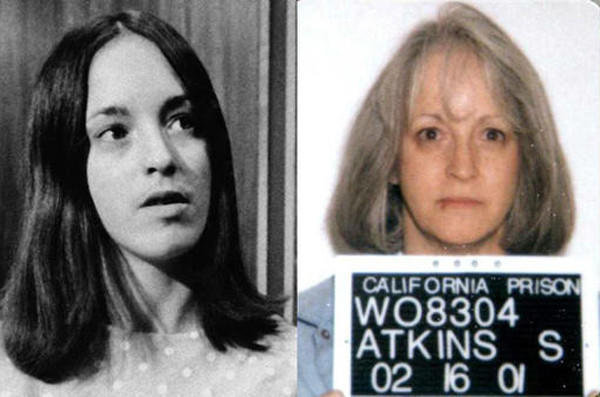

 Carina Chocono was losing her mind as a movie critic:
 As Chocono noted, “Women’s experience in its entirety seemed contained in that remark, not to mention several of the stages of feminist grief: the shock of waking up to the fact that the world does not also belong to you; the shame at having been so naïve as to have thought it did; the indignation, depression, and despair that follow this realization; and, finally, the marshaling of the handy coping mechanisms, compartmentalization, pragmatism, and diminished expectations.”
 Finely etched as a filigree narrative spanning these essays is the story of how Carina Chocono figured out how to save her marriage (Chapter 2 Can This Marriage Be Saved?), be a good mother, be a good writer, and find her way back onto the heroine’s path:
 For Chocono, it’s autonomy, agency, and authority. Also, equity and self-expression. To love and to be loved.


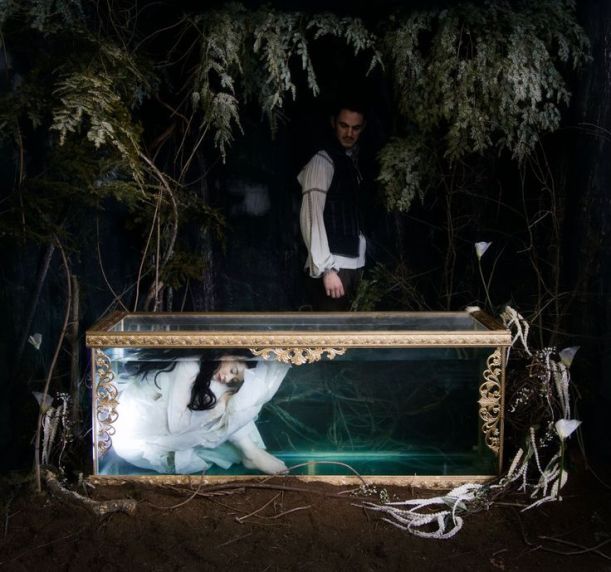




 To me, this, too, did not seem fair. Granted, Ellen was intense. She failed to sufficiently empathise with her husband’s needs. But all she asked was to be loved.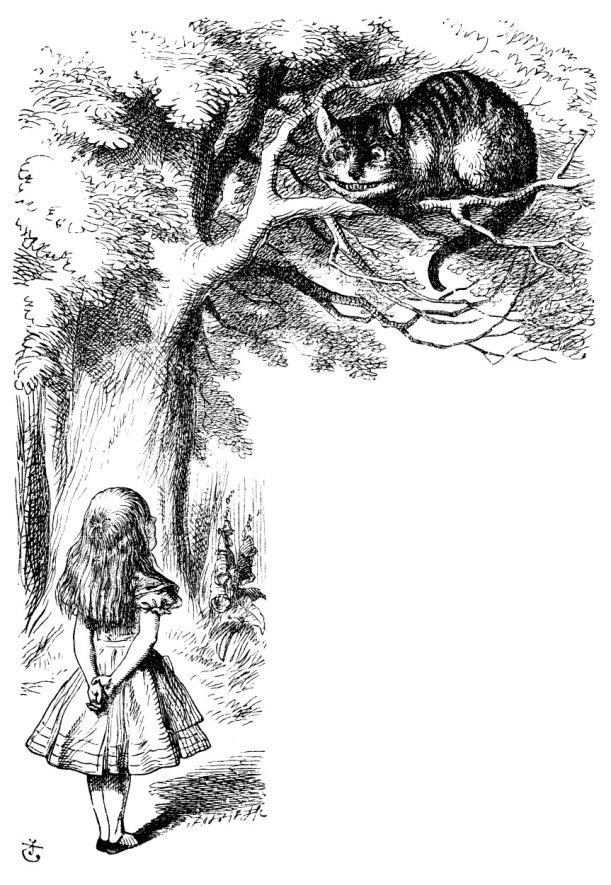
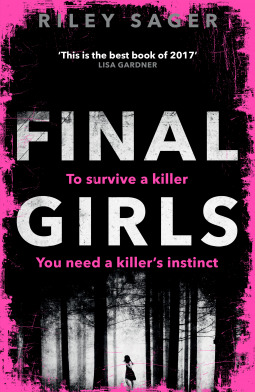


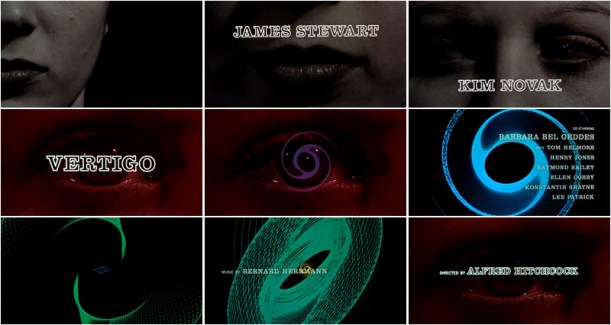 Next day, I couldn’t let it rest:
 I’ve just read Paula Hawkins’ Into the Water, and IMO it’s a better and more interesting novel than her bestseller The Girl On The Train.

 Ivor Indyk at Giramondo Publishing was one of my lecturers at Sydney Uni 30 years ago, and I see he helped birth Ali Alizadeh’s novel The Last Days of Jeanne D’Arc, which I read last night.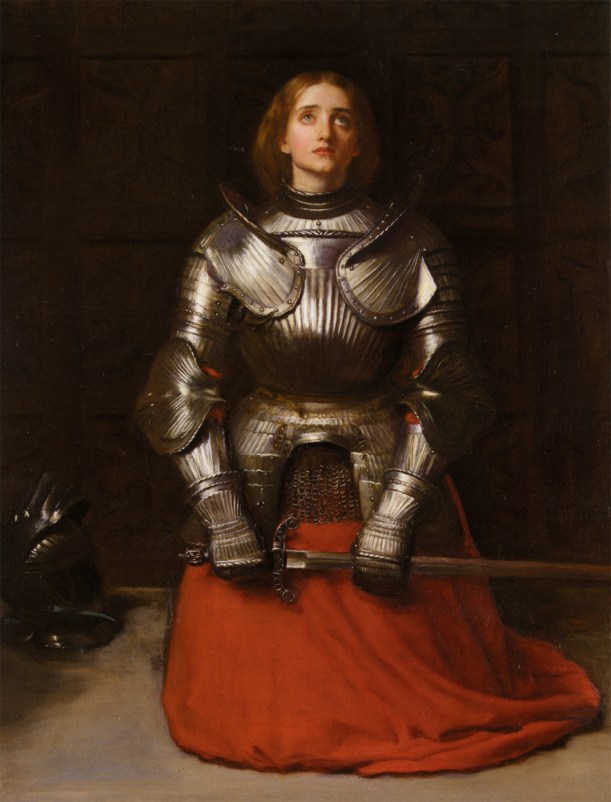

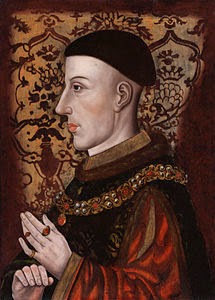
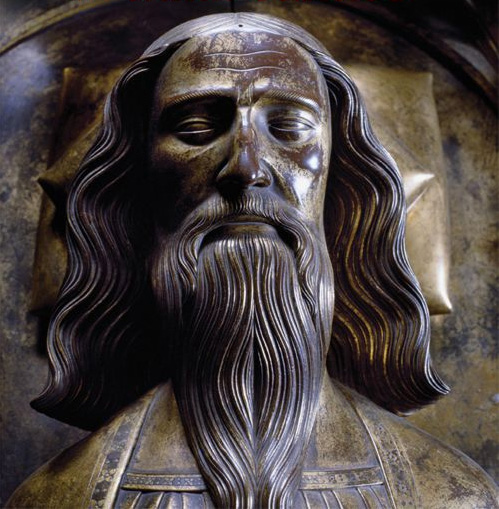

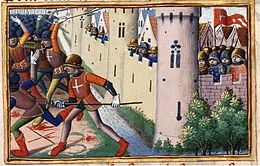
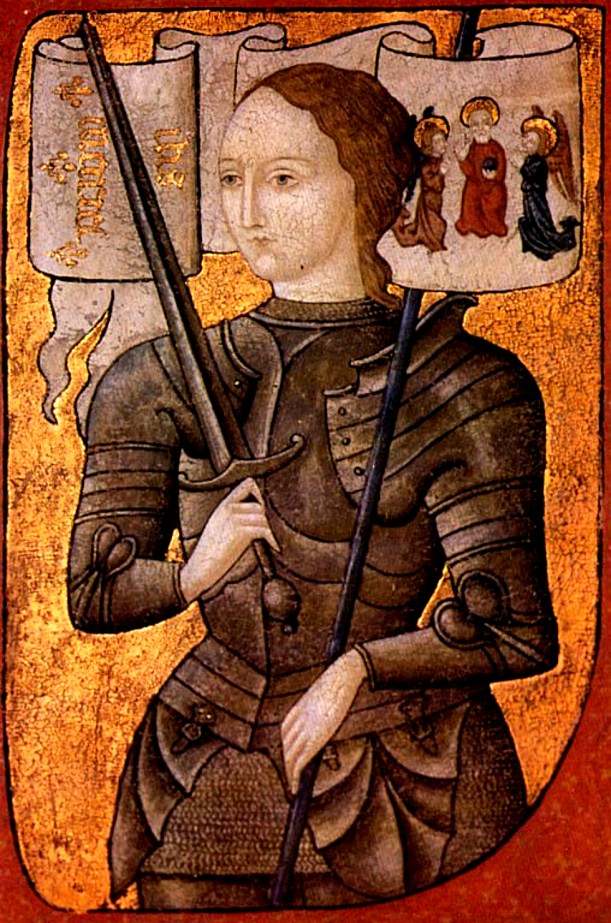
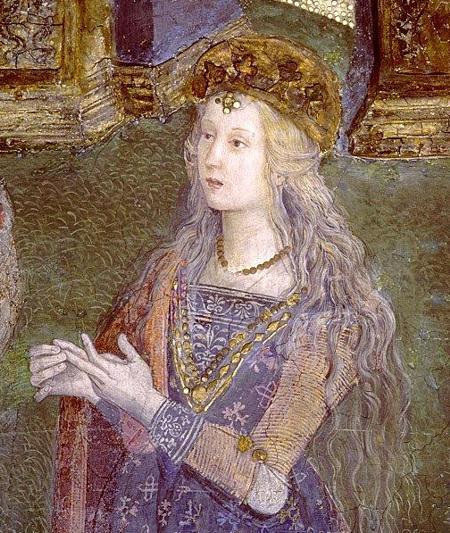


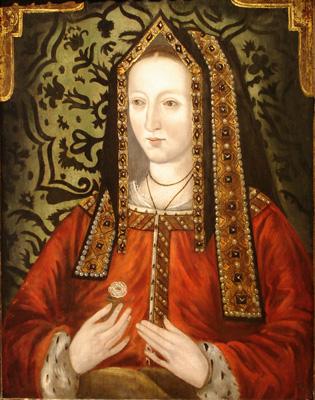


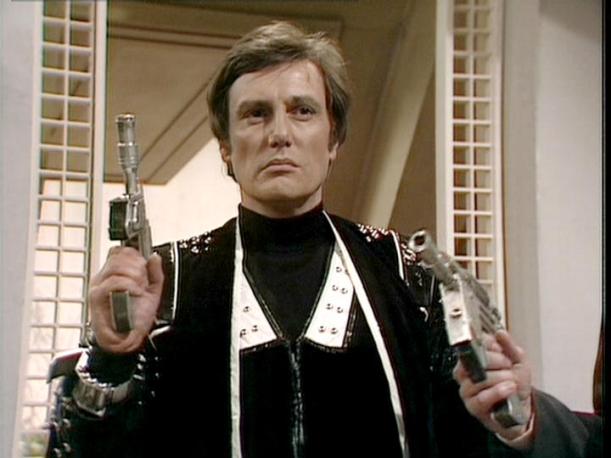
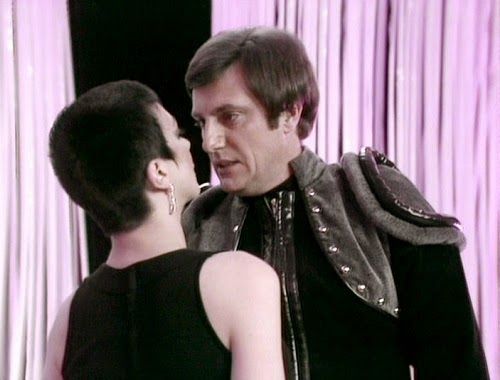


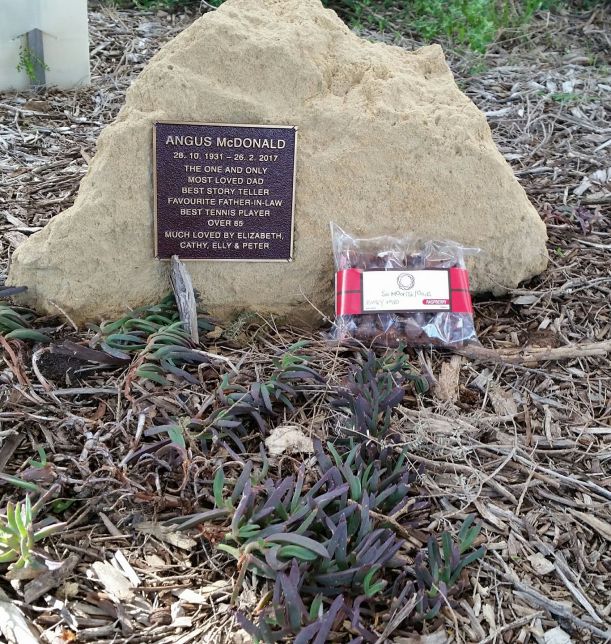



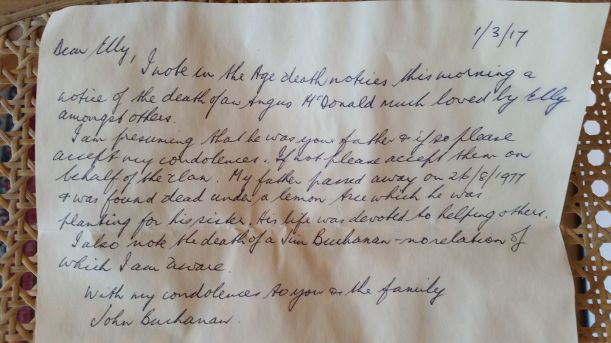
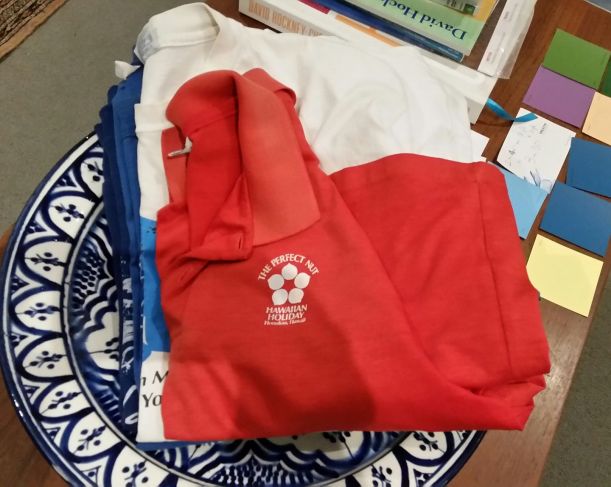
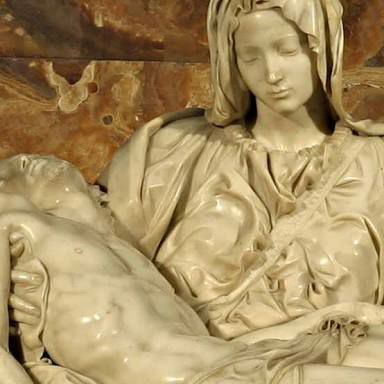
 I am 56 today and last night my sister gave me a birthday card from my Dad.