
Category Archives: Book reviews
Review: My Absolute Darling (2017) by Gabriel Tallent

The cover blurb sums it up:
At fourteen, Turtle Alveston knows the use of every gun on her wall; that chaos is coming and only the strong will survive it; that her daddy loves her more than anything else in this world. And he’ll do whatever it takes to keep her with him.
She doesn’t know why […] the line between love and pain can be so hard to see; why making a friend may be the bravest and most terrifying thing she has ever done; and what her daddy will do when he finds out…
Turtle is aptly named: she is both a lizard-brained creature armored by her shell, and the mythical turtle who bears the world on its back. She is at different points passive and watchful, and “the future shotgun-toting, chainsaw-wielding queen of postapocalyptic America”.
Naming matters in this novel. There is a worldview debate between Turtle’s daddy and his father, Turtle’s grandpa: do we know a thing by first naming it, or, in order to know it, do we need to approach it with complete openness, study it, examine it, understand it, before we can name? Martin, Turtle’s father, is, in addition to being a “narcissistic sociopath”, an avid reader of philosophy. He tells Turtle she is the Platonic ideal of herself: his perfect imagined survivor. Daniel, Turtle’s grandpa, teaches her to observe and intuit and recognize the truth from her observation.
This isn’t an abstract debate. Martin warns Turtle against allowing other people’s interpretations to corrupt her understanding: he wants his version of the ‘truth’ to remain unchallenged. Challenging Martin’s ‘truth’ could be fatal. Challenging Martin in any way brings painful retribution.
When we meet Turtle, she is wholly Martin’s. She is silent, sad, almost non-verbal. At school, she fails vocabulary tests again and again. She cannot reach for the appropriate words. Her worldview, mirroring Martin’s, is of a hostile, menacing environment. She has no sense that people might care, or cooperate.
When presented with the sentence ‘The _________ enjoyed working with children’, Turtle surmises ‘suspect’. Of course. “The suspect enjoyed working with children”. Turtle, whose father has had sexual relations with her for many years, whose father refuses her any contact with medical professionals or counselors, has no concept that the more obvious choice might be “The paediatrician enjoyed working with children”.
Turtle cannot find appropriate words, so inappropriate words speak for her. She is unable to speak of other girls or women without hissing misogynist violence. “Bitch.” “Whore.” “Cunt.” “Slit.” Turtle believes these words say everything there is to be said for femaleness, everything there is to be said about her. She believes her father, accepts everything he says. He calls her “kibble”: dog food.
Sometimes, Turtle has an urge to break free, to at least temporarily slip the leash, even knowing she’ll beaten after her day AWOL. On one of these free-range rambles, she encounters two boys, boys lost hiking, and protects them from the elements, maybe saves their lives. If Turtle is to have a life, this might be the moment she saves herself. This is the moment she chooses friendship.
Where will friendship lead?
We know from the outset chaos is coming. We know there must be a showdown. We don’t know who will live or who will die. We realize early on that Turtle needs someone outside herself to fight for; fighting on her own behalf will not be sufficient to survive her father.
Gabriel Tallent loves language and the boys Turtle meets are hyper-verbal. They’re very funny, and their linguistic joking provides much needed relief in an intense, extraordinarily poetic novel, filled with excess language thick like impasto paint technique, like the tidal wave and its debris-filled aftermath that is this narrative’s turning-point episode.
Turtle at times is a cartoon superhero(ine).
“She doesn’t feel cold.”
“Or pain.”
“Only justice.”
“We think she might be a ninja.”
“She denies this.”
“But of course, she’d have to deny it.”
“If she said yes, she was a ninja, we’d know she wasn’t.”
“I wouldn’t describe the ninja theory as definitive, but it’s a live possibility.”
“Anyway, she led us out of the valley of the shadow.”
“She can see in the dark.”
“She can walk across water.”
We can know a thing by looking at it closely and describing it. Then we might name it. Say, “ninja”.
But would we stake our lives on naming truthfully?
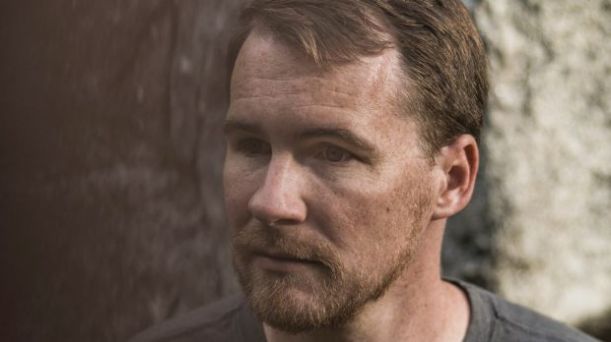
Debut novelist Gabriel Tallent
Such Small Hands (2017) by Andres Barba translated from the Spanish by Lisa Dillman

Edmund White states in his Afterword that in this slim novella, Such Small Hands, Spanish writer Andres Barba “has returned us to the nightmare of childhood”.
Maybe it’s a Spanish thing. Of the many pop culture associations that sprang to my mind reading Such Small Hands, perhaps the closest is the 2006 Spanish film Pan’s Labyrinth (El laberinto del fauno), written and directed by Guillermo Del Toro. Pan’s Labyrinth is as dark a nightmare of childhood as I could ever accommodate.
Truth to tell, I find myself pushing away this small book because it’s just too dark.
I find myself dismissing it as a kind of party trick, a Halloween party trick. Very clever, very skilled. Very scary. Nothing to do with me or mine.
If I were an agent, pitching this tale, I’d pitch it as an all-girl Lord of the Flies set in an orphanage, meets Courtney Love singing Doll Parts. Meets Euripides’ The Bacchae.
Plus Ziggy Stardust and the Spiders from Mars.
With that scene from Barbarella with the vicious dolls. And Anita Pallenberg as the Grand Tyrant.
Got it?
I’m not an agent, and some things get under my skin.
This tale is apparently based on a real-life incident in an orphanage in Brazil in about 1960. The presenting circumstance is that a child is orphaned: a child loses her parents. With her parents, she loses her protections in life. Much as the child did in Pan’s Labyrinth.
Wake up you sleepy head
Put on some clothes, shake up your bed
Put another log on the fire for me
I’ve made some breakfast and coffee
Look out my window what do I see
A crack in the sky and a hand reaching down to me
All the nightmares came today
And it looks as though they’re here to stay
[…]
I think about a world to come
Where the books were found by the golden ones
Written in pain, written in awe
By a puzzled man who questioned
What we were here for
All the strangers came today
And it looks as though they’re here to stay
David Bowie, 1971, Oh You Pretty Things
Review: The Stranger (2017) by Melanie Raabe – Die Falle, translated from the German by Imogen Taylor
 What if your spouse went missing for seven years then apparently returns – only it’s not him, and this person who claims to be the man you loved appears to have a mysterious, vindictive agenda?
I sat up past midnight gulping this book, forgetting I had work the next day.
I didn’t plan to write a full review, mostly because I can’t do that without spoilers.
Suffice to say, on the best seller, airport reading level, essentially it’s a nightmare, gender-reversed version of the Hollywood staple My Favorite Wife/Something’s Gotta Give/Move Over Darling, though the author casts it in terms of classic dark folk tales, primarily Hans Christian Andersen’s The Snow Queen. There are chips of ice in the heart. Lost love. Dark woods and winding paths.
On serious levels, it’s a meditation on love, guilt, and memory. On marriage. With Radiohead as its soundtrack. (The beloved also loved Leonard Cohen, Nick Cave and Tom Waits. There might be an echo of Orpheus and Eurydice here.)
The novel is rich in allusions: The Return of Martin Guerre, the 1982 French film starring Gerard Depardieu, based on a sixteenth-century incident. Sommersby, the 1993 Hollywood remake starring Jodie Foster and Richard Gere. Homer’s Penelope and Odysseus. The scar on Odysseus’s thigh, the testimony of the aged dog, the knowingness of the marital bed.
Is this man who returns to Sarah, Philip? (The names are significant: Phil being the ancient Greek etymology for ‘love; lover’; Sarah meaning ‘princess’, which was Philip’s nickname for her. There is also the shadow figure, Vincent. Vincent means ‘conqueror’.) Is this man her husband? Or is he a psychopath? Or is this stranger both?
I kept thinking of Hamlet. Hamlet is on a mission of revenge. He is fuelled with righteous rage, based on his belief in murder, conspiracy and betrayal. Yet Hamlet is uncertain. Uncertainty stays his hand. Who is this woman, this woman he claims as his wife?
When I outlined this plot to my sister, she insisted even after twenty years apart she could never not recognise her husband. She could never confuse her husband with a stranger. No ambiguity.
Melanie Raabe stacks the decks to create a plausible context. But her central inquiry – who is the person I married? who is the person I claim to love? – resonates broadly.
I’m not so certain myself.

Melanie Raabe
Mayhem: a memoir (2017) by Sigrid Rausing

Eva and Hans Kristian Rausing early in their marriage
The eye of the storm is a locked bedroom: it stinks, drug paraphernalia and littered clothes strewn about, drug dealers’ phone numbers penned on the walls. At the very centre is someone who is now dead.
That much is common to many drug tragedies. Flung from the storm’s centre are children, four of them, primary school aged. Clutching for the children are adults, siblings and parents of the drug-affected pair; and spiralling out from the distraught adults are lawyers, police, specialist doctors, psychoanalysts, rehab staff, staff at the children’s schools, distressed friends, well-wishers, haters, readers of mass circulation tabloids, writers and directors and stagers of operas, casual internet trawlers and readers of this book.
Mayhem.
… an old English term for the crime of maiming. The term implies guilt, which is appropriate in this context, since there is no addict story that doesn’t revolve around guilt, shame and judgement. The guilt is indiscriminate, and so is the shame. We were all guilty, and none of us were guilty. We were all shamed, and we absorbed the shame.
Sigrid Rausing’s account of her brother’s and sister-in-law’s drug addictions, and the havoc wreaked by addiction, is at its centre not so very different from every other addict story. The story has some sensational embellishments that made it a public scandal. It could be ripped from the pages of a Stieg Larsson thriller: The Girl with the Flaming Stigma. It’s also made distinctive by how extraordinary Rausing’s writing is, by how painstakingly she steers her course between restraint and suppressed fury, by how intelligently she attempts to analyse and contain the issues and emotions stirred up by the cyclone that is addiction.
Rausing’s account is many things.
If you do not tell your stories others will tell them for you, and they will vulgarize and degrade you, said Ishmael Reed, quoting George Bernard Shaw.
I write, know that writing at all may be seen as a betrayal of family; a shaming, exploitative, act [how much do I love that extra comma]. Anyone reading this who thinks so, please know that I thought it before you. Anyone who thinks so, consider also how we were brought up: wealth, privacy, silence, discretion.
But someone died, early one morning or late one night.
When someone dies this way, must someone wear the guilt?
The story, its centre, can be schematised:
Hans Kristian Rausing, an heir to the TetraPak fortune, worth billions, develops a heroin addiction at age 19 or 20 on the beaches of Goa, in India.
Years later, in rehab, he meets a fellow recovering addict named Eva Kemeny. They marry, have four children, lead a drug-free life as wealthy philanthropists funding addiction recovery programs.
Eight years after their wedding, Eva and Hans celebrate the new millennium on New Years Eve 2000 with a glass or several of champagne. It is the end of their sobriety. The next 12 years are a whirlwind that tears their lives apart, culminating in that death in that bedroom in July 2012.
Should I say more?
I can only imagine the shame, the pain, Sigrid Rausing must have felt putting words to what happened.
The Rausings, Hans and Eva, had lived in a mansion in Cadogan Place, in Belgravia, possibly the most exclusive and expensive location in London. The mansion was maintained impeccably by their staff – except for the bedroom on the second level, the epicentre of the couple’s drug world, forbidden to all others.
When Eva died, sometime either late at night or before dawn, Hans was present, but could not cope with her death. Instead of reporting her death and ensuring proper procedures were followed, he heaped clothes, doonas, TV sets on her body, wrapped it in a blue tarpaulin, apparently sprinkled it with baby powder (to absorb the smell?), and continued in his drug nightmare until two months later, when some police officers stopped his car on Wandsworth Bridge, searched the car, found drugs, searched his home under warrant, and found Eva.
She was identified by a partial thumb print and by the pacemaker implanted six years earlier to support her damaged heart muscle.
Eva’s immediate cause of death was determined to be heart failure caused by inhaling crack cocaine. Hans Kristian was charged with preventing Eva’s lawful burial. He was sentenced to two years, suspended, with the requirement that he undergo a two-year rehabilitation program.
Then things took a weird(er) turn. Eva had been in communication with journalists and police in Sweden, claiming Hans’s father, Hans Rausing Snr, had ordered the hit on Swedish prime minister Olof Palme, who was fatally shot after a night at the cinema in 1986.
Eva was very often irrational across those years of relapse, sending threatening, quite psychotic emails and texts to Sigrid (and others?) with a frequency and degree of implied violence that constitutes harassment. She wrote in her texts and emails that she was omniscient, omnipotent; she hurled black magic curses. The investigative journalist to whom she sent her accusations against Rausing Snr did not publicly disclose Eva’s allegations until after her death, suspecting they were unreliable, not least because Eva admitted she had gained her information through a revelatory dream, a vision she admitted was not her first.
In a letter to a jailed killer she wrote
One morning, I woke up and looked over at my husband, who was asleep, and I swear, the thought came to me loud and clear. […] I’m scared. What I think that they could do is come into the house, gas me with some sort of sleeping gas, then they could deliberately give me an overdose of some drug or other and then, worst of all, they leave a note in what looks like my handwriting. Help! I know this sounds very far-fetched and completely paranoid but I swear to you these people are capable of anything.
Swedish police made no comment, as is their policy with ongoing investigations. In Sweden, where there is no statute of limitation, all investigations are officially ongoing.
In Sweden, Eva’s revelations were incendiary.
The background is complicated – changes in Swedish legislation in the 1970s and early ‘80s that proposed unions buy increasing shares in privately owned companies to become majority stakeholders – but Sigrid Rausing is adamant:
Eva’s idea, therefore, that Olof Palme had constituted a threat against the company may have been true in the 1970s, but by 1986 it certainly wasn’t true any more. And every newspaper editor in Sweden knew that.
It was Nordic noir, Scandi noir, at its blackest. In 2016 an opera was staged in Sweden with Hans Kristian and Eva centre stage, Sigrid, her siblings and her parents presented as agents of doom. The director sent a copy of the libretto to the family for comment.
The charge against Sigrid and her sister, Lisbeth, is that they took the children. Sigrid took the children; Eva couldn’t live with that and so she died.
Much of Mayhem is Sigrid wrestling with issues of guilt. Trained as a social anthropologist, a longtime proponent of psychoanalysis, Sigrid thinks like a philosopher. She worries away at issues of guilt, of culpability, of agency, from every angle she can conceive of. She is insightful, intellectual, intuitive. She is devastated.
One thing she never traces in her writing is the possibility that the children could have remained with their parents. Could that have made the difference? Could that have benefited the children, saved Eva Rausing?
Eva always believed so, and so, apparently, did Eva’s parents.
Could those four young children have lived downstairs in that mansion in Cadogan Place, maybe gone to boarding school, maybe as week-day boarders, cared for by staff, visited by relatives – and all would have been well?
Could those young children have been kept innocent of the darkness at the centre of that house, the room that was their parents’?
Sigrid and Lisbeth spent 2007/08 in court with lawyers arguing the case that this wasn’t possible. Courts are loathe to remove children from their parents, from their home. Yet the courts determined the children could no longer live with these parents.
The court action was prompted by a report from Social Services after Hans Kristian dropped out of yet another attempt at rehab. Social Services had informed Sigrid and Lisbeth that action would be taken to protect the children, and that if the children were taken into care by the state, the four siblings would most likely be split up.
Sigrid had been a director of the NSPCC – Britain’s National Society for the Prevention of Cruelty to Children. She knew what this meant.
Mayhem is
Dedicated to Hans and Eva’s four children. For legal reasons, they cannot be named in this book. That is one of the many reasons why the text remains as partial and unfinished as it is, since these young people, alongside my own son Daniel, were, and are, an indelible part of my life.
I thank them for their patience, their humour and their courage.

Sigrid Rausing
Review: Idaho (2017) by Emily Ruskovich
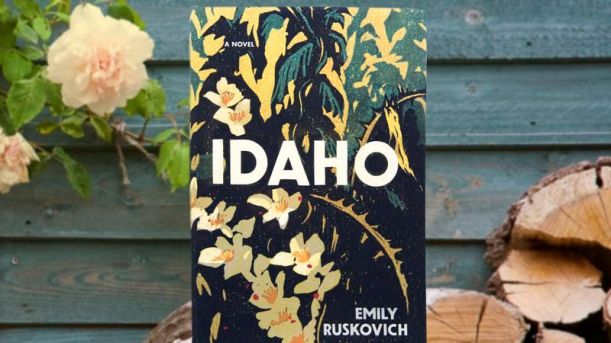 On a mountain-top in rural Idaho, a mother kills her 6 year old, in a seemingly impulsive, reflex action. She “waived her right to a trial, entered a plea of guilty, and, in a hearing that lasted twenty minutes was sentenced to life in prison with the possibility of parole after thirty years. During this hearing, the judge seemed to find her lack of self-regard unsettling, her adamant plea of guilt unusual. He pressured her to give an explanation, but she only said she had committed the murder of her child and she wished to die for it.”
Thirty-two years later, word in the Sage Hill Women’s Correctional Center is that Jenny told the judge: “I wish that you would kill me. But I should never again be granted anything close to what I wish.”
Word in the women’s prison is that during the sentencing, Jenny’s “husband didn’t look at her, not once.”
lacuna
ləˈkjuːnə/
noun
plural noun: lacunae
- 1.
an unfilled space; a gap.
- 2.
ANATOMY
a cavity or depression, especially in bone.
Jenny is, simultaneously, the lacuna at the heart of this book, an emptiness of the heart; and Jenny is the heart of this book. Jenny is Schroedinger’s cat: When you open the box, the cat is either alive or it is dead; when the box is closed, reality is unknowable, paradoxical possibilities exist.
”Wade,” she says, “You break my heart.”
And you break mine,’” he answers.
By no coincidence, stray cats, missing cats, feature as a narrative motif, and Schroedinger’s cat is referenced.
After poetry class in jail, Jenny writes a note to her cellmate:
D says this poem in I’ams almost whole way through. Where meter breaks free (see where I circled the phrases he pointed out), imagine a voice breaking too. Form and content intertwined. (People seem to know what I-am means. I assume “first person point of view.”)
Later, she reports: “An I-am is a pair of syllables. The first one soft, the second loud. It’s the rhythm of the human heart, which is also the natural rhythm of human speech.”
Idaho is a meticulously crafted text, thesis material in its density but highly readable. It’s a narrative of paired ‘syllables’, a narrative of people bonded as pairs: husband and wife, parent and child, sibling with sibling, cellmate with cellmate. Every heartbeat of this story reminds us it takes two. The pair at the centre of this story are twin enigmas: the mother, Jenny, because like Christ before Pilate she refuses to explain, or even speak; the father, Wade, because like his father and his grandfather before him, Wade has younger onset dementia, his memory disintegrating while he’s physically hale, his life expectancy no more than his mid-50s, the awareness of darkness and death his life-long shroud.
Yet, the song of the heartbeat is I AM: the assertion of self.
The uber-I AM is of course God, G-d, Jehovah: the Old Testament God who declaimed I AM THAT I AM, who instructed Moses on a mountain-top, who ordered Abraham to kill his child. At one point a family of Jehovah’s Witnesses visit Ann and Wade on their mountain (Iris Mountain, a mountain seeded with wild irises, Iris in Greek mythology being a female messenger of the gods). I don’t think that’s coincidence, either.
Jenny pushes away I AM and has chosen self-abnegation: “I should never again be granted anything close to what I wish” – not even this wish. For Jenny, “Silence is something she can bear a little better than a failed attempt at saying what she means.”
Wade has lost much, is losing everything. But, as they say, nature abhors a vacuum, perhaps most dramatically enacted in a wilderness, on a wild mountain, and it is the human way to make meaning even out of absences and silences, to try to reconstruct significant events.
Idaho is constructed as a series of first person narratives, and through those first person points of view we see how driven the human heart is to construe events so that, ultimately, we, the storytellers, the first person narrators, are at the heart of the matter, at the centre of the story, and the story becomes ours.
And so it is that Jenny’s story is appropriated by the woman Wade marries after Jenny makes herself an absence, a woman who in her imagination projects such a vivid, sensual scenarios that ultimately she feels herself to be the sole custodian of this family’s story:
She knows from [Wade’s] casual gestures, from the simplicity of his smile, the absence of pain, that she has inherited his family wholly now, that nothing can bring them back.
For the first time, she knows for certain that they live only in her.
This woman, Ann, is a good woman, believes herself to be a good woman. Yet eventually she convinces herself that she is the reason the child was killed, convinces herself that she is guilty, through a kind of lovers’ telepathy, an osmosis through the medium of music. She believes herself guilty, too, of the death of a fawn, merely by her touch:
Had she known, when she reached out afterward, so softly, with just one fingertip, that she could do it harm? […] she thought of wiping the fawn with a wet cloth. But the cloth had a smell, too, of detergent. And so there was nothing she could do. […] Periodically that evening she forgot it, and then when she remembered, her fingertip tingled at the memory of that white spot, like peppermint. She thought of those woods at night. Wade had mentioned seeing a mountain lion before, not up here but down at the river, leaping right out of the water. So they were around. Coyotes, wolves. All those dark branches and dark trunks of trees and the fawn moving in the dark. Invisible except in one place, one white spot: Ann’s fingerprint moving through the woods like a point of light. Here I am!
Jenny is appropriated, too, to an extent, by the cellmate her comes to love her, who sees Jenny as her saviour and who, through a Cyrano de Bergerac act of ventriloquism,* eventually procures Jenny’s ‘freedom’.
Paradoxically, this cellmate is driven to violence by the paranoid perception that her previous cellmate had appropriated her history:
“It’s fitting that I stabbed her with her own mirror. That’s what they call in my poetry class ‘dramatic irony’.”
He says, in a dull tone to mock her, “You mean because she was stealing your childhood.”
“Childhood, soul, whatever you want to call it.”
“A person can’t steal someone else’s childhood.”
(But they can. Killing a child steals that childhood.)
When this cellmate, Elizabeth, again encounters the ex-cellmate she stabbed, Sylvia, she looks at her as a dominant, abusive partner looks at their object of abuse and wonders, ”Who is she now, without Elizabeth?”
Who is Wade, without his children?
Who is Ann, the second wife, if not a young woman with an empty life who found meaning as a medium channelling the ghost of someone else’s tragedy?
And who is June?
June is the other gaping absence in this tale.
When the six year old was murdered on a mountain, her nine year old sister, June, saw, and ran, like a fawn in the dark woods. She has never been seen since, except as a series of photographs issued every few years through the National Center for Missing & Exploited Children, showing how that nine year old might look at 11, at 13, at 15, at 20. Ann has commissioned an artist whose vocation it is to construct ‘living’ images of absent children, to paint how June might look at different ages, in different contexts, living different personae. Is this another appropriation?
There is a character, Eliot, whose function is both to provide a living link to June and to show how hollow, how filled with the breath of hope, Ann’s life was before June’s sister’s murder.
Eliot has his own story – or he thinks he has. He tells his story often, dramatically, to assert his I AM. Then one day, his girlfriend throws in a different interpretation, and Eliot cannot live with it, can no longer live with her:
But with a casual shrug of her sholders, Ivy had changed his story. She changed the people in it. The intensity had not followed him – he followed it. […] He had become a passive player in the opening scene of his life.
And if Ivy could make him feel that in one careless instant, what else was she capable of taking away?”
At the heart of Idaho, our own private Idahos, is the question, can our stories hold? Can we ‘own’ our stories? Can we clutch them to ourselves, can we protect and keep them private?
Elizabeth’s injured ex-cellmate finds herself through music, through a reconnection with the piano.
Elizabeth wonders, “If music can live in Sylvia’s fingers for sixteen years without ever revealing itself, are there things that live in Elizabeth that time won’t touch, that nobody can take away?”
At the novel’s end, when it might appear Ann has given ‘back’ Jenny’s life, there’s a disturbing final paragraph. We think we know this story now. The basics were never in dispute:
“My wife has killed my daughter in the truck. My other daughter is scared. I need to get to her.”
It was the lack of ambiguity that made William stumble. […]
So Wade tried again. “My wife has killed my daughter.”
He was about to say it a third time when William managed a reply. […] “I understand. You’ve told me what happened.”
Do we, as outsiders, ever know the story?
In the novel’s last lines,
Jenny says, “On a different part of this river, I saw a mountain lion leap right up, right out of the water. It was the only time I ever saw one.”
“I know that story,” Ann says. “I didn’t know you were there, too. Wade told me.”
“He did?” Jenny smiles, surprised. ‘What else did he tell you?”
Ann isn’t sure what Jenny means. Jenny seems not to be sure, either. She laughs a little, for the first time.

Emily Ruskovich with rabbits
*Elizabeth’s act of written ventriloquism follows many years of literary ventriloquism, with roles reversed, with Jenny attending poetry class as Elizabeth’s proxy and handing in assignments written by Elizabeth under Jenny’s name. There’s so much in this novel to connect and unpick.
Review: History of Wolves (2017) by Emily Fridlund
Spoiler alert: contains plot details
I read History of Wolves immediately after reading Emma Cline’s The Girls (2016), and in some ways it’s a weirdly apt follow-up. Both are first novels by prodigiously talented young women writers.
Both are first person narratives told by damaged adult women recalling their young teen selves. In both cases the young teen selves are friendless and neglected, in Cline’s case living with material privilege, in Fridlund’s with privation. Both girls are desperate to be seen and to belong, and both form crushes on young women. Both stories centre on cults, and the consequences of cult beliefs, especially as promoted by male leader figures. Both discuss grooming and sexual exploitation (Fridlund in unpredictable ways). Both novels culminate in the death of innocents.
The strapline for History of Wolves is ‘How far would you go to belong?’, which could equally market The Girls.
But where The Girls is based on a notorious real-life crime (the Tate murders by Charles Manson’s followers), Fridlund’s novel is less sensational, much more subtle.
Emma Cline has said her central interest in writing The Girls was to explore the dynamics of relationships between adolescent girls; mapping that onto the lurid background of cults and massacre was a writing challenge she set herself.
Fridlund sets her story in a more mundane environment, where boredom and loneliness are the bogeymen her central character most fears.
Madeline – known as Linda, called ‘Freak’ or ‘Commie’ by her school peers, sometimes called Mattie, or Jane, or Janet – lives on a lake in frozen northern Minnesota, on a rural lot of woodland that formerly housed a commune. The commune disintegrated when she was about 7, leaving just her and her parents, who she speculates might not even be her actual parents, given children in the commune were raised in common.
Linda doesn’t know who she is. She doesn’t know who named her or why. She does not feel wanted or valued. She does not feel nurtured by her critical mother or her mostly silent father. She is underfed and overladen with survival tasks.
Linda is a wolf, without a pack.
Linda so desperately wants to be seen and wanted that she tries to seduce a pedophile – and fails. Instead, the pedophile fixates on beautiful Lily, who makes “people feel encouraged, blessed”. Linda makes people feel judged.
On the back of this rejection, Linda targets a young mother who, with her infant son and husband, has recently moved into a house across a narrow neck of lake. She has more success here: Patra (also known as Cleo or Patty, Patty Pea or Patty Cakes) is also lonely, with her scientist husband Leo frequently away, and Patra wants help with her four year old, Paul.
More pertinently, as the astute Linda observes, “Didn’t she always need someone to watch her and approve? And wasn’t I better at that than anyone?”
Linda is a watcher. She’s a stalker. She watches the pedophile and Lily. She stalks them. She watches Patra and her family across the lake through their house’s large windows. At various points she spies on Patra and Leo having oral sex, she slips into their darkened house when she thinks they’re out, she cyberstalks Patra, the pedophile and Lily in later life. She sends letters about intimate matters that should not be her concern and leaves anonymous gifts. She appropriates belongings. Her boundaries are porous.
Arguably Linda is a kind of ghost, a silent sinister being without substance. Fridlund references gothic horror: Jane Eyre, “the governess”, and that other governess, in Henry James’ classic horror story, The Turn of The Screw. In The Turn of The Screw, the governess, who might be sane but might be psychologically unhinged, believes her child charges are at risk from a pair of malevolent ghosts.
Or is it Leo and Patra who are types of ‘ghost’? It emerges their religious beliefs preclude matter, insist there is only spirit. Are they a couple who present a risk to the child in Linda’s care?

Linda watches.
Linda is so focused on watching Patra, so obsessive seeking to secure Patra’s attentions, that she fails in her role as babysitter, or “governess”, to Paul. The fact is, Paul is sick. Linda knew that on some level from the outset. But she fails to comprehend why Paul’s parents, who dote on him, don’t recognise Paul is ill and do not seek medical care.
Linda’s parents neglect her materially and emotionally. Paul’s parents see their son as a pure expression of God, as perfect, but their religious beliefs preclude any acknowledgement that his physical being might suffer.
Leo and Patra are adherents of Christian Science, and follow the tenets of its founder, Mary Baker Eddy:
“Become conscious for a single moment that Life and intelligence are purely spiritual, – neither in nor of matter, – and the body will then utter no complaints.”
Leo and Patra believe that mind determines all. If we think we are well, we will be well. If we think we are happy, we are happy. The only vulnerability is a negative mindset.
The key questions for Linda are
“What’s the difference between what you want to believe and what you do? That’s the question I should have asked Patra”
and
“And what’s the difference between what you think and what you end up doing? That’s the question I should have asked [the pedophile]”.
Linda wrestles with whether there’s a distinction between thought and act. If we think something, is that thought ‘real’, even if we do not enact it? Is it our truth? The pedophile ultimately thinks so: he accepts he is guilty, if not of the act, then of the thought.
So if Linda had the thought that without Leo and Paul, Patra would be hers, is she guilty, should Patra lose Paul and Leo? Is the illness of a child in this narrative in fact a McGuffin, a massive red herring? Is adult Linda sad, empty and angry not because she feels culpable about Paul but because she lost Patra?
It’s easy, and obvious, to read History of Wolves as a moral fable about child neglect. But I think it might be more complex. Emily Fridlund doesn’t conclude her tale after the court case. Instead, she concludes with a sexually charged sequence where Linda, a girl who (observed by a child) looks like a boy, imagines herself sexually assaulting Lily, almost as if she inhabits the psyche of the pedophile; and in imagining herself as the agent, imagines herself as the subject:
The violence in me is almost overwhelming. “That’s what you wanted, right? Just a kiss.”
And then there’s this. Even now, when those words move through my mind, like a curse or a wish, I become Lily […] I find I’m the one stranded in the boat, I’m the one shivering with cold, I feel everything and I’m the one wanted more than anything else.”
Underfed Lily is hungry, hungry like the wolf. Hungry like a pedophile driven by compulsion. Hungry to be “the one wanted more than anything else”.
This is not a tragedy about a young boy who dies. This is a horror story of a young girl werewolf who, in her desire to be “wanted more than anything else”, appropriates the objects of her desire and allows a young boy to die.

Author Emily Fridlund, History of Wolves
Review: The Girls (2016) by Emma Cline

Susan Atkins, Patricia Krenwinkel, Leslie Van Houten – Charles Manson’s “Girls”
Emma Cline’s The Girls is a serious novel, and seriously disturbing.
It’s a fictionalized reimagining of the Charles Manson “family” and the notorious murders perpetrated by Manson’s “girls” at 10050 Cielo Drive in Los Angeles in 1969.
Due to the salacious subject matter, and Emma Cline’s marketability, there was a bidding war for publishing rights in response to the book proposal. The project could have turned out grossly exploitative, but one of the attributes that makes Emma Cline marketable is her egregious talent: her novel is a stunning debut.
The Girls is a narrative told in the first person by Evie Boyd, within two timeframes: Evie aged about 61, and Evie aged 14, in 1969. Speaking as a 56 year old, I must immediately credit Cline with making an audacious choice, given the author was a mere 25 when The Girls was published. Her choice to inhabit the voice of a woman in her 60s is audacious but successful (though her mature Evie is outstandingly reflective – living through six decades doesn’t always result in this degree of insight).
Evie at 14 is painfully vivid. Cline is concerned with the vulnerabilities of adolescent girls: the ways the intense desire to belong, to be accepted within a friendship group or community, exposes them and makes them pliable, open to sexual exploitation and grooming. She’s concerned with formative adolescent sexual experiences and developing sexuality. She’s particularly concerned with the passionate feelings adolescent girls sometimes develop for each other and with older girls. Her Evie embodies all this.
Evie as a young girl is also a walking illustration of how we choose not to see, especially as adolescents, but also, for most of us, as we age. We choose not to recognize the obvious, if the obvious thwarts our illusions. We choose cognitive dissonance. We tell ourselves lies to make it all alright.
Evie is a privileged young girl from a wealthy, albeit troubled, background. She’s a socially isolated poor little rich girl. When she first sees “the girls”, gypsies, hippies, ‘free spirits’, she is immediately infatuated. When they take her to the hippy encampment on a ranch outside of San Francisco, she is seduced, literally and metaphorically, and wants nothing more than to join the girls as acolytes of Russell Hadrick, the cult leader Cline bases on Charles Manson.
Evie can see the hippy commune is dirty, disordered, dysfunctional, the small children underfoot feral and neglected, the adults semi-starved, drug addled inadequates. She can see they survive on petty criminality. But Evie is enamoured by the girls, most particularly Russell’s number one girl, Suzanne (who might be partly based on Manson disciple Susan Atkins), and all that is ugly is wreathed in the glamour of her feelings for Suzanne and her desire to be seen, accepted, and loved.
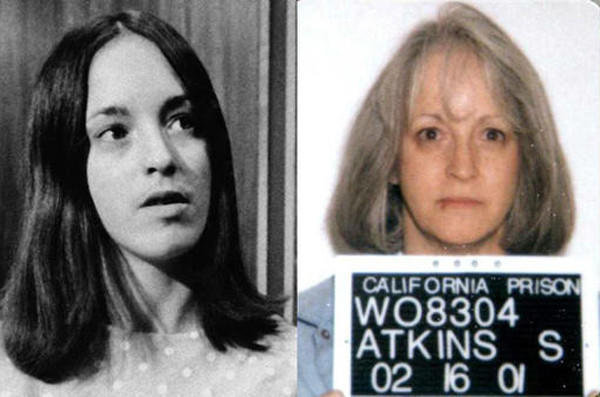
Susan Atkins
Evie gives herself sexually. She robs her mother. She joins in burglary forays, invading the homes of her own neighbours. She lies, cheats and steals for Suzanne, the girls and Russell. The question looms: would she kill?
To this point, the story could be a gothic allegory for more usual adolescent rites of passage – the crushes, the fervent group identifications, the sleazy manipulations of young girls by older men. But this story is based on the murders instigated by Charles Manson, so inevitably the narrative must engage with the much more extreme issues around killing fellow human beings.
If Cline simply retold the Manson story, fictionalizing names, attributing motivations and feelings, I think this project would be inexcusable. But she doesn’t do that. Instead, while allowing the narrative enough closeness to the Manson killings to acknowledge the real life scaffolding, she deliberately distances the story, geographically and in other ways, both to ensure the reader is pointed to the themes she most wishes to explore and, I believe, out of respect for Manson’s real life victims.
It would be unthinkable to recount in forensic terms precisely the ways the real life victims were slaughtered. That is not an entertainment. So instead of Sharon Tate, Abigail Folger, Jay Sebring, Wojciech Frykowski and Steve Parent, the victims in The Girls are named as Linda, Christopher, Gwen, and Scotty, and the ways they meet their deaths are comparable to, but not identical to, the ways Sharon, Abigail, Jay, Wojciech and Steven were killed. The killers are not named as Tex Watson, Susan Atkins, Patricia Krenwinkel and Linda Kasabian; Leslie Van Houten and Bobby Beausoleil are not named. Instead, the characters are Susan, Donna, Helen, Guy and Roos.
The LaBianca murders, perpetrated by Manson, Tex Watson and Manson’s girls the following night, are not mentioned. The Gary Hinman murder is only alluded to, without using names. The murders of James Willett and Don ‘Shorty’ Shea and the attempted assassination of President Gerald Ford are outside the scope of Evie’s story.
The fictional Evie Boyd owes her material comforts to the fortune built by her grandmother, a movie star. Emma Cline is the grand-daughter of the man who invented the Jacuzzi. There was at least one pubescent girl with movie star connections embroiled in the Manson cult [I have amended this blog’s original wording, which specified an individual, almost certainly confusing that individual with a different child of Hollywood, for which I sincerely apologise]. Emma Cline was a pubescent actress whose experiences in Los Angeles as a teen on the fringes of the entertainment world and later attempting to transition to a young adult actress were so demeaning she tossed it in and instead undertook a Masters of Fine Arts (Writing) at Columbia University in New York.
At Columbia, Emma Cline as a writing talent is remembered by one faculty member as “head and shoulders above everyone else”, which is born out by The Girls. She quickly progressed to writing for Salon, O Magazine and The New Yorker, with fiction in The New Yorker, Granta, Tin House and Paris Review, before she was signed to a three-book fiction deal by Random House, for a rumoured $2 million.
The Girls, published in 2016, was shortlisted for the John Leonard Award from the National Book Critics Circle and the Center for Fiction’s First Novel Prize. The following year Cline was named one of Granta’s Best Young American Novelists.
Her short stories to date tend to engage with similar themes to those explored in The Girls – how young girls navigate that potentially dangerous passage to adult sexuality. Emma Cline is on record saying she constantly wonders how she survived her teen years without crippling damage. The Girls asks, did Evie?

Emma Cline
Review: You Play the Girl (2017) by Carina Chocano
You Play the Girl by Carina Chocano
Subtitle: On Playboy Bunnies, Princesses, Trainwrecks & Other Manmade Women
Other editions subtitle: On Playboy Bunnies, Stepford Wives, Trainwrecks & Other Mixed Messages
Other editions subtitle: and Other Vexing Stories That Tell Women Who They Are
 Carina Chocono was losing her mind as a movie critic:
“I found myself spending hours in the dark, consuming toxic doses of superhero movies, wedding-themed romance comedies, cryptofascist paeans to war, and bromances about unattractive, immature young men and the gorgeous women desperate to marry them. Hardly any movies had female protagonists. Most actresses were cast to play ‘the girl’.”
Chocono credits film actor Isla Fisher with slapping her awake. Asked whether her break-out success in The Wedding Crashers opened opportunities for her, Fisher had reportedly replied, “All the scripts are for men and you play ‘the girl’ in the hot rod.”
 As Chocono noted, “Women’s experience in its entirety seemed contained in that remark, not to mention several of the stages of feminist grief: the shock of waking up to the fact that the world does not also belong to you; the shame at having been so naïve as to have thought it did; the indignation, depression, and despair that follow this realization; and, finally, the marshaling of the handy coping mechanisms, compartmentalization, pragmatism, and diminished expectations.”
Before diminishing into being a “movie” critic, Chocono had thought of herself as a “film” critic (her distinction): “I wrote about what interested me and reacted to whatever seemed to be worth reacting to in the moment.” She used film as the springboard to freeform meditations on issues that resonated – as Renata Adler wrote, writing “about an event, about anything”, “putting films idiosyncratically alongside things [writers] cared about in other ways”.
You Play The Girl is a collection of essays Carina Chocono has written utilising Adler’s approach: responses to film as “a way into larger cultural conversations”.
It’s also – which cannot surprise anyone who’s read my previous blogs exploring approaches to writing memoir – a memoir, of sorts.
 Finely etched as a filigree narrative spanning these essays is the story of how Carina Chocono figured out how to save her marriage (Chapter 2 Can This Marriage Be Saved?), be a good mother, be a good writer, and find her way back onto the heroine’s path:
“The heroine’s journey starts with the realization that she is trapped inside the illusion of a perfect world where she has no power. She employs coping strategies at first, or tries to deny reality, but eventually she is betrayed, or loses everything, and can no longer lie to herself. She wakes up. She gathers her courage. She finds her willingness to go it alone. She faces her own symbolic death. […] The heroine’s journey is circular. It moves forward in spirals and burrows inward, to understanding. […] The path is treacherous. The territory is hostile. But the heroine is brave. She knows what she wants. She’s determined to get it. Isn’t that how all good stories start?”
Yes but. As Herr Freud asked, “What do women want?”
 For Chocono, it’s autonomy, agency, and authority. Also, equity and self-expression. To love and to be loved.
This book is dedicated to the author’s primary school aged daughter, from “For Kira” on the dedication page to the penultimate thank you in the Acknowledgements: “And to my amazing daughter, Kira, for being ever curious, always insisting on presenting her evidence, and never holding her tongue.”
The ultimate acknowledgement goes to one of Chocono’s heroines: “And to Hillary Clinton, for inspiring us both.”

The memoir elements tracing Chocono’s marriage are subtle, and tender, but Chocono repeatedly refers back to cultural texts that provide explicit metaphors: Lewis Carroll’s mad worlds, Alice’s Adventures In Wonderland and Through the Looking Glass; the folk tales and fairy tales of Hans Christian Anderson, the Brothers Grimm and Charles Perrault; and the ways those folkloric tales have been reconfigured by Disney, Pixar and Hollywood more generally.
For me, Chocono is at her best deconstructing the Princess in popular culture, as she does in the chapter ‘All The Bad Guys Are Girls’. Her princesses range widely: encompassing Snow White, Cinderella, Sleeping Beauty/Aurora, Elsa and Anna, and Maleficent; but also Edith Wharton’s Lily Bart, Katharine Hepburn as Tracy Lord, and Betty Draper from Mad Men. She re-presents the Jennifer Beals character in Flashdance and the Julia Roberts character in Pretty Woman as “princesses’, based on their exceptionalism. (She savages both films, hilariously.)

She asks her daughter ‘What is a princess, anyway?’
Kira replies, “It’s a very fancy woman who gets her own way.”
What most horrifies Chocono though is what happens after the ‘happy ever after’. As she points out (and as I discuss in previous blogs), a medieval princess knew she was simply a transmitter of bloodlines and a vehicle for political alliances: her role was to get up the aisle with as little fuss as possible, pop out some heirs, and remain ‘invisible’ as an individual, whether alive or dead. Even in more recent times, for girls born into elites within stratified societies (as Chocono’s great-grandmother was, in Peru), ”A woman’s education was designed to coax her to sleep at sixteen and keep her unchanged and unconscious forever. It was an undoing. It wasn’t a start but a ‘finishing’.”

Elsewhere, in her synopsis of the film Maleficent, Chicano describes the narrative building from when “King Stefan’s men try to kill Maleficent, and Aurora tries to help her and discovers [Maleficent’s hacked off] wings in a glass case, because everybody is putting girls and their parts in glass cases all the time in these stories…”
These prince “heroes” in Frozen and Maleficent are sociopaths who mutilate and usurp women with extraordinary gifts. They’re Buffalo Bill in The Silence of The Lambs appropriating women’s skin. They’re monsters.
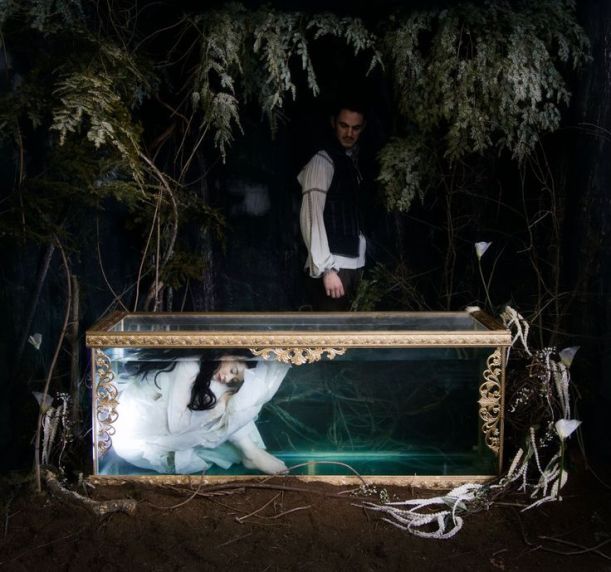
Yet in popular culture, just as often, what women see reflected back is the princess as monster. To quote David Bowie, ‘I looked around / and the monster was me’.
There’s a chapter called ‘Bunnies’ that I thought might be about the Bunny Boilers, but it is in fact about lads’ mags and the Playboy magazine ideal. Bunny Boilers surface instead in the chapter titled ‘The Eternal Allure of the Basket Case’. The Basket Case makes reference to Virginia Woolf (who Chocono cites frequently), and to artists’ muses, including Courtney Love, with a glancing mention of Zelda Fitzgerald but in-depth focus on Isabelle Adjani’s most famous studies in madness, in the films The Story of Adele H and Camille Claudel. Sylvia Plath pops up. Girl, Interrupted and Fatal Attraction are the Hollywood texts, along with an HBO show I haven’t seen, Enlightened, where Laura Dern loses her mind then loses her job. Or, arguably, the other way round.

Reading Chocono’s analysis of Adele H, I was reminded of when I first read reviews of this film, when it was released, in 1975, when I was 14. Director Francois Truffaut based his film on a real life story. Adele was the daughter of French literary titan Victor Hugo, writer of the novel Les Miserables. A young English army lieutenant had proposed to Adele, but she turned him down. Later, she regretted doing so, and, uninvited, followed his regiment to Canada, where she stalked him for years, then followed his regiment to Barbados, where eventually one day he confronted her, only for it to be apparent she did not recognise him.
Adele is a princess, daughter of the greatest French literary hero of the nineteenth-century. She is a Romantic: Chocono quotes philosopher Isaiah Berlin’s definition of Romanticism as “the unappeasable yearning for unattainable goals”. She quotes from Sandra Gilbert and Susan Gubar’s book The Madwoman In The Attic, a study of “madness as feminist protest, subversion, and resistance. The madwoman, they say, serves as ‘the author’s double, and image of her own anxiety and rage’ towards a culture that oppresses her.”
Is Adele’s madness also her own misplaced sense of entitlement? Is she being a “princess”, a “very fancy woman” who thinks she can get her own way by ‘virtue’ of her privilege and passion? Is she on the “heroine’s journey”?

Virtue, as Mae West almost said but didn’t, has nothing to do with it.
Reading again about Adele H reminded me of two vintage Hollywood films that made an impact on me when I was 12, both about mad and bad bunny boilers who selfishly insisted on loving men who did not want to be loved (by them). I was so distressed by these two films that I wrote about them at length in my then-diary. I have long since burnt those diaries. But I think I remember what I had to say.
The first film was Forever Amber (1947), starring Cornel Wilde, the Texan actress Linda Darnell, and George Sanders as King Charles II. Amber is a luscious 16 year old country girl when Wilde, playing randy cavalier (a tautology?) Lord Bruce Carlton, age 29 when our story starts, rapes her as he’s en route to London. Except it isn’t really rape because obviously she was too luscious to remain virgin and was gagging for it anyway, and because she falls Wilde-ly in love with Bruce and hitches a ride with him to the metropolis. Amber remains ardently in love with Bruce Carlton even as she sleeps her way to being the king’s mistress. She nurses Bruce when he collapses with plague. She lances his pustules. She lends him money and advocates on his behalf. In return, he scorns her as a fallen woman, derides her as shallow and selfish, and eventually, once he marries a demure young heiress, he takes the child Amber bore to him away to the colony of Virginia, away from the child’s whore mother, away from the contaminated royal court.
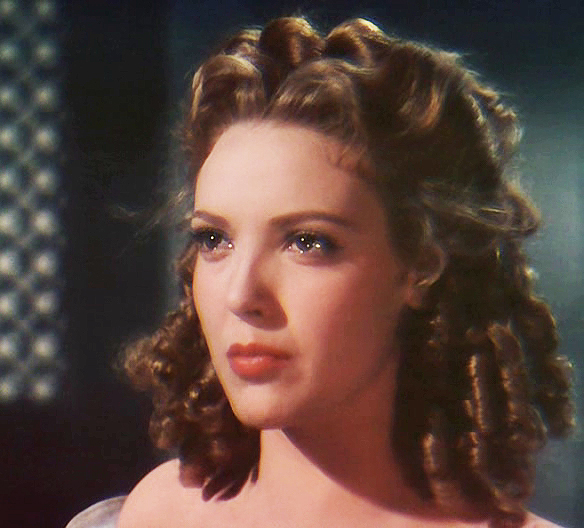
I felt that was unfair. Amber didn’t get to experience much love. She loved her son. Bruce was, reductively, a prick. She did not deserve his bad treatment of her.
It did not occur to me at age 12 that Amber might be capable of recognising all this herself and washing her hands of the bastard.
The second film was Leave Her to Heaven (1945), starring Gene Tierney and, again, Cornel Wilde, this time playing a writer who meets a beautiful woman, Ellen, on a train en route to her father’s funeral: the beautiful woman is especially emotionally vulnerable. Or out and out psycho. After their whirlwind marriage her obsessive jealousy and, yes, selfishness emerge. The writer has a disabled younger brother who comes to live with them. Bunny Boiler Ellen can’t bear to share her husband’s love so she watches, cold-bloodedly, as the boy drowns in a boating incident. Then her husband the writer finds solace in his friendship with her half-sister. He even dedicates his new novel to the sister, as “The gal with the hoe”. (She gardens.) Or was that dedication to “The gal with the hole”? Or “the gal with the ho’”?
Whatever. The Bunny Boiler had my sympathies.

Ellen flings her pregnant self down the stairs, cruelly murdering the writer’s innocent unborn son. When he walks out on her, she kills herself, setting up her sister and her husband for a murder charge. Knowing what we know about partner violence, it would be more credible if the writer had killed the Bunny Boiler, as Michael Douglas eventually kills Alex Forrest in Fatal Attraction (but she was asking for it). The screen-writer does kill Gene Tierney’s character. But only after he first assassinates it.
 To me, this, too, did not seem fair. Granted, Ellen was intense. She failed to sufficiently empathise with her husband’s needs. But all she asked was to be loved.
Gene Tierney’s problem was that she was a princess. She was a very fancy, over-entitled daddy’s girl who thought the world – or if not the whole world, her husband, at least – should love her unconditionally.
The Gene Tierney character is the Wicked Witch. She failed to play ‘the Girl’ the way ‘the Girl’ should be played – in the passenger seat.
To return to Isla Fisher: “All the scripts are for men and you play ‘the girl’ in the hot rod”:
“Women’s experience in its entirety seemed contained in that remark, not to mention several of the stages of feminist grief: the shock of waking up to the fact that the world does not also belong to you; the shame at having been so naïve as to have thought it did; the indignation, depression, and despair that follow this realization; and, finally, the marshaling of the handy coping mechanisms, compartmentalization, pragmatism, and diminished expectations.”
Or, the alternative coping mechanisms of madness and murder.
“’The girl’ doesn’t act, though – she behaves. She has no cause, but a plight. She doesn’t want anything, she is wanted.” For every princess who transforms into a witch, goes murderously crazy, there’s another – many others – being gaslighted: manipulated into believing, as Carina Chocono did, that she is losing her mind.
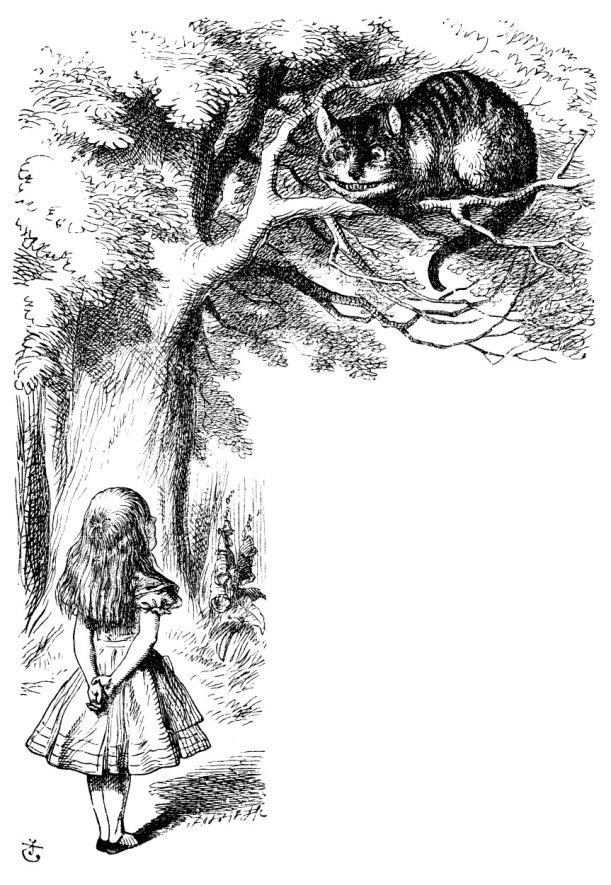
From Alice In Wonderland:
“But I don’t want to go among mad people,” Alice remarked.
“Oh, you can’t help that,” said the Cat: “we’re all mad here. I’m mad. You’re mad.”
“How do you know I’m mad?” said Alice.
“You must be,” said the Cat, “or you wouldn’t have come here.”
Review: Final Girls (2017) by Riley Sager
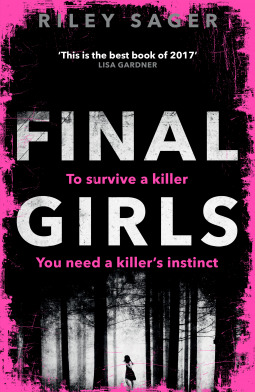
Quincy, Lisa and Samantha are each sole survivors of mass murders. But they live with threat.
When Lisa dies in suspicious circumstances, who should Quincy fear? Coop, the protective cop with Daniel Craig eyes? Jeff, the Ryan Reynolds look-alike Public Defender boyfriend? Samantha, her Riot Grrrl alter ego, tattooed SURVIVOR? Jonah, the tabloid scumbag? Her own mother, who taught her to be “Fine”?
Could He (who cannot be named) rise from the dead?
Or is that pesky dissociative amnesia concealing something Quincy’s survival depends on?
It’s 10.30pm. I’m working tomorrow. But I’m hooked.

So began my relationship with Riley Sager’s Final Girls – undoubtedly soon to be a movie near you, not to be confused with a 2015 teenflick of the same title.
This was a thriller I read through the night, constantly mapping it against its pop culture references, the movies, the books, the actors who might be cast, constantly guessing and second-guessing the whodunnit.
I knew guessing whodunnit was a pointless exercise. The author is such a fan of this genre that I knew s/he’d strew red herrings liberally and would make sure the ending twists back on itself like an angry rattler. (For the record: I’ve since discovered Riley Sager is a man.)
Partway through:
The movies it’s reminding me of most right now, other than Fight Club, are I Know What You Did Last Summer, The Blair Witch Project, and the Sharon Stone pic Sliver, where the script intended the Perfect Boyfriend (Billy Baldwin) to be the killer and Tom Berenger as the brooding cop with icy blue eyes to be the Male Savior. But preview audiences didn’t like that, so the ending was re-shot, making a nonsense of any nuanced characterisation the actors might have attempted.
Icy blue eyes ex-marine = sociopath ordinarily. But hey. Anything can happen.
In fact those icy blue eyes might be more Gary Cooper than Daniel Craig and Tom Berenger. The cop’s name is Franklin Cooper, known as Coop or Frank – Gary Cooper’s real name was Frank Cooper, and he was known to his friends as Coop.

Then I got precious:
Might be a touch of Donna Tartt (quince) in here too. The Secret History. The girl in the sacrificial virgin’s white dress that turns red with blood. Quincy and Sam are definitely maenads.
Btw Quincy is an Instagram blogging baker. She makes tartts (sic). And sweet muffins. Just desserts.
The Hitchcock Vertigo references kicked in.
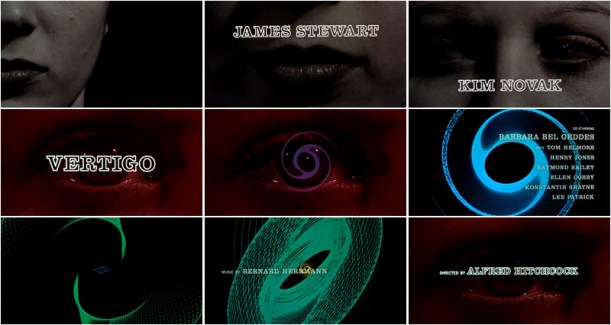 Next day, I couldn’t let it rest:
I’ve been turning this one over in my head this morning. The author really loves genre. This is surprisingly smart plotting and structure and is ultimately a fan homage to the “final girl” trope. It’s also genuinely terrifying in some sequences.
Yup. It is.

UPDATE 26 November 2017: Since posting this blog I have learned that two of the most striking moments in Final Girls are not products of Riley Sager’s imagination but are instead lifted from reports of the murders at 10050 Cielo Drive in Los Angeles in 1969, perpetrated by members of the Manson Family. It’s all fun and games until it’s real.
Review: Into The Water (2017) by Paula Hawkins
 I’ve just read Paula Hawkins’ Into the Water, and IMO it’s a better and more interesting novel than her bestseller The Girl On The Train.
It doesn’t have the more egregious flaws of GoTT – the drawn-out over-repetition, the ludicrous gothic ending, the central character we wanted to strangle. In all, much more disciplined: more pointed, less hysterical, more affecting. The ending is particularly finely judged.
The point is not really the whodunnit, which I won’t comment on. The point is how we construct and contextualise memories, the lies we tell ourselves and the delusions we accede to.
Hawkins prefaces her tale with two quotes, one from Hallucinations, by neurologist Oliver Sacks:
“We now know that memories are not fixed or frozen, like Proust’s jars of preserves in a larder, but are transformed, disassembled, reassembled, and recategorised with every act of recollection.”
Jules has been estranged from her sister Nel for decades, despite Nel’s frequent phone messages, to which she will not respond. Jules remembers Nel as callous – even cruel – as an adolescent big sister. She has Nel written off as a narcissistic self-dramatist. Then Nel dies in circumstances that might seem to justify that verdict. Jules returns to the village where the two spent teen summers, the village where Nel died, to care for Nel’s 15 year old mini-Nel, whose name is the near anagram Lena. But Lena is hostile, and her mother’s death is her second recent loss: not so long before, her BFF died the same way Nel apparently died.
The same way another local woman died 30 years earlier.
There are those who believe they know the truth of what happened in each case, and those who know versions of what happened but cannot quite trust their knowing. There are those who seek a ‘justice’ that validates their version of events. There are those solely interested in self-justification. There are characters who effectively live in parallel universes, their versions of ‘reality’ in contradiction to the universes inhabited by others in their orbit.
Paula Hawkins explores what might happen when contradictory realities, constructed memories, are contested. She’s interested in interpersonal conflict, the shock effects in the wake of tragedy. She’s particularly concerned, as she was in The Girl On The Train, with how misogyny impacts women. There are several plot strands that play out ways men exert power to the detriment of women. Not all of these are presented in the most obvious terms. There are subtleties that are disquieting.
Don’t get too hung up on who did the killings. It’s really not the pay-off with this novel. The pay-off is the deep sigh when the question “Why?” is answered.

Review: The Last Days of Jeanne D’Arc (2017) by Ali Alizadeh
 Ivor Indyk at Giramondo Publishing was one of my lecturers at Sydney Uni 30 years ago, and I see he helped birth Ali Alizadeh’s novel The Last Days of Jeanne D’Arc, which I read last night.
Declaration: When I read Thomas Keneally’s Joan of Arc novel Blood Red, Sister Rose at age 14 in 1975 it made an indelible impression on me. It was always, perhaps, an uphill task for Alizadeh’s novel to surmount that.
It’s not that the Alizadeh novel isn’t interesting. It’s simply that for me it’s not compelling. And partly it’s not compelling, for me, because of how he’s chosen to expound his narrative, in ways that might be described as unconventional, might be described as experimental, might be described (my description) as pompous.
Alizadeh has chosen to write mostly in very short sentences. Sentences grammatically incomplete. Missing subject pronoun or verb. Repetitive. Yeah, he’s a poet. He wrote his PhD on Jeanne D’Arc in verse. Very clever. Not compelling.
The authorial voice switches between what I think of as Pompous Academic; first person; second person; and Voices. The first person and second person pronouns interchange across much of the novel’s central sequences. Sometimes together within the same paragraph. Sometimes they are linked immediately together, hand in hand. I’ll take that as a metaphor for the lesbian relationship which forms one plot strand. The Voices are Jeanne’s saints, or angels, and they speak in free-form verse, italicized.
Confession: I skipped quite a bit of the italicized sacred voices. I also skipped a lot of the lesbian relationship, but I did go back and read those sections afterwards. I skipped the lesbian relationship not because I have any aversion to lesbian relationships – contemporary, historical, speculative or fictional – but because I was interested (not compelled) by Alizadeh’s recounting of the historical narrative, and initially I chose to follow that more closely. I’ll come back to that lesbian relationship.
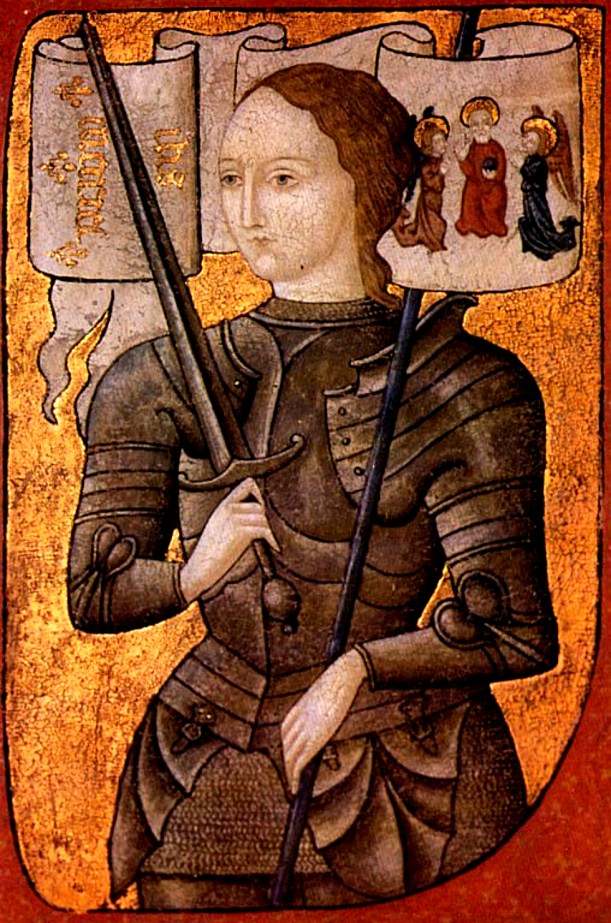
Joan of Arc as imagined by John Everett Millais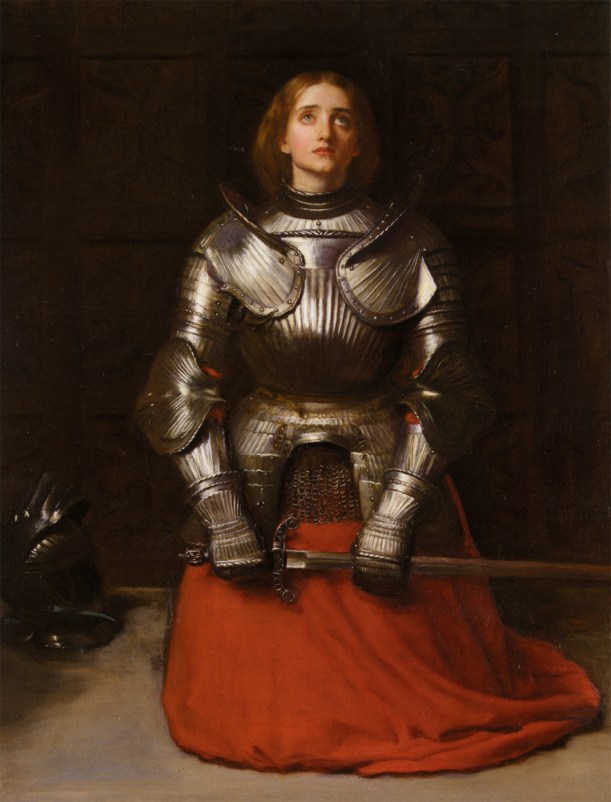
Let’s address the historical record, and that Pompous Academic voice.
In her review for Readings Online, Freya Howarth states “Alizadeh’s authorial interjections in the midst of battle scenes (about what future films will get wrong or debates historians will have) are jarring, in a good way; they remind the reader that what we know of Jeanne D’Arc is an amalgamation of stories told and retold over centuries”.
We are indeed frequently reminded that Jeanne D’Arc – that history – is an amalgamation of stories told and retold over centuries. And those reminders, that frequency, does jar. I agree with Howarth that this is intentional, intended to provoke readers to re-examine their assumptions, their received wisdoms.
Is Henry V of England a hero, as late medieval English people saw him, the very model of a king and warrior? Here’s how Alizadeh introduces Henry:
“Twenty-seven years old, a grotesquely scarred face. An extremely devout Christian, not at all the fun-loving, riotous youth of Shakespeare’s future play [Henry IV Part 1]. Severe and frankly soulless. Muscular. Possibly a psychopath. Probably a war criminal.”
And later:
“The Treaty of Troyes between the king of England, the Duke of Burgundy and the terrified, bullied queen of France. French Princess Catherine given to the English king. It is agreed that their child will be the joint ruler of the kingdoms of England and France. Celebrations in London. Shame in Paris. King Henry burps, rubs his hands after an ale, then fucks the beautiful Catherine without interest. Without any of the courtship of Shakespeare’s Henry V.”

How to respond to these passages?
Let’s compare them to Peter Ackroyd’s account in The History of England, Vol I: Foundations:
“There can be no doubt that Henry V was driven by a sense of divine right as well as of duty. He abandoned his youthful pursuits and almost overnight, according to chroniclers, became a grave and serious king. He acquired a reputation for piety and for the solemn observance of ceremonies; until his marriage, seven years later, he remained chaste. He established several monastic foundations of an ascetic nature, where the daily exhalation of prayer was meant to support the Lancastrian dynasty. His devotion also had an aesthetic cast. The annalist, John Stowe, recorded that ‘he delighted in songs, metres and musical instruments, insomuch that in his chapel, among his private prayers, he used our Lord’s prayer, certain psalms of David, with diverse hymns and canticles’. When he went to war in France, he took with him organists and singers.”
Ackroyd summarises Henry as follows:
“No king won such plaudits from his contemporaries as Henry V. The [financial] misgivings about his wars in France were forgotten for the sake of celebrating his martial valour. He was devout as well as magnificent, chaste as well as earnest. He was as generous to his friends as he was stern to his enemies; he was prudent and magnanimous, modest of temperament. He was the very model of a medieval king.”
He continues:
“Yet there are some who have doubted that verdict. Shakespeare’s play Henry V can be interpreted in quite a different spirit as an account of a military tyrant who staked all on vain-glorious conquest of France. What did he finally achieve? Once his French conquests were dissipated, and the dream of a dual monarchy dissolved, very little was left to celebrate. All was done for the pride of princes.”
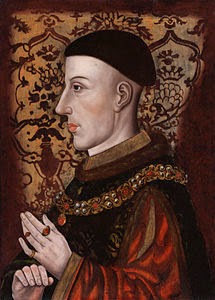
Which tells us nothing about Henry’s personal relations with the beautiful Catherine. Or the state of his soul (“soulless”?).
I am inclined to suspect Alizadeh’s descriptions of Henry burping, rubbing his hands after an ale and fucking the French princess without interest are speculative (fictional). And this inclines me to suspect other embellishments where the Pompous Academic voice does not make clear what is on the historical record as against what is speculative, or where the Pompous Academic voice omits details on the historical record, creating a different impression of events.
For example, on Edward III:
“His father, another Edward, murdered in captivity so that the boy could claim the throne. Murdered by having a red-hot blade forced into his anus, apparently. So the towering young ruler has reason to be consumed with shame, self-loathing, brutality, hatred.”
These alleged feelings, are, according to Alizadeh, Edward III’s motive for starting the Hundred Years’ War with France.
Alizadeh is not, to my knowledge, a psychiatrist or psychotherapist. (He’s a poet.) Henry V was probably not, in my opinion, a psychopath (although being a psychopath was a handy requisite for being a successful medieval warlord). Edward III may have had many strong feelings but there is nothing on the historic record, to my awareness, to suggest shame and self-loathing were among them.
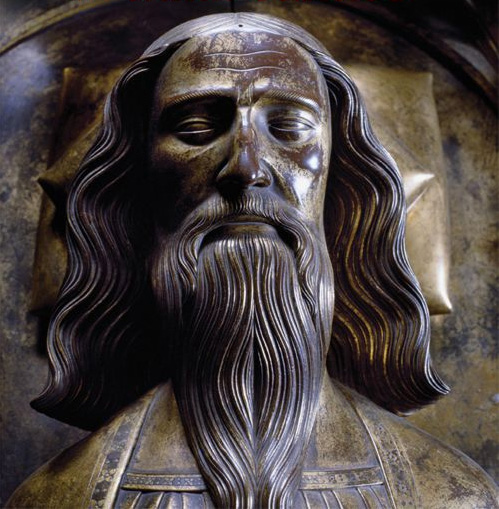
Let’s try the Battle of Crecy:
“The French king’s Genoese [mercenary] crossbowmen advance upon the English longbowmen. The crossbows’ range is very short – no more than seventy metres at the most – compared to the longbows’ 400-metre range. Corpses of Genoese shooters pile up. Haughty French knights, angered by the crossbowmen’s failure, charge the English positions.”
Yes, and no. What Alizadeh fails to mention is that it is raining, raining so that the Genoese crossbows are damp. The crossbows cannot operate when wet. The Genoese mercenaries’ captain explains this to the French commanders, pleads not to be deployed. The French force the Genoese forwards. When the Genoese crossbows misfire, the French heavy cavalry trample over the top of them.

Henry V is a “psychopath”, “Probably a war criminal”? Well yes. Henry V did order the execution of French prisoners taken for ransom during the Battle of Agincourt (Azincourt). The numbers of French prisoners overwhelmed the numbers of men available to guard them. But the order was stayed and most of the French knights and nobles taken captive survived to be ransomed.
Henry lays siege to Rouen: “the city’s trade routes, food supplies, water conduits, blocked by the English. Hunger forces out the city’s poorest, about twelve thousand. The English open fire: filled with arrows, thousands of civilians fall and fester. The surviving die of starvation and cold during the winter – one of the worst atrocities of the European Middle Ages.”
But hold up. “Hunger” forces out the city’s poorest? I think not. I believe the records show the good burghers of Rouen force out the city’s poor and sick, so the wealthier and healthier can live longer, sharing food and water between many fewer. Should the English army have taken in the outcasts, given them free passage? The English had camp followers enough of their own. Given men in medieval besieging armies die from contagious illnesses as much or more as they die in military assaults, the frail and sick of Rouen were potentially a biological weapon. The refugees might have included assassins, terrorists, fifth columnists. The debate has contemporary resonance.
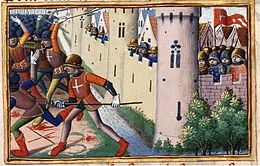
Not long after his marriage and the Treaty of Troyes, Henry V of England dies of dysentery, at the siege of Meaux.
Henry presided over a scorched earth policy, where English raiding parties burnt all habitations and all food sources that might provide shelter and sustenance to French troops. Henry didn’t invent that strategy; it was standard modus operandi for the English in France and their allies. Meanwhile, at the French court, the Burgundian and Orleans factions engage in massacres and assassinations. The French king believes he is made of glass. No one here has clean hands, no one is wholly sane.
But I digress. I promised to come back to the lesbian love story. Was Joan of Arc raped in imprisonment, prior to execution? That’s plausible. Was she raped by the Earl of Warwick? Speculative. Highly. Was she lesbian? Who knows. Did she engage in lesbian sexual relations? Speculative. Highly.
I am touched to learn from Ali Alizadeh that after Jeanne/Joan’s capture by Burgundian forces, not a voice in all of France, from all her erstwhile martial and political fellows, spoke up in Jeanne’s defence save one: a novice nun told a University of Paris theologian and judge something along the lines of “She’s not evil, sire. You must believe me. Joan is a good woman.”
Or maybe she said, “Jeanne’s a good woman, sire. All that she’d done has been good and according to God. She’s innocent.”
I wish I knew the precise words this Breton nun actually said, but I don’t, because Ali Alizadeh quotes all those words, yet he also writes, “What is known of Pieronne the Breton and her trial comes from a minor entry, one paragraph, in Journal d’un Bourgeois de Paris, an account of events of that time written by an anonymous Parisian.”
One paragraph? Did that one paragraph quote all those words verbatim? Or are they speculative? Or, does this Journal d’un Bourgeois de Paris exist at all, or is it a postmodern fictional insertion?
I wish I knew. Because I can’t trust the author, the Pompous Academic, and his “authorial interjections”.
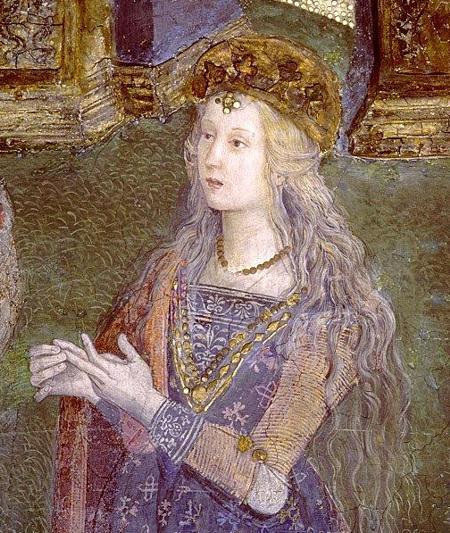
Lucrezia, Elizabeth and Sansa
Blood & Beauty / In the Name of the Family – Sarah Dunant
The White Princess – Philippa Gregory
Game of Thrones (TV series) – George R.R. Martin, David Benioff, D.B. Weiss
Lucrezia Borgia lived an extraordinary life, but really, who’d swap? Who’d be a Renaissance princess for real?
Born in 1480, the illegitimate daughter of a prince of the Roman Catholic Church, Pope Alexander VI, Lucrezia was twice engaged before age 12; married (to a third fiancé) at 13, divorced four years later, allegedly (but implausibly) still virginal; remarried at 18, widowed by age 20 when her brother had her husband garrotted; married once more at 22, to a duke’s syphilitic son; ten children (and multiple miscarriages) later, dead at 39. Libelled through the centuries as an adulteress, an incestuous wanton, a poisoner.
There’s Elizabeth of York, born in 1466, eldest daughter of King Edward IV of England: first engaged at age 3; then engaged to the French Dauphin at age 9; rumoured to be her uncle King Richard III’s intended wife at 18; offered by her malformed uncle to the Portuguese king’s heir; offered by her mother to Henry Tudor, King Henry VII. Six live births, three surviving children (including the future Henry VIII) when she died in childbirth on her 37th birthday.

Then there’s Sansa Stark. Sansa Stark is a fictional character. Arguably, she’s a composite invention, with elements of Elizabeth of York’s life woven through her story, and a few tangential elements of Lucrezia Borgia’s: Lucrezia’s sister-in-law, from her second marriage, was named Sancia. Viewers of the TV series Game of Thrones will recall that Sansa was engaged to King Robert Baratheon’s heir Joffrey, then married to the dwarf Tyrion Lannister, abandoned still virginal to be bigamously married off to the sociopathic rapist Ramsay Bolton. (Readers of the George RR Martin novels A Song of Ice and Fire understand the narrative in the books unfolds somewhat differently.)

What’s interesting about these storylines is agency.
Were Lucrezia and Elizabeth merely marriage pawns? Were they merely bargaining chips in high stakes political alliances? Or did they have some say in their ‘choices’? Once married, what degree of ‘choice’ did they have in how those marriages – and those political alliances – worked out?
Any historical fiction is always a working through of issues that address contemporary readers. As is all science fiction. So fictionalised imaginings of the lives of Lucrezia Borgia and Elizabeth of York, and fictional creations such as Sansa Stark, are vehicles to explore issues affecting women today: self-determination, autonomy and dependence among them.
Sarah Dunant has written five novels now which explore aspects of women’s lives in Renaissance Italian states. The Birth of Venus (2003) tells the tale of a Florentine merchant’s daughter who aspires to be an artist. In the Company of the Courtesan (2006) follows the career of a courtesan who, after the 1527 Sack of Rome by French armies, rebuilds her career in Venice. Sacred Hearts (2008) concerns a young girl unwillingly interned in a convent as a novice nun. Blood & Beauty (2013) and In the Name of the Family (2017) recount the fortunes of Lucrezia Borgia, through to the death of her father and her brother Cesare’s political demise.
Sarah Dunant scrupulously follows historical fact as best it can be ascertained. Where there is no surviving primary evidence, she chooses plausible speculations, from a feminist perspective. Most of the calumnies against Lucrezia Borgia are not plausible. Consequently, the Lucrezia Borgia Dunant presents is much the Lucrezia Borgia presented by Sarah Bradford in her readable biography, Lucrezia Borgia: Life, Love, and Death in Renaissance Italy (2004) – an exemplary Renaissance princess, a convent-educated patron of the arts well-versed in diplomatic skills.

This Lucrezia Borgia has no say in her first marriage and divorce, no hand in the death of her second husband, no choice in leaving her first-born child, but is actively involved in negotiating her third marriage and committed to ensuring that marriage succeeds. She is not an adulteress, being instead a poet’s muse, in line with poet-patroness conventions of the day. Dunant doesn’t allude to Lucrezia’s alleged affair with her brother-in-law the Duke of Mantua, but the case is well-made for why a canny political operative such as Lucrezia proved to be would reject a sexual liaison. (Besides, Francesco Gonzaga was frequently incapacitated by syphilis, and there were few occasions when the two were in physical proximity; their relationship was mainly a written correspondence.)

Lucrezia couldn’t prevent a husband she apparently loved from being murdered on her brother’s orders and was obliged to collaborate in impregnation after impregnation by a husband with advanced syphilis whose temperament and affinities were poles apart from hers. But their interests coincided: preserving the duchy of Ferrara for d’Este rule in a time of turmoil. As a team, they were a success.
Similarly, Elizabeth of York and Henry VII appear to have made a success of their marital alliance, albeit on very different terms. Elizabeth’s claim to the throne of England, as the eldest surviving child of Edward IV, was better than Henry Tudor’s. (Being female did not disbar her, as the subsequent ascents of Mary I, Lady Jane Grey and Elizabeth I in the Tudor period proved.) It was important to Henry that it be clear he claimed the throne in his own right, by right of conquest, and not as male spouse to a queen regnant, the Yorkist heir. The timing of his coronation, prior to the marriage, reinforced this point. Elizabeth was relegated to queen consort, stripped of political power.
It wasn’t that late medieval English female royals had no formal political influence, as had been argued until relatively recently. Henry’s mother, Margaret Beaufort, was his foremost political adviser, with private rooms adjoining her son’s and prominence in public ceremonies. Her household papers attest to the degree of power and autonomy she enjoyed.
But Elizabeth, the White Rose of York, was acknowledged as little more than a breeder. Little contemporary testimony as to her character and activities survives, other than that she was a most amiable woman, with a russet gown and one blue, fond of past-times such as cards, music and dancing, who loved her siblings, her mother and her children, and also her greyhounds. She grew plump over time. Her son Henry, who was 11 when she died, remembered her as a very pretty woman. She lived away from the public gaze, mostly at Greenwich Palace and Eltham Palace.
For Elizabeth, this was a good outcome. She had grown up as the marital prize for the would-be kings. Her destiny was to be queen of England, and she fulfilled that destiny. Even if she could not exercise power herself, her son would be king, and her descendants future rulers. She survived the downfall of her house, the House of York, the York Plantagenets, just as Lucrezia survived the fall of the house of Borgia to thrive as duchess of Ferrara, mother of future dukes.
Both were survivors – until they weren’t, until childbirth felled them. But they survived their brothers and fathers, and fared better than many might have wagered at the time.
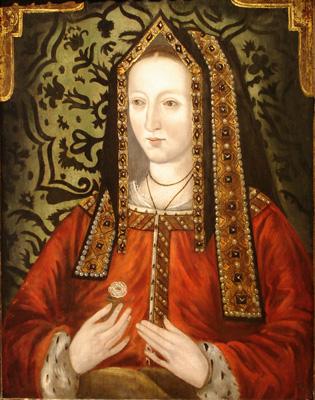
The central mystery of Elizabeth’s life however remains what she made of the emergence of the man who claimed he was her brother Richard – a man who claimed he hadn’t been murdered in the Tower of London as believed, had survived his older brother Edward, had been brought up in Burgundy, and was in fact the rightful king of England, King Richard IV. This man was supported by European royalty and enjoyed prolonged hospitality at royal courts, marrying the daughter of one of Scotland’s most powerful nobles.
When this man proclaimed himself king in England, he hoped for a popular uprising. It didn’t happen. Instead he was captured. Henry VII’s agents denounced him as an imposter. They said he was really Perkin Warbeck, a Fleming. But Henry treated the imposter well initially, allowing him to live at court for 18 months, albeit under guard and without his wife, who lived under the protection of the queen, Elizabeth.
It is improbable, but possible, that Perkin was born Richard. Did Elizabeth believe Perkin Warbeck was a pretender? Was she unsure, confused? Or, privately, did she recognise him as her brother? Did she believe his wife Lady Katherine was her sister-in-law, or was Lady Katherine, for her, another young noblewoman married for political purposes? Did Elizabeth ever get to have close contact with Perkin? Did she get to see him, to speak to him, at all?
Perkin Warbeck was recaptured after allegedly trying to escape. He was severely beaten and dragged on a wooden hurdle to execution at Tyburn, alongside Elizabeth’s cousin, her aunt Isabelle’s son Edward, the young Earl of Warwick. How did this impact Elizabeth?
The truth is, Elizabeth the White Rose of York, queen consort of England, had zero agency to affect Perkin Warbeck’s fate. Even if Perkin Warbeck was Richard Plantagenet, rightful king of England, and even had his sister recognised him at first glance, there was not a thing she could have done to avert his end. Any hint of recognition, distress or mourning would have been anathema to her husband and to the dynastic interests of her children, and might have endangered Elizabeth herself. After all, her husband – and, after her death, her son Henry – spent years systematically destroying any kin of Elizabeth’s who could be acclaimed as Plantagenet heirs.

I’m not a huge fan of Philippa Gregory’s novels, despite their immense popularity. But Elizabeth’s powerlessness is poignant as depicted in The White Princess, just as Lucrezia’s powerlessness to prevent her second husband’s murder is poignant – is shocking – as depicted in Dunant’s Blood & Beauty.
Philippa Gregory represents Elizabeth of York almost as catatonic, as paralysed, in relation to Perkin Warbeck. Dunant shows Lucrezia and her sister-in-law Sancia desperately attempting to save Alfonso of Aragon by appealing to a higher authority, her father, the Pope – only to inadvertently leave him exposed and fatally vulnerable.
On Game of Thrones, as at the time of writing we don’t know where Sansa Stark’s story is headed. She’s developed from being a naïve ingénue through manifold manipulations to her current status as an avenging Amazon, intent on reclaiming what is hers. So far, all but one of her immediate family have been killed (with one resurrected, and one transformed into a three-eyed crow). I don’t know whether Sansa gets to call the shots in her future. But I’m betting she doesn’t die in childbirth.
Sansa, of course, is a fiction.
https://ellymcdonaldwriter.com/category/medieval-history/

Avon and Servalan, Paul and Jacqueline – memoirs
Call me Jacks – Jacqueline Pearce in conversation [with Nicholas Briggs] Audio CD
You’re him, aren’t you? An autobiography by Paul Darrow
From 1978 till 1981 the British sci-fi series Blake’s 7 was broadcast on TV across four seasons, 52 episodes in all. Blake’s 7 was originated by Terry Nation, who also created the Daleks of Doctor Who fame. He intended Blake’s 7 to be a darker alternative to Doctor Who: Doctor Who for adults. Or a darker Star Wars. It ended badly. I mean that. As a 20 year old fan in 1981, I was so distressed by Blake’s 7’s final scenes that I wrote to the newspapers: Shocked of Kings Cross, Sydney (a neighbourhood where most of us were mostly unshockable).
There were two mainstay characters who did not appear in Episode 1, Series 1, and one of these characters was missing – and greatly missed – in that final episode. The other claims the final shot. These characters are the evil galactic Supreme Commander Servalan, played by Jacqueline Pearce, and Avon, first introduced as a cold, self-interested, sociopathic hacker, played by Paul Darrow.

The absence of Servalan and Avon might explain why, when I watched a repeat of Episode 1, Series 1 when Blake’s 7 was rescreened in the ‘90s, I could not make out why I’d loved this show so much. Avon and Servalan. They were the drawcards. Tarrant was cute and Cally quite compelling, Vila was amusing and the first Travis had a kind of S&M appeal, but really, for me Blake’s 7 was Avon and Servalan. This I understand was true for many of the series’ 10 million or so (at its peak) viewers.
Servalan, especially, was a kind of perverted role model for me. After a miserable love affair, I cut my hair to a short fuzz, to look like hers. Men wanted to touch the possum fur fuzz on my head. I let them. But I knew I was an alter ego – a lost clone – of the Supreme Commander and that if I chose, those men would be laser blast fragments.

Having recently re-encountered Blake’s 7, I was curious to learn what happened to the actors in their subsequent lives. I found there is a pop cult industry around the series, a business called B7 and a business called Big Finish, with audio adventures voiced by original cast members and Comic Con appearances. There are autobiographical materials, such as Call Me Jacks – Jacqueline Pearce in conversation (audio CD) and Paul Darrow’s memoir You’re him, aren’t you? – An autobiography.
What did I learn?
I learned that it’s painful to be an actor, that the odds of achieving any kind of success are stacked against acting aspirants, that success once achieved is seldom enough, and seldom sustained, and that the pain of being a has-been and the pain of being a never-was and the pain of finding hollow “success” can be hard to live with.
I learned that Darrow and Pearce are both deeply ambivalent about Blake’s 7, that the 35 years since have seen both struggle with depression and despair, and struggle in other ways. Pearce talks openly, recklessly, about it. Darrow circles around pain and disappointment over and over, looping through themes of ambition and failure, and feelings of anger and envy, till the cumulative effect is of an old actor, deep in his cups, holding forth in a way he hopes is avuncular but in fact comes across as bitter. Not that I’m saying Paul Darrow drinks. I’m talking about how I read his memoir.
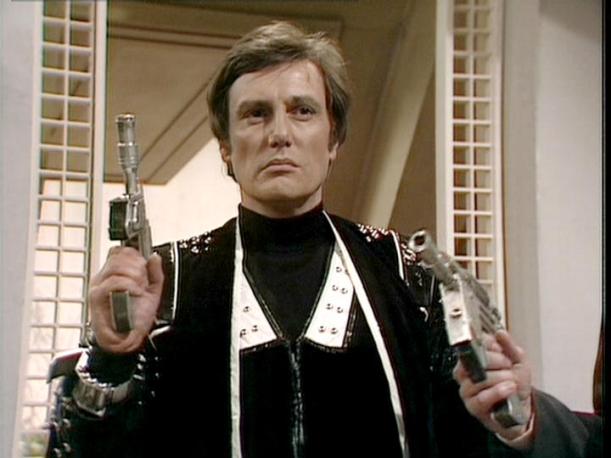
There are positives. Jacqueline Pearce is painfully open, recounting a tale of talent blighted by mental illness, but her story testifies to resilience and the value of friendships, including a supportive friendship with the late great actor John Hurt. It’s easy to empathise with Pearce’s observations and experiences, and easy to admire her fortitude. Plus, her voice is beautiful, even if her frequent throaty laugh becomes unsettling.
Paul Darrow is an intelligent man and his account of his life attests resilience, too, and enterprise. He writes in short pieces, not necessarily linear chronology, and I wish there’d been a sympathetic editor to hand to help him focus on the interesting questions he raises, and to minimise some of the more indulgent sections, such as his synopses of each episode of every Blake’s 7 series, which could be summarised as “The narratives were crap, the production values trash; if you care about Blake’s 7, the more fool you.”
I don’t think he meant to imply Blake’s 7’s production team, or its viewers, are idiots, but he does imply that, at length. Then he contradicts himself and praises the writers, the directors, the stunt crew, thanks the actors for their friendship and thanks Terry Nation for transforming his life. Like I said, conflicted.
Paul Darrow is an intelligent man. He does raise good questions. Given the plots are ludicrous, the stunts unconvincing, special effects rudimentary and the production values shout low budget, what can account for Blake’s 7’s popularity? This was a show shot on video, not film, shot largely within semi-bare stationary sets (Scene: The interior of a space craft), with quarries and occasional sand drifts for location shoots, and characters who wield what look like hair-dryers standing in for laser guns.
And this: why did audiences relate so strongly to the overt sociopaths, to Avon and Servalan? Why did the sparks of an Avon/Servalan pairing cause salivations? Why, cosmos above, would young women like me imagine Servalan a role model and fantasise about Avon?
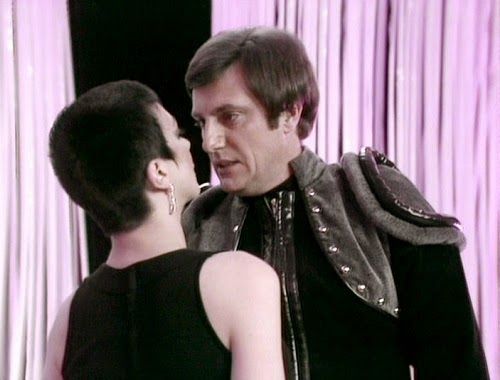
Paul Darrow is an intelligent man and in his autobiography he acknowledges these questions. Then, after a half-hearted stab in response (Avon as “a bit of rough”?), he gloomily gives up, as if it’s all too much. Which it would seem it was.
It must be hard, for Paul Darrow, to start out sharing a house with fellow RADA students John Hurt and Ian McShane, and at the height of one’s fame to be touted as a future James Bond (Timothy Dalton got the Bond gig), then to be relegated to pantomime, touring rep (again), and the continuing audio adventures of a character you played several decades back. A character who logic suggests died.
Darrow writes interestingly about typecasting, and he writes about an actor’s need for an audience, for affirmation. He is savagely funny about how he’ll be remembered. As ever, he’s torn, not sure whether anyone will care at all, or whether there’ll be mangled memories and pop culture fan-hysteric tears, or whether some people might consider his career had value. I’m here to reassure him. Paul, you are loved. How could a reader not love an actor who quotes the review that said “Paul Darrow plays Macbeth like Freddie Mercury giving a farewell concert”, and the review that read “Paul Darrow is an actor worth watching, but not in this play”?
It must be hard, for Jacqueline Pearce, to start out as the RADA ‘girl most likely’, directed by Trevor Nunn, hanging out with John Hurt, Anthony Hopkins and Ian McShane (no mention of Paul Darrow), then be ‘demoted’ in the final series of Blake’s 7, omitted altogether from the final episode, then spend most of the next decades with little or no acting work, instead dependent on Housing Benefits and the kindness of friends, with stints as an artists’ life-drawing nude model in Cornwall, and volunteering in a monkey sanctuary in Africa. Plus stints in psychiatric care. And two bouts with cancer.

Live well, Jacqueline.
My own best answer for why Blake’s 7 was loved is this:
In the late ‘70s, the Western world began to understand its supremacy could not last. Throughout the ‘70s there were petrol politics, revolutions, the Irish Troubles, labour unrest, increasing disparity between North and South, and rich and poor. During Blake’s 7’s run, the USA voted out Jimmy Carter and voted in Ronald Reagan. Margaret Thatcher was elected prime minister of Britain.
We weren’t too sure about our heroes – was Thatcher a Servalan? – and we weren’t sure who were the villains (the IRA? Revolutionaries in Iran?).
Paul Darrow points out it isn’t clear whether the crew of the space ship Liberator, the crew who were “Blake’s seven”, were in fact heroes or simply terrorists. He asks, if Blake was trying to lead a popular revolution, why was nobody else rising up? Could it be, possibly, that the Evil Empire was not perceived by its citizens as evil? Could it be that Blake, and his crew, with their talents for destruction, remained criminals even on the Liberator, as they had started out criminals?
In times of change and extreme moral ambivalence the foremost task, possibly, becomes survival. Avon and Blake and the Blake’s 7 crew hurtled through a hostile universe, hunted by omnipresent authorities, unsure of their mission, not knowing who to trust. So you trust the strong man. You trust the sociopath, Avon, because Avon has his eyes on the prize: survival. Or you follow the Supreme Commander, Servalan, because Servalan is also a survivor, and her will to power is second to none.
Pearce and Darrow were good at playing survivors.
Don’t be fooled by that soft velvet fuzz. Servalan will kill rather than be killed, and Avon will, always, be the last man standing.

Conquest Trilogy: Shieldwall (2011) by Justin Hill
 Shieldwall is a welcome surprise. It’s a serious – and successful – attempt at telling the hero tale of Godwin, father of Harold, last Anglo-Saxon king of England, in a style that’s consciously, but not crudely, an homage to the genre of Germanic heroic lay. It’s elegiac, lyrical, grand, high-minded; centrally concerned with honour and male friendship, fathers and sons, duty, war and death.
There’s a lot on the historic record about Godwin, mostly about his adult life. We know he was an Anglo-Saxon magnate of extraordinary wealth and power, right-hand man in England to King Knut the Great, the Danish King of Denmark, Norway and England. We know he was over-endowed with sons who proved troublesome even by C11th standards. We know he came from relatively humble beginnings, a thegn’s son, and was a pubescent hostage in the court of King Ethelred the Unrede, who exiled Godwin’s father.
History however is written by the winners, and three of Godwin’s sons, including King Harold, were killed at the Battle of Hastings when Duke William of Normandy won his cognomen William the Conqueror. Understandably, chroniclers in the Anglo-Norman period were not kind to Godwin, damning his and his dynasty’s ambition. About how Godwin rose to such heights in the first instance, gaining Knut’s trust, we know little, although we can surmise he was indeed ambitious. Given the violent and uncertain politics of the period, he was also almost certainly outstandingly able, intelligent, and brave. He very likely demonstrated qualities Anglo-Saxons admired and respected: a war-leader, a man of his word, loyal to his king, a just man (within the understandings of ‘justice’ of the time).
[When I say “we”, I am inviting you to agree with me, and I should admit now I am not an expert on Anglo-Saxon England. I do have an academic background in Early Medieval Celtic Literature, and Brythonic Literature, and a reader’s appreciation of the Anglo-Saxon period.]
Justin Hill represents the youthful Godwin in precisely these positive terms. The historic Godwin was likely brutal, ruthless, and feared, not only by his enemies; we see less of this aspect in Hill’s young Godwin. Hill’s Godwin is purely hero.
Arguably, though, the true hero of Shieldwall is less Godwin than the king Hill assigns him as blood-brother and soul-mate, the Anglo-Saxon king who proceeded Knut: Edmund Ironside. The Godwin of Shieldwall may be the adornment, the setting, that better shows off the ‘jewel in the crown’, the young Edmund. Almost forgotten in the popular imagination, Edmund’s life is as courageous as Alfred the Great’s, and well deserves to be retold now.
Some novels within the contemporary genre of Viking and Anglo-Saxon stories are gratuitously and sadistically violent, and violently misogynist. Hill’s tale doesn’t shy away from strong violence, and the extended battle sequences are informed by forensic research on wound marks on skeletons of men killed in early medieval battles. But he doesn’t indulge in the almost pornographic dwelling on brutality that some authors do. (Of course, some authors might argue that the world of Anglo-Saxons and Vikings was irredeemably violent and misogynist; I reply, an author chooses the world they write.) Although he depicts an earthy milieu, his nobles admire their noble wives, sometimes even love their sex slaves, and treat their dependents decently.
We know peasants – and slaves – suffered severely. Hill introduces characters intended to represent the experiences of the poor and powerless, and some of these characters die base deaths. But the nature of the heroic lay is that it memorializes a hero, high-born, and is aristocratic. Its focus is the lives, loyalties, betrayals and deaths of men who wield swords with precious hilts and who wear armbands gifted by their lord, who sing sad songs of the deaths of kings.
I loved Shieldwall. Can’t wait to read the next two novels in Justin Hill’s trilogy.

