Elly McDonald

Writer


4 Comments

Review: The Girls (2016) by Emma Cline

the_girls_elly_mcdonald_writer

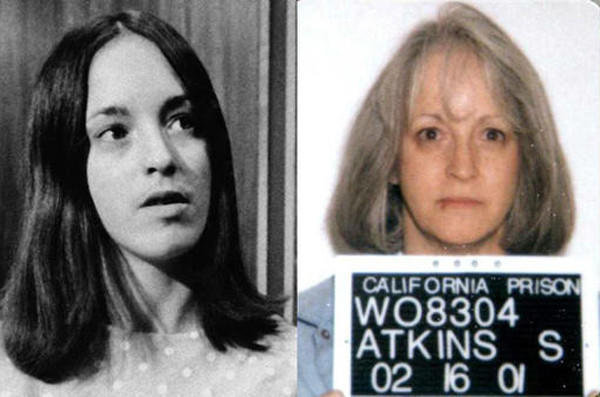
Susan Atkins, Patricia Krenwinkel, Leslie Van Houten – Charles Manson’s “Girls”

Emma Cline’s The Girls is a serious novel, and seriously disturbing.

It’s a fictionalized reimagining of the Charles Manson “family” and the notorious murders perpetrated by Manson’s “girls” at 10050 Cielo Drive in Los Angeles in 1969.

Due to the salacious subject matter, and Emma Cline’s marketability, there was a bidding war for publishing rights in response to the book proposal. The project could have turned out grossly exploitative, but one of the attributes that makes Emma Cline marketable is her egregious talent: her novel is a stunning debut.

The Girls is a narrative told in the first person by Evie Boyd, within two timeframes: Evie aged about 61, and Evie aged 14, in 1969. Speaking as a 56 year old, I must immediately credit Cline with making an audacious choice, given the author was a mere 25 when The Girls was published. Her choice to inhabit the voice of a woman in her 60s is audacious but successful (though her mature Evie is outstandingly reflective – living through six decades doesn’t always result in this degree of insight).

Evie at 14 is painfully vivid. Cline is concerned with the vulnerabilities of adolescent girls: the ways the intense desire to belong, to be accepted within a friendship group or community, exposes them and makes them pliable, open to sexual exploitation and grooming. She’s concerned with formative adolescent sexual experiences and developing sexuality. She’s particularly concerned with the passionate feelings adolescent girls sometimes develop for each other and with older girls. Her Evie embodies all this.

Evie as a young girl is also a walking illustration of how we choose not to see, especially as adolescents, but also, for most of us, as we age. We choose not to recognize the obvious, if the obvious thwarts our illusions. We choose cognitive dissonance. We tell ourselves lies to make it all alright.

Evie is a privileged young girl from a wealthy, albeit troubled, background. She’s a socially isolated poor little rich girl. When she first sees “the girls”, gypsies, hippies, ‘free spirits’, she is immediately infatuated. When they take her to the hippy encampment on a ranch outside of San Francisco, she is seduced, literally and metaphorically, and wants nothing more than to join the girls as acolytes of Russell Hadrick, the cult leader Cline bases on Charles Manson.

Evie can see the hippy commune is dirty, disordered, dysfunctional, the small children underfoot feral and neglected, the adults semi-starved, drug addled inadequates. She can see they survive on petty criminality. But Evie is enamoured by the girls, most particularly Russell’s number one girl, Suzanne (who might be partly based on Manson disciple Susan Atkins), and all that is ugly is wreathed in the glamour of her feelings for Suzanne and her desire to be seen, accepted, and loved.

susan_atkins_the_girls

Susan Atkins

Evie gives herself sexually. She robs her mother. She joins in burglary forays, invading the homes of her own neighbours. She lies, cheats and steals for Suzanne, the girls and Russell. The question looms: would she kill?

To this point, the story could be a gothic allegory for more usual adolescent rites of passage – the crushes, the fervent group identifications, the sleazy manipulations of young girls by older men. But this story is based on the murders instigated by Charles Manson, so inevitably the narrative must engage with the much more extreme issues around killing fellow human beings.

If Cline simply retold the Manson story, fictionalizing names, attributing motivations and feelings, I think this project would be inexcusable. But she doesn’t do that. Instead, while allowing the narrative enough closeness to the Manson killings to acknowledge the real life scaffolding, she deliberately distances the story, geographically and in other ways, both to ensure the reader is pointed to the themes she most wishes to explore and, I believe, out of respect for Manson’s real life victims.

It would be unthinkable to recount in forensic terms precisely the ways the real life victims were slaughtered. That is not an entertainment. So instead of Sharon Tate, Abigail Folger, Jay Sebring, Wojciech Frykowski and Steve Parent, the victims in The Girls are named as Linda, Christopher, Gwen, and Scotty, and the ways they meet their deaths are comparable to, but not identical to, the ways Sharon, Abigail, Jay, Wojciech and Steven were killed. The killers are not named as Tex Watson, Susan Atkins, Patricia Krenwinkel and Linda Kasabian; Leslie Van Houten and Bobby Beausoleil are not named. Instead, the characters are Susan, Donna, Helen, Guy and Roos.

The LaBianca murders, perpetrated by Manson, Tex Watson and Manson’s girls the following night, are not mentioned. The Gary Hinman murder is only alluded to, without using names. The murders of James Willett and Don ‘Shorty’ Shea and the attempted assassination of President Gerald Ford are outside the scope of Evie’s story.

The fictional Evie Boyd owes her material comforts to the fortune built by her grandmother, a movie star. Emma Cline is the grand-daughter of the man who invented the Jacuzzi. There was at least one pubescent girl with movie star connections embroiled in the Manson cult [I have amended this blog’s original wording, which specified an individual, almost certainly confusing that individual with a different child of Hollywood, for which I sincerely apologise]. Emma Cline was a pubescent actress whose experiences in Los Angeles as a teen on the fringes of the entertainment world and later attempting to transition to a young adult actress were so demeaning she tossed it in and instead undertook a Masters of Fine Arts (Writing) at Columbia University in New York.

At Columbia, Emma Cline as a writing talent is remembered by one faculty member as “head and shoulders above everyone else”, which is born out by The Girls. She quickly progressed to writing for Salon, O Magazine and The New Yorker, with fiction in The New Yorker, Granta, Tin House and Paris Review, before she was signed to a three-book fiction deal by Random House, for a rumoured $2 million.

The Girls, published in 2016, was shortlisted for the John Leonard Award from the National Book Critics Circle and the Center for Fiction’s First Novel Prize. The following year Cline was named one of Granta’s Best Young American Novelists.

Her short stories to date tend to engage with similar themes to those explored in The Girls – how young girls navigate that potentially dangerous passage to adult sexuality. Emma Cline is on record saying she constantly wonders how she survived her teen years without crippling damage. The Girls asks, did Evie?

Emma_Cline_The_Girls

Emma Cline


4 Comments

Jimmy Barnes and me: Working Class Boy, Working Class Man, and the clueless killer fat chick

Working Class Man by Jimmy Barnes (Harper Collins 2017)

Working Class Boy by Jimmy Barnes (Harper Collins 2016)

A boy and a girl are seated on the top step of a flight of stairs in a grand old house. She is 19, he’s five years older, almost to the day. Their knees are touching.

He leans close towards her and says, “You’re a killer.”

She is dismayed. “A killer?”

His turn to be taken aback. “It’s a compliment,” he reassures her. “A killer. I think you’re fantastic.”

The girl adores him. She still adores him 37 years later, even though she’s barely seen or spoken to him since December 1983. A chance meeting on a Kings Cross street in 1985, a moment backstage in 1991, a note in about 2001, another moment backstage in 2007, then a book signing in St Kilda in 2017.

The boy is Jimmy Barnes, known and loved these days as an Australian rock music icon both as a solo artist and as lead singer in the band Cold Chisel. The girl is me, and the book Jim autographed for me at a book signing yesterday is Working Class Man, his second volume of autobiography, following his memoirs of a brutal childhood, Working Class Boy.

Working Class Boy is a gut-wrenching account of a childhood filled with neglect and violence, of a young boy struggling to survive a dysfunctional Glaswegian Scot family who migrated to Australia in 1961 and moved around Adelaide’s tougher, working class suburbs. It is compelling reading, beautifully written, with a fluency, passion and wit that surprises me not at all from the Jimmy Barnes I knew. The voice is authentic. I could hear him speaking in the written words.

I loved every page, every paragraph, of Working Class Boy. Yes, some parts horrified me. Some made me cry. Some helped me understand things we had (and have) in common I hadn’t understood before.

Jimmy_Barnes_Working_Class_Boy

I was born in 1961. My family moved to Adelaide in 1963. We lived in what’s known as the “leafy green suburbs”, the pleasant suburbs housing the professional classes. We lived at the base of the foothills overlooking the plain Adelaide fills, in a place called Glen Osmond, just up the road from the Arkaba Hotel, where Jim and his brother John roomed for a time as young adults.

My dad had Scottish heritage – his name was Donald Angus McDonald – and my great-grandparents were Gaelic speakers. They came from south-west Scotland, and/or from the isles. Some of them were very probably Irish migrants to south-west Scotland, like Jim’s folk. Some of them were Irish from County Galway, the heart of the bilingual Gaeltacht. As best I can tell, they were all heavy drinkers.

Although my father grew up in a nouveau riche mini-castle and his father was a big man in his country town, a self-made man with a successful business, my father grew up with family violence. He very seldom alluded to it. It was only when he was dying, earlier this year, that in his last weeks he fleshed out a little of the kind of violence he witnessed between his parents. Within our family we’d all always known there was something dark and frightening, some things unexplained, but we’d never heard details. It was painful.

Hearing my father recount in plain terms what he’d been subjected to as a child helped me understand some of my dad’s own more erratic behaviour, and his drinking. I could also clearly see, reading Jim’s book, more reasons my teenage self felt an affinity with Jimmy Barnes: if I wrote a list of my dad’s best qualities, and his worse, then wrote a list of Jimmy’s best and worst qualities as I saw them, the lists would be identical. They were cut from the same cloth.

JImmy_Barnes

As soon as I finished reading Working Class Boy, I posted on Facebook:

Belatedly, I’ve finally read Jimmy Barnes’ memoir of his childhood, Working Class Boy, a remarkable work. On a personal level, there was so much in the voice, the reflections, the humour, the insights, the choices, the LANGUAGE that brought the Jim I once knew present. Which was a pleasure for me.

On a writerly level, I am blown away. Writing a coherent narrative takes skill. No surprise Jim is a great story teller. No surprise he’s articulate and rock-my-socks-off intelligent. But writing skills come through practice. I hadn’t realised he was so practiced. (Two previous attempts totaling c.60,000 words before a 100,000 dam-burst.)

Writing dialogue takes a great ear. Jim has that. In spades.

On a wisdom level – I always knew Jim as super-astute, with an off the charts EQ, but the maturity he demonstrates here through his writing has me worried. I’m only five years younger. Can I get that wise, so soon?

Jim’s wisdom is hard won. I would not wish to travel the road he has to acquire it. God bless him.

I am so eager now to read the follow-up, Working Class Man. This will be where I start to recognise more people, places, situations. I did meet Jim’s mum, his sister Linda and his brother John [also his siblings Alan and Dorothy, in passing], but I didn’t get to know them; arguably a lot of the people I met in the next stage of Jim’s life are also people I never truly ‘knew’, but we did share experiences and we share witness.
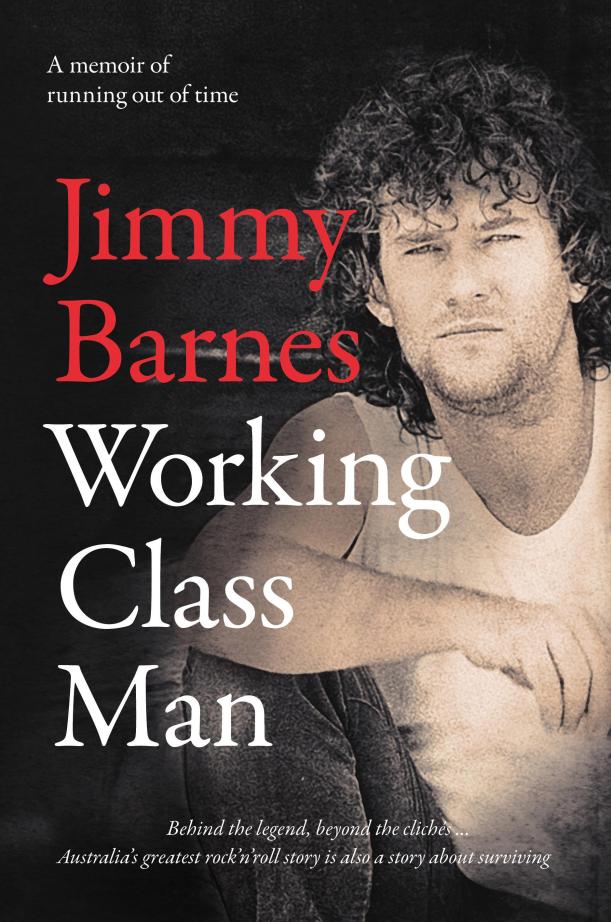
Jimmy_Barnes_Working_Class_Man

I knew Working Class Man would cover the period when I knew Cold Chisel – the band’s last four years, the height of their success and their ferocious last year or two – and there was so much I never understood about what went down, what happened between specific individuals, why they behaved the ways they did across that time. I wanted to understand, because I felt I’d been part of the emotional turmoil, that it affected me, and it had blindsided me.

And now I have read Working Class Man.

Early in the tale I meet friends we had in common, when Jim and I both still lived in Adelaide, moving in different circles but, in Adelaide, a large country town with zero degrees of separation, interconnected.

We share some history, this town and I
And I can’t stop that long forgotten feeling…

(Flame Trees – lyrics Don Walker)

Here on the pages is my friend Vince Lovegrove, Cold Chisel’s first manager, and his wife Helen. Helen taught me to go-go dance when I was six or seven. She was a nurse with a close-knit group of bff’s including Mary, one of my earliest babysitters, who became one of our family’s dearest friends. Through Mary I knew Helen and through Helen I met Vince.

Vince when I met him was a minor pop star, sharing vocals in a band called The Valentines with a cheeky singer called Bon Scott. Bon Scott went on to sing with an Adelaide band called Fraternity, later fronted by Jim Barnes (with his brother John on drums), while Bon went on to front AC/DC. That’s Adelaide for you: the city of churches and serial killers, the town that spawned Bon Scott , Vince Lovegrove, Cold Chisel – and, less remarkably, me.

This is a review – or more correctly, a response – to Jimmy Barnes’ books Working Class Boy and Working Class Man. For a few years there his story and mine dovetail, so forgive me indulging in “sentimental bullshit”, settling in to play “Do you remember so and so?”, as Cold Chisel’s principle songwriter Don Walker put it in his lyrics to Flame Trees:

I’m happy just to sit here at a table with old friends
and see which one of us can tell the biggest lies

Cold_Chisel_1980_3

I first met Jim Barnes in Melbourne. He was standing at the edge of a stage in a St Kilda venue, alongside his bandmate Don Walker, staring down at me. I was staring up, in my Anne of Green Gables floral-sprigged mauve frock, my hair the straggling remains of a dropped-out perm, my chubby upper arms straining at the cuffs of short puffed sleeves.

“Who’s in this band?” I demanded.

I was enrolled in Law/Arts at Monash University, then considered a second-tier suburban university, an offer I’d taken up over the offer from the more prestigious Melbourne University Law School due to some forlorn desire to be just a regular suburban girl. I wasn’t succeeding. I was a misfit, and I spent my days smoking dope and spinning the turnstile at the student radio station, 3MU.

3MU had lined up an interview with Jim and Don’s band Cold Chisel. Except no one owned having set up the interview and no one wanted to conduct an interview. I volunteered. Now here I was standing beneath a stage during a sound check.

The next time Cold Chisel came to Melbourne I interviewed Don and Cold Chisel drummer Steve Prestwich in their hotel room in St Kilda. I wrote it up as an article for the Adelaide-based rock magazine, Roadrunner.

In the hotel room, Don Walker considered me as if I were brain-gym puzzle. I asked Don what he was thinking.

“I’m wondering what social background you come from,” he said.

I told him my father was a director of a household name corporation and my mother was an academic. His mother was an academic too, but Don didn’t mention that.

Cold_Chisel_Set_Fire_To_The_Town

The band put my name on the free list at the door to see them play one of Melbourne’s big beer-barn suburban venues, and at Don Walker’s invitation I joined them in the band room after the show. It was the tail end of Chisel’s 1979 Set Fire To The Town tour, promoting Cold Chisel’s second album, Breakfast at Sweethearts. The band joked it should be called the Let’s Get Fat tour. Sure enough, Jim did not look well. He was puffy, unshaven, his eyes were glazed, his skin a bad colour, smeared with a greasy sheen, and he was out of it, off his face on god knows what. He nodded bleary-eyed recognition to me.

When Jim was functioning, which seemed to me most of the time, he was funny and bright and kind. Over the next year, after I moved to Sydney and started writing regularly for RAM (Rock Australia Magazine), I saw a lot of him. Briefly, he shared a house with Vince Lovegrove, just around the corner from my place. Then he moved into that grand old house where we sat together at the top of the stairs, also not more than a few minutes walk from my small flat. Bandmates referred to that house as “Jim’s castle”, which puts me in mind of the grand country house my dad grew up in.

Jim and I both lived in Paddington, an inner-city Sydney suburb then in the process of gentrification. Boundary Road formed the boundary between Paddington and Sydney’s red light district Kings Cross. In those days I alternated between dressing in jeans and flannel shirts and dressing in what might kindly be described as outdoor lingerie. It wasn’t uncommon for hoons visiting Kings Cross from the outer suburbs to pick up prostitutes or bash trans people to mistake me for a hooker. Sometimes they were menacing. One time I was pursued: I ran, but they ran faster. I knew the short cuts and ducked down a hidden through-walk. I knew I couldn’t make it to my own home before they spotted where I’d gone, so I ran through the wrought iron gates to Jim’s grand house and hid in the portico by his front door. I watched these boys trying to track where I’d gone. They sniffed around like hellhounds then finally gave up. My heart was pounding.

Jim and his housemates were out at the time. That night I told him the newspaper headlines would not have looked good: ‘Girl raped on rock star’s doorstep.’

Jim grinned and shot back, ‘While rock star at the beach!’

Elly_McDonald_1983

Elly in 1983, the year Cold Chisel split

When I first met Chisel I was a fat teen with binge eating disorder, post-anorexic. As one venue promoter correctly surmised, you could write my sexual history on the head of a pin. The surfers, apprentice plumbers and neophyte heroin addicts my popular older sister hung out with had zero interest in me. Being seen with a fat chick was an embarrassment.

So when Don Walker referred to me, approvingly, as an “earth mother”, I failed to hear the compliment and was mortified. When I walked through Kings Cross and saw a porn mag titled Deviations featuring a special issue on fat chicks, my immediate thought was: “That’s me. I’m a sexual deviation.” (My eating disorder did my friendship with Don no favours. I had it in my head that Don only liked thin women, and, since I valued Don’s good opinion, that meant that whenever I felt self-conscious I’d get defensive, even semi-hostile, around him.)

When Jimmy Barnes told me I “looked the way a woman should look”, it was the first time I’d heard male affirmation.

More important, and certainly more intimate: Jim taught me how to punch.

wp-image--770391214

Jim met and fell in love with Jane, the woman he married, not long after we met. But his relationship with Jane was turbulent. He did a lot of drugs. He drank a lot. When I complained I didn’t have money to buy groceries, Jimmy told me I could live on speed and booze. He must have liked that line, because he repeats it in Working Class Man. I didn’t have Jim’s constitution. I couldn’t afford groceries so I lost weight. Men started taking more sexual interest in me. I stayed cautious.

At Vince’s house, the lead singer of a young support band tried, politely, to chat me up. I was so unused to being chatted up and I couldn’t deal. I flung helpless looks towards Jim. He laughed.

Jimmy_Barnes_Vince_Lovegrove_Holly_Lovegrove_Jep_Mahoney

Jimmy Barnes with Vince Lovegrove and Vince and Helen’s daughter Holly, Jane’s sister Jep Mahoney at front

Jim writes of Cold Chisel in Working Class Man that “These four guys would eventually become my family. The family I always needed.” With much less cause, I too regarded Cold Chisel as family. Although my birth family, living in Melbourne, were nowhere near as explosive as Jim’s birth family was, as a family unit we were not, across those years, in good shape. My father accused me years later of choosing to live first interstate then overseas in order to be far away from my family. He was not wrong, though it hurt me to admit it.

For me, Cold Chisel were the big brothers I never had.

Cold_Chisel_1980_2

Jim could be protective. There was a night when white powders were being passed around and when I reached for my turn, Jim slapped my hand.

“Not that! That’s smack,” he warned me, sharply.
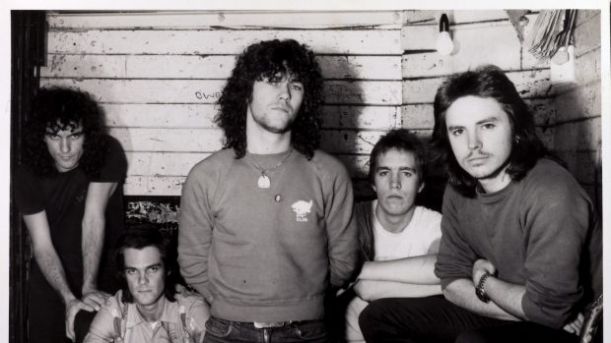
Cold_Chisel_1979

The huge breakthrough album for Cold Chisel was East, released May 1980. Before it came out I watched Chisel rehearse for the album tour and I remember I was irritable. I recall Jim being unimpressed when I criticised the harmonies on Twist’n’Shout, so maybe that was it.

In the train on the way back to Kings Cross with Don Walker and Don’s partner, the rock writer Jenny Hunter-Brown, I remember Don looking at me like I was a toddler in need of a pacifier and handing me a Walkman, a small cassette player with mini-headphones.

“Here,” he said. “Listen to this.”

It was East, the first track: Standing On The Outside. I was so shocked by how slick and tuneful those first bars sounded, but I didn’t want to let go of being grumpy and give Don the thumbs up. I listened with a stiff face to the whole track, then took the earphones out.

“What do you think?” Don asked.

I think I said, “It’s good. It’s very good.”

Cld_Chisel_East

In Working Class Man, Jimmy writes that when Don presented Standing On the Outside to the band,

“I felt like I was singing a song that came from somewhere deep inside my soul. I had been standing on the outside all my life, never being allowed to taste or touch the world that was just outside my reach.”

Jim writes that on East, Don “came up with a lot of songs about outsiders. We were outsiders, and we were surrounded by outsiders and misfits. There was something about the outcasts from society that fascinated him. Maybe that’s why he liked me.”

Me too. Maybe that’s why Don liked me when he met me, too.

Jim asked me which of the songs from the East live playlist I liked best. I told him Tomorrow (the set opener) and Star Hotel.

Jimmy met my eyes: “Me too”, he said.

In Working Class Man he writes, “Star Hotel let me sing about not being good enough, not being wanted or worth anything, and wanting to tear down the world because of it.”

Until I read that line I didn’t realise this was the “me too” we shared. I came from a relatively privileged background, Jim came from what is sanitised as “disadvantage”. But we both had a fundamental sense of being worthless, and a desperate fear of being abandoned. We both had deep wells of anger and terror.

When Jim writes in Working Class Man about near hysteria at the prospect of being separated from Jane when she fell ill in America, I cried:

“The idea of being separated from Jane again made me feel sick. I couldn’t lose her. If I let her go now I might never see her again. I always had the feeling that I would end up alone. I didn’t deserve her. I couldn’t let her go. […] I was definitely hysterical now. I was crying.”

That is so precisely how I felt about being part of Chisel’s circle. I was terrified of being expelled. I felt that Jane didn’t like me, and I can’t blame her. At my fattest I once trod on her while wearing stilettoes. But not to make light of this (so to speak): it was not easy for Jane being married to Jim. Even then, there were so many hangers-on pressing for Jimmy’s time and attention, and some had no scruples about how to achieve that end. There were individuals hanging out with Chisel who Jane disliked and mistrusted, mostly with good reason. I didn’t try to see things from her perspective. I resented her for seemingly separating Jim from people who had been his friends – for separating him from me.

I hated watching Jim cease to be my friend, and I was beyond terrified to lose my friendship with Don, for much the same reasons Jim and the band valued him: because Don was the big brother of big brothers, the stable one, the calm, capable, trustworthy one, the one who made sure what needed to get done always did get done. What a burden Don shouldered.

Cold_Chisel_1980

Cold Chisel, with Don Walker at centre

After I spoke with Jimmy at the book signing this week, I spoke with Jane. I leaned in close and said, “Thank you for keeping him alive.”

Jane instinctively pushed back, saying “It wasn’t me.”

“I know,” I replied. “He did that. But you both did that. You did it together.”

She half-nodded, warily. I know better than to put the burden of someone’s survival, of someone’s thriving, onto their partner. I asked if I could hug her. She wasn’t keen.

“After 30 years…” she began. I hugged her anyway.

I was over-emotional, and it’s not right to force another person’s emotional space. But for years I’ve recognised I was wrong about Jane. Jim ceased to be my friend after he and Jane married and committed to a life together, but Jane was and is, it seems to me, very likely the best thing that’s happened to Jimmy Barnes.

You made his life,” I whispered, as I hugged her.
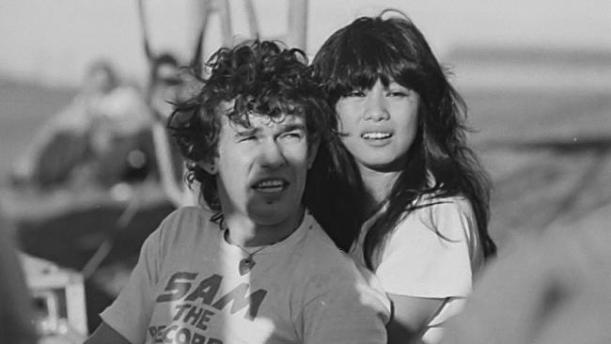
Jimmy_Barnes_with_Jane

Years after Jimmy left Cold Chisel, years after Cold Chisel broke up, I was living in London. It came to my attention Vince Lovegrove was living in London too. I made contact and we talked on the phone.

Vince told me he’d worked with Jim when Jimmy Barnes toured Europe, and that Jim had not been in a good place.

“He’s a mess,” Vince told me. “He is drugging and fucking around and he’s filled with self-loathing. He can’t bear to look at the man in the mirror.”

This was not long after Michael Hutchence’s death and I was filled with fear that, like the INXS frontman, Jim might kill himself, intentionally or otherwise. I was in denial. I was angry at Vince for being the bearer of bad news, and for a moment – a long moment – I believed he was exaggerating the mess that was Jimmy Barnes because he was jealous of how much Jimmy meant to me, and because by exaggerating the depths of Jimmy’s personal decline it might distract from his own decline. This long moment – this extended denial – contributed to me not following up the plans Vince and I made to meet up.

I regret that now. Vince was killed in a car crash in early 2012. Friends are valuable. Friends don’t cease to matter because years have passed.

Do you know I reach to you
from later times…

(Letter to Alan, lyrics by Don Walker)

I now know, after reading Jimmy’s account of his solo career and life across the years when we didn’t see each other, that Vince was not exaggerating. I now know that Jim very nearly did kill himself, in circumstances not unlike the circumstances in which Michael Hutchence died.

I am profoundly grateful my friend is alive.

I am profoundly grateful he wrote this harrowing book, painful as it’s been for me to read. I am grateful to his family and the friends who love him, who have been by his side.

I know Jimmy Barnes didn’t write this book so that people he wouldn’t recognise in the street could reminisce 35 years later about their brushes with fame. Seems to me he wrote it for himself, yes, as therapy; and also for the people who he loves, the people he perhaps feels he owes explanations; for people who are children of family violence, children of alcoholics and addicts; and for the people who share experiences similar to his of addiction, self-loathing, the fear of abandonment, the terror of loss.

When Jimmy was a child, he used to run away from his family, all the way down to Glenelg Beach, and watch the world from the jetty. I did something similar. I had a beach where I’d climb over a clifftop guard rail, curl up in a small sandstone depression in the cliff, and watch the sun set into the waters of Gulf St Vincent.

Jim didn’t write this book for me (or just for me). But I open the front leaf of my copy of Working Class Boy, and I see in Jim’s scrawl

Jimmy_Barnes_autograph

And I am grateful.

Jimmy_Barnes_signs_for_Elly_McDonald.jpg


5 Comments

Hillary Clinton and the 2016 U.S. Presidential election – What happened?

Hillary Clinton, What Happened (Simon & Schuster 2017)

Susan Bordo, The Destruction of Hillary Clinton (The Text Publishing Company 2017)

Hillary_Clinton_blue

So much has been said and written about how Hillary Clinton lost the 2016 U.S. Presidential election because she was a “flawed” candidate, and about her supposed inauthenticity.

In response to the question, ‘ Who is Hillary Clinton, really?’, large numbers of Americans have, in multiple ways, insisted she’s a liar, untrustworthy, a war-monger, an Establishment agent, a privileged white lady, a Lady Macbeth, unlikeable, avaricious, corrupt, criminal, vicious, and worse (enabler for a sexual predator, a murderer).

I’m not American. I’ve watched Hillary since 1992 (not before). I followed media and social media coverage of the 2016 campaign and election. I’ve read her autobiography Living History, and now I’ve read her memoir and analysis of the 2016 elections, titled What Happened, and I remain puzzled.

Not puzzled as to who Hillary is. Seems simple to me: she’s a Methodist. An over-achieving, hyper-capable, intellectually brilliant Methodist with a life-long dedication to public service.

My puzzlement continues over how it is that such large numbers of American citizens refuse to accept it can be so simple, and prefer to believe in Clinton as a bitch-witch Medusa.

These two recent publications – What Happened by Hillary Clinton, and The Destruction of Hillary Clinton by feminist academic Susan Bordo, a media critic and cultural historian – attempt to address public perceptions of who Hillary is, and other factors that contributed to her election loss, resulting in the triumph of President Donald Trump.

The-Destruction_of_Hillary_Clinton

If you’re committed to the view that Hillary Clinton lost the election because she personally is “flawed”, or flawed as a candidate, I hope you will nonetheless continue reading. Most of this review focuses not on Hillary’s character and history, but on those other factors that combined to help undo her campaign.

In both Clinton’s and Bordo’s accounts, but most expansively in Clinton’s, other factors of vital public interest are identified:

  • Cyber warfare, also known as “active measures” – “semicovert or covert intelligence operations to shape an adversary’s political decisions” (Thomas Rid, Professor of Security Studies at King’s College, London).
  • The war on truth – the phenomenon of “false news” and a transition within established media from traditional news values to news as entertainment: news for ratings, news as click bait, news to fuel a 24-hours news cycle.
  • Inappropriate interference by State agencies in the electoral process, in breach of established protocols.
  • The breakdown of Democratic voter solidarity, with voters taking their cues from dissenter Democrat or third party leaders.

In short:

  • Putin
  • Emails
  • Comey
  • Sanders

At more length:

Putin, Wikileaks, cyber warfare and the war on truth

In the section of her book titled ‘Frustration’, which examines in depth specific issues and missteps within Clinton’s campaign that caused its failure, Clinton has a chapter titled ‘Trolls, Bots, Fake News, and Real Russians’. Whatever your personal views on Clinton, I recommend this chapter as a serious essay by a former Secretary of State on cyber propaganda as proxy warfare.

Clinton summarizes:

“The January 2017 Intelligence Community report called the Russian influence campaign a ‘new normal,’ and predicted Moscow would continue attacking the United States and its allies. Given the success Putin has had, we should expect interference in future elections and even more aggressive cyber and propaganda efforts. […]

“We should also expect the right-wing war on truth to continue. As Trump faces growing political and legal challenges, he and his allies will likely intensify their efforts to delegitimize the mainstream press, the judiciary, and anyone else who threatens his preferred version of reality.”

Clinton suggests four steps:

  1. A Special Counsel investigation in tandem with an independent commission with subpoena power, to “provide a full public accounting of the attack against our country and make recommendations to improve security going forward”.
  2. State and private sector partnership to plan and invest in improvements to U.S. networks and national infrastructure security, alongside acceleration of the U.S. military and intelligence agencies’ own offensive cyber and information warfare capabilities.
  3. Publicly calling out cyber enemies – Putin and Wikileaks – and taking tough measures against them.
  4. “We need to beat back the assault on truth and reason here at home and rebuild trust in our institutions.” Social media and tech companies need to adjust algorithms, deactivate bot networks, partner with fact-checkers and generally clean up their platforms. Mainstream media need to reaffirm a commitment to rigorously uphold factual rather than speculative or unexamined reporting.

By implication (Clinton doesn’t spell this out), individuals need to educate themselves to better identify fake news and stop fuelling it: stop Sharing fake news, but also stop Liking and Commenting, as responses on fake news posts trigger the algorithms that spread these posts more widely.

In What Happened’s final section, titled ‘Resilience’, in a chapter titled ‘Onward Together’, Clinton does strongly urge individuals to participate in public political conversation:

“If you’ve been keeping your opinions to yourself, try speaking out – whether that’s on social media, in a letter to the editor, or in conversations with friends, family, and neighbors. Your views are every bit as valuable as everyone else’s. You’ll be surprised by how satisfying it can be to express yourself. And chances are, once you take a stand, you’ll find you’re not standing alone for long. If all else fails, make a sign and show up at a protest.”

Using the mantra “Resist, insist, persist, and enlist”, with the emphasis on “enlist”, Clinton recommends further civic engagement:

  • “Register to vote.” Encourage friends, family and others to register too.
  • “Get involved in a cause that matters to you.” Actively involved.
  • Engage with our elected representatives.
  • Run for office.

In that section titled ‘Frustration’, Clinton addresses at length avoidable mistakes she made. A chapter titled ‘Country Roads’ examines economic stagnation in rural areas previously dependent on the fossil fuel industries, states such as Kentucky, West Virginia and parts of Ohio. She examines the impact of her statement at a town hall meeting that “We’re going to put a lot of coal miners and coal companies out of business”. This chapter is heartfelt and thoughtful, and I was astonished at her courage in subsequently fronting up to a public meeting in Mingo County in West Virginia, “arguably Ground Zero for the coal crisis”. Here the candidate ran a gauntlet of “several hundred angry protestors chanting ‘We want Trump!’ and ‘Go home Hillary’”. One woman had hands dripping red paint to symbolize blood and yelled accusations about Benghazi.

In this chapter Clinton does not make excuses. She presents a distressing picture of the plight of Appalachian communities and discusses the issues from multiple angles. She does provide the full context of that inflammatory, widely disseminated quote:

“Instead of dividing people the way Donald Trump does, let’s reunite around policies that will bring jobs and opportunities to all these under-served poor communities. So, for example, I’m the only candidate who has a policy about how to bring economic opportunity using clean renewable energy as the key into Coal Country. Because we’re going to put a lot of coal miners and coal companies out of business, right Time? And we’re going to make it clear that we don’t want to forget those people. Those people labored in those mines for generations, losing their health, often losing their lives to turn on our lights and power our factories. Now we’ve got to move away from coal and all the other fossil fuels, but I don’t want to move away from the people who did the best they could to produce the energy that we relied on.”

In a later chapter in that section, titled ‘Why’, Clinton provides the context for the inflammatory quote about Trump voters being a “basket of deplorables”. Many Trump supporters, she continued, as quoted by Susan Bordo, are

“People who feel that the government has let them down, the economy has let them down, nobody cares about them, nobody worries about what happens to their lives and their futures. They are just desperate for change. Doesn’t even really matter where it comes from. They won’t wake up and see their jobs disappear, lose a kid to heroin, feel like they’re in a dead end. Those are people who we have to understand and empathize with as well.”

Hillary_Clinton_grimace

Comey and “those damn emails”

There is a chapter titled ‘Those Damn Emails’. Although the issue of Hillary’s use of a private email server during her tenure as Secretary of State dominated coverage of her presidential campaign, and ultimately, arguably, derailed it, the ‘issue’ was only ever a furphy. Federal Register regulations requiring that only government servers be used were brought in in 2013, after Clinton left office. She, like all previous Secretaries of State (Colin Powell and Madeleine Albright, for example), did use a private server, and used it for both government and personal email correspondence; this was not in violation of any protocol or law. That she chose to delete her personal emails prior to providing all work-related emails for examination was found to be a legitimate choice. (Powell and Albright, by the way, did not provide any emails for examination, despite official State Department requests.)

Nor was Clinton guilty of improperly or carelessly disseminating classified emails. Even then-FBI director James Comey was obliged to retract his damning public verdict that Clinton had been “extremely careless” in her email use. Under questioning on 7 July 2016 (prior to the election vote), Comey acknowledged only three of 110 emails he had claimed were classified, out of more than 30,000 work emails provided, “had any kind of markings on them at all which would have alerted the recipient to their classified status. Those three, moreover, were marked (mistakenly, as it later turned out) only ‘internally,’ with tiny letter symbols pertaining to specific sentences within the emails” (Bordo).

DEMOCRAT MATT CARTWRIGHT: You were asked about marking on a few documents, I have the manual here, marketing national classified security information. And I don’t think you were given a full chance to talk about those three documents with the little ‘c’s on them. Were they properly documented? Were they properly marked according to the manual?

JAMES COMEY: No.

CARTWRIGHT: According to the manual, and I ask unanimous consent to enter this into the record, Mr Chairman.

CHAIRMAN: Without objection so ordered.

CARTWRIGHT: According to the manual, if you’re going to classify something, there has to be a header to the document, right?

COMEY: Correct.

CARTWRIGHT: Was there a header on the three documents that we’ve discussed today that had the little ‘c’ in the text somewhere?

COMEY: No. There were three emails, the ‘c’ was in the body, in the text, but there was no header on the email or in the text.

CARTWRIGHT: So if Secretary Clinton really were an expert about what’s classified and what’s not classified and we’re following the manual, the absence of a header would tell her immediately that those three documents were not classified. Am I correct in that?

COMEY: That would be a reasonable inference.

Across the presidential campaign, it’s been quantified that there was three times more coverage of Hillary Clinton’s so-called “email scandal” than there was on all her policy statements combined. The real scandal, according to Clinton and Bordo, is the way Hillary Clinton’s email use as Secretary of State was used as a political weapon to scupper her presidential campaign. Eleven days before the election FBI director Comey publicly announced further investigation into Clinton’s emails, even though the emails in question were subject to a wholly unrelated inquiry (into former congressman Anthony Weiner’s misuse of emails) and in the event turned out to be emails already examined months earlier during the closed inquiry into Clinton’s email use.

It violates protocols for an FBI director to publicly comment on an investigation in process, much less speculate about the possible reopening of a completed investigation where, in Comey’s words, “the FBI cannot yet assess whether or not this material may be significant”.

But that’s what Comey did. Clinton makes a convincing case for Comey’s announcement on 28 October 2016 being the turning point and deciding factor in an election where, for all her “flaws”, she led as preferred candidate at and up until that moment. She believes that a small cabal of FBI agents in the FBI’s New York office pressured Comey into making public statements that amount to electoral interference. Bordo describes it as a “coup d’état”.

Hillary_Clinton_anger

Sanders and the Bernie Bros

In What Happened, Hillary Clinton is relatively restrained in her criticisms of Democrat contender Bernie Sanders’ impact on her campaign’s outcome. At some points her anger shows through. At other points she acknowledges him positively. Her main objection to how Sanders managed his campaign and its aftermath is that he set up ‘stalking horse’ policy positions, positions that were so idealistic, so far towards the left, that there was no chance of being able to deliver them as legislation, but which served to discredit her credentials as a “progressive” and made her own policy positions, which Clinton considers to be on the same continuum but pitched more realistically, appear compromised. She objects to his unwillingness to rein in the online vitriol of his more extreme supporters and to correct mischaracterizations of her activist history and affiliations. She notes he was tardy in publicly supporting her campaign after she was confirmed as the Democrat presidential candidate. She points out that ultimately she lost the presidential vote by a slim margin of voters, and that had some Sanders voters not abstained or voted Green, history may have been different.

Susan Bordo is not at all restrained. Her chapter ‘Bernie Sanders and the “Millennials”’ is, at 30 pages, the longest chapter in her book The Destruction of Hillary Clinton. She makes many of the same points Hillary does, but much more angrily. Unlike Hillary, she expresses exasperation at younger feminist voters who say they saw Hillary Clinton as an Establishment candidate or that they didn’t see her feminist policies and politics as relevant. Bordo isn’t at her most convincing in this chapter. She comes across as patronizing younger voters, accusing them of ignorance or immaturity.

The candidate herself is very clear younger voters are the future. She concludes What Happened? with a section titled ‘Resilience’, where in chapters titled ‘Love and Kindness’ and ‘Onward Together’, where she argues the need fervently for common cause. In ‘Onward Together’, she chooses to conclude her book with an account of her May 2017 visit to her college alma mater, Wellesley, where she had been invited to deliver an address to the graduating class, 48 years after she had come to national attention as the first student to deliver an Ivy League college graduation address, an event covered by Life magazine.

What’s interesting to me, and frankly moving, given how clear it is from previous chapters how personally devastated Hillary Clinton was by her election failure, is that in these concluding pages Clinton chooses not to focus on the speech she delivered to the Wellesley graduating class, but on the speech delivered by the representative of that class, Tala Nashawati:

“… she compared her classmates to emeralds. ‘Like us, emeralds are valuable, rare, and pretty durable,’ she said. ‘But there’s something else emeralds are known for: their flaws. I know it’s hard to admit, especially as Wellesley students, but we all have a lot of flaws. We are incomplete, scratched up in some places, jagged around the edges.’

I leaned in, curious. This is not what I had expected to hear.

‘Flawed emeralds are sometimes even better than flawless ones’, Tala went on, ‘because the flaws show authenticity and character.’

There was that word again, authenticity. But she was using it as a balm instead of a bludgeon. Flawed. How often had I heard that word over the past two years. ‘Flawed Hillary.’ But here was Tala defiantly reclaiming the word, insisting on the beauty and strength of imperfection.

Now her classmates were leaning in, too. They snapped their fingers instead of clapping, as Tala smiled and built to her close.

‘In the words of Secretary Clinton, never doubt that you are valuable and powerful and deserving of every chance in the world to pursue your dreams,’ she told the class of 2017. ‘You are rare and unique. Let yourself be flawed. Go proudly and confidently into the world with your blinding hues to show everyone who’s boss and break every glass ceiling that still remains.’

Now the snaps gave way to cheers. I was among the loudest. I stood and applauded and felt hope and pride rising in my heart. If this was the future, then everything had been worth it.

Things are going to be hard for a long time. But we are going to be okay. All of us.

The rain was ending. It was my turn to speak.

‘What do we do now?’ I said. There was only one answer: ‘Keep going.’”

Hillary_Clinton_smile


Leave a comment

Review: You Play the Girl (2017) by Carina Chocano 

You Play the Girl by Carina Chocano

Subtitle: On Playboy Bunnies, Princesses, Trainwrecks & Other Manmade Women 

Other editions subtitle: On Playboy Bunnies, Stepford Wives, Trainwrecks & Other Mixed Messages

Other editions subtitle: and Other Vexing Stories That Tell Women Who They Are

Maleficent_Angelina_JolieCarina Chocono was losing her mind as a movie critic:

“I found myself spending hours in the dark, consuming toxic doses of superhero movies, wedding-themed romance comedies, cryptofascist paeans to war, and bromances about unattractive, immature young men and the gorgeous women desperate to marry them. Hardly any movies had female protagonists. Most actresses were cast to play ‘the girl’.”

Chocono credits film actor Isla Fisher with slapping her awake. Asked whether her break-out success in The Wedding Crashers opened opportunities for her, Fisher had reportedly replied, “All the scripts are for men and you play ‘the girl’ in the hot rod.”

Wedding_Crashers_Isla_FisherAs Chocono noted, “Women’s experience in its entirety seemed contained in that remark, not to mention several of the stages of feminist grief: the shock of waking up to the fact that the world does not also belong to you; the shame at having been so naïve as to have thought it did; the indignation, depression, and despair that follow this realization; and, finally, the marshaling of the handy coping mechanisms, compartmentalization, pragmatism, and diminished expectations.”

Before diminishing into being a “movie” critic, Chocono had thought of herself as a “film” critic (her distinction): “I wrote about what interested me and reacted to whatever seemed to be worth reacting to in the moment.” She used film as the springboard to freeform meditations on issues that resonated – as Renata Adler wrote, writing “about an event, about anything”, “putting films idiosyncratically alongside things [writers] cared about in other ways”.

You Play The Girl is a collection of essays Carina Chocono has written utilising Adler’s approach: responses to film as “a way into larger cultural conversations”.

It’s also – which cannot surprise anyone who’s read my previous blogs exploring approaches to writing memoir – a memoir, of sorts.

Elizabeth_Montgomery_BewitchedFinely etched as a filigree narrative spanning these essays is the story of how Carina Chocono figured out how to save her marriage (Chapter 2 Can This Marriage Be Saved?), be a good mother, be a good writer, and find her way back onto the heroine’s path:

“The heroine’s journey starts with the realization that she is trapped inside the illusion of a perfect world where she has no power. She employs coping strategies at first, or tries to deny reality, but eventually she is betrayed, or loses everything, and can no longer lie to herself. She wakes up. She gathers her courage. She finds her willingness to go it alone. She faces her own symbolic death. […] The heroine’s journey is circular. It moves forward in spirals and burrows inward, to understanding. […] The path is treacherous. The territory is hostile. But the heroine is brave. She knows what she wants. She’s determined to get it. Isn’t that how all good stories start?”

Yes but. As Herr Freud asked, “What do women want?”

Virginia_WoolfFor Chocono, it’s autonomy, agency, and authority. Also, equity and self-expression. To love and to be loved.

This book is dedicated to the author’s primary school aged daughter, from “For Kira” on the dedication page to the penultimate thank you in the Acknowledgements: “And to my amazing daughter, Kira, for being ever curious, always insisting on presenting her evidence, and never holding her tongue.”

The ultimate acknowledgement goes to one of Chocono’s heroines: “And to Hillary Clinton, for inspiring us both.”

Hillary_Clinton

The memoir elements tracing Chocono’s marriage are subtle, and tender, but Chocono repeatedly refers back to cultural texts that provide explicit metaphors: Lewis Carroll’s mad worlds, Alice’s Adventures In Wonderland and Through the Looking Glass; the folk tales and fairy tales of Hans Christian Anderson, the Brothers Grimm and Charles Perrault; and the ways those folkloric tales have been reconfigured by Disney, Pixar and Hollywood more generally.

For me, Chocono is at her best deconstructing the Princess in popular culture, as she does in the chapter ‘All The Bad Guys Are Girls’. Her princesses range widely: encompassing Snow White, Cinderella, Sleeping Beauty/Aurora, Elsa and Anna, and Maleficent; but also Edith Wharton’s Lily Bart, Katharine Hepburn as Tracy Lord, and Betty Draper from Mad Men. She re-presents the Jennifer Beals character in Flashdance and the Julia Roberts character in Pretty Woman as “princesses’, based on their exceptionalism. (She savages both films, hilariously.)

Katharine_Hepburn_The_Philadelphia_Story

She asks her daughter ‘What is a princess, anyway?’

Kira replies, “It’s a very fancy woman who gets her own way.”

What most horrifies Chocono though is what happens after the ‘happy ever after’. As she points out (and as I discuss in previous blogs), a medieval princess knew she was simply a transmitter of bloodlines and a vehicle for political alliances: her role was to get up the aisle with as little fuss as possible, pop out some heirs, and remain ‘invisible’ as an individual, whether alive or dead. Even in more recent times, for girls born into elites within stratified societies (as Chocono’s great-grandmother was, in Peru), ”A woman’s education was designed to coax her to sleep at sixteen and keep her unchanged and unconscious forever. It was an undoing. It wasn’t a start but a ‘finishing’.”

Princess_Diana

Elsewhere, in her synopsis of the film Maleficent, Chicano describes the narrative building from when “King Stefan’s men try to kill Maleficent, and Aurora tries to help her and discovers [Maleficent’s hacked off] wings in a glass case, because everybody is putting girls and their parts in glass cases all the time in these stories…”

These prince “heroes” in Frozen and Maleficent are sociopaths who mutilate and usurp women with extraordinary gifts. They’re Buffalo Bill in The Silence of The Lambs appropriating women’s skin. They’re monsters.

Snow_White

Yet in popular culture, just as often, what women see reflected back is the princess as monster. To quote David Bowie, ‘I looked around / and the monster was me’.

There’s a chapter called ‘Bunnies’ that I thought might be about the Bunny Boilers, but it is in fact about lads’ mags and the Playboy magazine ideal. Bunny Boilers surface instead in the chapter titled ‘The Eternal Allure of the Basket Case’. The Basket Case makes reference to Virginia Woolf (who Chocono cites frequently), and to artists’ muses, including Courtney Love, with a glancing mention of Zelda Fitzgerald but in-depth focus on Isabelle Adjani’s most famous studies in madness, in the films The Story of Adele H and Camille Claudel. Sylvia Plath pops up. Girl, Interrupted and Fatal Attraction are the Hollywood texts, along with an HBO show I haven’t seen, Enlightened, where Laura Dern loses her mind then loses her job. Or, arguably, the other way round.

Courtney_Love

Reading Chocono’s analysis of Adele H, I was reminded of when I first read reviews of this film, when it was released, in 1975, when I was 14. Director Francois Truffaut based his film on a real life story. Adele was the daughter of French literary titan Victor Hugo, writer of the novel Les Miserables. A young English army lieutenant had proposed to Adele, but she turned him down. Later, she regretted doing so, and, uninvited, followed his regiment to Canada, where she stalked him for years, then followed his regiment to Barbados, where eventually one day he confronted her, only for it to be apparent she did not recognise him.

Adele is a princess, daughter of the greatest French literary hero of the nineteenth-century. She is a Romantic: Chocono quotes philosopher Isaiah Berlin’s definition of Romanticism as “the unappeasable yearning for unattainable goals”. She quotes from Sandra Gilbert and Susan Gubar’s book The Madwoman In The Attic, a study of “madness as feminist protest, subversion, and resistance. The madwoman, they say, serves as ‘the author’s double, and image of her own anxiety and rage’ towards a culture that oppresses her.”

Is Adele’s madness also her own misplaced sense of entitlement? Is she being a “princess”, a “very fancy woman” who thinks she can get her own way by ‘virtue’ of her privilege and passion? Is she on the “heroine’s journey”?

The_Story_of_Adele_H_Isabelle_Adjani

Virtue, as Mae West almost said but didn’t, has nothing to do with it.

Reading again about Adele H reminded me of two vintage Hollywood films that made an impact on me when I was 12, both about mad and bad bunny boilers who selfishly insisted on loving men who did not want to be loved (by them). I was so distressed by these two films that I wrote about them at length in my then-diary. I have long since burnt those diaries. But I think I remember what I had to say.

The first film was Forever Amber (1947), starring Cornel Wilde, the Texan actress Linda Darnell, and George Sanders as King Charles II. Amber is a luscious 16 year old country girl when Wilde, playing randy cavalier (a tautology?) Lord Bruce Carlton, age 29 when our story starts, rapes her as he’s en route to London. Except it isn’t really rape because obviously she was too luscious to remain virgin and was gagging for it anyway, and because she falls Wilde-ly in love with Bruce and hitches a ride with him to the metropolis. Amber remains ardently in love with Bruce Carlton even as she sleeps her way to being the king’s mistress. She nurses Bruce when he collapses with plague. She lances his pustules. She lends him money and advocates on his behalf. In return, he scorns her as a fallen woman, derides her as shallow and selfish, and eventually, once he marries a demure young heiress, he takes the child Amber bore to him away to the colony of Virginia, away from the child’s whore mother, away from the contaminated royal court.

Linda_Darnell_Forever_Amber

I felt that was unfair. Amber didn’t get to experience much love. She loved her son. Bruce was, reductively, a prick. She did not deserve his bad treatment of her.

It did not occur to me at age 12 that Amber might be capable of recognising all this herself and washing her hands of the bastard.

The second film was Leave Her to Heaven (1945), starring Gene Tierney and, again, Cornel Wilde, this time playing a writer who meets a beautiful woman, Ellen, on a train en route to her father’s funeral: the beautiful woman is especially emotionally vulnerable. Or out and out psycho. After their whirlwind marriage her obsessive jealousy and, yes, selfishness emerge. The writer has a disabled younger brother who comes to live with them. Bunny Boiler Ellen can’t bear to share her husband’s love so she watches, cold-bloodedly, as the boy drowns in a boating incident. Then her husband the writer finds solace in his friendship with her half-sister. He even dedicates his new novel to the sister, as “The gal with the hoe”. (She gardens.) Or was that dedication to “The gal with the hole”? Or “the gal with the ho’”?

Whatever. The Bunny Boiler had my sympathies.

Gene_Tierney_Leave_Her_To_Heaven

Ellen flings her pregnant self down the stairs, cruelly murdering the writer’s innocent unborn son. When he walks out on her, she kills herself, setting up her sister and her husband for a murder charge. Knowing what we know about partner violence, it would be more credible if the writer had killed the Bunny Boiler, as Michael Douglas eventually kills Alex Forrest in Fatal Attraction (but she was asking for it). The screen-writer does kill Gene Tierney’s character. But only after he first assassinates it.

Falta_Attraction_Glenn_CloseTo me, this, too, did not seem fair. Granted, Ellen was intense. She failed to sufficiently empathise with her husband’s needs. But all she asked was to be loved.
Gene Tierney’s problem was that she was a princess. She was a very fancy, over-entitled daddy’s girl who thought the world – or if not the whole world, her husband, at least – should love her unconditionally.

The Gene Tierney character is the Wicked Witch. She failed to play ‘the Girl’ the way ‘the Girl’ should be played – in the passenger seat.

To return to Isla Fisher: “All the scripts are for men and you play ‘the girl’ in the hot rod”:

“Women’s experience in its entirety seemed contained in that remark, not to mention several of the stages of feminist grief: the shock of waking up to the fact that the world does not also belong to you; the shame at having been so naïve as to have thought it did; the indignation, depression, and despair that follow this realization; and, finally, the marshaling of the handy coping mechanisms, compartmentalization, pragmatism, and diminished expectations.”

Or, the alternative coping mechanisms of madness and murder.

“’The girl’ doesn’t act, though – she behaves. She has no cause, but a plight. She doesn’t want anything, she is wanted.” For every princess who transforms into a witch, goes murderously crazy, there’s another – many others – being gaslighted: manipulated into believing, as Carina Chocono did, that she is losing her mind.

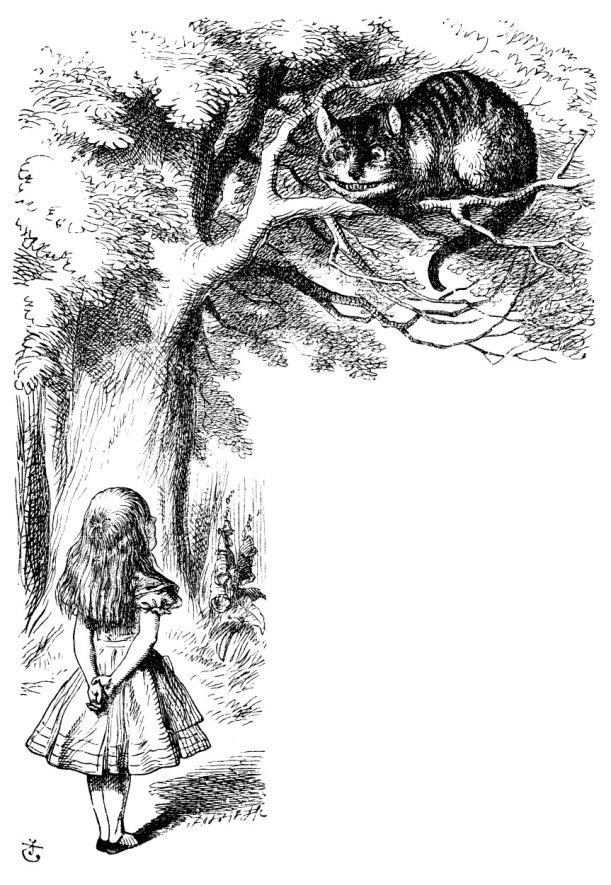
From Alice In Wonderland:

“But I don’t want to go among mad people,” Alice remarked.

“Oh, you can’t help that,” said the Cat: “we’re all mad here. I’m mad. You’re mad.”

“How do you know I’m mad?” said Alice.

“You must be,” said the Cat, “or you wouldn’t have come here.”

Alice's_Adventures_In_Wonderland_Cheshire_Cat


Leave a comment

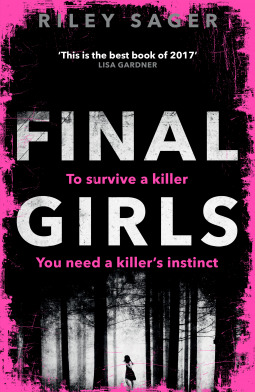
Review: Final Girls (2017) by Riley Sager

Final_Girls_Riley_Sager_Elly_McDonald_Writer

Quincy, Lisa and Samantha are each sole survivors of mass murders. But they live with threat.

When Lisa dies in suspicious circumstances, who should Quincy fear? Coop, the protective cop with Daniel Craig eyes? Jeff, the Ryan Reynolds look-alike Public Defender boyfriend? Samantha, her Riot Grrrl alter ego, tattooed SURVIVOR? Jonah, the tabloid scumbag? Her own mother, who taught her to be “Fine”?

Could He (who cannot be named) rise from the dead?

Or is that pesky dissociative amnesia concealing something Quincy’s survival depends on?

It’s 10.30pm. I’m working tomorrow. But I’m hooked.

daniel_craig_blue_eyes_elly_mcdonald_writer

So began my relationship with Riley Sager’s Final Girls – undoubtedly soon to be a movie near you, not to be confused with a 2015 teenflick of the same title.

This was a thriller I read through the night, constantly mapping it against its pop culture references, the movies, the books, the actors who might be cast, constantly guessing and second-guessing the whodunnit.

I knew guessing whodunnit was a pointless exercise. The author is such a fan of this genre that I knew s/he’d strew red herrings liberally and would make sure the ending twists back on itself like an angry rattler. (For the record: I’ve since discovered Riley Sager is a man.)

Partway through:

The movies it’s reminding me of most right now, other than Fight Club, are I Know What You Did Last Summer, The Blair Witch Project, and the Sharon Stone pic Sliver, where the script intended the Perfect Boyfriend (Billy Baldwin) to be the killer and Tom Berenger as the brooding cop with icy blue eyes to be the Male Savior. But preview audiences didn’t like that, so the ending was re-shot, making a nonsense of any nuanced characterisation the actors might have attempted.

Icy blue eyes ex-marine = sociopath ordinarily. But hey. Anything can happen.

In fact those icy blue eyes might be more Gary Cooper than Daniel Craig and Tom Berenger. The cop’s name is Franklin Cooper, known as Coop or Frank – Gary Cooper’s real name was Frank Cooper, and he was known to his friends as Coop.

Gary_Cooper_1936_Elly_McDonald_Writer

Then I got precious:

Might be a touch of Donna Tartt (quince) in here too. The Secret History. The girl in the sacrificial virgin’s white dress that turns red with blood. Quincy and Sam are definitely maenads.

Btw Quincy is an Instagram blogging baker. She makes tartts (sic). And sweet muffins. Just desserts.

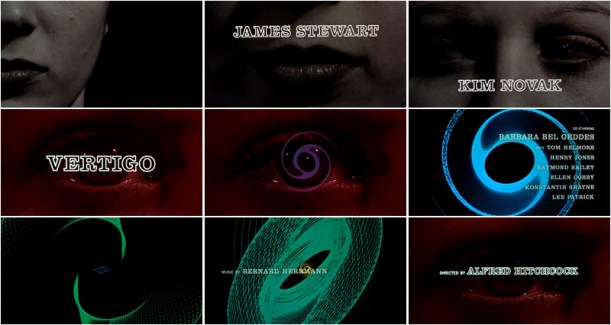
The Hitchcock Vertigo references kicked in.

vertigo_elly_mcdonald_writerNext day, I couldn’t let it rest:

I’ve been turning this one over in my head this morning. The author really loves genre. This is surprisingly smart plotting and structure and is ultimately a fan homage to the “final girl” trope. It’s also genuinely terrifying in some sequences.

Yup. It is.

Final_Girl_Elly_McDonald_Writer

UPDATE 26 November 2017: Since posting this blog I have learned that two of the most striking moments in Final Girls are not products of Riley Sager’s imagination but are instead lifted from reports of the murders at 10050 Cielo Drive in Los Angeles in 1969, perpetrated by members of the Manson Family. It’s all fun and games until it’s real.


Leave a comment

Review: Into The Water (2017) by Paula Hawkins


Into_The_Water_Paula_HawkinsI’ve just read Paula Hawkins’ Into the Water, and IMO it’s a better and more interesting novel than her bestseller The Girl On The Train.
It doesn’t have the more egregious flaws of GoTT – the drawn-out over-repetition, the ludicrous gothic ending, the central character we wanted to strangle. In all, much more disciplined: more pointed, less hysterical, more affecting. The ending is particularly finely judged.

The point is not really the whodunnit, which I won’t comment on. The point is how we construct and contextualise memories, the lies we tell ourselves and the delusions we accede to.

Hawkins prefaces her tale with two quotes, one from Hallucinations, by neurologist Oliver Sacks:

“We now know that memories are not fixed or frozen, like Proust’s jars of preserves in a larder, but are transformed, disassembled, reassembled, and recategorised with every act of recollection.”

Jules has been estranged from her sister Nel for decades, despite Nel’s frequent phone messages, to which she will not respond. Jules remembers Nel as callous – even cruel – as an adolescent big sister. She has Nel written off as a narcissistic self-dramatist. Then Nel dies in circumstances that might seem to justify that verdict. Jules returns to the village where the two spent teen summers, the village where Nel died, to care for Nel’s 15 year old mini-Nel, whose name is the near anagram Lena. But Lena is hostile, and her mother’s death is her second recent loss: not so long before, her BFF died the same way Nel apparently died.

The same way another local woman died 30 years earlier.

Into_The_Water_Elly_McDonald_Writer

There are those who believe they know the truth of what happened in each case, and those who know versions of what happened but cannot quite trust their knowing. There are those who seek a ‘justice’ that validates their version of events. There are those solely interested in self-justification. There are characters who effectively live in parallel universes, their versions of ‘reality’ in contradiction to the universes inhabited by others in their orbit.

Paula Hawkins explores what might happen when contradictory realities, constructed memories, are contested. She’s interested in interpersonal conflict, the shock effects in the wake of tragedy. She’s particularly concerned, as she was in The Girl On The Train, with how misogyny impacts women. There are several plot strands that play out ways men exert power to the detriment of women. Not all of these are presented in the most obvious terms. There are subtleties that are disquieting.

Don’t get too hung up on who did the killings. It’s really not the pay-off with this novel. The pay-off is the deep sigh when the question “Why?” is answered.

Into_The_Water_Hawkins_Elly_McDonald_Writer


Leave a comment

Review: The Last Days of Jeanne D’Arc (2017) by Ali Alizadeh

Jeanne_D'Arc_Elly_McDonald_Writer.pngIvor Indyk at Giramondo Publishing was one of my lecturers at Sydney Uni 30 years ago, and I see he helped birth Ali Alizadeh’s novel The Last Days of Jeanne D’Arc, which I read last night.
Declaration: When I read Thomas Keneally’s Joan of Arc novel Blood Red, Sister Rose at age 14 in 1975 it made an indelible impression on me. It was always, perhaps, an uphill task for Alizadeh’s novel to surmount that.

It’s not that the Alizadeh novel isn’t interesting. It’s simply that for me it’s not compelling. And partly it’s not compelling, for me, because of how he’s chosen to expound his narrative, in ways that might be described as unconventional, might be described as experimental, might be described (my description) as pompous.

Alizadeh has chosen to write mostly in very short sentences. Sentences grammatically incomplete. Missing subject pronoun or verb. Repetitive. Yeah, he’s a poet. He wrote his PhD on Jeanne D’Arc in verse. Very clever. Not compelling.

The authorial voice switches between what I think of as Pompous Academic; first person; second person; and Voices. The first person and second person pronouns interchange across much of the novel’s central sequences. Sometimes together within the same paragraph. Sometimes they are linked immediately together, hand in hand. I’ll take that as a metaphor for the lesbian relationship which forms one plot strand. The Voices are Jeanne’s saints, or angels, and they speak in free-form verse, italicized.

Confession: I skipped quite a bit of the italicized sacred voices. I also skipped a lot of the lesbian relationship, but I did go back and read those sections afterwards. I skipped the lesbian relationship not because I have any aversion to lesbian relationships – contemporary, historical, speculative or fictional – but because I was interested (not compelled) by Alizadeh’s recounting of the historical narrative, and initially I chose to follow that more closely. I’ll come back to that lesbian relationship.

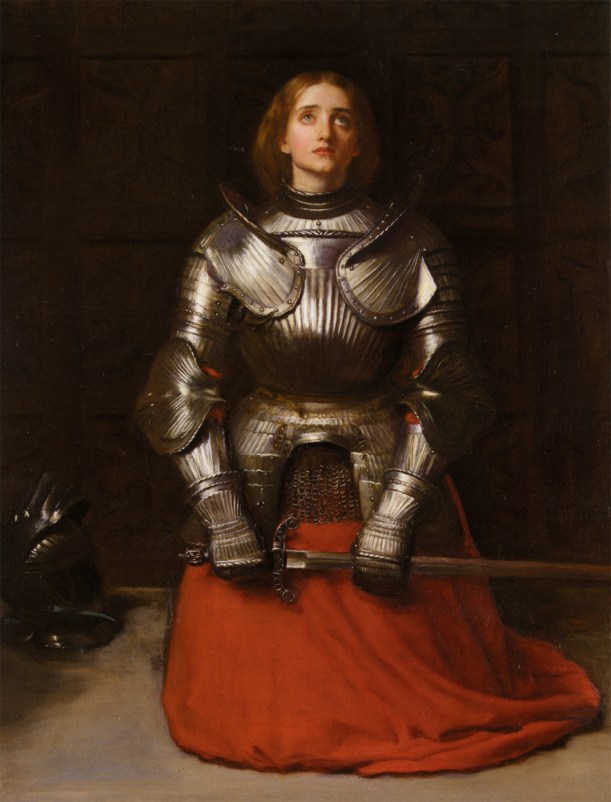
Joan of Arc as imagined by John Everett MillaisPreRaphaelite-Joan_of_Arc_Elly_McDonald_Writer

Let’s address the historical record, and that Pompous Academic voice.

In her review for Readings Online, Freya Howarth states “Alizadeh’s authorial interjections in the midst of battle scenes (about what future films will get wrong or debates historians will have) are jarring, in a good way; they remind the reader that what we know of Jeanne D’Arc is an amalgamation of stories told and retold over centuries”.

We are indeed frequently reminded that Jeanne D’Arc – that history – is an amalgamation of stories told and retold over centuries. And those reminders, that frequency, does jar. I agree with Howarth that this is intentional, intended to provoke readers to re-examine their assumptions, their received wisdoms.

Is Henry V of England a hero, as late medieval English people saw him, the very model of a king and warrior? Here’s how Alizadeh introduces Henry:

“Twenty-seven years old, a grotesquely scarred face. An extremely devout Christian, not at all the fun-loving, riotous youth of Shakespeare’s future play [Henry IV Part 1]. Severe and frankly soulless. Muscular. Possibly a psychopath. Probably a war criminal.”

And later:

“The Treaty of Troyes between the king of England, the Duke of Burgundy and the terrified, bullied queen of France. French Princess Catherine given to the English king. It is agreed that their child will be the joint ruler of the kingdoms of England and France. Celebrations in London. Shame in Paris. King Henry burps, rubs his hands after an ale, then fucks the beautiful Catherine without interest. Without any of the courtship of Shakespeare’s Henry V.”

Princess_Catherine_Elly_McDonald_Writer

How to respond to these passages?

Let’s compare them to Peter Ackroyd’s account in The History of England, Vol I: Foundations:

“There can be no doubt that Henry V was driven by a sense of divine right as well as of duty. He abandoned his youthful pursuits and almost overnight, according to chroniclers, became a grave and serious king. He acquired a reputation for piety and for the solemn observance of ceremonies; until his marriage, seven years later, he remained chaste. He established several monastic foundations of an ascetic nature, where the daily exhalation of prayer was meant to support the Lancastrian dynasty. His devotion also had an aesthetic cast. The annalist, John Stowe, recorded that ‘he delighted in songs, metres and musical instruments, insomuch that in his chapel, among his private prayers, he used our Lord’s prayer, certain psalms of David, with diverse hymns and canticles’. When he went to war in France, he took with him organists and singers.”

Ackroyd summarises Henry as follows:

“No king won such plaudits from his contemporaries as Henry V. The [financial] misgivings about his wars in France were forgotten for the sake of celebrating his martial valour. He was devout as well as magnificent, chaste as well as earnest. He was as generous to his friends as he was stern to his enemies; he was prudent and magnanimous, modest of temperament. He was the very model of a medieval king.”

He continues:

“Yet there are some who have doubted that verdict. Shakespeare’s play Henry V can be interpreted in quite a different spirit as an account of a military tyrant who staked all on vain-glorious conquest of France. What did he finally achieve? Once his French conquests were dissipated, and the dream of a dual monarchy dissolved, very little was left to celebrate. All was done for the pride of princes.”

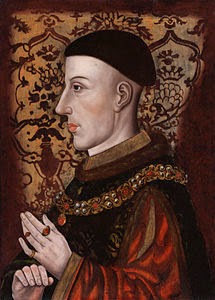
King_Henry_V_Elly_McDonald_Writer

Which tells us nothing about Henry’s personal relations with the beautiful Catherine. Or the state of his soul (“soulless”?).

I am inclined to suspect Alizadeh’s descriptions of Henry burping, rubbing his hands after an ale and fucking the French princess without interest are speculative (fictional). And this inclines me to suspect other embellishments where the Pompous Academic voice does not make clear what is on the historical record as against what is speculative, or where the Pompous Academic voice omits details on the historical record, creating a different impression of events.

For example, on Edward III:

“His father, another Edward, murdered in captivity so that the boy could claim the throne. Murdered by having a red-hot blade forced into his anus, apparently. So the towering young ruler has reason to be consumed with shame, self-loathing, brutality, hatred.”

These alleged feelings, are, according to Alizadeh, Edward III’s motive for starting the Hundred Years’ War with France.

Alizadeh is not, to my knowledge, a psychiatrist or psychotherapist. (He’s a poet.) Henry V was probably not, in my opinion, a psychopath (although being a psychopath was a handy requisite for being a successful medieval warlord). Edward III may have had many strong feelings but there is nothing on the historic record, to my awareness, to suggest shame and self-loathing were among them.

Edward_III_Elly_McDonald_Writer

Let’s try the Battle of Crecy:

“The French king’s Genoese [mercenary] crossbowmen advance upon the English longbowmen. The crossbows’ range is very short – no more than seventy metres at the most – compared to the longbows’ 400-metre range. Corpses of Genoese shooters pile up. Haughty French knights, angered by the crossbowmen’s failure, charge the English positions.”

Yes, and no. What Alizadeh fails to mention is that it is raining, raining so that the Genoese crossbows are damp. The crossbows cannot operate when wet. The Genoese mercenaries’ captain explains this to the French commanders, pleads not to be deployed. The French force the Genoese forwards. When the Genoese crossbows misfire, the French heavy cavalry trample over the top of them.

Crecy_Elly_McDonald_Writer

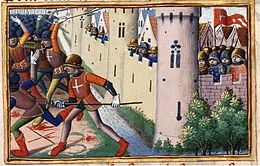
Henry V is a “psychopath”, “Probably a war criminal”? Well yes. Henry V did order the execution of French prisoners taken for ransom during the Battle of Agincourt (Azincourt). The numbers of French prisoners overwhelmed the numbers of men available to guard them. But the order was stayed and most of the French knights and nobles taken captive survived to be ransomed.

Henry lays siege to Rouen: “the city’s trade routes, food supplies, water conduits, blocked by the English. Hunger forces out the city’s poorest, about twelve thousand. The English open fire: filled with arrows, thousands of civilians fall and fester. The surviving die of starvation and cold during the winter – one of the worst atrocities of the European Middle Ages.”

But hold up. “Hunger” forces out the city’s poorest? I think not. I believe the records show the good burghers of Rouen force out the city’s poor and sick, so the wealthier and healthier can live longer, sharing food and water between many fewer. Should the English army have taken in the outcasts, given them free passage? The English had camp followers enough of their own. Given men in medieval besieging armies die from contagious illnesses as much or more as they die in military assaults, the frail and sick of Rouen were potentially a biological weapon. The refugees might have included assassins, terrorists, fifth columnists. The debate has contemporary resonance.

Siege_of_Rouen_Elly_McDonald_Writer

Not long after his marriage and the Treaty of Troyes, Henry V of England dies of dysentery, at the siege of Meaux.

Henry presided over a scorched earth policy, where English raiding parties burnt all habitations and all food sources that might provide shelter and sustenance to French troops. Henry didn’t invent that strategy; it was standard modus operandi for the English in France and their allies. Meanwhile, at the French court, the Burgundian and Orleans factions engage in massacres and assassinations. The French king believes he is made of glass. No one here has clean hands, no one is wholly sane.

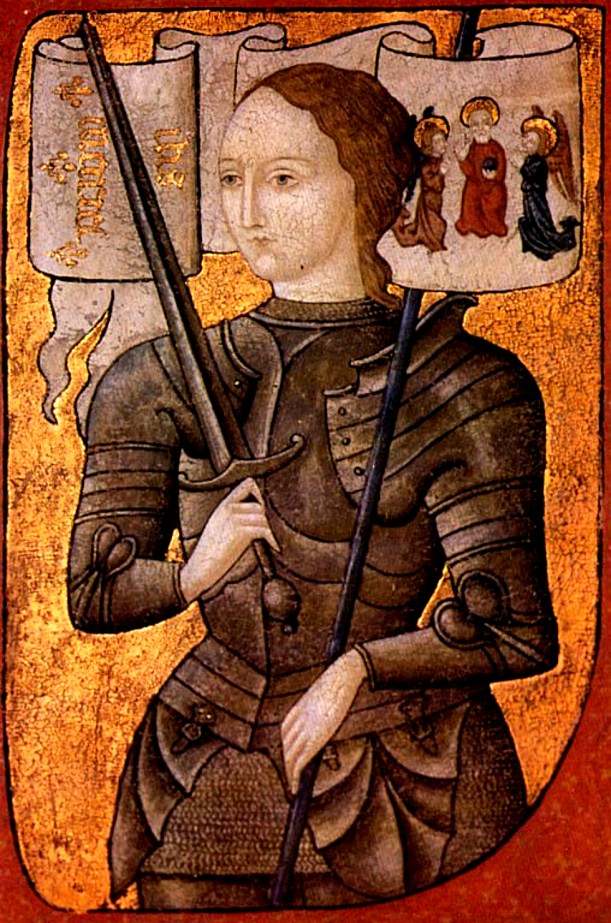
But I digress. I promised to come back to the lesbian love story. Was Joan of Arc raped in imprisonment, prior to execution? That’s plausible. Was she raped by the Earl of Warwick? Speculative. Highly. Was she lesbian? Who knows. Did she engage in lesbian sexual relations? Speculative. Highly.

I am touched to learn from Ali Alizadeh that after Jeanne/Joan’s capture by Burgundian forces, not a voice in all of France, from all her erstwhile martial and political fellows, spoke up in Jeanne’s defence save one: a novice nun told a University of Paris theologian and judge something along the lines of “She’s not evil, sire. You must believe me. Joan is a good woman.”

Or maybe she said, “Jeanne’s a good woman, sire. All that she’d done has been good and according to God. She’s innocent.”

I wish I knew the precise words this Breton nun actually said, but I don’t, because Ali Alizadeh quotes all those words, yet he also writes, “What is known of Pieronne the Breton and her trial comes from a minor entry, one paragraph, in Journal d’un Bourgeois de Paris, an account of events of that time written by an anonymous Parisian.”

One paragraph? Did that one paragraph quote all those words verbatim? Or are they speculative? Or, does this Journal d’un Bourgeois de Paris exist at all, or is it a postmodern fictional insertion?

I wish I knew. Because I can’t trust the author, the Pompous Academic, and his “authorial interjections”.

Joan_of_Arc_Elly_McDonald_Writer.jpg


1 Comment

Lucrezia, Elizabeth and Sansa

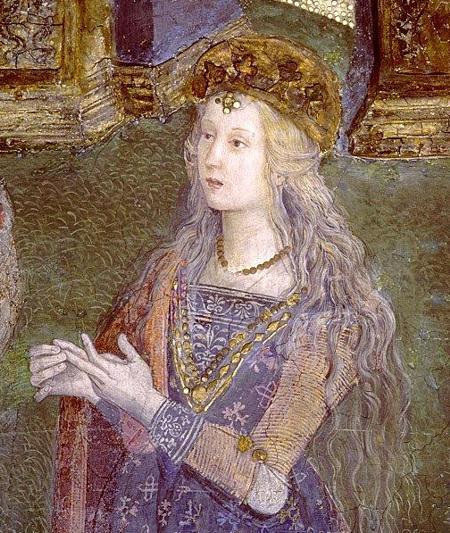
Blood & Beauty / In the Name of the Family – Sarah Dunant
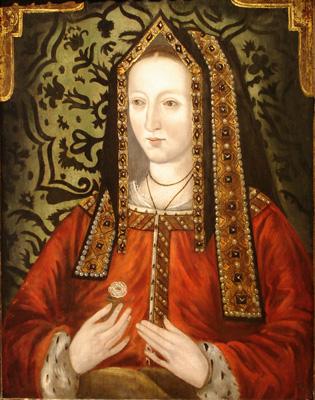
The White Princess – Philippa Gregory
Game of Thrones (TV series) – George R.R. Martin, David Benioff, D.B. Weiss

Lucrezia Borgia lived an extraordinary life, but really, who’d swap? Who’d be a Renaissance princess for real?

Born in 1480, the illegitimate daughter of a prince of the Roman Catholic Church, Pope Alexander VI, Lucrezia was twice engaged before age 12; married (to a third fiancé) at 13, divorced four years later, allegedly (but implausibly) still virginal; remarried at 18, widowed by age 20 when her brother had her husband garrotted; married once more at 22, to a duke’s syphilitic son; ten children (and multiple miscarriages) later, dead at 39. Libelled through the centuries as an adulteress, an incestuous wanton, a poisoner.

Lucrezia Borgia Elly McDonald Writer

There’s Elizabeth of York, born in 1466, eldest daughter of King Edward IV of England: first engaged at age 3; then engaged to the French Dauphin at age 9; rumoured to be her uncle King Richard III’s intended wife at 18; offered by her malformed uncle to the Portuguese king’s heir; offered by her mother to Henry Tudor, King Henry VII. Six live births, three surviving children (including the future Henry VIII) when she died in childbirth on her 37th birthday.

Elizabeth of York Elly McDonald Writer

Then there’s Sansa Stark. Sansa Stark is a fictional character. Arguably, she’s a composite invention, with elements of Elizabeth of York’s life woven through her story, and a few tangential elements of Lucrezia Borgia’s: Lucrezia’s sister-in-law, from her second marriage, was named Sancia. Viewers of the TV series Game of Thrones will recall that Sansa was engaged to King Robert Baratheon’s heir Joffrey, then married to the dwarf Tyrion Lannister, abandoned still virginal to be bigamously married off to the sociopathic rapist Ramsay Bolton. (Readers of the George RR Martin novels A Song of Ice and Fire understand the narrative in the books unfolds somewhat differently.)

Sansa Stark Elly McDonald Writer

What’s interesting about these storylines is agency.

Were Lucrezia and Elizabeth merely marriage pawns? Were they merely bargaining chips in high stakes political alliances? Or did they have some say in their ‘choices’? Once married, what degree of ‘choice’ did they have in how those marriages – and those political alliances – worked out?

Any historical fiction is always a working through of issues that address contemporary readers. As is all science fiction. So fictionalised imaginings of the lives of Lucrezia Borgia and Elizabeth of York, and fictional creations such as Sansa Stark, are vehicles to explore issues affecting women today: self-determination, autonomy and dependence among them.

Sarah Dunant has written five novels now which explore aspects of women’s lives in Renaissance Italian states. The Birth of Venus (2003) tells the tale of a Florentine merchant’s daughter who aspires to be an artist. In the Company of the Courtesan (2006) follows the career of a courtesan who, after the 1527 Sack of Rome by French armies, rebuilds her career in Venice. Sacred Hearts (2008) concerns a young girl unwillingly interned in a convent as a novice nun. Blood & Beauty (2013) and In the Name of the Family (2017) recount the fortunes of Lucrezia Borgia, through to the death of her father and her brother Cesare’s political demise.

Sarah Dunant scrupulously follows historical fact as best it can be ascertained. Where there is no surviving primary evidence, she chooses plausible speculations, from a feminist perspective. Most of the calumnies against Lucrezia Borgia are not plausible. Consequently, the Lucrezia Borgia Dunant presents is much the Lucrezia Borgia presented by Sarah Bradford in her readable biography, Lucrezia Borgia: Life, Love, and Death in Renaissance Italy (2004) – an exemplary Renaissance princess, a convent-educated patron of the arts well-versed in diplomatic skills.

Lucrezia Borgia 2 Elly McDonald Writer

This Lucrezia Borgia has no say in her first marriage and divorce, no hand in the death of her second husband, no choice in leaving her first-born child, but is actively involved in negotiating her third marriage and committed to ensuring that marriage succeeds. She is not an adulteress, being instead a poet’s muse, in line with poet-patroness conventions of the day. Dunant doesn’t allude to Lucrezia’s alleged affair with her brother-in-law the Duke of Mantua, but the case is well-made for why a canny political operative such as Lucrezia proved to be would reject a sexual liaison. (Besides, Francesco Gonzaga was frequently incapacitated by syphilis, and there were few occasions when the two were in physical proximity; their relationship was mainly a written correspondence.)

Lucrezia Borgia 3 Elly McDonald Writer

Lucrezia couldn’t prevent a husband she apparently loved from being murdered on her brother’s orders and was obliged to collaborate in impregnation after impregnation by a husband with advanced syphilis whose temperament and affinities were poles apart from hers. But their interests coincided: preserving the duchy of Ferrara for d’Este rule in a time of turmoil. As a team, they were a success.

Similarly, Elizabeth of York and Henry VII appear to have made a success of their marital alliance, albeit on very different terms. Elizabeth’s claim to the throne of England, as the eldest surviving child of Edward IV, was better than Henry Tudor’s. (Being female did not disbar her, as the subsequent ascents of Mary I, Lady Jane Grey and Elizabeth I in the Tudor period proved.) It was important to Henry that it be clear he claimed the throne in his own right, by right of conquest, and not as male spouse to a queen regnant, the Yorkist heir. The timing of his coronation, prior to the marriage, reinforced this point. Elizabeth was relegated to queen consort, stripped of political power.

It wasn’t that late medieval English female royals had no formal political influence, as had been argued until relatively recently. Henry’s mother, Margaret Beaufort, was his foremost political adviser, with private rooms adjoining her son’s and prominence in public ceremonies. Her household papers attest to the degree of power and autonomy she enjoyed.

But Elizabeth, the White Rose of York, was acknowledged as little more than a breeder. Little contemporary testimony as to her character and activities survives, other than that she was a most amiable woman, with a russet gown and one blue, fond of past-times such as cards, music and dancing, who loved her siblings, her mother and her children, and also her greyhounds. She grew plump over time. Her son Henry, who was 11 when she died, remembered her as a very pretty woman. She lived away from the public gaze, mostly at Greenwich Palace and Eltham Palace.

For Elizabeth, this was a good outcome. She had grown up as the marital prize for the would-be kings. Her destiny was to be queen of England, and she fulfilled that destiny. Even if she could not exercise power herself, her son would be king, and her descendants future rulers. She survived the downfall of her house, the House of York, the York Plantagenets, just as Lucrezia survived the fall of the house of Borgia to thrive as duchess of Ferrara, mother of future dukes.

Both were survivors – until they weren’t, until childbirth felled them. But they survived their brothers and fathers, and fared better than many might have wagered at the time.

Elizabeth of York 2 Elly McDonald Writer

The central mystery of Elizabeth’s life however remains what she made of the emergence of the man who claimed he was her brother Richard – a man who claimed he hadn’t been murdered in the Tower of London as believed, had survived his older brother Edward, had been brought up in Burgundy, and was in fact the rightful king of England, King Richard IV. This man was supported by European royalty and enjoyed prolonged hospitality at royal courts, marrying the daughter of one of Scotland’s most powerful nobles.

When this man proclaimed himself king in England, he hoped for a popular uprising. It didn’t happen. Instead he was captured. Henry VII’s agents denounced him as an imposter. They said he was really Perkin Warbeck, a Fleming. But Henry treated the imposter well initially, allowing him to live at court for 18 months, albeit under guard and without his wife, who lived under the protection of the queen, Elizabeth.

It is improbable, but possible, that Perkin was born Richard. Did Elizabeth believe Perkin Warbeck was a pretender? Was she unsure, confused? Or, privately, did she recognise him as her brother? Did she believe his wife Lady Katherine was her sister-in-law, or was Lady Katherine, for her, another young noblewoman married for political purposes? Did Elizabeth ever get to have close contact with Perkin? Did she get to see him, to speak to him, at all?

Perkin Warbeck was recaptured after allegedly trying to escape. He was severely beaten and dragged on a wooden hurdle to execution at Tyburn, alongside Elizabeth’s cousin, her aunt Isabelle’s son Edward, the young Earl of Warwick. How did this impact Elizabeth?

The truth is, Elizabeth the White Rose of York, queen consort of England, had zero agency to affect Perkin Warbeck’s fate. Even if Perkin Warbeck was Richard Plantagenet, rightful king of England, and even had his sister recognised him at first glance, there was not a thing she could have done to avert his end. Any hint of recognition, distress or mourning would have been anathema to her husband and to the dynastic interests of her children, and might have endangered Elizabeth herself. After all, her husband – and, after her death, her son Henry – spent years systematically destroying any kin of Elizabeth’s who could be acclaimed as Plantagenet heirs.

Elizabeth of York 3 Elly McDonald Writer

I’m not a huge fan of Philippa Gregory’s novels, despite their immense popularity. But Elizabeth’s powerlessness is poignant as depicted in The White Princess, just as Lucrezia’s powerlessness to prevent her second husband’s murder is poignant – is shocking – as depicted in Dunant’s Blood & Beauty.

Philippa Gregory represents Elizabeth of York almost as catatonic, as paralysed, in relation to Perkin Warbeck. Dunant shows Lucrezia and her sister-in-law Sancia desperately attempting to save Alfonso of Aragon by appealing to a higher authority, her father, the Pope – only to inadvertently leave him exposed and fatally vulnerable.

On Game of Thrones, as at the time of writing we don’t know where Sansa Stark’s story is headed. She’s developed from being a naïve ingénue through manifold manipulations to her current status as an avenging Amazon, intent on reclaiming what is hers. So far, all but one of her immediate family have been killed (with one resurrected, and one transformed into a three-eyed crow). I don’t know whether Sansa gets to call the shots in her future. But I’m betting she doesn’t die in childbirth.

Sansa, of course, is a fiction.

https://ellymcdonaldwriter.com/category/medieval-history/

Sansa Stark 2 Elly McDonald Writer


Leave a comment

Avon and Servalan, Paul and Jacqueline – memoirs

Call me Jacks – Jacqueline Pearce in conversation [with Nicholas Briggs] Audio CD

You’re him, aren’t you? An autobiography by Paul Darrow

From 1978 till 1981 the British sci-fi series Blake’s 7 was broadcast on TV across four seasons, 52 episodes in all. Blake’s 7 was originated by Terry Nation, who also created the Daleks of Doctor Who fame. He intended Blake’s 7 to be a darker alternative to Doctor Who: Doctor Who for adults. Or a darker Star Wars. It ended badly. I mean that. As a 20 year old fan in 1981, I was so distressed by Blake’s 7’s final scenes that I wrote to the newspapers: Shocked of Kings Cross, Sydney (a neighbourhood where most of us were mostly unshockable).

There were two mainstay characters who did not appear in Episode 1, Series 1, and one of these characters was missing – and greatly missed – in that final episode. The other claims the final shot. These characters are the evil galactic Supreme Commander Servalan, played by Jacqueline Pearce, and Avon, first introduced as a cold, self-interested, sociopathic hacker, played by Paul Darrow.

Servalan

The absence of Servalan and Avon might explain why, when I watched a repeat of Episode 1, Series 1 when Blake’s 7 was rescreened in the ‘90s, I could not make out why I’d loved this show so much. Avon and Servalan. They were the drawcards. Tarrant was cute and Cally quite compelling, Vila was amusing and the first Travis had a kind of S&M appeal, but really, for me Blake’s 7 was Avon and Servalan. This I understand was true for many of the series’ 10 million or so (at its peak) viewers.

Servalan, especially, was a kind of perverted role model for me. After a miserable love affair, I cut my hair to a short fuzz, to look like hers. Men wanted to touch the possum fur fuzz on my head. I let them. But I knew I was an alter ego – a lost clone – of the Supreme Commander and that if I chose, those men would be laser blast fragments.

servalan blasts Avon

Having recently re-encountered Blake’s 7, I was curious to learn what happened to the actors in their subsequent lives. I found there is a pop cult industry around the series, a business called B7 and a business called Big Finish, with audio adventures voiced by original cast members and Comic Con appearances. There are autobiographical materials, such as Call Me Jacks – Jacqueline Pearce in conversation (audio CD) and Paul Darrow’s memoir You’re him, aren’t you? – An autobiography.

What did I learn?

I learned that it’s painful to be an actor, that the odds of achieving any kind of success are stacked against acting aspirants, that success once achieved is seldom enough, and seldom sustained, and that the pain of being a has-been and the pain of being a never-was and the pain of finding hollow “success” can be hard to live with.

I learned that Darrow and Pearce are both deeply ambivalent about Blake’s 7, that the 35 years since have seen both struggle with depression and despair, and struggle in other ways. Pearce talks openly, recklessly, about it. Darrow circles around pain and disappointment over and over, looping through themes of ambition and failure, and feelings of anger and envy, till the cumulative effect is of an old actor, deep in his cups, holding forth in a way he hopes is avuncular but in fact comes across as bitter. Not that I’m saying Paul Darrow drinks. I’m talking about how I read his memoir.

Paul Darrow Avon

There are positives. Jacqueline Pearce is painfully open, recounting a tale of talent blighted by mental illness, but her story testifies to resilience and the value of friendships, including a supportive friendship with the late great actor John Hurt. It’s easy to empathise with Pearce’s observations and experiences, and easy to admire her fortitude. Plus, her voice is beautiful, even if her frequent throaty laugh becomes unsettling.

Paul Darrow is an intelligent man and his account of his life attests resilience, too, and enterprise. He writes in short pieces, not necessarily linear chronology, and I wish there’d been a sympathetic editor to hand to help him focus on the interesting questions he raises, and to minimise some of the more indulgent sections, such as his synopses of each episode of every Blake’s 7 series, which could be summarised as “The narratives were crap, the production values trash; if you care about Blake’s 7, the more fool you.”

I don’t think he meant to imply Blake’s 7’s production team, or its viewers, are idiots, but he does imply that, at length. Then he contradicts himself and praises the writers, the directors, the stunt crew, thanks the actors for their friendship and thanks Terry Nation for transforming his life. Like I said, conflicted.

Paul Darrow is an intelligent man. He does raise good questions. Given the plots are ludicrous, the stunts unconvincing, special effects rudimentary and the production values shout low budget, what can account for Blake’s 7’s popularity? This was a show shot on video, not film, shot largely within semi-bare stationary sets (Scene: The interior of a space craft), with quarries and occasional sand drifts for location shoots, and characters who wield what look like hair-dryers standing in for laser guns.

And this: why did audiences relate so strongly to the overt sociopaths, to Avon and Servalan? Why did the sparks of an Avon/Servalan pairing cause salivations? Why, cosmos above, would young women like me imagine Servalan a role model and fantasise about Avon?

Servalan Avon.jpg

Paul Darrow is an intelligent man and in his autobiography he acknowledges these questions. Then, after a half-hearted stab in response (Avon as “a bit of rough”?), he gloomily gives up, as if it’s all too much. Which it would seem it was.

It must be hard, for Paul Darrow, to start out sharing a house with fellow RADA students John Hurt and Ian McShane, and at the height of one’s fame to be touted as a future James Bond (Timothy Dalton got the Bond gig), then to be relegated to pantomime, touring rep (again), and the continuing audio adventures of a character you played several decades back. A character who logic suggests died.

Darrow writes interestingly about typecasting, and he writes about an actor’s need for an audience, for affirmation. He is savagely funny about how he’ll be remembered. As ever, he’s torn, not sure whether anyone will care at all, or whether there’ll be mangled memories and pop culture fan-hysteric tears, or whether some people might consider his career had value. I’m here to reassure him. Paul, you are loved. How could a reader not love an actor who quotes the review that said “Paul Darrow plays Macbeth like Freddie Mercury giving a farewell concert”, and the review that read “Paul Darrow is an actor worth watching, but not in this play”?

It must be hard, for Jacqueline Pearce, to start out as the RADA ‘girl most likely’, directed by Trevor Nunn, hanging out with John Hurt, Anthony Hopkins and Ian McShane (no mention of Paul Darrow), then be ‘demoted’ in the final series of Blake’s 7, omitted altogether from the final episode, then spend most of the next decades with little or no acting work, instead dependent on Housing Benefits and the kindness of friends, with stints as an artists’ life-drawing nude model in Cornwall, and volunteering in a monkey sanctuary in Africa. Plus stints in psychiatric care. And two bouts with cancer.

Servalan Jacqueline Pearce

Live well, Jacqueline.

My own best answer for why Blake’s 7 was loved is this:

In the late ‘70s, the Western world began to understand its supremacy could not last. Throughout the ‘70s there were petrol politics, revolutions, the Irish Troubles, labour unrest, increasing disparity between North and South, and rich and poor. During Blake’s 7’s run, the USA voted out Jimmy Carter and voted in Ronald Reagan. Margaret Thatcher was elected prime minister of Britain.

We weren’t too sure about our heroes – was Thatcher a Servalan? – and we weren’t sure who were the villains (the IRA? Revolutionaries in Iran?).

Paul Darrow points out it isn’t clear whether the crew of the space ship Liberator, the crew who were “Blake’s seven”, were in fact heroes or simply terrorists. He asks, if Blake was trying to lead a popular revolution, why was nobody else rising up? Could it be, possibly, that the Evil Empire was not perceived by its citizens as evil? Could it be that Blake, and his crew, with their talents for destruction, remained criminals even on the Liberator, as they had started out criminals?

In times of change and extreme moral ambivalence the foremost task, possibly, becomes survival. Avon and Blake and the Blake’s 7 crew hurtled through a hostile universe, hunted by omnipresent authorities, unsure of their mission, not knowing who to trust. So you trust the strong man. You trust the sociopath, Avon, because Avon has his eyes on the prize: survival. Or you follow the Supreme Commander, Servalan, because Servalan is also a survivor, and her will to power is second to none.

Pearce and Darrow were good at playing survivors.

Don’t be fooled by that soft velvet fuzz. Servalan will kill rather than be killed, and Avon will, always, be the last man standing.

avon and guards


Leave a comment

TripAdvisor review – JW Cafe at JW Marriott Hotel, Hong Kong (April/May 2017)

jw-cafe-jw-marriott-hotel-hong-kong-cafe

“Gold-star friendly service with a world of fine foods”

Staff at the JW Cafe at JW Marriott Hong Kong MADE my Hong Kong stay, along with my mother’s.

On the first morning one of the chefs assisted me in putting together a “local Cantonese breakfast” from the buffet. Every day after that, waiters Noble and Ricky helped me choose different takes on congee (rice porridge) with different condiments, including Chinese pickles, boiled egg, jelled mushrooms, sesame seeds, fried spring onion, peanuts, black seaweed and a kind of Cantonese fried doughnut. I had mini spring rolls or similar deep-fried savoury pastry with my congee, then two dim sum – different types each day – and fresh fruit to follow. I was never hungry!

jw-cafe-buffet-jw-marriott-hotel-hong-kong

Noble and Ricky pointed out the Cantonese favourites for me: pork and shrimp dim sum, banana-leaf parcels, fresh dragonfruit. They were friendly and cheerful and excellent company. I appreciated that their supervisors, Alex and John, permitted the wait staff to engage in conversation with us visitors and even to sneak us occasional ‘added value’ treats. The Cantonese cakes (mmm the little cake with black seeds!) were wonderful mid-morning! I loved the sweet buns and the light wafer tubes, too.

dragonfruit-at-jw-cafe-jw-marriott-hotel-hong-kong

JW Cafe offers a magnificent buffet – not just Cantonese, not just Chinese, but a wide range of cosmopolitan cuisines to every taste, and a delightful baked goods section. The lunch menu is good too, with – again – a fabulous Cantonese buffet, and also dishes tailored to Western tastes. The Peking Duck wrapped in soft taco with a choice of hoisin or ketchup sauces was a first for me 🙂

Staff at JW Cafe can’t have known my mother and I were newly bereaved, with me travelling in place of my father’s booked trip. We could not have been better cared for.


Leave a comment

TripAdvisor review – Splendid Tours in Hong Kong: Lantau Island, New Territories, Hong Kong Island

Hong Kong“Making it possible to Boldly Go – thank you, Splendid!”

My father died immediately prior to a holiday in Hong Kong he’d planned with my mother. The travel operators, Luxury Escapes and JW Marriott Hotel Hong Kong, very kindly permitted my mother to transfer the travel dates and to take me as her companion in place of my father, but she was not keen: in fact, at 82, newly bereaved and with a heart condition, she was adamant she was not going. But at late notice she announced she was game, because she knew my father wanted us to go as his proxies. We could not possibly have enjoyed Hong Kong, or explored Hong Kong, without the wonderful tours and team at Splendid Tours, booked on our behalf by JW Marriott Hong Kong concierges. Splendid Tours’ half-day and full-day tours were the backbone of our itinerary.

We experienced the day trip to Lantau Island, including the Big Buddha at Po Lin Monastery, Tai O fishing village with a short boat trip, and a beach stop, with Ben as our guide…

… a half-day trip to the New Territories Wetlands, including visits to Kam-Tin heritage village, two Buddhist monasteries on the Buddha’s birthday, a visit to Lam-Tsuen wishing-tree, and time shopping at Stanley St Market, with Terry as our guide…

… a half-day introduction to Hong Kong Island, including Victoria Peak and a sampan ride on Aberdeen Harbour, with Timothy as guide…

… and an evening dining on Jumbo Floating Restaurant at Aberdeen Harbour, following night shopping at Temple Street market, with Terry and Shirley as guides…

I cannot thank Terry, Shirley, Ben, Timothy and Johnny enough for their knowledgeable and entertaining commentaries, their kindness, their patience and their experience. My mother and I both had the BEST time.

We both recommend Splendid Tours unreservedly.

https://www.tripadvisor.com.au/ShowUserReviews-g294217-d9882782-r481758650-Splendid_Tours-Hong_Kong.html#


Leave a comment

TripAdvisor review – Man Ho Chinese Restaurant at JW Marriott Hotel Hong Kong

“Gourmet Cantonese cuisine with outstanding service in beautiful surrounds”

I am 56 years old and the banquet for 2 I shared with my 82 y.o. mother at the Man Ho Chinese Restaurant might just be the best meal I’ve enjoyed in my life! We are neither of us strangers to fine dining or grand hotels, and this trip – just after my father’s death, with me travelling in place of my father – might not have been predictably a time of wall-to-wall joy, but Sam, who served us our banquet, made every moment memorable for us, and the meal was sublime.

We had several banquets during our stay, a repeat visit, in Hong Kong. The menus were similar, featuring Cantonese classics such as shrimp and corn soup, and mango pudding, but the Man Ho Restaurant was way superior to the very disappointing banquet we had the following night at Tien Ye Restaurant in Pacific Place mall downstairs (where the service was insulting) or on Jumbo Floating Restaurant in Aberdeen Harbour (fun and friendly, but a tourist experience rather than a culinary adventure).

I am particularly impressed by the Man Ho Restaurant’s Cantonese dish Deep Fried Kagoshima Pork Roll with Foie Gras, Red Onion and Ginger, and with the extraordinary, subtle flavours of the light Poached Seasonal Vegetable with Wolfberry in Superior Soup. The mango pudding was light and fresh and the mini egg tart had perfect pastry.

Bravo, and thank you!


Leave a comment

TripAdvisor review – Flint Grill & Bar at JW Marriott Hotel Hong Kong (April/May 2017)

Flint Grill & Bar JW Marriott Hotel Hong Kong restaurant“Exceptional service in elegant surrounds with Western-style sophistication”

My mother and I cannot thank Donna and the staff at the Flint Grill & Bar enough for making our last evening in Hong Kong so special. I ate tender Wagyu beef steak with Dijon and white asparagus with a fantastic light mayonnaise. My mother ate white fish with vegetables. For dessert we were surprised with a wonderfully light tartlet of chocolate and chestnut with (I think) hazelnut glace. I’m reliably assured the apple pie is magnificent too. We were primed before our meal, as we were on previous nights, by cocktails prepared with good grace by the Flint Grill & Bar bar staff. I can highly recommend the Snowy Rose lychee cocktail while my mother enjoyed the Distinguished patron (orange and rosemary). I’ll need to return to try the blackberry-ouzo cocktail now!

We loved the ambience, the decor, the earth-striped textured wall paper and especially the tubular light fittings. Thank you.

Flint Grill & Bar JW Marriott Hotel Hong Kong light fittings

https://www.tripadvisor.com.au/ShowUserReviews-g294217-d2364438-r481752171-Flint_Grill_Bar-Hong_Kong.html#


2 Comments

TripAdvisor review – JW Marriott Hotel Hong Kong (April/May 2017)

JW Marriott Hotel Hong Kong night exterior.jpg“Friendly, welcoming, cheerful service in top location”

My 82 y.o mother and 85 y.o father were booked to spend 5 nights at the JW Marriott Hotel Hong Kong when my father was diagnosed with aggressive untreatable pancreatic cancer and given only weeks to live. JW Marriott Hotel Hong Kong and the tour operator, Luxury Escapes, very kindly agreed to allow my mother to re-book the dates and to take me in my father’s place after his death. I cannot thank the hotel and its staff enough. We were welcomed and treated with such kindness and friendliness by every staff member we met. The levels of service were well beyond what I might ordinarily have expected and I don’t think staff had been primed that we were bereaved.

I particularly would like to single out for thanks the staff at the JW Cafe, where we were guided in “eating like locals” by Noble and Ricky, under the smiling eyes of their supervisors Alex and John (the buffet and menu are cosmopolitan – I asked to be directed to local dishes).

Sam at the JW Marriott’s Man Ho Chinese Restaurant assisted us through a banquet for 2 that might be the best meal I’ve had in my life.

Jenny who did our room cleaning was like an aunty to us.

Gary at the Concierge Desk booked us four half-day and full-day tours through Splendid Tours, which took the anxiety out of exploring not only Hong Kong Island and Kowloon but also other islands and the New Territories. Gary also directed me to Lord’s Tailors so I could fulfil my promise to my sister to have dresses made. Lord’s Tailors are Saville Row quality and not cheap, but my sister now has a silk wardrobe for the races.

Phoebe and Ren at the Concierge Desk took care of our limo, airline and wheelchair arrangements while Frankie advised me on tipping.

In all, it was a dream trip for us at a time when being surprised and delighted was magic. Thank you, JW Marriott Hong Kong.

https://www.tripadvisor.com.au/ShowUserReviews-g294217-d300697-r481753651-JW_Marriott_Hotel_Hong_Kong-Hong_Kong.html#


1 Comment

Eulogy by my sister Cathy for our father Angus’s wake – draft

I was with Dad when the surgeon said the cancer is inoperable. Dad smiled and asked, “You don’t think it’s worth looking around for a new car then?”

The next day he went out with Mum and bought a new car for her because he wanted her to be safe when he was no longer here to protect her.

He had an amazing capacity to manage setbacks with humour and I think he learned it from when he was very young growing up in Mt Gambier during the Great Depression and World War 2. His parents Angus and Edie were born in the 1890s and already parents when World War 1 began. Dad’s sister, Ila, was one of thousands of children who caught polio around 1917 and she suffered the effects for the rest of her life. His cousin Des also grew up cared for by Dad’s family but by the time Angus was born Des was leaving home. Dad’s father owned a shop called The Spot for Menswear and it’s there that Dad began his career in retail, learning from his own father the skills he needed to be a manager and later director at Myer. I think the first photographs he took were of his house and family and the shop.

You will all recall Dad out and about with his camera. Photography was his special past-time that got him out into nature, the sunshine and the inevitable conversations with all the extraordinary people he met. Soon after he received the bad news, he decided to prepare a slide show for today. I helped with the technology and he chose the images. This proved complicated because he has 45,000 photos on his computer. Not long after we started work on the slide show his computer completely froze. I took it to Matt at Apptech who said he’d never seen that happen before but Dad’s computer was completely full. We had to delete some obsolete files. This was tricky because Dad doesn’t see any of his things as redundant.

Dad wanted the slide show to reflect his great love of Mum and family. He wanted images of all his friends: those who have already passed and those here today. We found images of him at school, including a special one of the football team showing him and Hugh Edwards who would later be brothers-in-law. There are his dear friends from uni who I’ve known and loved all my life. There are the amazing people from the community at Point Lonsdale who have shown so much love and support for the family.

Dad was so worried about Mum left alone but just seeing all the kindness that has been extended towards Elizabeth relieved him. Thank you to all of you who have dropped off food and equipment, who have chatted on the beach, phoned, and given your attention to our family in the last few months. That solidarity is much appreciated.

I sidetracked there a bit, so back to the slide show.

There are the tennis players, the Point Lonsdale Raqueteers, who awarded him legend status just in the nick of time, as seen in the photo on today’s flyer. You will see the Optimists from the Optimists’ Club, who have lunched together once a month for years, and his mates from Probus. Mum and Dad were very proud foundation members of the Combined Probus. There are old friends from interstate.

However, we didn’t fit every one Dad cares about into the slide show because I wanted images of Dad. Now, he is happy to take photos of everyone else, but there are not so many images of him. Most of the ones he chose were taken by Mum when they travelled together. One of my favourites is of Dad dressed up as Father Christmas with his sister Ila and his Auntie Maude, both of whom he looked after as they aged. It was a huge responsibility for him to drive through Melbourne on Christmas Day dressed this way because children in cars everywhere spotted him and waved. He waved back to them all.

Last year, I researched the connections between memories and photographs for an artwork project for my post-graduate studies in art at Deakin. I based my work on a photograph of the Point Lonsdale front beach by Dad. You will have seen his images of random families on the front beach that he took originally to decorate the guest rooms at the Point Lonsdale Motel, which Mum and he ran during the 1990s. Later, he couldn’t throw them away, so they hung in their house at Cheshunt Street. We discussed what his photographs actually recorded. He told me that he recalled he heard Louis Armstrong singing A Wonderful World as he pressed the shutter button. When you look at Dad’s images they all show his love for people and nature and for being alive.

Angus loved music and played it constantly. If he could hang out with Bing, Louis, Frank, Dean and Sammy he was happy. He decided to make a soundtrack for the party, to start after these speeches. He wants to dedicate all these love songs to Mum. Like Dad, I find great consolation in the stardust of a song.

He also chose the songs for this serious part of the proceedings. Amazing Grace is for Mum because Dad is grateful to her for all the grace she has shown him over the years. He wanted the Dennis Walter version but we couldn’t find the single to buy so Elly tracked down Dennis’s brother. Fred said it wasn’t available as a single but he sent Dad a homemade disk just for today. Dad chose St Louis Blues because he loved the joyous jazz funeral processions he saw in New Orleans.

He chose Jimmy Durante because there couldn’t be anyone more lovable to sing about love and Dad decided that love was the most important part of his life.

Stardust captures the bitter-sweetness he feels at leaving behind his loved ones. You might be surprised that he chose When Irish Eyes are Smiling when his ancestry is so Scottish, but Elly sent a sample of his spit to be DNA tested and it turned out he was nearly 50% Irish, down the female lines of course. This amused him no end, as his favourite son-in-law is an O’Keefe. He gave Peter his green polo shirt to wear today and chose the song, an Irish song, to celebrate the news.

Isa Lei is a Fijian farewell song. Last year, for his 85th birthday Dad took us all to Fiji. Mum and Dad took Elly and me there for our first trip overseas as teenagers. It is a special place for our family and we had the most marvellous times there. I have video of Dad’s birthday dinner aboard a sunset cruise, being serenaded by waiters. Then we all got up and danced the night away.

Looking back at my childhood, I am grateful I had loving parents but even more so that I had parents who loved each other. I remember sometimes sneaking out of bed to the top of the stairs because I could hear music playing and seeing Mum and Dad dance together alone in their own bubble of love. The last song Dad chose is Save the Last Dance for Me.

Adam Lindsey Gordon, one of Australia’s great poets, incidentally also lived in Mt Gambier. He wrote a poem that sums up how I see my Dad. It’s known as Froth and Bubble – a good name for a racehorse.

Life is mainly froth and bubble

But two things stand as stone

Kindness in another’s trouble

And courage in your own.

angus-with-liz-in-fiji-2016