I nursed my father in my arms as he died
spewing black blood.
Do you think any residue between me and you
means anything
alongside that?
I do a lot of death.
The ones who grow old
The people who don’t
Those who barely made it past the cradle.
I wait in the market in Damascus and
no one is unexpected.
I stand on a bridge and
sooner or later they all pass by.
I extend my hand and
welcome them.
“You know how European literature begins?” he’d ask, after having taken the roll at the first class meeting. “With a quarrel. All of European literature springs from a fight.” And then he picked up his copy of The Iliad and read to the class the opening lines. “ ‘Divine Muse, sing of the ruinous wrath of Achilles… Beginning where they first quarreled, Agamemnon the King of men, and great Achilles.’ And what are they quarreling about, these two violent, mighty souls? It’s as basic as a barroom brawl. They are quarreling over a woman. A girl, really. A girl stolen from her father. A girl abducted in a war.”
The Human Stain, Philip Roth – as quoted in the frontpiece of The Silence of The Girls
Why did Pat Barker not title her intelligent, engaging and troubling novel The Silence of the Women? Because she tells a tale of girls, mostly, young girls taken as war trophies and held in sexual servitude by the killers of their families.
I’d heard [the enemy commanders’] plans for Troy […]. Every man and boy killed […] pregnant women to be speared in the belly on the off chance their child would be a boy, and for the other women, gang rape, beatings, mutilation, slavery. A few women – or rather a very few girls, mainly royal or of aristocratic birth – would be shared out among the kings […] I might easily end up living the life of the common women, dodging blows by day and sleeping under the huts at night […]
Briseis
Pat Barker, Man Booker-winning author of the Regeneration Trilogy, which tells of the human damage wrought by WW1, is not the first author to retell Homer’s Iliad in the imagined voice of Briseis, the young girl at the centre of the rift between Agamemnon, commander-in-chief of the Achaeans (Bronze Age Greeks) and the armies’ most feared warrior, Achilles. Daughter of Troy, by Sarah B Franklin, precedes The Silence of The Girls, but I haven’t been able to find information about that book.
Other authors have deployed Briseis as a character in their fictions: Christa Wolf, in her novel Kassandra; Judith Starkston, in Hand of Fire (2014); Madeline Miller, in The Song of Achilles (2011).
The Song of Achilles – which missed the mark for me so completely I couldn’t read far enough in to meet Briseis – represents Briseis as being in love with Achilles’ loved companion, Patroclus. Best-selling author Marion Bradley Zimmer had a stab at Achilles’ story in Fire Brand (1987), where she presents Briseis as in love with Achilles.
Possibly the most widely recognized representation of Briseis in contemporary English-speaking culture is actress Rose Byrne’s film portrayal of the character in the Brad Pitt vehicle Troy (2004), where, again, Briseis is shown as being in love with Brad-Achilles. The 2018 BBC TV series Troy: Fall of a City features a Rose Byrne look-alike playing Briseis (I don’t who Briseis loves in this one).
In The Silence of The Girls, Pat Barker’s Briseis wonders “What will they make of us, those people of [the far future]? One thing I do know: they won’t want the brutal reality of conquest and slavery. They won’t want to be told about the massacres of men and boys; the enslavement of women and girls; they won’t want to know we were living in a rape camp. No, they’ll go for something altogether softer. A love story, perhaps?”
Pat Barker tells the story of living in a rape camp.
I’m impressed by this novel on multiple levels, although it took a while to grab me. The language is plain. So much literary writing at present is ambitious in its use of language and form, but Barker, speaking as Briseis, keeps it straight. Sometimes that can read flat. It also serves to make the occasional excursions into the supernatural – the appearance of gods, the workings of gods – startling, at first seeming incongruous. But Homer’s language is stark, and incursions by the gods are a fact of life in The Iliad, so: so be it.
I’ll say only that I’m unused to magical realism where the realism so lacks in magic and the magic is so matter of fact.
Another thing that startles is Barker’s occasional references to northern European physical attributes: Achilles’ silver hair, his cousin Ajax’s blondness, a doctor’s green eyes, a king’s grey eyes. Ethnicity in the ancient world is a contested area, but the Achaeans as described by Homer are not the dark-eyed, olive-skinned peoples of the later Mediterranean worlds. That said, it’s curious Barker chooses to introduce this element, particularly since the language her characters use is neither archaic nor contemporary but instead, faintly anachronistic, as if the writer is still immersed in the world of the Great War 1914-18 and British Imperialism, or perhaps is suggesting analogies.
Barker doesn’t describe Briseis’s appearance directly. From the comments of others, its plain she’s very beautiful: elegant but with (sorry) huge knockers. Her breasts announce her. (Really. It’s in the text.)
Homeric legend is more explicit: Homer’s Briseis is lauded for her golden hair, blue eyes and fair skin.
I found, when I did some research after reading, that the name “Briseis” simply means “daughter of Brisis”, just as the name of Agamemnon’s girl, Chryseis, means “daughter of Chrysis”. To borrow from Margaret Atwood, and The Handmaid’s Tale, it’s like calling a character “Offred” (‘Of Fred’), except with reference to the father as patriarch rather than the sexual master. Briseis could equally be “Ofachilles”, Chryseis “Ofagamemnon”.
Briseis’s actual given name, according to legend, was Hippodameia. My Greek is rudimentary, but I believe that might translate as “Horsegoddess”, which casts a wholly different light on Briseis’s symbolic role in The Iliad. (I see, too, that the Trojan hero Hector’s wife Andromache might translate as “man killer”, which likewise positions her differently, as a kind of Amazon – the Amazons came to Troy’s aid as allies. It could also translate as “manly fighting spirit”. After Achilles killed her husband, and her infant son was flung from the walls of Troy, Andromache was given as a sex slave to Achilles’s adolescent son.)
This is such an interesting book, and I do not want any comment of mine to denigrate it, but I think what I took away that troubled me most is this:
Briseis is attempting to author her own story. She is represented as telling the tale of her captivity many years later, having turned her back on the sand dunes of the Greek camp as a 19 year old, boarded a ship to a new life, and made that a full and fascinating life (by her own account): “Once, not so long ago, I tried to walk out of Achilles’ story – and failed. Now, my own story can begin.”
Good for her.
My problem is this.
Pat Barker tells most of The Silence of The Girls in Briseis’s voice. But there are things Briseis cannot know and cannot tell. So in the second half of the book, there are sequences told in the third person from the point of view of Achilles. These sequences are for me the most compelling and effective parts of the novel. These sequences – not least the visit by King Priam of Troy to Achilles to ransom his son Hector’s body – have an emotional charge that leaves much of Briseis’s narrative pallid by comparison. (Briseis’s voice does share the telling the Priam episode. But it’s Achilles’ perspectives that carry the charge.)
Is it the age old problem that the Devil has all the best tunes? That sociopaths are more compelling than victims? That the sins and sufferings of violent men are stories we are acculturated to attend to, that we can’t look away from violent men, though we turn away, time and again, from beaten women?
After an entire novel that purports to be a platform for Briseis to speak for herself, and her sisters, is this, in the end, what’s meant by The Silence of The Girls?
Last word:
My favourite paragraphs from The Silence of The Girls:
There’s a story he once chased the god Apollo all over the plains of Troy. Cornered at last, Apollo is supposed to have said: “You can’t kill me, I’m immortal.” “Ah, yes,” Achilles replied. “But we both know if you weren’t immortal, you’d be dead.”
Nobody was ever allowed the last word; not even a god.
This is not the review I prepared to write when I sat down a short while ago.
I have a friend, a novelist, who is skeptical about Reader Response theory: a literary criticism theory that focuses on how readers’ individual life experiences and beliefs shape their understandings of a text, as opposed to literary criticism that focuses on the author’s intentions, or the formal qualities of a text – crudely summarized, every novel a Rorschach Test, capable of being read in multiple ways.
My novelist friend is clear his intentions are paramount. His novels mean what he means them to mean. If readers take from them understandings that he did not intend, it’s a misreading.
I tend to differ. (Perhaps that’s obvious – I blog my individualistic responses. I gravitate to themes and issues that reflect my own concerns.)
I believe we will read the same book differently at age 60 than we did at age 16, or 30. We will read books differently depending on our emotional environment at the time of reading – what we’re dealing outside the covers of the book. Mostly I think of this in terms of life stages, but today I had an acute lesson in how what we take from a book can depend even on what’s happening within a given 48 hour period.
Lots of people deeply love All The Light We Cannot See, by Anthony Doerr. It won the 2015 Pulitzer Prize for Fiction. It was a National Book Award in the author’s native United States, a New York Times #1 bestseller (as the cover proudly proclaims).
I liked this novel. I liked it quite a lot. Some aspects of it I liked very much indeed. But as the final 50 pages counted down, I grew less and less enamoured. By the time I closed its cover, I was nonplussed. That night, cynical. This morning, irritated.
There was no question All The Light We Cannot See is beautifully written. For me, it was just that bit too beautiful, that bit too soulful, too sensitive. It made me long for a punk or grunge riposte.
Here’s my draft review, written at that time:
There are two types of novel, it seems, at present. In one type, the author is a ruthless god, killing characters who logic dictates must die, or killing just because s/he can. The other type is humanist, somewhat sentimental; hopeful refractions of humankind. This type tends to be American.
All The Light We Cannot See is a novel about WW2 written by an author from Idaho. It is indeed “Sublime” (The Times) and “Magnificent” (The Guardian). Oprah magazine likes it too. At this point, 100 pages from the end, its dual narratives are both peaking, its dual protagonists both in extreme peril.
I am confident the author plans to rescue them, or at least let their deaths have meaning.
[If you detect snark, you’d be right. I was saying the narrative line struck me as predictable – and implausible. I was suggesting there is a cosy fairy-tale at the heart of the handkerchief wrenching.]
I wish writers in this genre [the humanistic war epic] knew when to STOP, or when to strip it back: there were important points Doerr wanted to make in those last 53 pages [the post-War ‘Whatever happened to…” section], but for me they were 52 pages too many. [Man-Booker 2014 winner] The Narrow Road to the Deep North [by Australian author Richard Flanagan] had similar problems, in a somewhat similar project [in Flanagan’s case, addressing POW experiences in Changi and on the Burma Death Railway, then continuing to examine at great length what happened to his fictional characters afterwards]. To me it reads self-indulgent.
[This is a hard call. I’m certain both Doerr and Flanagan would say that the sections of their novels that deal with how their characters’ lives unfolded in the decades after the War is where it lives. They intend to examine the lasting impacts of war. In Doerr’s case, especially, his whole point is what lives on.
Me, I frankly wish the characters were left at a point of unpredictability. I wish we were left not knowing, required to use our imaginations to fill in the future – left, like the characters, displaced, facing an uncertain world. The ‘arguments against’ of course include the educative function of novels of this type (later generations don’t necessarily have the knowledge to imaginatively inhabit those spaces); the authors’ own preferences, their planned projects; and the outrage most readers would feel if these characters were sent out adrift – the t’s uncrossed, the i’s not dotted.]
I see in American writing a tendency to look back to WW2 as “the last heroic age”. There’s a valid desire to ensure what happened is remembered, and to cast the events as fables, as warnings. A book like All The Light You Cannot See is actually extremely effective in presenting aspects of wartime human experience and historic episodes, obscure [in the Doerr book, the Allied assault on St-Malo in France, and the Schulpforta Hitler Youth schools in the Reich] and better known (The Narrow Road to the Deep North).
The turn-off for me is the tone: all that effortful profundity; the wise, sorrowful voice, the self-conscious delicacy. Yes, it’s elegant, but IMO it’s overworked and kind of smug, the literary equivalent of an “Oscar bait” movie, a Manchester By The Sea. As if we read it or watch it to remind ourselves of how sensitive we are that we are so moved by the tragedies of others.
Also, embedded in the noble soulful remembrance of times past stuff there’s a wartime romp involving a sinister German sergeant-major and a cursed diamond, and frankly I came to be more involved in that narrative than in the cosmic significance.
[That’s not entirely true. I enjoyed The Adventure of the Cursed Diamond, as I enjoy a Tin-Tin comic, or a Madeline adventure – the Ludwig Bemelmans children’s classics, not Proust – and I was amused. But the sequences in the book I found most affecting were those that traced the life of the young German, Werner Pfennig.]
The author IMO over-egged the “What you could have been!” waste of human potential till the novel came to read, for me, like a shaggy dog tale culminating in a one-liner: all that lost humanity transposed into a metaphor about radio and cyberspace communications – we/they as infinite ghosts in the ether. Violins played.
Indeed.
That was my draft review. What changed?
Here I was being a Grinch. The background was the lingering death of my sister and her husband’s nephew, who 48 hours ago was about to be taken off life support .
I did not believe in fairies. I did not believe in Doerr’s elfin blind heroine, Marie-Laure. I did not believe in her loving papa, her endearing (and miraculously healed!) great-uncle, her Mary Poppins housekeeper, her gently jovial mentor, her Man In The Iron Mask mysterious Resistance friend. I absolutely did not believe in her miniature intricately crafted plywood model of a town of 865 mostly medieval buildings (I could not for the life of me figure out scale). Not even as Magical Realism, I did not believe.
Then today, one hour ago, my sister texted. Wills is to be removed from his ventilator today, but not to die. He’s to be removed because now, it seems he will live.
I don’t know if there’s an author who planned to rescue Will (refer above). I do know that for his family and carers, Will’s death would have had meanings; as does his life.
On March 16 1968 Lieutenant William Calley ordered the men of 1st Platoon, Company C, 1st Battalion, 20th Infantry of the 23rd Infantry Division of the United States Army to kill every person in the Viet Cong village My Lai.
At his court martial nearly three years later he claimed he acted on orders from his superior officer, Captain Ernest Medina.
Now We Shall Be Entirely Free is set in 1809 and centres on a massacre in the Spanish village Los Morales by British troops retreating from Napoleon’s forces. One key character is called Corporal Calley. Another is named Ernesto Medina.
The My Lai massacre trial caused a sensation in the United States, with some senior military personnel vehemently condemning Calley and Medina as rogue elements bringing the U.S. Army into disrepute; others, including conservative politicians, insisting Calley and his unit were justified in their actions; and yet others arguing Calley was symptomatic of American policy and was scapegoated as an individual.
Now We Shall Be Entirely Free is a meditation on the morality of war, the circumstances in which such a massacre might happen, who might perpetrate war crimes, and who should be held accountable.
It is also a poetic and mystical travelogue. The Hebrides, the islands off western Scotland, were in ancient times reputed to be a place of sorcery and magics; a tradition presenting the islands and the Highlands, the Gaelic realms, as supernatural lives on in popular culture from Brigadoon to Local Hero to the contemporary hit TV series Outlander. The Scottish west coast is a portal, the Hebrides another world, its islands akin to the island in The Tempest, where strange music is heard: this is the dreamworld of Now We Shall Be Entirely Free.
In this novel, the British cavalry officer who is held responsible for the Los Morales massacre is Captain John Lacroix. John Lacroix barely survives the retreat and evacuation to England. He suffers what we’d now call PTSD. Long before he has any inkling retribution is pursuing him (“I am the War”, says Corporal Calley), Lacroix flees further, to Scotland, to the islands. In the islands, he encounters forms of healing magic: music, friendship, love.
Can John Lacroix be redeemed? Does he deserve to be? Did he deserve to be condemned? Is justice, what’s ‘deserved’, even relevant? Is fate random? Or supernaturally determined?
This is a tale where I genuinely could not predict the ending. I don’t normally spend a lot of energy predicting how narratives will resolve, but with this novel, I fretted. And I got it wrong.
“[H]e saw things etched on the sea. A woman in a white dress, turning like a star”, a woman who is a seer, a prophetess, a blindfolded goddess of judgement, who “dreamed her bed was on the sea and that she had looked back at the island and seen the house”.
I was taken by the leitmotifs the author embraces. The sound of the sea. The sound of singing. The constant references to singing, to the sea, to music, to language as song. Lacroix reflects that all Gaelic is one long conversation with the sea. He reflects that “these people, the Gaels, were a curious mix, rooted and practical, but living easily among dreams and stories and superstition, one ear always pressed against the night-world, or whatever it was, the correct name for that part of life people were forgetting how to address.”
The spiritual, the fantastical, death. The new gods – technologies, surgery, populism, the cults that spring up as conventional religion fails – and the old gods, the gods who ride sea cows, walk across waters, speak through waves and await in currents.
Now We Shall Be Entirely Free looks towards the modern, but does not forget the old forms of address.
A murder will occur tonight in a crumbling stately heap named Blackheath, at 11pm. You know who the victim is.* Your mission – and you have no choice but to accept – is to identify the killer. You have eight days to do this: the same day will repeat, Groundhog Day-like, eight times; each day you will inhabit the body (and assimilate some mental traits) of a different witness. Make good use of each window to investigate.
Each day you will co-exist alongside – interact with – your other iterations. You may discover who they are as the days repeat. You may offer to collaborate. They may – or may not – do so.
You are in competition with two other souls tasked with the same mission. The first correct answer wins. The winner will be returned to his/her initial identity, have his/her memory restored, and will be permitted to leave this place. The two laggards will not.
Oh. Watch out for the sociopathic sadist footman. Footman, as in attendant on a hunting shoot. Btw: almost every guest invited to Blackheath’s masque ball and hunt has brought a footman. Which is the one?
And who is Anna?
This is the premise for The Seven Deaths of Evelyn Hardcastle, which its author describes as a “time-travel, body-hopping murder-mystery novel”. The cover blurbs refer to it as “unique” and “original”, as if this territory isn’t worked repeatedly by David Mitchell (The Body Clocks, Slade House), and as if the plot construction doesn’t owe a debt to games design. But I’ll grant it’s “darkly comic, mind-blowingly twisty”, “energising and clever”, and given his vision of grafting time travel, body-hopping onto an Agatha Christie-style English Country House Weekend murder mystery, I’ll grant Stuart Turton the title “the Mad Hatter of crime”.
Turton himself refers to the genesis of his novel as “Lynchian”, referring to filmmaker David Lynch.
Allowing the narrator’s consciousness to live in the present tense through the vehicles of eight other individuals permits multiple perspectives on solving the murder. The narrator, who we learn has voluntarily submitted himself to this bizarre “puzzle box house”, Blackheath, is, we are given to understand, one Aiden Bishop.
Bishop is a moral character, a character who believes in justice and subscribes to judgement. His musings invite the reader to engage in multiple moral perspectives. Which loyalties carry most weight? Is redemption possible? Can an evil person work good? Can seemingly inevitable futures be averted?
A masked man in a black-feathered coat, known as the Plague Doctor, tells him
“Nothing that’s happening here is inevitable, much as it may appear otherwise. Events keep happening the same way day after day, because your fellow guests keep making the same decisions day after day. […] They cannot see another way, so they never change. You are different, Mr Bishop. […] You make different decisions, and yet repeat the same mistakes at crucial junctures. It’s as if some part of you is perpetually pulled towards the pit.”
The Plague Doctor speculates this is Bishop’s nature. To break out of Blackheath, Bishop will need to change his decisions so markedly that he has in effect changed his nature – become a different man.
“[E]very man is in a cage of his own making,” proclaims the Plague Doctor.
This is a version of Hell.
The very name “Blackheath” summons a kind of hell: Blackheath south of the Thames in London, where thousands of plague dead lie buried (and where Blackheath Village is now a genteel suburb peopled by the kinds of upper-middleclass folk who enjoy Agatha Christie and will read this novel. I lived there myself for eight years). A “plague doctor” was a person who in the sixteenth through nineteenth centuries attended to plague victims, wearing “a beak-like mask which was filled with aromatic items. The masks were designed to protect them from putrid air, which (according to the miasmatic theory of disease) was seen as the cause of infection. […] These doctors rarely cured their patients; rather, they served to record a count of the number of people contaminated for demographic purposes.” [Wiki]
Blackheath has resonances of Limbo, from the Latin ‘Limbus’, meaning “edge’ or “boundary”, referring to the “edge” of Hell (ref Wiki). But the Roman Catholic religious concept ‘Limbo’ condemns those consigned there to eternity. Blackheath is more like a Purgatory, from which those destined to be saved will eventually be delivered.
More closely, Blackheath draws on the Hindu concept Samskara:
Sanskara (IAST: saṃskāra, sometimes spelled samskara)
In the context of karma theory, Sanskara are dispositions, character or behavioral traits, that exist as default from birth or prepared and perfected by a person over one’s lifetime, that exist as imprints on the subconscious according to various schools of Hindu philosophy such as the Yoga school.[3][5] These perfected or default imprints of karma within a person, influences that person’s nature, response and states of mind. – Wikipedia
Samskara is the repetition of behaviours that results in deeply entrenched behavioural patterns, in ruts, that effectively constrain our choices, determine our actions, and hence our outcomes: our karma.
To break Samskara, a concerted moral effort, an effort of courage, is required, and consistency.
The hell that is Blackheath is the hell of the addict, and more than one of Bishop’s host entities are addicted to drugs, alcohol, food, criminal, immoral or self-defeating behaviours.
The other guests at the masque ball at Blackheath are a Hieronymus Bosch representation of Hell, an evil cornucopia of vice. They are trapped in Samskara, doomed to repeat the same vile behaviours ad infinitum.
Yet the Plague Doctor tells Bishop he is different, “Each time you fail, we strip your memories and start the loop again, but you always find a way to hold onto something important, a clue if you will.”
The nature of the clue he wakes up to each new loop determines the tone, the nature, of that loop.
This loop, Bishop’s clue is “Anna”.
Bishop finds that with each successive host entity, the residual memories and traits of each host grow stronger. He first wakes as a man who is a blank slate, a man who can recall only the name “Anna”, and a vague sense that who he is, is a coward. His earliest hosts’ vices merely niggle at Bishop; his later hosts’ vices threaten to overwhelm him.
Each of Bishop’s hosts has different strengths and weaknesses, and he’s challenged to learn how to best use each one’s strengths, and best manage each one’s weaknesses.
He learns that masks, and being in different guises, only serve to reveal underlying character. Embodied in different entities, oftentimes he is only recognised by allies and prospective allies as Bishop because his behaviour contrasts with the way his host would have behaved.
At one point he tells a man with a differing philosophy, “We’re never more ourselves than when we think people aren’t watching, don’t you realise that?”
The other man argues back that Blackheath is a “puzzle, with disposable pieces”.
He argues that “Avoiding unpleasant acts doesn’t make a man good.”
The person killed today will reappear in endless tomorrows, to be killed again. Are they “never anything more than a trick of the light […]. Shadows cast on a wall”?
Are the characters that people Blackheath anything other than two-dimensional? Are they imbued with any real humanity? If not, does their fate matter? What is actually at stake?
The recurring time-loop that is the prison Blackheath is clearly a moral project, but what is its purpose?
The Plague Doctor provides a clue: “Do you know how you can tell if a monster’s fit to walk the earth again, Mr Bishop? […] You give them a day without consequences, and you watch what they do with it.”
Samskara
[MAJOR SPOILERS FROM HERE ON]
As well as being a moralist, Aiden Bishop is a romantic.
When the Blackheath puzzle ends, he believes in a future he must know is impossible:
“It seems like a dream, too much to hope for […]. The luxury of waking up in the same bed two days in a row, or being able to reach the next village should I choose. The luxury of sunshine. The luxury of honesty. The luxury of living a life without a murder at the end of it.”
This, despite the Plague Doctor warning him, “Once you’re released, start running and don’t stop. That’s your only chance.”
Despite that he has no knowledge of the life he’ll be returned to – to what point in Bishop’s timeline, into what practical reality. What paperwork do citizens require? How is ID established? Will irises be read, faces mapped, fingerprints scanned? How is food and shelter obtained? Income acquired? Transport accessed?
Don’t get out of the carriage.
Seems to me there is death at the end of this road. In effect, the footman still awaits.
Aiden Bishop, who was finally able to combine the multiple perspectives and talents of eight different hosts to make sense of what happened in Blackheath, appears, in his haste to shed everything he learned at Blackheath, to have fallen once again into the pit dug by the dominant trait of his nature: that is, the rut of his obstinate tunnel vision.
Whatever happens next is karma.
Yet Bishop is a delirious optimist:
“Tomorrow can be whatever I want it to be […]. Instead of being something to fear, it can be a promise I make myself. A chance to be braver or kinder, to make what was wrong right. To be better than I am today.”
It’s liminal: the gateway to other worlds, other mysteries.
To grow old is to learn what Merlin knew, what Prospero discovered.
There are powers that come with age: powers of far-seeing; powers to forgive, powers to avenge; powers of release, powers to persist.
Margaret Atwood’s Stone Mattress (2014), a collection of nine tales, builds on Hag-Seed (2007), her re-working of Shakespeare’s tale The Tempest, to explore aging through the tropes of fantasy, myth and folklore.
She’s particularly concerned with sexual karma (aging people reconnecting with past lovers); entrapment; with how we ‘write’ our personal mythologies; with how the act of writing exerts its magic, its power; and with contemporary ‘folklore’ – genre writing in popular culture, whether fantasy, horror, or crime.
The last tale, ‘Torching the Dusties’, is to my mind the crowning glory: who are “the aged,” in contemporary culture? What do they represent, for us? What do they embody?
The weakest tale, on the face of it, is ‘Lusus Naturae’ (Latin for “freak of nature”), which at first seems rote – I wrote a similar tale myself, aged 22. But this is a collection, where each tale is a facet of every other, casting light and shadow, and with its Frankenstein references, fire-fuelled mob rampages, ‘Torching the Dusties’ is the obvious counterpoint to ‘Lusus Naturae’:
“When demons are required someone will always be found to supply the part, and whether you step forward or are pushed is all the same in the end”.
These tales are so rich in mythic reference a tale by tale deconstruction would overflow a mere blog’s confines. But, as befits a collection titled Stone Mattress, the most obvious references are to Sleeping Beauty and its kin: the lover preserved, or preserved in fantasy; the lover’s kiss; the awakening. Atwood introduces ambiguities. The murderess who needs her “beauty sleep”. Who are the innocents, who the monsters? Who casts the spell, and when are spells benign?
Related, the trope of imprisonment: the lover spellbound, or cursed – the lover contained. A “stone mattress”, after all, is a stromatolite:
The word comes from the Greek stroma, a mattress, coupled with the root word for stone. Stone mattress: a fossilized cushion, formed by layer upon layer of blue-green algae building up into a mound or dome. It was the very same blue-algae that created the oxygen they are now breathing. Isn’t that astonishing?
A stromatolite, a stone mattress, is analogous to the archetypal experiences men and women have enjoyed and endured since the dawn of time. It is the very air we breathe. It is our hearts, pumping, hardening. In the tale ‘Stone Mattress,’ the old folks on a cruise ship dance to Hearts of Stone.
The first three tales – ‘Alphinland’, ‘Revenant’, ‘Dark Lady’ – are a trilogy, concerning what at first presents as a dyad (Constance and Ewan) but transforms into the archetypal triangle (Constance/Gavin/Jorrie). Constance, who as “C.W. Starr” is the author of a massively successfully decades-long fantasy series set in her imagined world, Alphinland, is now a widow but was once the muse and lover of the poet Gavin, the Gawain of her youth.
Gavin has aged into a vain and cantankerous mediocrity, but Constance’s myth of Gavin lives on in Alphinland, asleep, a Sleeping Beauty, in a hidden cask – much as her husband Ewan lives on in a chest in her attic, embodied by his old clothes. (By the way – Gavin is contained within a wine cask, evoking the Duke of Clarence’s death as depicted in Shakespeare’s Richard III – drowned in a vat of Malmsey sweet wine. I don’t think it’s far-fetched to suggest a Shakespeare reference here, given Atwood referred to Shakespeare’s Richard III in Hag-Seed, and given Hag-Seed explored containment, fantasy and the deep sleeps of enchantment in its retelling of The Tempest.)
Constance conjures a number of devices for metaphorical imprisonment: in her mind are filing cabinets; her mind is a memory palace.
Jorrie is the Dark Lady who came between Constance and Gavin, transformed in Alphinland into the Scarlet Sorceress of Ruptous (rupture, rapturous), “walled up in a stone beehive”, where “every day at twelve noon sharp, [she] is stung by a hundred emerald and indigo bees. Their stings are like white-hot needles combined with red-hot chili sauce, and the pain is beyond excruciating” – ‘Alphinland’.
Another standout is the title tale, ‘Stone Mattress’: an enchantress enacts a primordial (literally, primal) revenge on the male mortal who wronged her.
I’m a long time, life-long, aficionado of the fantasy genre. As I keep bleating, my attempted MA thesis was on Transformation and Shapeshifting in Early Medieval Literature. I’m also a carer for an octogenarian mother, a daughter who held her father across his last hours through till his death. For me, a big part of the pleasure in reading Stone Mattress is how Atwood shifts her representation of various characters between their archetypes, their counterparts in myth – Nimue, Vivian, Bluebeard, Jessica Rabbit – and their actuality; between their spirit, as undying archetypes, and their material reality, as bodies experiencing decay.
A raven flies, overhead. Can it tell? Is it waiting? She looks down through its eyes, sees an old woman – because, face it, she is an old woman now – on the verge of murdering an even older man because of an anger already fading into the distance of used-up time. It’s paltry. It’s vicious. It’s normal. It’s what happens in life.
– ‘Stone Mattress’
Andrew Lloyd-Greensmith, The Inner Stillness of Eileen Kramer (2017)
Sometimes the trajectory is from youth straight to decay, as in the tale within the tale in ‘The Dead Hand Loves You’ (where a female Sleeping Beauty is wakened by a monster), and ‘The Freeze-Dried Groom’ (another Sleeping Beauty – but who is the beauty, who the witch or monster?). Other times it ‘magically’ reverses: in ‘Torching the Dusties,’ a slightly ridiculous older man turns into a dignified, honorable Sir Lancelot; a cynical male pulp fiction writer is awakened by the touch of his princess (‘The Dead Hand Loves You’).
In the tale ‘Stone Mattress’, a ‘prince’ is ‘awakened’ in the rudest terms by a girl he turned into a monster, and a male Sleeping Beauty awakened by a touch fails to recognize the princess, or even the girl, seeing only the monster:
They say dead people can’t see their own reflections, and it was true; I could not see myself. I saw something, but that was not myself: it looked nothing like the kind and pretty girl I knew myself to be, at heart.
– ‘Lusus Naturae’
Underlying Stone Mattress is the problem of recognition: seeing through the spells, the glamours, recognizing people for who, for what, they are.
In ‘Revenant’ (which means, ‘The Dreamer’)
[…] Maria’s just a nice, ordinary high school girl making a few bucks, dime a dozen, nothing special. Hardly a nymphet, hardly the beckoning sapsucker from “Death In Venice.” […] Still, he likes the idea of Maria as the Angel of Death. He’s about due for one of those. He’d rather see an angel in his dying moment than nothing at all.
In ‘Stone Mattress’
Verna’s heart is beating more rapidly. If he recognizes me spontaneously, I won’t kill him, she thinks. If I tell him who I am and he recognizes me and then apologizes, I still won’t kill him. That’s two more escape chances than he gave her.
In ‘Dark Lady’
“She doesn’t recognize me!” Jorrie whispers. […] Who would recognize you, thinks Tin, with that layer of stucco and dragon scales on your face? […]
She [Constance] knows exactly who Jorrie is: despite the gold flakes and the bronze powder, she must have known from the first minute.
When Constance recognizes the truth of Jorrie, the two sorceresses experience a shared moment of truth. They have the opportunity to release each other.
“We live in two places,” says Constance. “There isn’t any past in Alphinland. There isn’t any time. But there’s time here, where we are now. We still have a little time left.”
There always was “an alternate vision stashed in Constance’s inner filing cabinet, in which Constance and [Jorrie] recognized each other […] with cries of delight, and went for a coffee, and had a big bray over Gavin and his poems and his yen for blow jobs. But that never happened. ” – ‘Alphinland’.
Even as Constance and Jorrie in ‘Dark Lady’ work through their karma, the spells that have bound them, a younger writer watches, recognizing this as her moment of power:
She’s embedding us in amber, thinks Tin. Like ancient insects. Preserving us forever. In amber beads, in amber words. Right before our eyes.
Because that’s what happens to old people. They either turn to dust, or they turn into myth.
Jane Harris is a British author and screenwriter who is the same age as I am and if I were the envious kind I suppose I should hate her. Her writing is brilliant.
Her first novel, The Observations (2006) was a finalist in Britain’s Orange Prize for Fiction 2007. Her second novel, Gillespie and I (2011), is similarly set in Glasgow, where Belfast-born Harris grew up and attended university.
Harris takes obvious delight in setting herself the task of researching a time and place so thoroughly that she feels able to inhabit the first-person voices of people whose fictional lives are, on the face of it, far removed from her own lived experience: a 15 year old ladies’ maid in 1863, a deranged English spinster in 1888 and 1933, a pubescent male black slave on Grenada and Martinique in 1765.
Wait up, you say (or at least, the reviewer in The Guardian says). A pubescent male black slave in 1765? But how can a white female British author presume to take the voice of a black male slave?
We’ll get there.
First, Gillespie and I, a fictional narrative in the form of a memoir: purportedly written by one Harriet Brown, at the age of 80, in 1933, about events that occurred when she was in her 30s – well and truly on the shelf, in the marriage market of her times. Harriet starts out asserting she is writing a biography of the (fictional) Scottish artist Ned Gillespie, but it’s evident almost at once she is writing about herself, in the most self-serving terms.
I doubt too many are clamoring to protect the authentic voice of privileged middleaged white female spinster stalkers, let alone white female stalkers who deploy the memoir form to write about the victims of their stalking. Those who have read blogs in the ‘Memoir’ category of this blogsite might be aware I am myself a middleaged, verging on elderly, white female spinster with a history as a stalker, who does write memoir pieces claiming relationships with people she has stalked.
Given the parallels between what Harriet Brown is doing and what I’ve done in blogs, Gillespie and I made for uncomfortable reading for me. But it sets out to be uncomfortable – if also, often, hilarious – reading. When I discussed it last night with friends I expressed the sanctimonious opinion it makes all of us – not merely the SWF stalkers – question where in our lives we promote delusional stories about who we are and how others perceive us.
Gillespie and I is long, 501 pages. The first half is relatively restrained and sometimes feels unduly detailed and protracted (which makes sense, once you realise it’s the case for the defence). The first-person narrative voice is highly stylized, alternately prim and vitriolic, and initially I found it off-putting. In the very early stages, only a mischievous sentence in the Preface persuaded me to sign on for the duration:
“I never suspected that we were moving towards such a rapid unraveling, not only of our relationship (what with that silly white slavery business and the trial) but also of his [the artist Gillespie’s] entire fate.”
The unravelling, which commences at the halfway point, is rapid indeed. The second half of the book is faultless, a wild savage scamper to a vicious end.
Harris seeds her text with other teasers to make us persist in the early parts of the tale, and by about page 135 I was hooked by the malevolent humour and originality. And the cleverness. Such a very clever text!
I read a review that described Gillespie and I as a “masterpiece of misdirection”. That phrase prompted me to seek out this title, but I suspect that critic misunderstands the term “misdirection”. It has a legal sense, not pertinent to this novel (although it becomes a courtroom drama); it also has a meaning specific to magic tricks. Misdirection, as neatly summarized on Wiki, is “a form of deception in which the attention of the audience is focused on one thing in order to distract its attention from another” – a technique to facilitate sleight of hand.
Gillespie and I does not do that. What Gillespie and I does is create what I’ll call a double narrative, a shadow narrative that reads counter to the narrator’s intentions. Quickly we recognize that this narrator is not merely unreliable: she is so far divorced from ‘truth’ that she’s lost its address. She is either completely self-serving, without conscience, or she is delusional. She’s attempting to reclaim a narrative she’s long since lost control over: she writes untruths that the truth glares through.
Reading ‘Harriet Brown’ made me seriously consider deleting every memoir blog post I’ve written.
My friends asked whether Gillespie and I has a point, as in a moral. I suppose I could take as its moral something like “Be careful how you speak (or write) about other people; what you say about others speaks more loudly of who you are’. But I don’t believe Jane Harris set out to write a fable. Instead, I read Gillespie and I as a strikingly wicked gothic fairytale about the havoc evil forces can wreak on the unsuspecting. Harriet Brown, with her hooked nose, her tall hats, her garb of grey and purple and black, is a witch, a nightmare witch.
She calls to mind the Scottish bedtime prayer; “From ghoulies and ghosties and long-leggity beasties and things that go bump in the night, good Lord deliver us.”
Like Gillespie and I, Sugar Money is told by a first person narrator, in an act of ventriloquism requiring huge amounts of research. As with Gillespie and I, the first person voice is highly stylized, in this case employing dialect: Creole phrases and sentences, a mélange of French, English and African linguistic elements.
Again, I found the first person voice initially so offputting I almost gave up. I’m glad I didn’t.
The Guardian’s reviewer disliked this book absolutely: she objected to a white writer speaking as a black slave; she argued the stories of black slavery are not the white writer’s to tell; she believed the use of the classic adventure genre (think Treasure Island) was inappropriate to such a serious subject; she felt the way the tale unfolded was initially way too soft in its depiction of the conditions of slavery, and that by the time Harris laid it out in explicit ugliness it was too little, too late; she proposed that black writers have addressed the issues raised in Sugar Money more powerfully, more authentically, such that the white writer added nothing of value.
Also, specifically, that reviewer felt the romance is “underdone” (is it proper to write about slavery with reference to the romance genre?); and that issues are touched on in mere sentences where Toni Morrison would take pages, whole books.
As a SWF – a SWSF, Single White Spinster Female, a SSWFS (Spinster Single White Female Stalker, no less – I can’t argue with those perspectives. Except I will, to say (1) Jane Harris did not set out to write books already written by Toni Morrison – if she alludes to abuses such as black slave couples being forcibly split up without making it her novel’s central issue, it’s because it is not her novel’s central issue; and (2) there will be those of us who, having read Toni Morrison, and others, still find value in Sugar Money, who will learn much we did not know previously, and are stimulated by the particulars of this time and place – the Caribbean, late C18th – to learn more.
I found Sugar Money affecting and educative. It was also entertaining, though perhaps it is not appropriate for a novel about black slavery to entertain?
I’m out of step with the current orthodoxies here. If a novel is properly researched and sensitively written, I don’t myself have a problem with the author’s demographic or ethnicity. But that’s easy for me to say: I’m speaking from a culturally dominant position.
From that culturally dominant position, my own perspective is: What is the novel, if not the creative exercise of empathy? From that perspective, the questions for me become: did the author succeed in engaging me, entertaining me, moving me, enlightening me, encouraging me to find out more? For me, the answer here is YES.
On the other hand: is the choice to use the first person voice of a fictional character so radically different (in race, gender, historical location) from the author primarily a showy literary move, a bravura performance?
It seems to me to come down to: Is a tale about black slaves in the Caribbean off limits altogether for a white author? If not, can it be told another way, without foregrounding the colonial experience, without making white characters central?
Attempting to write from ‘within’ any historical experience is fraught, even with the most thorough research. Historical subjectivity is immeasurably different from contemporary worldviews.
The cultural appropriation debate will continue. For me, I’m grateful writers with the immense talents of Jane Harris are attempting to re-present historical mores. Even if she is a WF.
Jane Harris – portrait of the artist as a White Female?
Two strong novels presenting visions of America at war, at its best and at its worst.
That’s the short summary.
Manhattan Beach is not an especially long novel, at 433 pages, though the narrative sprawls. It’s set in the early ‘30s, from 1933, and then from about 1942, after U.S. forces entered World War 2. Variously, we see through the eyes of Anna Kerrigan, a splint of steel with a kind of innate, blind mechanical genius; her father, Eddie Kerrigan, a bagman for Irish racketeers on the New York docks; and Dexter Styles, stylish mob boss for the Syndicate.
The characters can be read, allegorically, as embodiments of the traits that made America great: boldness, resilience, resourcefulness, courage, individualism, ambition, idealism, initiative, a certain ruthlessness, ethics that make sense on their own terms but then again – no.
Allegorically, the novel could be read as an ambitious tale of the rise of the American Century, the rise of American world dominance, fuelled by immigrant energy, replete with gangsters and war heroes, chorus girls and dock workers, closet homosexuals, proto-feminists, and systemic racism.
There are nods to other narratives of immigrant reinvention, other relationships between the American Establishment (the world of bankers) and the Mob. In Manhattan Beach, we read counterpoints, echoes, to E L Doctorow’s 1975 bestseller Ragtime, and, more pertinently, to F Scott Fitzgerald: The Great Gatsby, and The Last Tycoon, albeit less glamorous.
I envisage Dexter Styles as the young Robert De Niro, playing Monroe Stahr, a character based on movie producer Irving Thalberg, in Elia Kazan’s 1976 film adaptation of The Last Tycoon. Which, incidentally, has what for me might be the most haunting final lines in movies, entirely apposite to Manhattan Beach, from a script by Harold Pinter: the master storyteller, the maestro of reinvention and invention, turning to camera and admitting, “I don’t know what happens next.”
There’s a motif of night skies, dawn skies, silver seas, and moonlight throughout Manhattan Beach, as there was in Kazan’s vision of The Last Tycoon.
That last scene, in The Last Tycoon, with the night sky above a beach, is so entirely apposite to Manhattan Beach I can’t help but wonder if it inspired the novel. But then, I also wonder if Jennifer Egan’s project was to write a response to Trump and his ‘Make America Great Again’ slogan. I wondered as I read whether her plan was to present an optimistic reminder of “the greatest generation” – but the ending is not, in truth, optimistic:
“Look,’ [he] said. “here it comes.”
She was surprised to find him watching the fog. It rolled in fast: a wild volatile silhouette against the phosphorescent sky. It reared up over the land like a tidal wave about to break, or the aftermath of a silent, distant explosion.
Without thinking, she took [his] hand.
“Here it comes,” she said.
Final lines worthy of Harold Pinter.
There’s a character whose verbal quirk calls to mind Samuel Beckett: when he repeats a thing, the repetition negates what he’s saying – “What I want from you […] is that you be your own man. Your own man”, or ‘It’s forgotten. It’s all forgotten’ meaning just the opposite (quote here not exact).
Egan does not generally evoke Beckett, or Pinter, her style being fluid, welcomely readable, astonishingly seductive. Very occasionally, there’s a faint of odour of romantic overripeness, just momentary; and then, at other points, she pokes fun of movie, radio, and popular fiction romance.
When she does write sex, as she does as an extended sequence in Chapter 17, it’s erotically charged and intelligent, and does not neglect context:
And yet there was a problem with the girl in his car – this smart, modern girl with correct values, joined to the war effort, a girl matured by hard times and familial tragedy – and that problem was that all he could think of doing, in a concrete way, was fucking her. The rest – vague notions that she might work for him, that her toughness could be of use, that she was likely a good shot (taut slender arms, visible in the dress she was wearing tonight); confusion about how they had originally met (had someone introduced them?) – flickered at a middle distance, well behind his need to have her. And even as that need made it hard to drive the goddam car, he was also thinking: this was the problem between men and women, what made the professional harmony he envisaged so difficult to achieve. Men ran the world, and they wanted to fuck women. Men said “Girls are weak” when in fact girls made them weak.
Omar El Akkad’s novel American War is a different proposition: a terrifying, raw novel that imagines a future while simultaneously confronting us with the contemporary politics of displacement, radicalization, terrorism, torture, treason, the fall and rise of empires.
It’s a disturbing read that humanizes (though not necessarily forgives) the players.
American War follows the trajectory of Sarat, an American girl from Louisiana’s south in a United States geographically altered by the encroachment of the seas, due to climate change, and altered politically by the Second American Civil War, 2074-2095, with a breakaway “Free Southern State” (FSS), led by the MAG (Mississippi/Alabama/Georgia, South Carolina having been knocked out by biological weapons), proclaimed after disputes about fossil fuels, acts of terrorism, and political assassinations.
The author was born in Egypt, raised in Qatar, moved to Canada, and now lives in Oregon. As a journalist he’s won a National Newspaper Award for Investigative Reporting in Canada for his coverage of a 2006 terror plot. He’s also reported on the NATO-led war in Afghanistan, the military trials at Guantanamo Bay, Egypt’s Arab Spring, and Black Lives Matter.
It seems obvious – to me, at least – that El Akked’s project with American War is to describe the paths to radicalization, the making of a terrorist (of terrorists). Western readers won’t read a novel about children growing up in refugee camps in Jordan, Turkey, Pakistan or Kenya; so El Akkad has written about Gaza, Syria, Afghanistan, Somalia and Sudan in the guise of speculative fiction set in America. I was disconcerted, on scanning some online reviews, to see that some American readers failed to recognize that intention, and instead expected a World War Z-style overview of a dystopian social collapse. Reviewers didn’t understand why the author’s focus increasingly narrowed in on Sarat, a character it’s hard – and gets harder – to empathise with. Katniss Everdeen, she is not.
(I was also nonplussed by the person who complained that all the main characters, except Sarat, who is explicitly black, are, according to him, white, with, apparently, “No Hispanics or Blacks”. It seems to me quite evident that just about all the characters are racial blends, with varying degrees of Black, Hispanic and other racial traits, not to mention the Arab and North African characters from the fictional rising power, the Bouazizi Empire. I can only assume the readers who failed to recognize the multiracial nature of this future are the same readers who were shocked, on seeing the first Hunger Games movie, to realize that Hunger Games author Suzanne Collins intended the character Rue, along with most of the inhabitants of District 11, to be black.)
By following Sarat, El Akkat takes us on a dark journey through displacement, to a displaced persons’ camp (clearly, to my mind, analogous to displaced persons’ camps and refugee camps in the Middle East), through the politics of radical splinter groups, to radical activism, to an interrogation camp (clearly, to my mind, analogous to Guantanamo and Abu Ghraib) called Sugarloaf Detention Facility, on an island reminiscent of Robben Island (where Nelson Mandela was held) but which happens to be the residue of what once was Florida.
The spectral raising of Nelson Mandela seems, to me, intentional. El Akkat intends to explain radicalization and terrorism, not condone it. In how he writes what happens after Sarat emerges from detention at Sugarloaf, he intends to make clear that Sarat still has choices: she could use her horrific experiences for the good, as Nelson Mandela did, or by creating a healing, peaceful life in seclusion for herself and those close to her – she is, remarkably, offered that option, due to unique circumstances her family is blessed by. But Sarat chooses a different course of action.
We are told 11 million people die in the Second American Civil War. Another 110 million die in its aftermath, after a terrorist turns biological weapon during Reunification Day celebrations. It’s a terrible cost. American War is speculative fiction, but no wonder young American reviewers put down this book, incomplete.
The myth of the “Greatest Generation” is that war brings out the best in a people: the myth directs to 1940s Americans, the British during the Blitz. But, without minimizing the undoubted heroism many Americans (soldiers, merchant navy, civilian war workers) did demonstrate during World War II, and the undoubted heroism many British service personnel and civilians showed from 1939 onwards, it is a lie. War does not bring out the best in people. It brings out the worst.
War brings out the racketeers, the profiteers, the exploiters, the sadists, the sociopaths, the people forced to abandon goodness to the slave-god Survival. War breaks down civil order, breaks down social codes. War has its merits if it takes place offshore, if your side emerge as winners, if you’ve invested in profitable war-related ventures. If it takes place on home soil, if you are directly affected, if you’re injured or displaced or your soul is destroyed – not so okay.
As I said back at the start – just, no.
Somewhere, a fog shaped like a mushroom cloud rolls in.
The Lenny novella was written mostly in mid-2012, with one chapter, Death, written late 2013, then the conclusion in early 2018, six years after its inception.
There’s a range of reasons I abandoned it for so long (other than that I was embarrassed by it).
These include concerns about:
The hysterical tone and narrative content.
Cultural appropriation and pastiche.
How to end the narrative.
Plagiarism.
So, some thoughts on those points.
Hysteria
The first 12,000 words were written essentially in one burst, immediately after I was sacked from a temp admin job, where, among other things, I’d failed to prepare coffee and tea for senior staff and clients to the corporate standard.
I was in that temp job after leaving my previous admin job due to injuring my back, an injury that completely incapacitated me for about five weeks and left me unable to move without pain for just over three months. I’d attempted a return to work, but the firm where I worked was unwilling to modify my tasks: three hours every morning continued to be rote mechanical movement with a twist from the waist (don’t ask).
It’s fair to say I felt evil towards the corporate workplace.
It’s fair to say I had a track record as a misfit in conventional workplaces. I despaired of finding employment again. In fact, I haven’t worked fulltime since then.
But Lenny’s hysteria has other origins.
I’d experienced occasional panic attacks over the previous five or so years, and one way back when I was 18 or 19. At that time I worked in the Australian rock music industry, and being backstage was a way of life. On this occasion something had happened earlier in the night that distressed me hugely; when I went to leave, I could not find the exit. I could not see a door, or figure out the direction to get outside. I was standing on a stage with road crew loading up all around me, panicking. I grabbed a friend I trusted – and screamed “Jim! I cannot find my way out!” He looked at me oddly, half turned, pointed, and said “There”.
There was a missing wall with a truck parked halfway through it. There was a roller door fully opened. There was the night sky. Black and stars.
I didn’t identify that as a panic attack as I’d never heard that term. But if someone had used the words “Panic attack” that night, I would have recognised myself immediately.
Lenny is, in effect, one long panic attack. That might make it hard to read. Or unreadable.
Cultural appropriation and pastiche
The Lenny novella is set in a world that shares recognisable elements with ours but is not ours. In among the fantasy elements, I have lifted imagery from many cultures, notably Japan and Silk Road cultures: China, Persia, Moghul India. I have lifted elements from the myths of many cultures. It might be worth mentioning the post-graduate thesis I attempted was on Transformation and Shapeshifting in Early Medieval Celtic Literature.
I didn’t lift images and narrative elements to disrespect these cultures. But I do understand many readers are uncomfortable with privileged white people using the symbologies of other cultures in cavalier ways.
At the time I began Lenny I was frankly unaware of that debate. I chose to create a cultural hybrid fantasy world partly for the beauty of those varied elements and partly to distinguish this world from the reality (realities) we live in. If I thought about it, I thought of it as a postmodern pastiche.
I needed to distinguish Lenny’s world from ours because this is not a factual tale. At the same time, I needed to retain ties to the world as we know it to ensure the themes – genocide, child soldiers, institutional abuse, collaboration and collusion – recognisably relate to this world. I plucked names ad hoc from different languages and cultures, mostly European, to draw attention to parallels between the events in this story and events during the Bosnian War and in World War II.
I pilfered parts of other people’s stories. A big slab of Lenny’s opening address is straight from the experiences of a Bosnian Muslim combat veteran who I met in 2002 when he was a refugee. Thank you, Sakib Mustafic. The woman who steps from a helicopter at the conclusion is an homage to my friends Tara Young, an Australian Iraq War combat veteran, and Dr Barb Wigley, who manages refugee camps in sub-Saharan Africa.
The figure of the Investigator is a tribute to my friend Robyn Dixon, a foreign correspondent since 1993.
The dragons come from the west. Not “the West”. There is no political partisanship intended there.
The End
The way I had set up this narrative there is no escape for these children. I grew more and more depressed, realising any device I used to extract them would be wishful thinking. These children were doomed. Then this morning, I was listening to talkback radio, listening to a woman my age (57) say there was no prospect of employment for her after years of disability. A short while back, a very short while back, I would have echoed her belief. But my instinctive response was, “No! I have two jobs – casual jobs, it’s true, but jobs I love, and I love the life those jobs make possible!”
I might be the lucky exception, but luck does exist: exceptions do exist. The unlikely, the providential, can happen.
I thought, if I am an exception, why should I not allow my characters a Deus Ex Machina? A God from above?
So I sent them helicopters. I rescued them.
Also, as Lenny discusses at the end, these are children. What are adults for, if not to protect children? I, as author, can do that. I am the adult here.
So, I let them live.
Lenny says she can’t speak to the rightness or wrongness of those helicopters being there. I can’t either, and I don’t. This tale is not a justification for wars of foreign intervention.
Quite apart from my pique at being sacked as an admin temp, this story was prompted by issues raised by the International Criminal Court (ICC) in the Hague, the court of last resort for crimes of genocide, and by the Court of Human Rights. It might seem to allude to Al Qaeda, the Taliban, Syria, even institutional child sex abuse as in the Roman Catholic Church internationally. It is not “about” any one of those phenomena specifically. It is “about” social prejudice, exclusion, discrimination and persecution as social and political phenomena.
Plagiarism and due credit
As soon as I wrote that ending, I recognised my borrowings from John Wyndham’s classic The Chrysalids. I loved The Chrysalids as a child. Two years back I repurchased a copy, which sits on my bookshelves, unread. I hadn’t realised how much Lenny’s narrative owes to The Chrysalids till today.
Call it postmodern. Call it homage.
All elements of homage are unintended, with love, or intended, with respect.
By the way – the photographs in the Lenny novella blog post, almost all, are mine. Other images I’ve lifted can be identified by doing a reverse images search. When I get a moment, I will do a list of credits and update the post.
To be clear: this is not a book about music. This is a novel about time and technology, and change. The music business, being a fast-changing, youth-obsessed industry, just happens to provide a perfect environment for themes of change, aging, redundancy, mortality.
I would know. I spent 10 years in the rock music industry. Now I’m 35 years older. I feel it. So, I think, do my contemporaries.
Jennifer Egan says she didn’t know a lot about the music business but researched in order to write this story – or these stories, more correctly, as A Visit to the Goon Squad comprises thirteen interlocked, interrelated short stories rather than the novel’s traditional linear chapter narrative.
The stories loosely pivot around Bennie Salazar, first met as a teenage bass player in a garage punk band in San Francisco in 1979, and his long-time assistant, Sasha, who we see at her youngest as a small child from the perspective of her uncle, and at her oldest as a mother in her late 40s. Variously, we meet Bennie’s mentor Lou, a big-name, hedonistic record producer in the ‘60s and ‘70s; Bennie’s wife, Stephanie, a sometime publicist; Bennie’s protégé Alex, a one-night-stand of Sasha’s; Bennie’s close friends from his punk days, Scotty, Jocelyn, and Rhea; Sasha’s uncle and her college friend, Rob; Lou’s lover Mindy; Stephanie’s ex-boss Dolly, in her heyday known as LaDoll; Dolly’s daughter Lulu; the ex-rock star Bosco; the flailing ex-ingénue ex-movie star Kitty Jackson; Jules, Stephanie’s brother, who attempts to rape Kitty; and sundry other friends, family, lovers and clients.
The tone veers radically from satire to sour. The forms vary from Proustian to PowerPoint presentation (really).
It’s wildly ambitious and wildly, breathtakingly accomplished, in the best ways.
The title?
Quite early, we meet Bosco, once a skinny, hyperkinetic stage performer guitarist, now an obese wreck. Bosco wants to go out on tour on stage one last time, doing what he once did, but blatantly as he is now: he knows it will kill him.
He tells Stephanie and Jules
“The album’s called A to B, right?” Bosco said. “And that’s the question I want to hit straight on: how did I go from being a rock star to being a fat fuck no one cares about? Let’s not pretend it didn’t happen. […] Time’s a goon, right? Isn’t that the expression?”
Later, Bennie echoes Bosco, telling his ex-bandmate Scotty, who has spent the better part of 50 years a bum
”Time’s a goon, right? You gonna let that goon push you around?”
The novel could quite easily be titled A to B, like Bosco’s album: What happened? What took us from A (then) and turned us into B (now)?
Never having heard the expression “Time’s a goon”, I like to think Jennifer Egan lifted the image from Elvis Costello’s song Goon Squad, off his album Armed Forces, which came out in 1979, the same year the fictional Bennie Salazar connected with the fictional Lou Kline:
I could be a corporal into corporal punishment Or the general manager of a large establishment They pat some good boys on the back and put some to the rod But I never thought they’d put me in the
Goon squad […]
Some grow up just like their dads and some grow up too tall Some go drinking with the lads Some are no fun at all And you must find your proper place For everything you see But you’ll never get to make a lampshade out of me
I danced to that song at my 18th birthday party.
The way I heard it then, and the way I hear it now, Elvis Costello’s song is about paths our lives could take, and our fear that we can’t control how it’ll turn out, and our fear the way it turns out might be completely random, or conversely, that it absolutely might not be: that some of us are born to lose and some are born to survive.
These are themes I read in Jennifer Egan’s book. Among other things, it’s exploring failure and thwarted potential, and unexpected, unlooked for success; the tragedies of getting what you want, or not getting it. It’s shockingly predictive of the #MeToo movement, and predictive, too, of technological change and its effects on human relations (A Visit to the Good Squad was published in 2010).
There were characters I feared for. Please, let them live. Let them live well.
Some pray to survive.
Sometimes I read the ‘B‘ where Egan took individual characters, and sighed in relief. Sometimes I felt sad for where she left them. But if Egan’s book says anything, it says the story ain’t over, until life ends. There’s a recurring motif of sunrises and sunsets. Life ends for only a couple of these characters within the pages of these stories.
Of the arcs I found chilling, Jocelyn’s story stands out. We meet Jocelyn as a beautiful Eurasian 17 year-old Californian punk. In 1979 she has the fortune, or misfortune, to be picked up as a hitchhiker by Lou Kline the hot-shot record producer, in his red Mercedes.
Jocelyn’s friend Rhea (“the girl no one is waiting for. Usually the girl is fat […]”) tells us
“I’m two inches away on my parents’ flowered bedspread while she dials the phone with a black fingernail. I hear a man’s voice answer, and it shocks me that he’s real. Jocelyn didn’t make him up […] He doesn’t go, Hey beautiful, though. He goes, I told you to let me call you.”
Later
“A man is sitting in a round corner booth, smiling teeth at us, and that man is Lou. He looks as old as my dad, meaning forty-three. He has shaggy blond hair, and his face is handsome, I guess, in that way dads can sometimes be.
C’mere, beautiful, Lou actually does say, and he lifts an arm to Jocelyn.”
Before long Lou is forcing Jocelyn’s head up and down on his erect penis as they sit in a public booth in a nightclub. But that’s okay. Already “Lou did some lines off Jocelyn’s bare butt and they went all the way twice, not including when she went down on him”.
It is not always okay. Not once Jocelyn forms a bond with Lou’s eldest, best-loved son, Rolfe.
I’ve met a few Lou’s. Happily, I’ve never had the experiences Jocelyn has. Jocelyn is a fiction, but she reminds me sharply of the actor and activist Rose McGowan writing about her early experiences in L.A., in her autobiography Brave.
Rhea says to Lou
I go, do you even remember being our age?
Lou grins at me in my chair, but it’s a copy of the grin he had at dinner. I am your age, he goes.
Ahem, I go. You have six kids.
So I do, he goes. He turns his back, waiting for me to disappear. I think, I didn’t have sex with this man. I don’t even know him. Then he says, I’ll never get old.
You’re already old, I tell him.
He swivels around and peers at me huddled in my chair. You’re scary, he goes. You know that?
A bit over 20 years later, Rhea and Jocelyn visit Lou at his deathbed, poolside at his mansion, as ever:
Jocelyn, who has lost at least 15 years of her life as a drug addict, and has lost the capacity to love, thinks
“Who is this old man dying in front of me? I want the other one, the selfish, devouring man, the one who turned me around between his legs out here in the wide open, pushing the back of my head with his free hand while he laughed into the phone. […] I have a thing or two to say to that one.”
In the last story, the last episode, Bennie tries to make it up to Scotty, the friend of his youth, for Bennie’s former success and Scotty’s years of failure.
Bennie organises a massive outdoor gig at Ground Zero, where Manhattan’s Twin Towers once stood. The gig has been promoted virally through social media. It’s anybody’s guess how many might show up.
In the event (as they say), the ground is packed. Scotty panics severely:
Scotty shook his head. “The goon won.”
Yet, once forced on-stage, Scotty, who has been under the wire, so to speak, technologically, Scotty, who plays “ballads of paranoia and disconnection ripped from the chest of a man you just knew had never had a page or a profile or a handle or a handset [smartphone], who was no part of anyone’s data, a guy who lived in the cracks all these years, forgotten and full of rage”, is recognised as a signifier of The Authentic, “that now register[s] as pure”.
Scotty has the impact of a musical messiah, a Bob Dylan for the 2020s.
Scotty, who commences his set with songs for children, this future decade’s key trend, a Wiggles for “pointers” (infants) and adults alike, moves onto his punk repertoire from 1979: Eyes in my Head, X’s and O’s, Who’s Watching Hardest, and Jocelyn’s song, What the Fuck?:
You said you were a fairy princess You said you were a shooting star You said we’d go to Bora Bora Now look at where the fuck we are…
Jennifer Egan’s characters each ask: Now look at where the fuck we are.
There’s a game going round on Facebook where a person posts over seven consecutive days about seven books that had an impact on their life when first read. Each day, the person nominates a Facebook friend to take on the same task, in a book review-memoirs chain letter.
My friend Chris Stafford nominated me. Due to my long-standing issues with poor impulse control, I found myself writing six posts on Day 2. I’ll try to release them one by one, day by day, on Facebook. But here are all seven now. Because I can.
Day 1: We Wish To Inform You That Tomorrow We Will Be Killed With Our Families by Philip Gourevitch. I don’t know why I picked up this book at that time (1998), as it was one of the more insular moments in my life, when I was immersed in the London advertising village. It might be because Gaby Rado’s coverage of the Bosnian war for Channel 4 had made such an impression on me. I remember going on a date with a 21 y.o. Serb boy named Kristin in 1993 and he was completely bewildered, adrift. At any rate. I bought this book as a house-guest gift when I visited Robyn Dixon in Russia late ’98 and it gives me some satisfaction that she’s now spent many years bringing conflict (and other issues) in Sub-Saharan Africa to the awareness of Los Angeles Times readers through her work as their foreign correspondent based in Johannesburg. I look forward to what she writes from her new posting in Beijing.
This book almost certainly dictated that when I attempted a novel it drew heavily on the Rwanda (and Bosnia) scenario.
Day 2: Blood Red Sister Rose by Thomas Kenneally (1974), a novel about Joan of Arc. There were a number of historical novels that impacted me powerfully as a child and young adolescent, usually featuring traumatised male loners (One is One by Barbara Leonie Picard, The Lantern Bearers by Rosemary Sutcliff), but Blood Red Sister Rose was quite different stylistically and in its concerns.
I was 14 when I read it in 1975. Here was a book about a very young girl asserting herself in a very brutal male environment, written in extremely direct, contemporary language. To my recollection, I understood its representation of war as a response to the Vietnam War. In that respect it prefigured my reading of Michael Herr’s book Dispatches, which blew me away a few years later at age 17.
But Blood Red Sister Rose was also about gender and authority and sexualities and menses (mildly mortifying for a pubescent girl to read about, but there it was – echoing Neville Williams’ psychosexual analysis of Elizabeth I in his biography of the Virgin Queen, which impacted me strongly when I was 12).
Blood Red Sister Rose doesn’t follow Joan – or Jehannette, as Keneally calls her – through to her capture, trial and execution by England’s Burgundian allies. It addresses how an uneducated peasant girl might relate to French commanders bred within a military cast, and to their troops. The most memorable passage for me was the shocking image of Gilles de Rais witnessing at close quarters his (male) lover’s head blown off by a cannonball. I understood at once the traumatic conjunction of violence and eroticism. Gilles de Rais is known in legend as Bluebeard, the nobleman turned monster who practiced dismemberment for its erotic charge.
Day 3: Roxana by Daniel Defoe (1724). I was enrolled in an MA at Melbourne University trying to research a thesis on Transformation and Shapeshifting in Early Medieval Celtic Literature when I stumbled on a dusty antique copy of Roxana while employed part-time in the English Department library.
It amazes me now that I didn’t recognize Roxana tied in with my ‘transformation and shapeshifting’ project. After all, the novel’s full title is The Fortunate Mistress: Or, A History of the Life and Vast Variety of Fortunes of Mademoiselle de Beleau, Afterwards Called the Countess de Wintselsheim, in Germany, Being the Person known by the Name of the Lady Roxana, in the Time of King Charles II.
At the time I was in urgent need of self-reinvention and it was serendipitous to encounter a character as resourceful as the Lady Roxana, who is a C17th forerunner to William Makepeace Thackeray’s Becky Sharp, of Vanity Fair (a book I discovered with wonder when I was about 12), and spiritual ancestress to the pop idol Madonna.
Unlike the eponymous Amber St Clare of Forever Amber, Kathleen Winsor’s bestselling 1947 bodice-ripper, which I had swallowed whole at age 13, and which also centres on a fallen woman rising to become King Charles II’s mistress, the character who eventually becomes known as Roxana does not obsess over any lover. Amber is punished for her sinful career by having her son taken from her. Defoe assures us Roxana is to be punished, ultimately, but when the reader leaves her she has successfully achieved high social status and financial security by calculatedly killing off her discarded identities. This has required tacitly permitting the killing of her eldest daughter, who could not let her mother go.
Roxana is spiritually discomfited by her daughter’s fate. But I had the feeling material comfort mattered more to her. Roxana has the ‘I will prevail and survive at all costs’ tenacity I aspired to over the following decade of my life.
Day 4: The Owl Service by Alan Garner (1967). I already knew Alan Garner through The Weirdstone of Brisingamen (1960), The Moon of Gomrath (1963) and Elidor (1965) when I first read The Owl Service at about age 10 or 11. Those first two books I bracketed as a sub-genre with Tolkien’s The Lord of the Rings, which I adored, and Elidor scared me: I had as yet no idea how extraordinarily scary Alan Garner’s writing would become, with Red Shift (1973), one of the most disturbing reading experiences of my life, then, much later, Boneland (2012), the belated completion of the Weirdstone trilogy.
I read The Owl Service the summer the 1969/70 BBC TV adaptation went out (delayed I think in Australia). I was girl-crushing on the actress who played Alison, Gillian Hills. The Owl Service is a contemporary take on an episode from the Welsh mythological cycle The Mabinogion, in which a wizard fashions a woman from flowers, then is driven to murderous rage when she loves another man, and turns her instead into a night predator owl.
This is the episode of The Mabinogion that was to be the centerpiece of my MA thesis (on Transformation and Shapeshifting in Early Medieval Celtic Literature). I think my love for The Mabinogion, and for Garner, links to my love for the novels of David Mitchell, who in his fantastical, speculative novels (The Bone Clocks) wraps witty, confident homages to many writers of British myth and fantasy whom we both admire.
In this past year I have had DNA tests done. While my father’s DNA is almost wholly Connacht Irish, and my mother and my sister have extremely similar profiles heavy on the Yorkshire-Pennines region and Scandinavia, it turns out my DNA is predominantly Welsh and West Midlands. Yes, I feel like a changeling. When I saw my DNA results, one of my first thoughts was: Ah yes – my affinity for Welsh myth and for Alan Garner’s tales. Ah, yes.
Day 5: A Place of Greater Safety by Hilary Mantel (1992). Hilary Mantel is best known for her Man-Booker Prize winning Tudor novels, Wolf Hall (2009) and Bringing Up The Bodies (2012). This is the unpublished novel in a drawer that piggybacked on the critical success of her fourth published book, Fludd (1989). Mantel says she started writing A Place of Greater Safety for her own satisfaction, to write the historical novel she wished to read, and that she researched it obsessively, right down to the actual wallpapers and décor, using the historical characters’ actual words wherever possible. The New York Times critic speculated whether, “more novel and less history might not better suit this author’s unmistakable talent.”
The New York Times critic is mistaken.
A Place of Greater Safety is an extraordinary reading experience, a fully-realised world like a Tolstoy novel. It’s a remarkable, immersive evocation of how it might have been to be a major player living though the French Revolution – to be Camille Desmoulins, Georges Danton or Maximilien Robespierre, although of course it’s incorrect to describe these epoch-making actors as “living through” the experience.
One of my close friends in high school studied the Enlightenment at university. “Les philosophes”, she told me, breezily. I, a rock music writer at the time, felt humbled. I knew next to nothing about the French Revolution. I remember reading about it in primary school and earnestly telling my French-speaking headmistress I was reading about “Rob-ess-perry”. After reading A Place of Greater Safety, I felt I understood more about the genesis of democracy as it’s understood in America, and about modern politics. I was also astonished to find I’d fallen in love, just a little, with a character dead more than 200 years, re-presented in fiction. Mantel’s Camille Desmoulins is, to my mind, one of the greatest re-animations in literature.
Day 6: We Need To Talk About Kevin by Lionel Shriver (2003). My psychologist asked me if I’d read this book. I was wary. Why would she ask? Lionel Shriver, a female novelist, is a provocateur. The propositions for some of her novels are deliberately perverse and confrontational: Malthusianism and racism (Game Control, 1994); rivalry between a couple within marriage (Double Fault, 1996); family inheritances (A Perfectly Nice Family, 1997); obesity and self-control (Big Brother, 2013); capitalism’s meltdown (The Mandibles, 2016). In We Need To Talk About Kevin, she addresses motherhood, maternal instinct, and high school shooters. If a mother is convinced, from the outset, her baby is a psychopath, can it be her instincts are correct, or is she cursing that child’s development, determining its fate? In either case, can she be held accountable? What are the costs to such a mother? To the child? To society?
We Need To Talk About Kevin made a splash on publication and has only become more salient since. In 2005 it was filmed with Tilda Swinton playing the mother, who in the novel is of Armenian extraction. Tilda was brilliant, I’m told. Me, I can’t go past the novel’s image of a mother gazing through the rear window of a car at the bright police lights outside a school in lock down.
Day 7: So many great books, so few to be name-checked within seven days! I didn’t mean to focus as much as I have on books I read when very young. But with just one book choice left, the one book I need to include is a children’s novel from 1958 – Tom’s Midnight Garden, by Philippa Pearce, which I think I read in 1970 at about age 10. I re-read it recently. I cried, again.
Tom’s Midnight Garden is, as many of my childhood favourites were, a novel about childhood loneliness. Also, as with several of my childhood favourites, a novel about time travel, or ghosting across time.
The best of the ‘ghosts’-in-time novels is in my opinion Daphne du Maurier’s The House on the Strand. But that’s a novel for grown-ups, about the ugliness of addiction (really – the medieval romance is a McGuffin).
At 10 (thereabouts), I encountered three time travel ‘ghosts’ who left their imprints on me. Lexie in Nan Chauncy’s Tangara (1960) is linked in time with Merrina, an Indigenous Tasmanian, and witnesses the extermination of Merrina’s community. Penelope in AlisonUttley’s A Traveller In Time (1939) ‘ghosts’ back in time to C16th Derbyshire, befriending a boy named Francis, becoming embroiled in the Babington Plot, a Papist plot to assassinate Queen Elizabeth I.
Tom’s Midnight Garden is a gentler affair.
Pearce’s character Tom ‘ghosts’ back to a late Victorian garden on the grounds of a large country house, where he befriends another lonely child, Hatty. Hatty and Tom form a relationship that transcends time. But while Tom remains a child, each time he visits the midnight garden Hatty has grown incrementally older. Each time he visits, the fabric of his being in this other world becomes slightly more translucent, slightly less material, until, after one wonderful day where the two skate on a frozen river towards Ely Cathedral, he effectively evaporates, as Hatty moves towards her adult life.
But, as they say, love never dies. A child is heard crying in a hallway. A name is called. Eyes are opened. Eyes fill with tears.
I think this is a novel about cross-generational love, and change, and loss, and love recovered, love as a legacy. I think this is a novel about love.
Tara Westover is a remarkable person who has written a remarkable book.
I love this book, and I don’t want to put it down, literally or figuratively.
But it must be said upfront:-
It’s a story America wants to hear:
A story of self-invention, of pulling oneself up by one’s boot-straps, of education as deliverance, of the individual as hero.
A story about a back-country girl whose remorseless pluck earns her our admiration – Jennifer Lawrence as Katniss Everdeen (The Hunger Games), as Ree Dolly (Winter’s Bone), as Joy in the eponymous movie Joy. It’s The Unsinkable Molly Brown.
A story currently in the Zeitgeist – three books I’ve blogged about recently, Idaho by Emily Ruskovich, History of Wolves by Emily Fridlund, and, most of all, My Absolute Darling by Gabriel Tallent, are all kissin’ cousins to this narrative.
It’s John Stuart Mill meets Ben Franklin by way of Abe Lincoln and the backwoods lawyer tradition.
It’s contemporary feminism and #MeToo entwined with the narratives of Joseph Smith, Brigham Young and the Church of the Latter Day Saints, the Mormons.
It is America as America wishes: a struggle to be birthed, a struggle to break free, a triumphant claiming of independence.
The narrative as retold by Tara Westover is straightforward:
A girl (a warrior child, an Arya Stark) is the youngest of seven children (omg! A Snow White nod!), born to a young Mormon couple who live on a small-holding on a mountainside in Idaho. The father, who in her book she calls Gene (most of the family are assigned pseudonyms), was an idealistic and somewhat odd young man when he married, who has become seriously odd across the years. He believes fervently that the End Days are imminent.
He’s not alone in this in his neck of the woods. The notorious Ruby Ridge shootings in 1992 took place on another mountainside in that Idaho neighborhood, with FBI agents wounding another mountain father, killing his son, his wife and his baby (held in its mother’s arms). Ruby Ridge was a formative experience for Tara Westover and her siblings, and a turning point in their parents’ radical rejection of mainstream values.
Tara’s father’s mission is to stockpile food, weapons and all essentials to ensure his family are sheltered and protected when the world as we know it collapses, soon. He believes government is the agent of doom. He believes his family, as best possible, must be kept ‘off the grid’, under the radar of government oversight.
To this end, he pulls his older children out of school very young and prevents his younger children from attending school. Ever. He refuses to register the births of his younger children. Officially, the younger children, Tara included, do not exist. They could die on that mountainside and no-one would ever know they had lived.
And the odds are ever in favour of their premature deaths.
The father earns a living doing freelance construction work and picking scrap metal from the junk heap that threatens to smother his mountain. He has the older children work on his construction jobs and the younger children work alongside him in the junk heap. He does not believe in OH&S. He does not believe in what most of us might consider common-sense safety precautions. He tells his children there are angels watching over them so they won’t be killed. When they suffer serious injuries, he says see? Angels watch over you. Otherwise you’d have been dead.
When they suffer serious injuries, as they do, with terrifying frequency, the father refuses all medical care. He does not believe in conventional medicine, or doctors, or hospitals. He insists his wife trains with an unqualified rural midwife then, despite the wife’s aversion to midwifery, he insists she become the local midwife practitioner. After she suffers a serious head injury and her ability to monitor births is impaired, he insists she develop her herbal remedies practice. This has the unexpected side effect of founding a commercially successfully botanicals empire, marketed largely on the back of claims that the father’s life was saved solely by herbals after he turned himself into a human torch, in an accidental involving a blow-torch and a petrol tank.
By the time her parents become wealthy local employers and gurus of natural cures, Tara is long gone.
After failed attempts to convince her father to permit her to attend school, eventually as a teen she goes to great lengths to secure a “late issue” birth certificate – complicated by the fact various records show various birthdates – and, with the help of her brother Tyler, is able to gain entry to Brigham Young University, the Mormon college, claiming she’s been home schooled.
Tara’s “home schooling” was a nonsense. She swots like a teenager obsessed (as she is) to pass the entrance exam for college. She teaches herself algebra and calculus from scratch, with some help from Tyler. When she arrives at college, she has never heard of the genre “short story”. Her teachers remark that she writes well but in a stilted, wordy style; a consequence of learning from the Bible and the writings of the Mormon patriarchs.
Worse, in her early lectures she is handicapped by not recognizing Europe is a continent, not a nation, and humiliated when she puts her hand up to ask what this word in the photo captions means – “Holocaust”?
“Very funny,” snaps backs her lecturer, without looking up.
Predictably, Tara fails her first exams. But, she persists. By working through the nights, by mid-year she achieves the perfect score she needs to win a scholarship to fund her studies.
Tara is not doing so well socially, either. She hasn’t been taught basic hygiene. She is ashamed to speak about her home and her family. She seeks counselling, and finds an ally in the local Mormon bishop. He attempts to direct her to government grants, but her father’s teachings are embedded: the government is Satan; financial assistance is Satan’s lure. The bishop attempts to loan her money from the church. Tara is adamant: that money is intended for other purposes. In exasperation, the bishop attempts to lend her money from his own pocket.
Tara does accept a fellowship to join a select group of students from Brigham Young to spend several months at Cambridge University in England. There, she experiences a whole new order of social inadequacy. (My grandfather was one of the first working-class scholarship boys to Cambridge. I know enough about his experiences to wince for Tara Westover.) But, once more, she impresses her academic supervisers, one of whom becomes a valuable mentor (which does not IMHO excuse his patronising remark about stepping straight into George Bernard Shaw’s play Pygmalion).
Subsequently this superviser champions her application as a Cambridge/Harvard PhD student.
Here’s where I got really, REALLY interested.
Tara, whose family keep insisting she should be with them, should live like them, should work alongside them, chooses to do her PhD on family obligation, as examined in the doctrines of four influential American nineteenth-century social and/or intellectual movements, including Mormonism. What would I not give to read that thesis!
Throughout her college career, Westover constantly has to push back against her parents attempting to bring her back home. When they visit her, it’s to convince her she’s suffering demonic possession and only they can cure her. When she does visit them, she is redeployed back in that lethal junk yard, which keeps spreading.
Worse, when Tara revisits home, she comes into conflict with her older brother Shawn (a pseudonym), the black sheep of the family turned prodigal son, who at an earlier time in their relationship was her protector and special friend, but who turned to violent abuse of Tara once Tara reached puberty.
Tara is not alone is suffering abuse from Shawn. His girlfriends, then his young wife, are also abused. But the young wife excuses her husband’s behavior on the grounds Shawn is special in the eyes of God, and therefore subjected to greater temptation than regular folks, and Shawn is his father’s right hand man in the construction business, and has his father’s unequivocal support, so the family collude in silence about Shawn’s violent outbursts.
Westover writes that her rupture from the family circle was not brought about by her insistence on education (although her father does attempt to exorcise her while she’s at Harvard), but by her speaking out about Shawn’s abuse.
Despite what seemed to Tara some initial qualified support from her mother, and a false feint from the sister she calls Audrey, Tara remains estranged from all her immediate family except the two elder brothers who themselves achieved tertiary qualifications – not coincidentally, the only two family members who are not financially dependent on the parent family business. A third older brother is apparently sympathetic but is employed as the business manager and is not in contact with her.
For Tara Westover, the costs of self-actualisation have been steep.
When Westover was first at Cambridge, she identified her special interest area as historiography – the study of how histories come to be recorded, how primary materials are translated through the preconceptions and biases of those who interpret them for contemporary readers. This understanding is built into her memoir project. Westover writes very carefully, sometimes as if for a legal disposition. Unsurprisingly, her publishers had her manuscript exhaustively fact-checked.
Westover showed drafts of the manuscript to her brothers Tyler and Richard, and to extended family members such as aunts and uncles, and invited their input ahead of publication. In parts of the published text she acknowledges directly how others reported or recalled specific incidents. At the back of the book, there is a kind of appendix, where she lists incidents where others’ recall differs from her own, and where she has not been able to accommodate the differences in perception in the body of her text. This is the professional historian at work.
The final sentence of that appendix is especially poignant.
There’s a school of thought, based on neuroscience, that argues memory is essentially fiction, that the memories we choose to retain and to recall construct a selective history, and are highly amorphous, malleable. Westover discusses the nature of memory but more particularly she addresses the mechanisms of what feminists call ‘gaslighting’ – trying to convince people that their apprehension of reality, their own perceptions, are mistaken. Gaslighting is a technique of manipulation.
Tara struggled with counter-narratives – that is, people saying she misrecollected, or that she lied maliciously. She fought hard to have confidence in her account of her own history. The price of being accepted back into the bosom of the family she loves would be to admit she was wrong and to repent.
Yet, she persists.
Afternote:
Tara Westover states at the start of her book that she is not attacking Mormonism. She says, in effect, her parents are crazy not because they are Mormon but are instead Mormons who just happen to be crazy.
I was reminded, reading Westover’s account, of Martha Beck’s memoir Leaving The Saints: How I lost the Mormons and Found My Faith (2006), which tells of Beck’s belief that she had been abused as a child in quasi-religious rituals by her grandfather, a prominent Mormon elder. I liked Beck as a columnist and agony aunt (Oprah magazine), but I found her memoir a difficult read, partly because the tone seemed to me hysterical and the nature of the alleged abuse implausible, which may be unfair. The contrast in tone between Beck and Westover, and changes in publishing practice since Beck’s memoir was published which ensured comprehensive fact-checking of Westover’s memoir, seem to me to lend credibility to Westover’s account.
This piece is respectfully dedicated to the elders and descendants of the Indigenous peoples of the lands now known as Victoria and South Australia. I apologize sincerely on behalf of my own ancestors for the wrongs my ancestors committed against the Indigenous people they encountered in this country now known as Australia. I apologize sincerely for the wrongs the people of my heritage, Anglo-Celts, continued – and continue – to commit against the people of Australian Aboriginal heritage.
I hope in this piece it does not appear that I conflate the sufferings inflicted on the Indigenous people of Australia with the sufferings experienced by the emigrants from Scotland and Ireland who are my ancestors.
It is not my intention to do that.
My intention is to look at aspects of my own heritage I have not previously considered, with reference to two powerful pieces of writing I read today: a letter written in southeastern Australia in 1846 by a squatter (landholder) Henry Meyrick, to his relatives back home in England; and a novel by the Irish writer Paul Lynch, titled Red Sky in Morning.
Henry Meyrick wrote:
The blacks are very quiet here now, poor wretches. No wild beast of the forest was ever hunted down with such unsparing perseverance as they are. Men, women and children are shot whenever they can be met with … I have protested against it at every station I have been in Gippsland, in the strongest language, but these things are kept very secret as the penalty would certainly be hanging … For myself, if I caught a black actually killing my sheep, I would shoot him with as little remorse as I would a wild dog, but no consideration on earth would induce me to ride into a camp and fire on them indiscriminately, as is the custom whenever the smoke is seen. They [the Aboriginal people] will very shortly be extinct. It is impossible to say how many have been shot, but I am convinced that not less than 450 have been murdered altogether.
I read this appalling testimony today, the same day I read Paul Lynch’s novel, which, I think, centrally addresses these questions: how do we distinguish humans from animals; how and in what circumstances do some people privilege themselves as ‘human’ and reduce others to the status of ‘animals’; and, what are the consequences of some declaring themselves ‘human’ by denouncing others as ‘animal’?
What are the inter-generational consequences?
My father, who died last year at age 85, took pride in being part of history:
You see, my great-grandfather would now be 215 years old [born 1802], my grandfather would be 175 [born 1842], and my father would be 127 [born 1890] and my mother 125 [born 1892]. Even my sister would be 105 [born 1912]. […] All four of my grandparents had died long before I was born but because of this my parents told me a great deal about them and anecdotes of life in their time, including voyages by sailing ship from Great Britain, the goldrushes, Ned Kelly and the life of 12 kids on a 160 acre farm, floods, droughts, bushfires, horse-drawn vehicles and all.
My father’s grandfather arrived in the colony of South Australia in 1841 and made his way to the colony of Victoria, where he farmed land in central-west Victoria. My father passed on one anecdote only about the local Aboriginal peoples. He told me that his uncles – eight of whom survived childhood – who taught him to hunt and shoot, and whom he loved, practiced target shooting using the skulls of native people, set up as targets along fence posts.
I don’t know where these skulls were obtained. Presumably from Indigenous burial sites. Every thing about my father’s anecdote distresses me.
So what do I know, or think I know, really, about how my line of McDonalds came to be in Victoria, shooting at Aboriginal skulls?
In 1822 a girl was born in County Galway, Ireland, possibly to Luke Cavanagh and Mary Malone, but maybe not, and she was named Mary Jane. In about 1840 Mary Jane emigrated to Adelaide, in the young colony of South Australia, possibly travelling with a younger brother. There Mary married a man named Beresford, who worked felling timber on an estate called Burnside – neighboring the suburb where I grew up – and who died within the year. Beresford had a workmate named John McDonald. There were McDonalds in the neighborhood in Galway Mary might have come from, so possibly this John McDonald was someone she knew from home, or his family was known to her. Or perhaps, as his descendants believed, John McDonald hailed from southwest Scotland. We’ll probably never know. There were several John McDonalds who arrived in Australia in 1841 and whose known paths intersect with each other, confusing their tracks.
For certain, Mary Cavanagh married a John McDonald in 1841 in Adelaide and they had their first child, John, in 1842. This John is without doubt my great-grandfather.
In other respects there is doubt aplenty.
Mary Jane apparently had nine sons and three daughters with John McDonald between 1842 and 1858. A Mary Jane Cavanagh died on 8 October 1894 in Geelong, Victoria, at the age of 72. However… something is not right. There were twins, and twins in several generations of this line, but it still seems unlikely the same Mary Cavanagh had three children all born in 1858 and two children born 1851. My family’s research turned up a marriage certificate showing our Mary Cavanagh married John McDonald born 1802, whereas other amateur genealogy trees show her married to John McDonald born 1832 or 1835, which doesn’t make sense, given he’d be a child in 1841. It looks possible that somewhere, two or more Mary Cavanaghs and two or more John McDonalds have been elided.
It’s very unlikely that ‘our’ Mary Cavanagh died in Geelong. My father believed he knew his grandmother’s place of burial, in central western Victoria, but my father is dead. The main arguments in favour of ‘our’ Mary Cavanagh being the daughter of Luke and Mary and the mother of the named children is that the children include some with ‘family names’ that recur throughout our family tree: Donald, Angus, Annie, John, Archibald, James (Jim).
Does it matter?
We can’t know what kind of a person Mary Cavanagh was or why she emigrated.
I have always felt it was enough to say I cannot know and leave it at that. But in this past week I’ve read two novels by Paul Lynch that have made me rethink the Irish side of my heritage. The first, Grace, tells a story of the Great Hunger, the Great Potato Famine of 1845-46.
The second, which in fact was written prior to Grace (Grace is a kind of sequel), is the book I read today that shook me up so much.
Paul Lynch’s novel Red Sky in Morning tells a story of a man named Coll Coyle who is born in County Donegal, just north of Mary Cavanagh’s home County Galway, and who in 1832 flees to America after accidentally killing his landlord’s son.
Coll’s story is fiction, but the climactic sequence and other elements are based on fact. The climactic sequence is a massacre: humans regarded as animals, slaughtered.
Henry Meyrick writes of the Aboriginal people that “No wild beast of the forest was ever hunted down with such unsparing perseverance as they are”. Coll’s is another tale of a human being, in this case an Irishman, hunted down with unsparing perseverance, derided as an animal by his pursuer, the landlord’s right-hand man Faller.
Did you know […] the Irish never founded a town? Never founded a town. I bet you didn’t. But it’s true. The Danes and the Normans came here and cut down your forests. They founded on those clearings every single Irish town that exists. Had to build them themselves. Dublin, Wexford, Wicklow, Limerick, Cork. You’ve got the Danes to thank for all of that. […]
The Danes and the Normans they built your roads too. The Irish never founded a road. Imagine that. Thousands of years of trudging in the rain and the mud, back and forth, to and fro, in your bare feet, up to your knees in cow shit. It must have been slow going on your primitive roads. And nobody not once thought of making a road. You had to be helped with that too, didn’t you? […]
Not that you knew much about building either. You lived in your bothies made of clay and branches. You lived like that for thousands of years. But you could hardly call that living now could you […]? You had to be shown how to secure a proper roof over your heads. What I’m saying about all this is that you needed guidance.
[…] you have to wonder what the Irish were doing all those years. Imagine. What a state you would be in if left to your own devices. You really do have to think about that. To think of the advancement of the amenities of life. Well. I’ll tell you what you were doing […]. You were standing in the rain up to your oxters in cow shit. The world pissing on your heads. Huddling in your dank forests. Squirming about in your little wooden huts. Stealing each other’s cows then murdering each other for it. It’s not what you would call civilization is it […]?
The old man Faller is addressing says “What’s all that talk about? You’re as much from this place as any man. Not a drop of foreign blood in ye.”
Faller put his hands flat on the table and leaned into Ranty.
I’m not like you, he said.
I don’t think like you.
In truth, he does not.
A short while later Faller kills a man he repeatedly refers to as a “rat”, as vermin. He kicks a girl who he sneers is a “mamzer” (a Biblical term for outcast, the unclean product of incest). She should count herself lucky she lives. Almost no one who crosses Faller’s path lives.
In another short while Faller forces a crippled beggar to dance like an organ grinder’s monkey. He kills a man and orders the body fed to sheep.
Faller justifies killing two undefended women by saying
Let me tell you something […]. People aren’t people. They are animals, brutes, blind and stupid and following endless needs they know not what the origin. And all the rest that we place on top to make us feel better is a delusion.
In extremis, “Faller became at one with the beast” – by “beast” Lynch means requisitioned horse, but he might as well mean the Devil, the Great Beast. Faller is satanic. He is inhuman. As Coll’s bereft wife reflects, “Not everyone has the kindness in them.”
Encountering a loving, religious family who offer hospitality, help tend his injuries and promise to help him on his way next morning, Faller can only consider the husband and father “a very troublesome creature”. When bounty hunters trap him in the farmer’s home, he holds the family hostage, then uses the small daughter as a human shield, flinging her towards the bullets.
Is ‘Faller’ a reference to ‘Fallen’, or ‘Falling’, as in Lucifer?
Faller has a Darwinian dog eat dog philosophy. He lives to exert dominance, most particularly the power of life or death (mostly death). Cornered, he philosophizes
I’ll tell you, there’s always an agency more powerful than your own. Think about that. The terrible beauty of it. How it lies there unseen waiting for you. Every fate, every life, every story swallowed by forces greater […]
The man listening views Faller as a dangerous animal. He responds
But you know I spend a lot of my time on my own thinking betwixt me and the saddle and I ain’t come up with much but I did come up with this – the difference between a man and a beast is we’re able to imagine the future and they’re not. But what makes us no better than em is we cain’t predict it.
While Faller kills his way on his remorseless quest – like the Terminator, like a sociopathic Javert – Coll Coyle, the hunted quarry, barely one stumble ahead, faces shock after shock of life-threatening situations, and faces them like, dare one say, a man. A good man.
He endures many weeks at sea in squalid conditions on the emigrant boat to New York. He helps nurse his companions through a lethal fever that kills scores of fellow passengers, their corpses swollen with bloat turfed overboard. He spares the life of a deranged young man who tries to kill him. He joins his compatriots in signing up with an Irishman in New York called Duffy who promises they’ll be well-fed and paid fairly if they work cutting down a mountain to make way for a railway at a site known to history as Duffy’s Cut.
Duffy’s Cut turns into a gulch of hell: “In the days that follow they begin to work not like men but beasts […] They burrowed into the surface like animals taking flight from some sluggish danger […]”
Transcontinental railroad workers in America
On a journey to Philadelphia for supplies, Coll and his mate the Cutter
[…] decided they wanted a drink. A place called the Bull’s Head Tavern and they opened tentatively the door. Card players with clean faces and suits and they stopped their game to eye the two strangers. A man coughed and they thought they heard him say dirty Irish and they felt they were being watched. The Cutter clanked coins on the counter and waved a grubby hand and ordered two drinks but the barman turned away from them […]
Coll and the Cutter are refused service at the Bull’s Head Tavern and, when they attempt to journey back to Duffy’s Cut, they’re run out of the district by a local posse.
Git walking. Up thataways. He pointed to the road. […] The men mounted their horses and followed closequarters.
Coll and the Cutter are marched back to Duffy’s Cut by the mounted gunmen, who see at the encampment dead and sick men. Cholera has broken out at Duffy’s Cut –
[…] their minds went wild with the thought of disease and they put their sleeves to their mouths to protect them from the air and they turned their horses one-handed and fled.
At the encampment, some of the workers feel their best chance is to leave while they still can. But now the horsemen know the Irishmen carry cholera fever, and it’s already too late. A man called Maurice walks away only to be dumped back at the camp entrance by a local horseman.
The men stood up and walked over to where he had stopped and they saw that he had left a body. It lay face down in the dirt noosed about the neck and Chalky turned it over with his toe. The man’s complexion was scratched raw and teeth were broken and gums were bleeding and they saw it was the body of Maurice. Beneath the blood his lips were grey and his eyelids brown and his extremities dark with his own faecal matter. The men stood stunned and the blacksmith wandered slowly over and he looked at the body. […] Coyle watched him and walked over. What in the hell?, he said.
Again the blacksmith sighed. There’s people about who’d like you lot to keep to your own, he said. That’s just the way it is. And he turned and led the mule away.
Coll, once again, nurses the sick, tries to do the right thing by the dying and dead. He enlists his remaining companions to load the sick up on a mule cart. They attempt to leave Duffy’s Cut as a group.
The mounted gunmen stop them.
Not another step I tell you, the leader said. Take yer sickness back down with you where you belong and not a damn sight near the good folk from round here families and all. You lot are staying put in the valley and if you think you aren’t hell will come paying. You hear me? I tell you. Pack of diseased dogs.
In the minds of the locals, the Irishmen have ceased to be human. In a short while, the encampment is overrun by men with guns who shoot down ever last Irish soul.
The way Paul Lynch imagines this massacre left me gasping.
I took to google to look up Duffy’s Cut on Wiki:
Duffy’s Cut is the name given to a stretch of railroad tracks about 30 miles west of Philadelphia, United States, originally built for the Philadelphia and Columbia Railroad in the summer and fall of 1832. The line later became part of the Pennsylvania Railroad‘s Main Line. Railroad contractor Philip Duffy hired 57 Irish immigrants to lay this line through the area’s densely wooded hills and ravines. The workers came to Philadelphia from the Ulstercounties of Donegal, Tyrone and Derry to work in Pennsylvania’s nascent railroad industry. Less than two months after their arrival, all 57 are believed to have died during the second cholera pandemic. While most died of the disease, forensic evidence suggests that some may have been murdered, perhaps due to fear of contagion […].
I know that when Gaelic-speaking Scottish highlander emigrants arrived in the colony of Victoria, they were considered by the English settlers to be savages, and were penned up on arrival in camps in central Victoria until they could be ‘habituated’.
I know my forebears, both Irish and Scottish, were Gaelic-speakers.
I do not for one moment propose that the ways the Irish and the Scots who emigrated to the colonies had been dispossessed and mistreated in their home lands justifies their treatment of Indigenous people in Australia.
But I can’t help but relate the conditions of the subjected Irish and the Scots dispossessed in the Clearances with Henry Meyrick’s lines
For myself, if I caught a black actually killing my sheep, I would shoot him with as little remorse as I would a wild dog […]
Let’s get this out of the way straight up: Paul Lynch’s novel Grace is a tour de force. Not everyone will love it. Let me tell you why I do.
A young man, still a teen boy, stands on an open road in defiance of an oncoming speeding vehicle. The year is 1845, the place is western Ireland: the first year of an Gorta Mor – the Great Hunger, the Irish Potato Famine. The vehicle is a horse-drawn carriage – six horses, galloping, the coachman whipping them faster.
They think they own the place, says the boy.
Afterwards, as he lies in a ditch, his head aching from the coachman’s boot, he delivers his manifesto:
He says, I am not stupid in the least. Don’t you see what’s going on around you? The have-it-alls and well-doers who don’t give a fuck what is happening to the ordinary people. You saw that village yesterday and how prosperous it was, untouched by this curse. The arrogance of that driver. This is the way of things now. It could be the end of the world for the likes of us, but to the likes of them, they aren’t bothered. Do you know what I think? Those who are starving on the roads still believe deliverance is going to come. But who is going to deliver them? Not God and not the Crown and not anybody in this country. The people are living off hope. Hope is the lie they want to believe in. It is hope that carries you along, keeps you in your place. Keeps you down. Let me tell you something. I do not hope. I do not hope for anything in the least because to hope is to depend upon others. And so I will make my own luck. I believe there are no rules anymore. We are truly on our own in all this. If they have left us to fend for ourselves then we will do just that. We should meet it standing up. I believe that if I want that goddamn carriage to slow down or get off the road I can make it happen. I really believe this. Either I win or they win. There can be no other. I will make it happen, for how else am I supposed to live? What is happening now is no different to the end of the world, the only difference is that the rich can continue to live without affliction. The gods have abandoned us, that’s how I figure it. It is time to be your own god.
About a million people died from starvation and starvation-induced illness during the four years of the famine. A million more emigrated. Two-fifths of the population were reliant on potato crops that failed; countless numbers took to the roads, hoping to find food and sustenance, some kind of salvation. The wanderers on the roads, the beggars, the walking skeletons, prefigure our cultural nightmare of a zombie apocalypse. Grace is the story of people who strived their hardest to live, asking all the time, what kind of life is this?
Grace Coyle is 14 when her mother cuts her hair and shoves her out of their cottage on Blackmountain in Donegal. “You’re the strong one now,” her mother tells her. Go find work. Come back in a year.
Grace’s younger brother Colly runs away to join her; Colly is a resourceful, pragmatic presence supporting Grace in her quest to survive. Another ally is Bart, the young man standing in the middle of that road. For me, Bart is the most compelling character in the story.
There is love, of sorts, between Grace and Bart, as far as two young people scrabbling to survive can experience love. There are moments when “She knows they are ancient and young and will never die.”
But this is not a love story. This is a story about how the very determined insist it cannot happen to them – they will never die – and yet circumstances and history mow them down and sweep them away. It’s a story about how, to survive, we need to believe we are exceptions, and yet when the great winters, the great hungers, come, belief in itself is insufficient.
They walk past a young woman delirious in a ditch, the woman smiling now as the snow gives last drink to her lips. The snow gowning her white for the slowest of country burials. The woman becoming part of it all, she thinks, that is the sky and the earth locked together in white and forgetting. You do not look but keep walking onwards. This feeling she has. It is not that she tells herself she is different. She knows she is different from all these others on the road, that what she sees around her will not happen to her also. That she will make better choices. So why would you even look at them, they have made their choices and you made yours, they aren’t even people, just sitters and starers with their cramp hands held out like the grabby hands of the dead. They want what you want and would take it out of your hand or even kill you for it so why would you even begin to give them a sympathetic look?
Grace is identifying as a survivor, identifying with the strong. Yet when snows blanket everything and everything is hunger, she is categorically not among the privileged.
Watching such men in the coffeehouse and watching such men on the street and she thinks that these people have been born clean, born into a higher position, while all the rest of us on earth were born into a lower position and such a thing is all down to who you are and where you come from and the luck of the draw and there is nothing you can do about it but take it back off them, because a fish cannot become a bird but there is nothing to stop a fish from wearing a bird’s feathers.
Grace wrestles with the limits of transformation, with who she needs to be to survive. Earlier, she asked, “a fish cannot become a bird, or can it? Maybe it can.” Later, she asks
Tell me this, do you think that everybody in the world is born fixed into their position?
I don’t know about that. It is certainly the case that everybody takes the same position in death.
It seems to me that a fish cannot become a bird and that the bird will attack the fish if it tries to fly. Perhaps that is the natural order of things. But why must that be so? I just saw men belonging to a farmer beat to death a poor man with clubs. They dug a trap to catch him like an animal, or like a fish if you think about it – pulled him like a fish from a pond. Poked his eyes out with their beaks. Things have gotten worse now. I think it would take some kind of magical effort for the fish to leave the water–
[…] Finally she asks, do you think he was just unlucky? Do you think he made his own luck?
The transformations Grace rolls through are many, and none of her own volition. From a young girl on a mountain, she becomes a boy named Tim, a cattle drover; a developing woman betrayed by her menstruation; the target of would-be rapists; a bandit, the pirate queen of Connaught; Deirdre of the Sorrows, Grainne loved by Diarmuid; a zombie; a corpse; a miracle of God, penitent; the girl who says no; the girl who can say nothing, nothing, no word in the face of what she’s seen; the one taken by the pooka, the fairies, returning home to find centuries have past and she a ghost, unrecognized; the mother who brings new life, at the cost of letting go of the old, forgetting.
More than once, men ask Grace, “What are you?”
Throughout her journey Grace is accompanied by ghosts, mostly ghosts who help sustain her. In the end, the ghosts must go, and with them, memory.
The novel is deeply concerned with memory. Colly frets about its nature. He frets about the relationship between the soul and memory:
Like, when you die, where do your memories go– if the soul doesn’t have a memory box, how can you remember your life when you die, where do memories go–
Grace wonders
About her own soul, all that has been put in it, wonders how a soul can be of the same essence when you are changing a little bit every day, when you are no longer the same person, because you are not the same person at the end of the year as you were at the start of it, and sometimes you change during the day, depending on certain events. And if that is the case, and you die at one age rather than another, would your soul not be completely different?
The tragedy of sweeping cataclysms is that those who do not live do not get to become who they might have been. The inventor. The engineer. The philosopher. The political activist. The writer.
Colly frets about how the soul relates to the body. Is the soul embodied? Does it take its form from the shape of the body? Does the soul then change as the body changes? What if the body is radically malformed?
Paul Lynch, the writer, cares about soul and memory. In interviews he speaks of how the Great Hunger left survivors traumatized, unwilling or unable to speak of what they knew. He speaks of the legacy of trauma in Ireland.
That’s one summation of what he tries to do here: he tries to speak of the legacy of trauma left by the Great Hunger, and of the social changes, including changes in the role of religion, and changes to the heritage of supernatural belief, resulting from the Great Hunger.
I think he does this extraordinarily.
I understand from researching Paul Lynch’s previous writings that Grace is a sequel of sorts. Now I feel compelled to find his first novel (Grace is his third), which tells the story of Grace’s father: Red Sky in Morning.
I opened this piece by saying Grace will not be loved by all. Against my usual practice, after finishing my reading I googled reviews and articles on the internet. Many are rave reviews, particularly those written by professional reviewers and authors. Yet, many reader reviews online about Grace are negative. Mostly, the complaint is that the story is too unremittingly grim. Readers, apparently, can’t handle grim. Others complained there is no story. These are people presumably unfamiliar with the picaresque genre, who can’t relate to themes unfolded episodically within an overarching narrative. Some readers complained the language is impenetrable. The more highbrow critics complained the characters are stock Irish stereotypes. The most highbrow critics complained Lynch’s language reads like a parody of Irish literary modernism.
Some critics writing for major newspapers took Lynch to task for language overworked, overwritten, deliberately obscure. I found some critics for major newspapers lacking in credibility: two of them misidentified characters – one a character at the book’s start, one towards its end – which undermined my confidence in their readings.
The reviewer for the New York Times started her review by quoting P.G. Wodehouse:
To twist a phrase from P.G. Wodehouse, it’s not difficult to tell the difference between Paul Lynch’s writing and a ray of sunshine, and “Grace”, his third novel, reveals an undiminished appetite for the depiction of suffering. Through its young heroine, we experience all the indescribable horrors of the Irish famine. Lynch goes where only famished dogs should go, and it’s a measure of his skill that he keeps us with him all the same.
Oh my. A backhanded compliment. Never mind that it references what for me was the most touching moment in the book and makes a joke of that. Never mind that it foregrounds a review of a book about famine with reference to a twee humorist. The suggestion that suffering as a subject is unseemly, that such suffering is indescribable, is hostile and to my mind bizarre. If this book were by a black author, about American slavery, would Katherine Grant write this way? If it were a book about the Holocaust, by a Jewish author, could she write this way?
But I digress.
Lynch’s writing is without doubt deliberately, perhaps provocatively, poetic. His language in places is blank verse. His imagery is dense, his grammar as if translated from another language. He drops in Gaelic phrases. He drops allusions to Gaelic myth and folklore that might elude a reader unfamiliar with this heritage. It is difficult to read, and sentences, paragraphs, demand re-reading.
Paul Lynch says his writing is intuitive and yet he rewrites sentences up to fifty times. He seems to ask, if I value language to the extent of rewriting up to fifty times, is it so hard to reread that sentence more than once?
He seems to ask, if people lived these experiences, and couldn’t speak of them, and if I write them, if I write and rewrite and try to honour the experiences of the dead, is it so hard to bear with the grim, and see it through?
Paul Lynch does not believe that a novel set in an historical time is necessarily a genre novel, “historical fiction”. He believes his historical novel has contemporary relevance. His novel addresses the Irish Great Famine and also every other famine, pestilence, genocide, holocaust that has reduced humans to animals and reduced life to survival.
I finally read Charlotte Wood’s The Natural Way of Things [which subsequently won the 2016 Stella Prize for “Writing by Australian women”].
I liked the opening sequences and the final section; some of the middle sagged a bit. It’s not an easy novel to like – stylistically sometimes too gothic for my palate (the Ransom doll) and ideologically hardline. Even as an unabashed feminist I found myself squeaking “But I like men!”. Which is beside the point in a schematically rigorous parable like this.
It was very similar, thematically, to the novella I wrote mid-2012: women forcibly interred in a kind of prison camp run by men, subjected to humiliations intended to enforce the “natural way of things”, with femaleness seen as abject and subject to male controls. I liked my opening sequences, too, but my draft backed my heroine into a muddy pit and I could not devise a way to extract her. Eventually I edited it into a short story, which worked better.
Charlotte Wood has set hers in a distinctively Australian environment, anchored by Australian references (notorious true crimes perpetrated against individual women and generic misogynist scenarios), whereas mine was set in a land of fable with lots of east Asian elements. Also mine was as much a lashing out at corporate culture… oops, so is Charlotte’s.
Charlotte’s novel stayed in my mind and I remember it now, precisely two years later (to the day), with more appreciation than I felt at the time. Also, I thank her for this:
I’m thinking I might reactivate one or both of my blogs, Elly McDonald Writer and Telling Tales. Maybe I’ll import the content of one into the other and just retain one [which is what I did]. Last time I was writing memoir pieces that sent me into a tailspin of depression. Enough of that. Not sure what I’d write about at this point.
Turns out I write about gender politics and violence, for now.


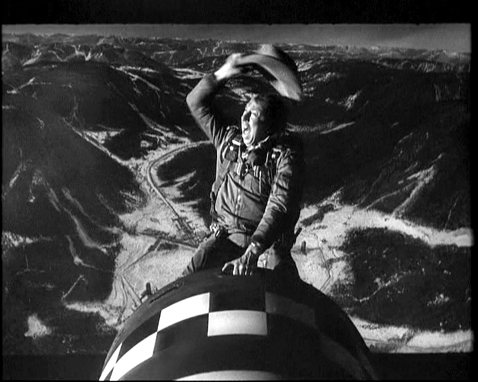

 On March 16 1968 Lieutenant William Calley ordered the men of 1st Platoon, Company C, 1st Battalion, 20th Infantry of the 23rd Infantry Division of the United States Army to kill every person in the Viet Cong village My Lai.





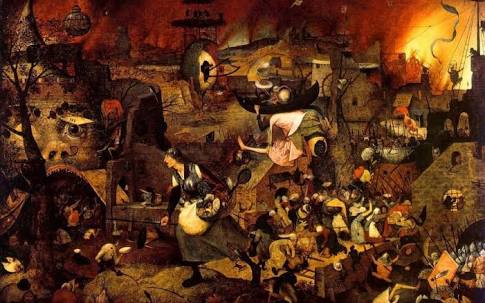








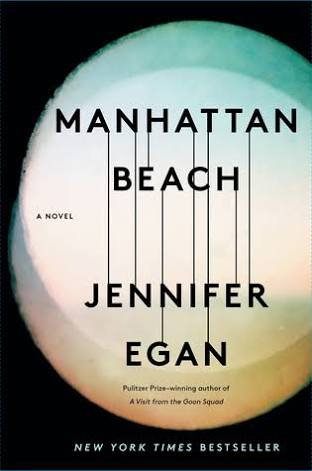
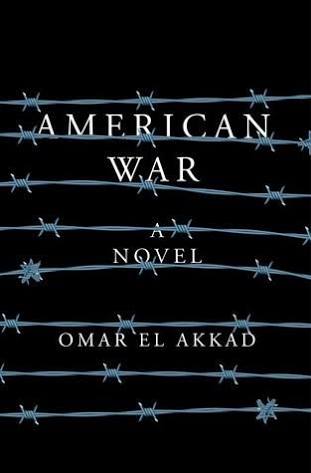
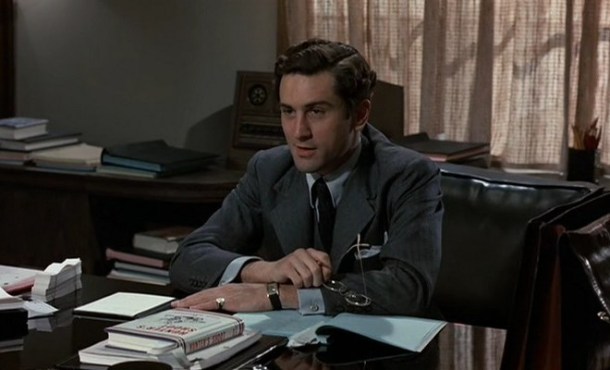

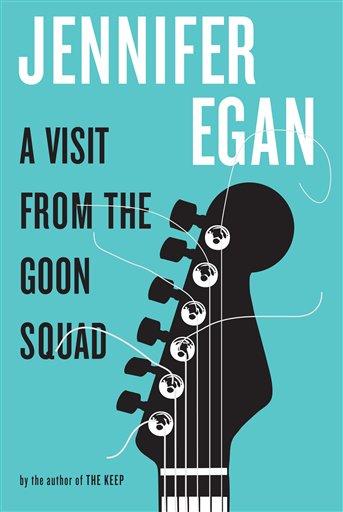
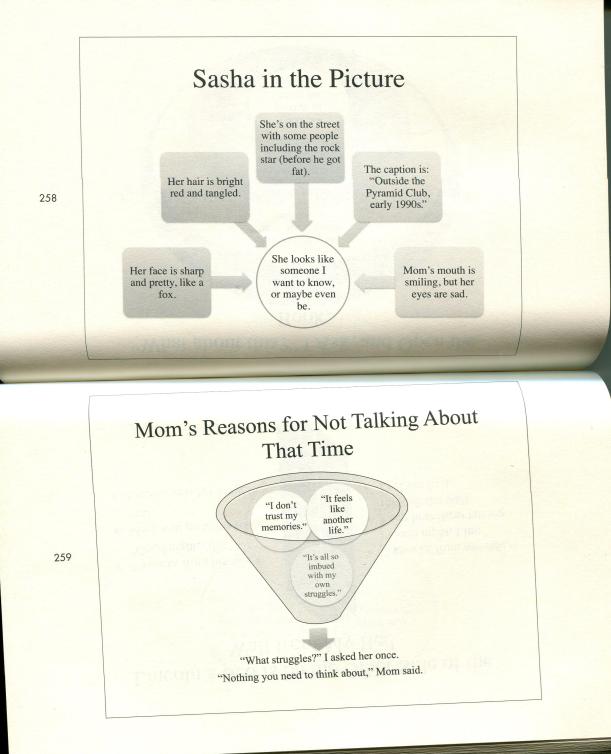

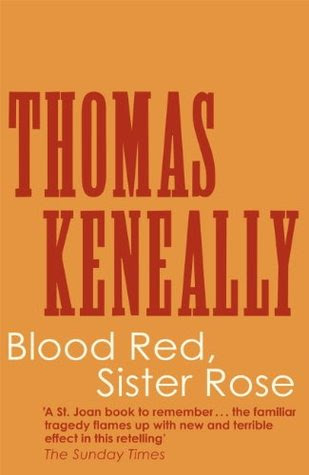

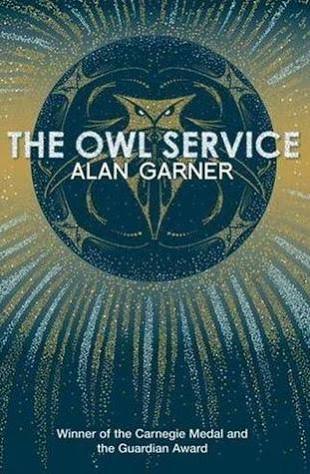





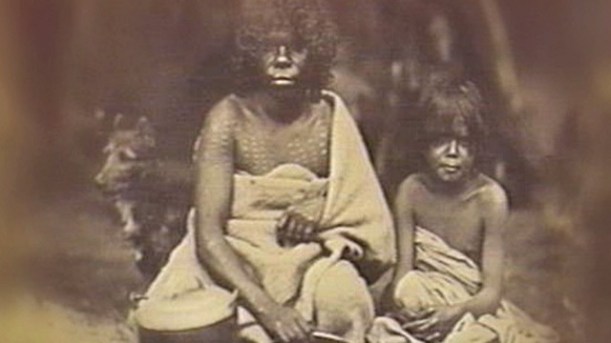
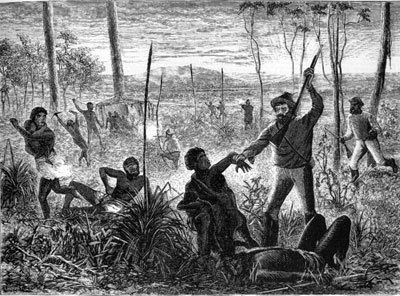
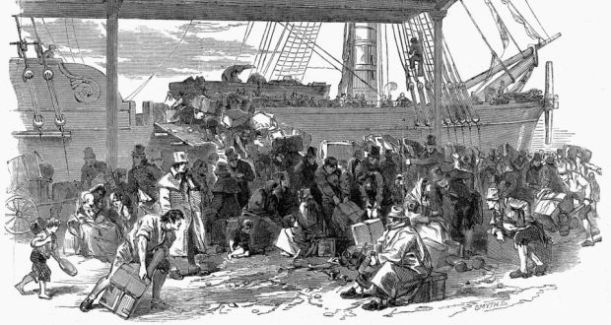

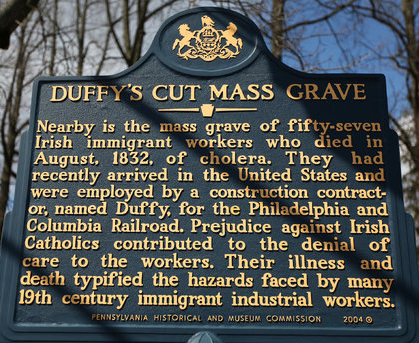

 Let’s get this out of the way straight up: Paul Lynch’s novel Grace is a tour de force. Not everyone will love it. Let me tell you why I do.

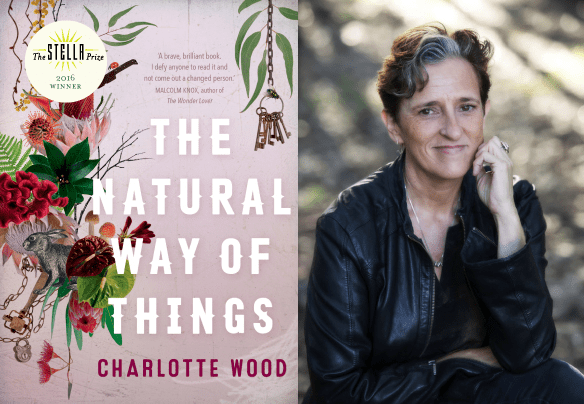
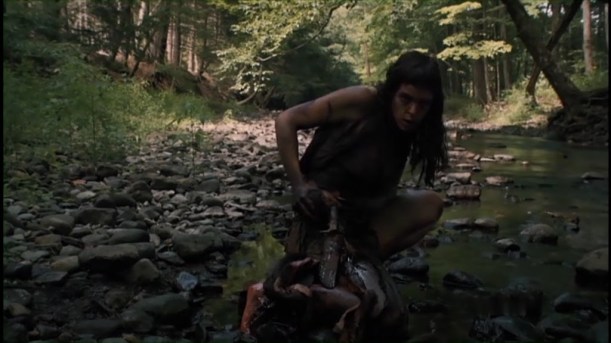
 Elly McDonald